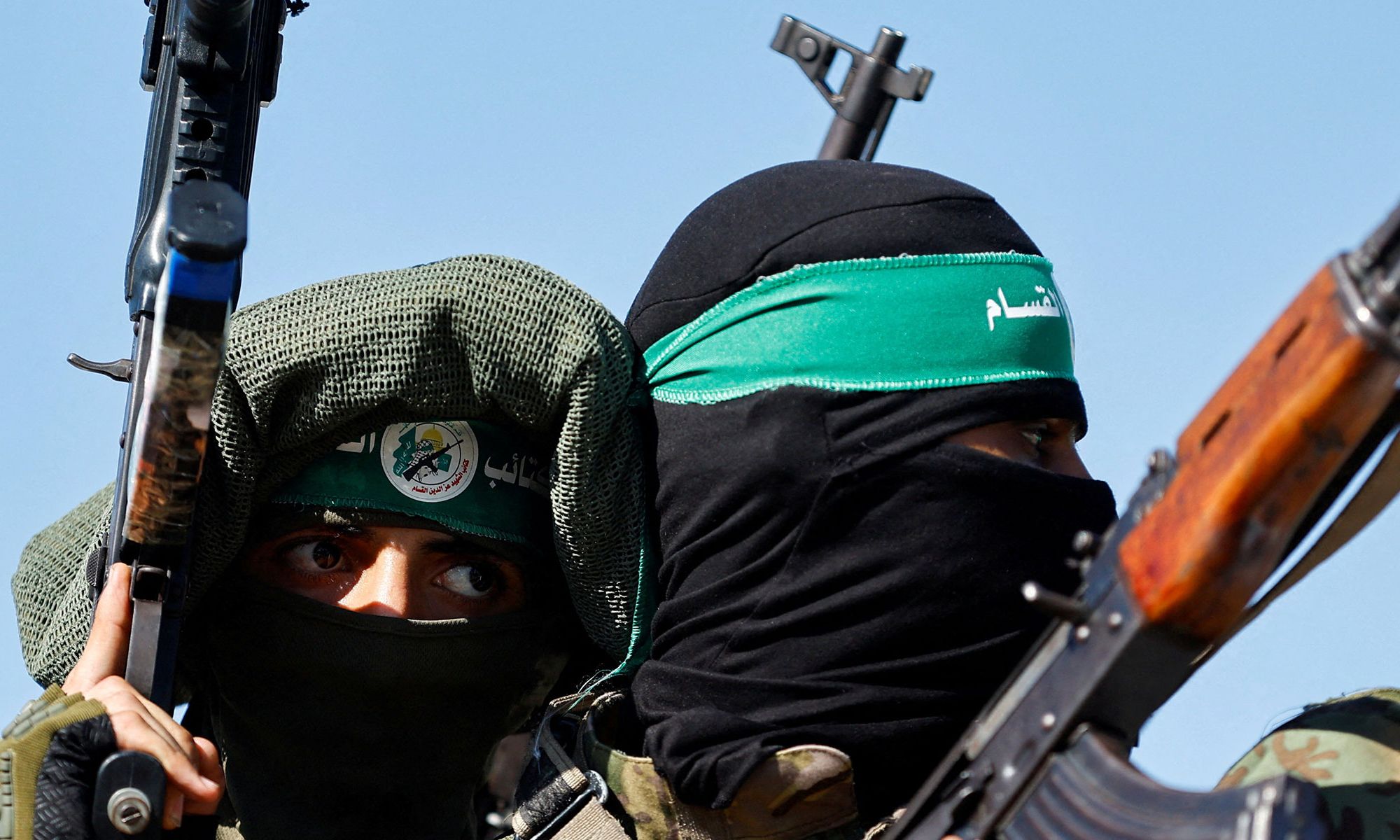
Doctors responsible for treating the released Israeli hostages have confirmed that female hostages suffered violent sexual assaults at the hands of Hamas captors.
The doctors confirmed to USA Today that Hamas sexually assaulted “many” of the released female hostages aged 12-48, adding that the hostages “came to us as patients with the trauma of those who witnessed very severe sexual assaults.” Upon their release, the hostages received pregnancy tests and were tested for sexually transmitted diseases.
“We know that female hostages were raped during their captivity under control of Hamas,” one Israeli military official said.
Hamas still holds 19 women and two children captive. Although terrorists claim that the remaining women are female soldiers, U.S. officials have said that Hamas’s refusal to release its remaining female captives is likely because the terror group doesn’t want women to reveal the horrors of what happened to them in captivity.
“It seems that one of the reasons they don’t want to turn women over that they’ve been holding hostage — and the reason this pause fell apart — is that they don’t want these women to be able to talk about what happened to them during their time in custody,” State Department spokesman Matthew Miller said earlier this month.
One of the women still held hostage is Naama Levy, an Israeli woman whose abduction quickly became a viral, harrowing image at the forefront of the Israel-Hamas war. A video emerged on October 7 of Hamas terrorists dragging the 19-year-old Levy by her hair into a Jeep. Her hands were bound, and pants bloodied.
“There’s a reason why women and children were prioritized first for release: younger women are at greater risk for further trauma,” Levy’s mother, Levy Shachar wrote in a recent op-ed. “Just as women and girls are more vulnerable to more forms of violence, they are also more vulnerable to suffering from infections and pregnancy from sexual violence. The longer Naama is held in captivity, the more violence she is subjected to, the more likely she will suffer the consequences of lifelong post-traumatic stress.”
Chen Goldstein-Almog and three of her children were abducted by Hamas and held hostage in Gaza for 51 days. When Goldstein-Almog returned to Israel, she told the press that “If [hostages] were released earlier, they would’ve been saved from experiencing sexual violence.”
“I heard the testimony directly from girls and heard things second hand,” Goldstein-Almog said. “Some of the sexual violence happened well into our time in Gaza, not in the first week.”
“But the way their bodies were desecrated, they don’t know how they will deal with that. It happened weeks into their time in Gaza,” she continued.
Goldstein-Almog also said that during her time as a hostage, at one point “there was a threat that” she would “be handcuffed, but it didn’t happen.”
“I said I have kids and nothing happened to me,” Goldstein-Almog said. “It was the only time I felt under threat [of sexual violence].”
New information about Hamas’s use of sexual violence against female hostages comes just weeks after UN Women, the United Nations entity tasked with confronting gender-based violence, finally acknowledged Hamas’s violence against women. Although widespread accounts of Hamas terrorists raping, murdering, assaulting, and maiming Israeli women have been public since October 7, it took UN Women until December 1 to issue a statement in which it “unequivocally condemn[ed] the brutal attacks by Hamas on Israel on 7 October,” and admitted that it was “alarmed by the numerous accounts of gender-based atrocities and sexual violence during those attacks.”
Such atrocities first came to light on October 7, when Hamas terrorists filmed themselves throwing wounded women like Levy into vehicles, or desecrating women’s bodies as was the case with Shani Louk, the German-Israeli citizens whose naked body was paraded around Gaza in the back of a pick-up truck.
Released hostages have testified to other psychological and physical warfare Hamas waged against their captives. Some hostages were reportedly starved, beaten, isolated in “suffocating” rooms, and not given medical attention.
“We were in tunnels under impossible conditions: underground, lacking oxygen, in darkness, with basic food like rice or pita bread twice a day,” a Nili Margalit, a nurse and former hostage, said in a letter.
Another female hostage who was released said of Hamas, “they touch girls, and everyone knows it,” adding that the hostages “had a procedure that no one moves without someone guarding them,” the Israeli newspaper Haaretz reported.





Comments