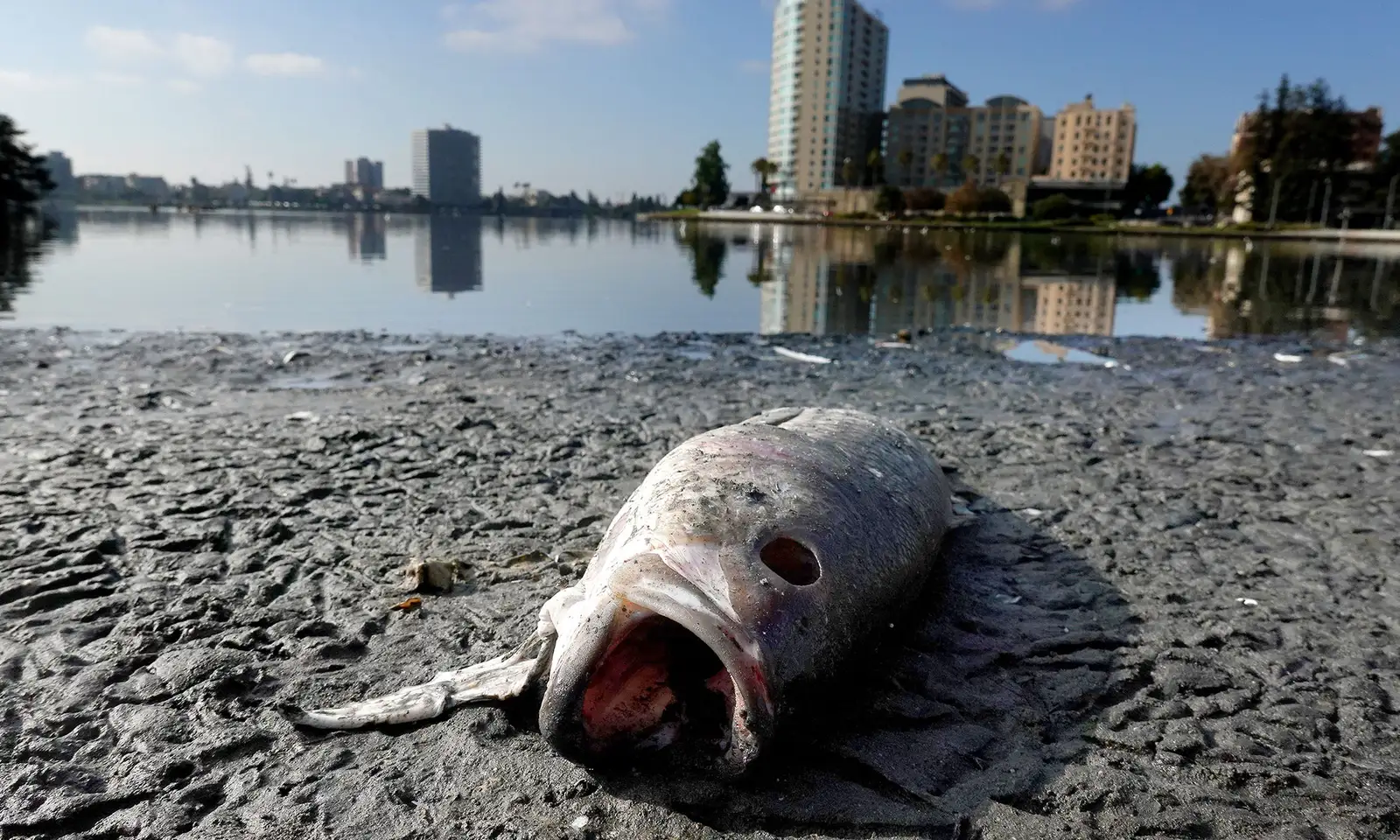
It was late July when San Francisco Bay Area residents first grew concerned: The water in a channel near Oakland was turning a murky, tea-colored brown.
Scientists in the region tested the water and found a bloom of algae, Heterosigma akashiwo, that causes a form of what is known as “red tide.” By the end of August, the bloom had spread throughout San Francisco Bay. Observers who flew over the bay saw that most of the water had turned a reddish brown. And then came the fish kills: dead sharks, sturgeon, striped bass, minnows, and other sea life washed up and covered local shores.





Comments
On “Wastewater, Not Climate, Fueled Massive Algae Bloom in ‘Epicenter of Supposed Environmentalism’”