Duke University’s sexual-misconduct policy, adopted last year, has been the subject of recent comment by Stuart Taylor, coauthor of Until Proven Innocent, and by Powerline.
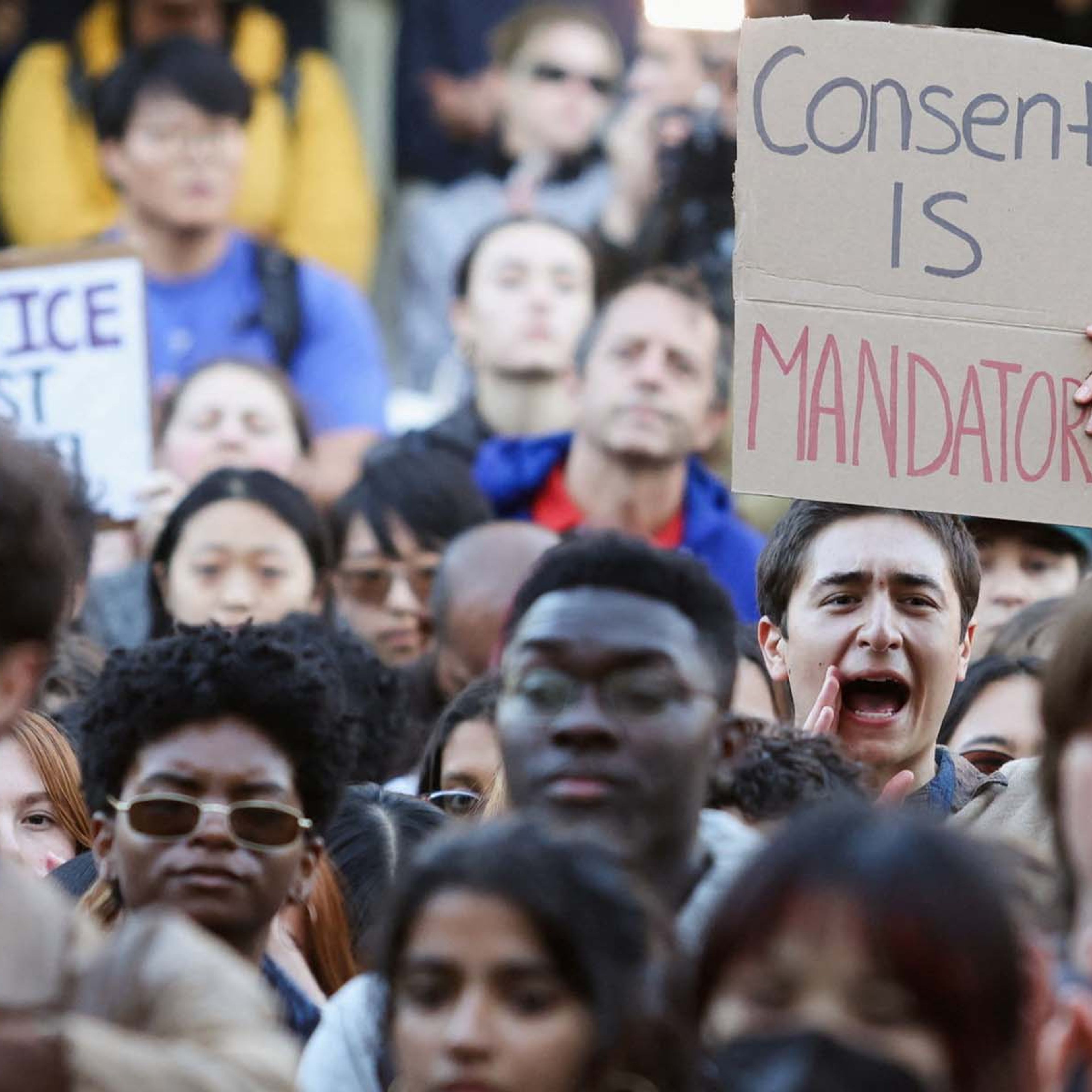
Although cloaked in non-judgmental “diversity” language (the examples of violations of consent to sexual relations include male-female sex, male-male sex, and female-female sex), the policy seems designed to create opportunities for women to claim after the fact that they did not give consent to sexual activity.
The bloggers see the policy as an attack on males (and because it is Duke, mostly on white males). That it may be, but its impact on women is worth considering, too.
The policy says:
Conduct will be considered “without consent” if no clear consent, verbal or nonverbal, is given. It should be noted that in some situations an individual’s ability to freely consent is taken away by another person or circumstance. Examples include, but are not limited to, when an individual is intoxicated, “high,” scared, physically or psychologically pressured or forced, passed out, intimidated, coerced, mentally or physically impaired, beaten, threatened, isolated, or confined.
My colleague Jenna Ashley Robinson says, “It would be very difficult to prove a lot of these, one way or another. What if a woman claims, after the fact, that she felt isolated? Or psychologically pressured? Or scared?”
Harry Lewis, former dean of Harvard College, suggests that such latitude is harmful for women as well as men. He wrote about his torturous experiences as an administrator carrying out Harvard’s policies on “acquaintance rape” in his 2006 book, Excellence without a Soul.
“Until the 1970s,” said Lewis, “the term ‘rape’ was almost never used to describe a sexual incident involving a man and woman voluntarily alone together.” The women’s movement “shifted the discourse of responsibility” to give women more voice in such encounters. The step was in the right direction, he indicates, but ultimately it had harmful results: “Colleges now treat women as weaklings who should bear no responsibility for what befalls them rather than share responsibility for what happens during sexual encounters.”
Today, said Lewis, “the old view that women are the weaker sex is kept alive — now advanced by women, with the acquiescence of men. Running against the educational ideal that a college should help students mature. . . . are well-intentioned forms of support for women that tend to infantilize them.” As far as I can see, Duke, the “Harvard of the South,” is following that path.




Comments