
On the menu today: Yesterday’s GOP primaries are yet another mixed bag for Donald Trump’s endorsements; and a moderate Democratic challenger nearly unseats Minnesota representative Ilhan Omar, in something of a warning sign for progressives.
The Results Are In
Primary elections in a handful of states yesterday confirmed what we’ve seen several times already this year: An endorsement from Donald Trump can be helpful to Republican challengers and make a race competitive, but they don’t tend to turn a competitive race into a sure thing.
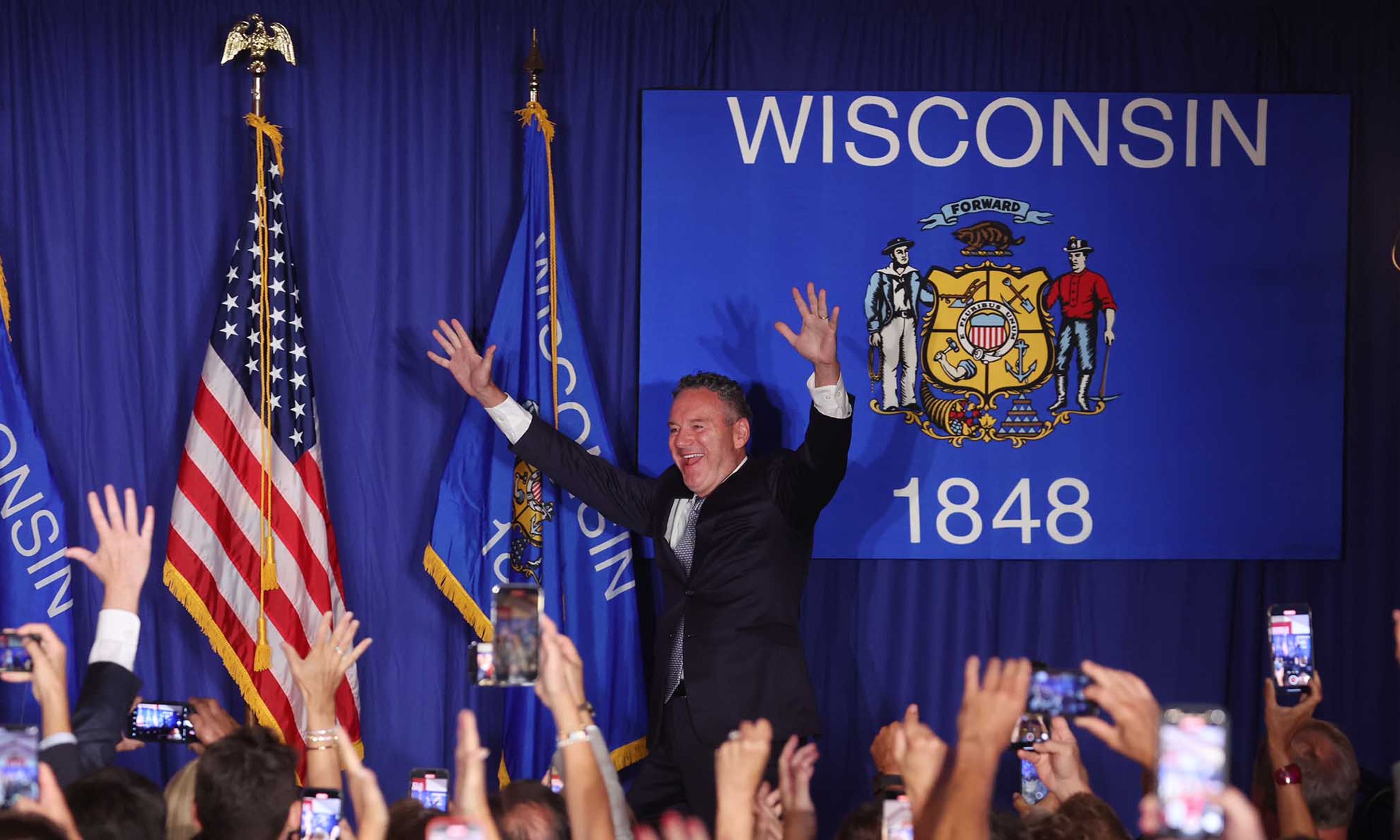
Last night’s biggest news was that Tim Michels, a Wisconsin businessman, defeated GOP-establishment favorite Rebecca Kleefisch for the nod in the Wisconsin governor’s race. Kleefisch is a former lieutenant governor and a long-time fixture in the state Republican Party. She had locked down endorsements from former vice president Mike Pence and former Wisconsin governor Scott Walker and was assumed to be a shoe-in — that is, until Trump chose to endorse Michels.
That endorsement turned the race into a nail-biter, and Michels pulled off a fairly sizable victory, defeating Kleefisch by more than five points and about 35,000 votes. Kleefisch performed best in counties surrounding the state’s largest cities, while Michels had a significant advantage in the rest of the state. The race was another example of Trump’s choosing to back the candidate most open to his continued insistence that the 2020 election was stolen. Here’s what the Wall Street Journal reports:
Ms. Kleefisch and Mr. Michels both made personal visits earlier this year to Mr. Trump’s Mar-a-Lago resort in Florida to try to win his favor, but Ms. Kleefisch had been slightly less receptive to the former president’s calls to upend Wisconsin’s certified 2020 election results.
Mr. Trump’s push for Wisconsin Republicans to decertify Mr. Biden’s Wisconsin win became a prominent topic in the campaign, even though there is no legal basis or mechanism to do so and multiple election reviews have found no evidence of widespread fraud in the state.
If elected governor, Mr. Michels has left open the possibility that he would try to decertify Mr. Biden’s win in the state.
But New York Times reporting points out that, while Michels was willing to entertain talk of stolen elections during the campaign, he was notably silent on the point during his acceptance speech after the results came in last night:
“I’d like to thank President Trump for his support, for his endorsement,” Mr. Michels said in victory remarks at his campaign headquarters in Waukesha, Wis. “It was a tremendous validation of our meteoric rise in this campaign. He knows that we need new leadership and he sees a lot of similarities.”
During the primary, Mr. Michels, 60, subscribed to some of Mr. Trump’s most outlandish conspiracy theories about the 2020 election. He pledged to consider signing legislation that would overturn Mr. Trump’s defeat to Joseph R. Biden Jr. in Wisconsin and withdraw the state’s 10 electoral votes — a move that has no basis in state or federal law.
But on Tuesday night, Mr. Michels did not mention the 2020 election or the state’s voting laws — an issue that just last week he said he was “very, very fired up about.”
But even though Trump seems to have endorsed Michels as a result of this stance, it wouldn’t be fair to read the results in this race as evidence that Wisconsin Republicans are still motivated by anger over Trump’s loss in 2020 or still inclined to support only those candidates who claim that the 2020 election was stolen or can be reversed.
In another hotly contested race, long-time Wisconsin GOP leader and assembly speaker Robin Vos held onto his seat in the face of a challenge from a Trump-backed candidate. Despite intense efforts from the former president to pressure Vos into attempting to investigate and somehow undo the results of the 2020 presidential race, Vos declined to do so — a choice that seems to have led to Trump’s last-minute endorsement of his challenger, Adam Steen. More from the Times:
While Mr. Michels prevailed, Mr. Trump ultimately failed to displace Mr. Vos, who has been in the Legislature since 2005 and served as speaker since 2013, wielding more influence than any other Republican in the state in recent years.
After pressuring Mr. Vos over the 2020 election in public and private for months, last week Mr. Trump endorsed his long-shot challenger, Adam Steen. A small-time real estate investor, Mr. Steen had no paid staff and barely raised enough money to print and mail campaign literature.
The race was far closer than Wisconsin analysts had expected, with Mr. Steen appearing to come within several hundred votes of toppling Mr. Vos, a testament to the power of the Trump endorsement and the enduring false belief that the 2020 election can still be rolled back.
My own theory: A Trump endorsement can buoy a candidate some of the time, particularly in a race with a number of viable candidates or in a close race against a candidate who isn’t especially well known or well liked. Over the past two years, the president has had enough success in his endorsements to suggest that some voters still consider his opinion as one of many factors when they head to the polls.
But there’s little evidence that Trump’s particular brand of grievance politic — in which he backs a challenger to unseat an incumbent who he thinks wasn’t sufficiently loyal to him — is appealing, and there’s likewise little reason to believe that his fixation on the 2020 election is anything close to a decisive factor in GOP elections.
Ilhan Omar’s Close Call
Facing a primary challenge from a pro–law enforcement Democrat, Minnesota representative Ilhan Omar just barely squeaked by. Omar defeated her challenger Don Samuels by a margin of just over 2,000 votes, 50.3 percent to Samuels’s 48.2 percent.
“We did have the right read on the voters,” Samuels contended when the results were in, “but we just couldn’t pull it off in the length of time we had.
Omar’s district includes Minneapolis, which has been the site of significant political unrest and even violence over the past two years. For her part, the radically progressive Omar has placed the blame for that disorder squarely on the shoulders of law enforcement. Among other things, she has called the local police department “rotten to the root.”
Samuels, who has lived in the area for decades, didn’t buy that line, and he challenged Omar primarily in response to her divisive brand of politics, with a particular emphasis on support for law enforcement. Here’s how our own Ryan Mills described Samuels in a piece last week:
Samuels is a soft-spoken 73-year-old Jamaican immigrant, as well as a former professional toy designer, a former Minneapolis city councilman, and a one-time school-board member. He currently leads a micro-grant company that helps poor people start small businesses and solve local problems. He is an underdog in his race against Omar, a political celebrity and “Squad” member, who has consistently been a lightning rod for controversy, including for regularly making what many view as antisemitic and anti-American comments, as well as for her far-left politics, her misuse of campaign funds, and her headline-making antics and scandals.
In an interview with National Review, Samuels said he initially supported Omar, a former Somali refugee, hoping that her “multiple minority statuses would make her a real uniter.”
“Instead, she has proven to be a divisive force in Congress,” Samuels said. “Over time, we expected her to kind of learn and get better at the job. In fact, it seems as if her predisposition for conflict and standing out and not collaborating is getting worse.”
Omar’s campaign has attempted to paint Samuels as a corporate-backed conservative, but on most issues, Samuels is no right-winger. He describes himself as an Obama Democrat. His top priorities, if elected, include passing gun-control measures, working with President Joe Biden to create green jobs, and protecting abortion access with a federal law. He wants to strengthen the Affordable Care Act with a public option, and pass the John Lewis Voting Rights Act.
That this race turned out to be such a close call is a warning sign to the national Democratic Party, which is sounding more like Omar than Samuels each day.
ADDENDUM: If you’re curious about the state of play in swing-state Senate races, I recommend this opinion piece by the Wall Street Journal’s editor-at-large, Gerard Baker, which identifies some of the problems with GOP candidates in Georgia, Pennsylvania, and Arizona.






Comments