Dear Weekend Jolter,
When Congress originally prepared to establish “Real ID” standards for driver’s licenses nationwide, National Review’s editorial board lauded the move, which had been recommended by the 9/11 Commission:
Making it as hard as possible for terrorists and other bad guys to get these documents is an important piece of any homeland security strategy. After all, two of the 9/11 hijackers were able to get multiple state IDs after they had become illegal aliens, and future enemy operatives are even more likely to be illegal aliens, as legal entry becomes harder for them.
The editorial concluded with a note of caution that even if some were to claim mission accomplished, “there is much work left to do before we can claim to have an immigration-enforcement system worthy of the name.”
Little did the board know that this work would include simply implementing the Real ID Act itself, 17 years later.
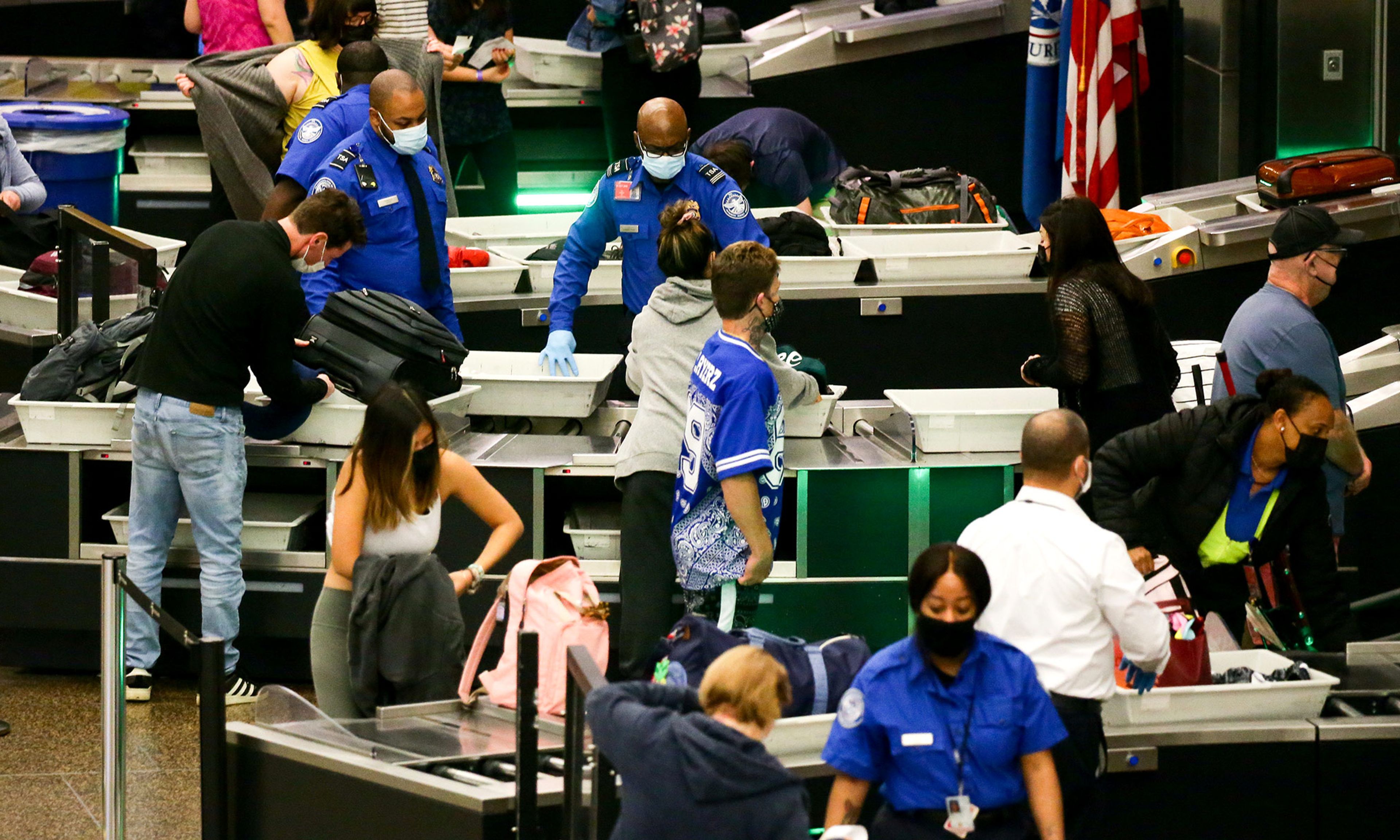
Earlier this month, the Department of Homeland Security announced yet another delay in enforcing the Real ID standards approved in 2005. They first were set to take effect in 2008. This kept getting pushed back. May 2023 had been the latest deadline, but DHS has kicked that down the tarmac once more, to May 2025.
Until the date changes again, that is when U.S. travelers will need to possess the new form of ID (or an alternative document such as a passport) in order to fly domestically. Getting one generally entails providing documentation showing one’s full name, date of birth, Social Security number, place of residence, and “lawful status.” Those who pass this screening get a little star added to the top of their cards, the DMV’s version of a Twitter blue check, except actually verified.
“This extension will give states needed time to ensure their residents can obtain a REAL ID-compliant license or identification card,” DHS secretary Alejandro N. Mayorkas said in a statement, explaining that the delay is necessary to “address the lingering impacts” of the Covid-19 pandemic. This refers to motor-vehicle department backlogs that swelled in recent years.
But that was one of a host of reasons and complaints accompanying the host of delays to date, including state concerns over cost, concerns over privacy, concerns about how immigrants will be affected, and concerns by travel groups about the potential for chaos at American airports.
Call me cold-hearted: This delay — all 17 years of it — is pathetic. The Real ID Act was highly controversial during the Bush administration, for the same reasons various groups have since sought deferrals, but nobody has repealed the law. It’s simply being avoided. The Real ID saga illustrates government’s worst habits and inclinations, toward coddling, drawing out, and, ultimately, refusing to pull off the Band-Aid.
That warned-of chaos at the airports, to pick on one excuse, is inevitable, whether Real ID is enforced this year or a decade from now, considering that 17 years later less than half of state-issued driver’s licenses and ID cards are compliant. It will also be temporary: Once a traveler is turned away from the airport 40 minutes from boarding one time, he’ll be sure to get the correct ID before returning. And while I don’t doubt that DMVs are backlogged, it was ever thus.
Washington interests often mistake procrastination for policy-making. Many of the big decisions of the past two years concerned extensions of “temporary” programs (read: punting) — the eviction moratorium, student-debt deferment, traveler mask mandates — though the courts didn’t always go along.
With regard to Real ID, the pace at which the government has moved ridicules the urgency that characterized the legislation’s passage. Before moving on to the week’s highlights, I’ll give the last word to the 9/11 Commission, which implies in its recommendation here that a two-decade delay is not advisable:
Secure identification should begin in the United States. The federal government should set standards for the issuance of birth certificates and sources of identification, such as drivers licenses. Fraud in identification documents is no longer just a problem of theft. At many entry points to vulnerable facilities, including gates for boarding aircraft, sources of identification are the last opportunity to ensure that people are who they say they are and to check whether they are terrorists.
Rant over. Let the linking commence.
NAME. RANK. LINK.
EDITORIALS
Enough already: It’s Well Past Time to End the President’s Covid-Emergency Powers
Don’t go wobbly, Fed: The Fed Must Stick to It
New York’s Democratic mayor has the right idea when it comes to treating the mentally ill: Mayor Adams Is Right
ARTICLES
Andrew Follett: Is This the Fusion Breakthrough We’ve Been Waiting For?
Madeleine Kearns: Brittney Griner’s Race and Sexuality Are Irrelevant
Madeleine Kearns: The Infinite Victimhood of Harry and Meghan
Rich Lowry: ‘Safety’ Is the Worst Word in the English Language
John Fund: Lessons from the Sexual-Assault Cover-Up in Loudoun County Schools
Ryan Streeter: Republicans Shouldn’t Forget about Optimism
Ari Blaff: Crypto Enthusiasts Undeterred by Spectacular Collapse of FTX
Yuval Levin: Some Lame-Duck Warning Signs
Andrew McCarthy: The Curious Timing of Sam Bankman-Fried’s Arrest
Daniel Buck: What Is Wrong with Our Schools?
Ryan Mills: Eric Adams Is Defying Decades of Hands-Off Homeless Policy: ‘The Pendulum Swung Too Far’
Christian Schneider: The DeSantis Delusion
CAPITAL MATTERS
John C. Mozena, with the Center for Economic Accountability, highlights the tradition of crony capitalism at the state and local levels: It’s Time to Call Out America’s Corporate Welfare State
LIGHTS. CAMERA. REVIEW.
Armond White notices a curiosity, a hit film’s foil: Devotion Is the Anti–Top Gun: Maverick
FROM THE NEW, DECEMBER 30, 2022, ISSUE OF NR
Charles C. W. Cooke: The Great Republican Freak-Out
Brian Riedl: Utopia’s Price
Luther Ray Abel: O Christmas Tree
Mary Eberstadt: Secularization Revisited: There’s Hope for Faith
A FESTIVAL OF EXCERPTS
From NR’s editorial on the need to bring the president’s emergency powers in line with the current state of the Covid-19 threat:
The spread of both vaccination and natural immunity, combined with better treatments for the infected, have ended all reason to see Covid as a basis to suspend normal life in the United States. . . .
The problem for Biden is that he needs the pandemic to be an ongoing national emergency in order for him to exercise “emergency” authorities that otherwise would be universally recognized as extralegal powers. Even after the Supreme Court struck down his efforts to act as the national arbiter of vaccination and apartment leases, he claimed the power to spend hundreds of billions of dollars without congressional appropriations on forgiving student loans. Even as that remains in litigation, he continues to extend payment holidays. Few claims of presidential authority would have more alarmed the Framers of the Constitution, familiar as they were with the English reaction to Charles II trying to rule without revenue raised by Parliament, than an executive asserting the authority to spend vast sums without legislative consent.
Biden’s action is illegal anyway — as Nancy Pelosi warned him until he did it — but he will continue attempting to exert powers inconsistent with a constitutional republic so long as he can point to some statute saying that the president has vast additional authority in an emergency. There is no valid reason why Congress should not pass, on a bipartisan basis, a legislative end to this “state of emergency” and compel the president to act within the ordinary law. There is no reason why Republicans in Congress should not demand, immediately, that this be done.
We would recommend a broader effort by Congress to review and restrict presidential emergency powers of open-ended duration, especially in domestic affairs but extending as well to practically permanent states of war. But first things first. The simple truth is that the Covid national emergency is over. Congress should say so.
Brian Riedl, in the latest issue of NR, surveys the incoherence that runs through leftist policy visions:
The progressive movement, we are often told, represents the future of American politics. It boasts millions of passionate (mostly younger) activists and generally dominates universities, think tanks, Hollywood, and the media. Progressive politicians such as Bernie Sanders, Elizabeth Warren, and Alexandria Ocasio-Cortez are hailed as national celebrities, fawned on in traditional media, and able to command a massive social-media presence.
The progressive movement has energy and numbers. It has bold ambitions and rhetoric. What it does not have is coherent policy proposals. This is the inescapable conclusion after one carefully reviews leading progressive bills and proposals to nationalize health care, tax the rich, slash defense, and reduce net carbon emissions to zero. The issue is not that their blueprints are misguided or would shift policy in the wrong direction, but rather that they contain virtually no policy substance whatsoever. They are vaporware: empty gimmicks and messaging bills that lack the minimum specificity to be implemented even if enacted. Most proposals make brash and expensive promises and then appoint a future commission or government agency to figure out how to make it all work.
A movement filled with millions of committed activists and led by ambitious academics, economists, scientists, think-tank fellows, and politicians cannot simply have forgotten how to turn aspirations into legislative proposals. Such attempts at policy entrepreneurship seem instead to have collapsed under the weight of their internal contradictions, operational unworkability, political infeasibility, and even disregard for basic arithmetic. . . .
Serious policy scholars understand that if there were painless “easy answer” solutions, they would have been enacted by now. Most policy options involve balancing costs and benefits and using our political values to assess those trade-offs. The progressive movement largely rejects this framing, selling astonishing fantasies as straightforward and obvious solutions that have no drawbacks and are opposed only by a cabal of sinister bad-faith actors. But Congress cannot enact empty slogans, and progressives’ utopian proposals cannot become legislation because they are contradictory, unworkable, or mathematically impossible.
Madeleine Kearns wonders why the commentary on Brittney Griner’s imprisonment and release keeps focusing on aspects that have nothing to do with either:
Griner is black, female, and lesbian — none of which is relevant to her imprisonment and release, effected through a prisoner swap, but all of which have been seized on by commentators obsessed by identity politics. Tayo Bero, writing in the Guardian prior to Griner’s release, maintained that her imprisonment was “a stunning indictment of how America continues to fail Black women — both on and off its shores.”
How exactly was it America’s fault that the Russian government seized on Griner’s minor mistake — forgetting she had marijuana vaping cartridges in her luggage — to its geopolitical advantage? America is either the hero or the loser in this story, depending on your view of the swap. But it is hardly the villain.
This wasn’t about identity but nationality. Griner became the target for unfair treatment not because of her sex, skin color, or sexuality but because she is an American. She became a candidate for rescue for the same reason. The only controversy in the whole story was whether it was tactically prudent of the United States government to make the swap. . . .
It doesn’t help to see the White House engage in pointless virtue-signaling highlighting Griner’s identity, either. In her press briefing last week, Karine Jean-Pierre described Griner as “an important role model and inspiration to millions of Americans, particularly the LGBTQI+ Americans and women of color.” This was topped by teachers’ union boss Randi Weingarten’s now-infamous tweet declaring: “What a great relief!!! Extraordinary news, a basketball star, but also a gay, black woman is released. And yes of course we want other prisoners like Paul Whelan released.”
But again, identity is irrelevant here. Nationality is the point: ensuring that Americans wrongfully detained abroad are brought home. One of the biggest concerns about the swap was that it made the U.S. look weak. Sadly, the obsession with identity politics, in lieu of patriotism and gratitude, has done exactly that.
Yuval Levin warns of trouble ahead in debt-ceiling negotiations:
In all of the debt-ceiling theatrics of the past decade and more, I have really never once thought that Congress would actually fail to act in the end. But the peculiar weakness of the House in the next Congress leaves me thinking that will be a very real possibility. If you game out the pressures House Republicans would face in a debt-ceiling showdown, it is hard to see how an increase makes it through.
This, too, is a function of a very tight majority in a divided Congress. House Republicans don’t exactly want Congress to fail to raise the debt ceiling. They would like the debt ceiling to be raised while they stand on the sidelines and criticize it. . . .
Once a few members stake out a position against lifting the ceiling, another hundred will be afraid to stand to their left. And the Speaker will be powerless to move them, and disinclined to try.
In some periods of divided government, reaching back to the 1950s, the president’s party has made concessions in return for a debt-ceiling increase in response to precisely this attitude. Both parties have done this. But the Democrats seem to believe that the lesson of such bargains in the Obama era was that they should not make substantive concessions on the debt ceiling again. That may be wrong, but it appears to be the strongly held view of the party’s activists, and President Biden has rarely proven able to resist those activists so far in his term. What’s more, Republicans don’t have many obvious demands to make in return for a debt-ceiling increase — at least not ones directly tied to budget rules or spending. There are plausible concessions they could ask for, such as Mitt Romney’s “Trust Act.” But these tend to lack the tone and pitch that House Republicans will seek. So it isn’t obvious what demands they would make. They want to complain about raising the debt ceiling, rather than to do something else in particular.
If that doesn’t change, Democrats would need to step up, as the majority party usually does. But the psychology of being the minority in the House will make it harder. And they may also think they would be well served by a crisis they can blame on Republicans.
Right or wrong, this is a recipe for disaster. And it suggests one important conclusion for members trying to figure out how to approach what remains of this lame-duck session: Both sides should recognize that they are not well equipped to benefit from a debt-ceiling showdown, and that they would benefit from avoiding such a showdown in the next Congress by acting now. There is some reason to hope that key members on both sides in both houses do see this. But hope is not a strategy, and for the moment, I don’t see a strategy.
Shout-Outs
Aaron Sibarium, at the Free Press: The Hijacking of Pediatric Medicine
Tevi Troy, at the Washington Examiner: Conservatives we lost in 2022
Jonathan Turley, at the New York Post: Biden allies move to intimidate witnesses ahead of GOP’s coming Hunter probe
CODA
Several readers responded to last week’s call-out for a bit of warm-weather music, something to thaw the frost before it makes too much headway.
Kevin in St. Petersburg draws from sunny climes to offer and highly recommend the ribald tavern-folk of Michael McCloud, a regular act at the Schooner Wharf Bar in Key West; here he is performing “Conch Republic Song.” Brooks Eason, naturally, sends along some Buffett. And Pamela Pletz shoots over a classic, “Kokomo.”
Thanks all. Bundle up out there.




Comments