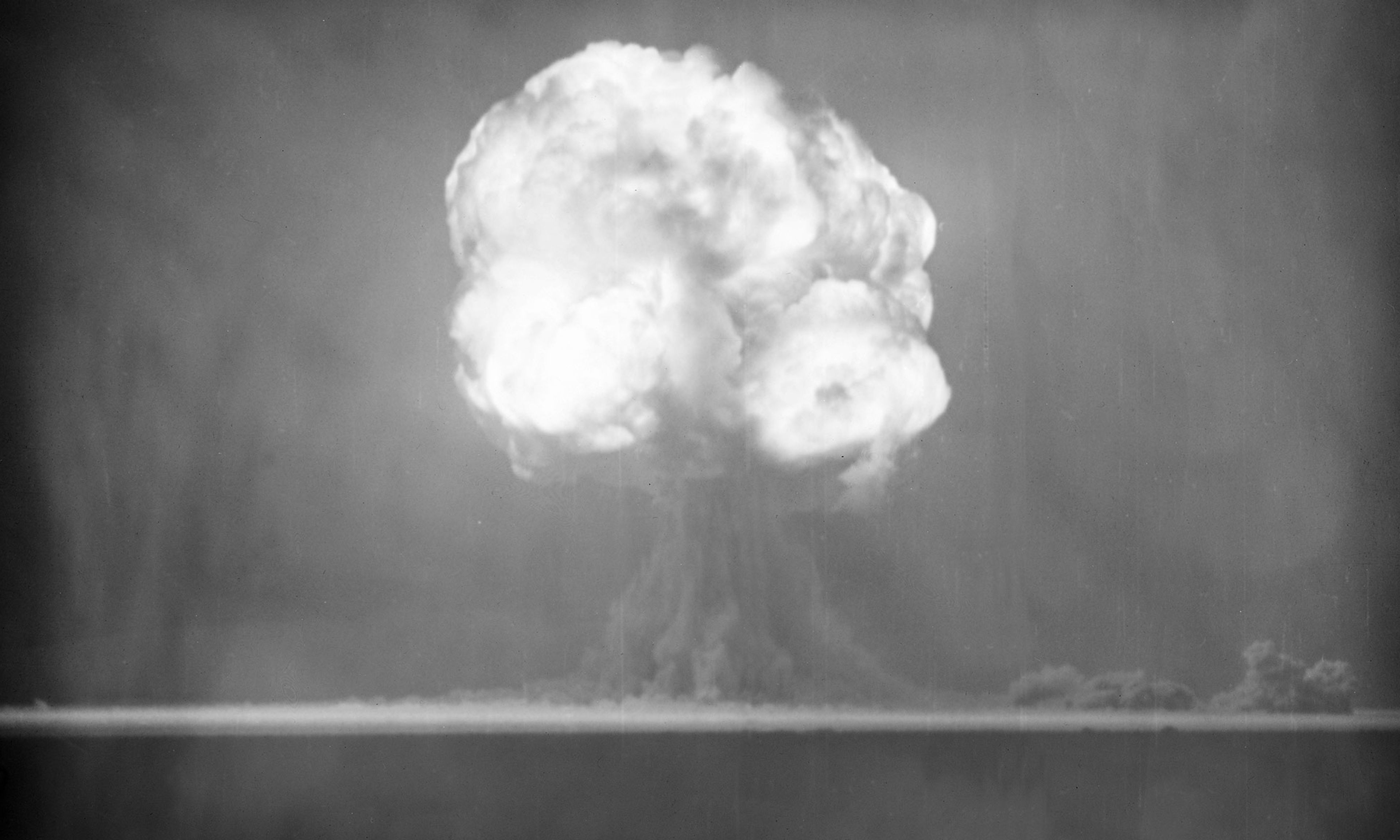
What was the seminal event in human history? Was it the birth of a prophet, philosopher, warrior, or king? The discovery of the New World? A revolution or war? A great natural disaster? History may show that the watershed moment occurred 75 years ago in the isolated New Mexico desert. On July 16, 1945, the atomic age began in a burst “brighter than a thousand suns,” as one observer described the first-ever nuclear detonation, and the world was forever altered. Indeed, human history now had its “before” and “after.”
The Manhattan Project, as it was called (because early work was done at Columbia University), was urgently set into motion after a 1939 letter, written by the physicist Leo Szilard and signed by Albert Einstein, warned President Franklin D. Roosevelt that German scientists had discovered atomic fission. Hitler, the letter said, might soon have a nuclear weapon, which could be catastrophic. Fortunately, it never came to pass, and Szilard, fearing the escape of the nuclear genie, petitioned that none be used on an enemy. (For his own part, Einstein would later lament: “Had I known that the Germans would not succeed in developing an atomic bomb, I would have done nothing.”) But even as the Third Reich was in its death throes, the Pacific war was intensifying, and Japan showed no inclination toward surrender. The bloodlettings at Peleliu, Iwo Jima, and Okinawa convinced the military, and the new president, Harry Truman, that only dropping the soon-to-be tested bomb on one of Japan’s cities would shock the nation’s leaders into capitulation.



Comments