John O’Sullivan of our parish lives in Budapest and edits The Hungarian Review, a bi-monthly journal in the English language. In the current number, I reminisce about Hungary at length. My parents owned a property there called Pusztaszabolcs, and my father, half Welsh and half English, fantasized about settling down in the country as an eccentric Hungarian gentleman. The property came through my mother’s mother, and she owned a house at Kapuvar, a town near Gyor in Western Hungary. She bred race horses at a stud called Lesvar, and the family rented a shoot at Pokvar nearby.
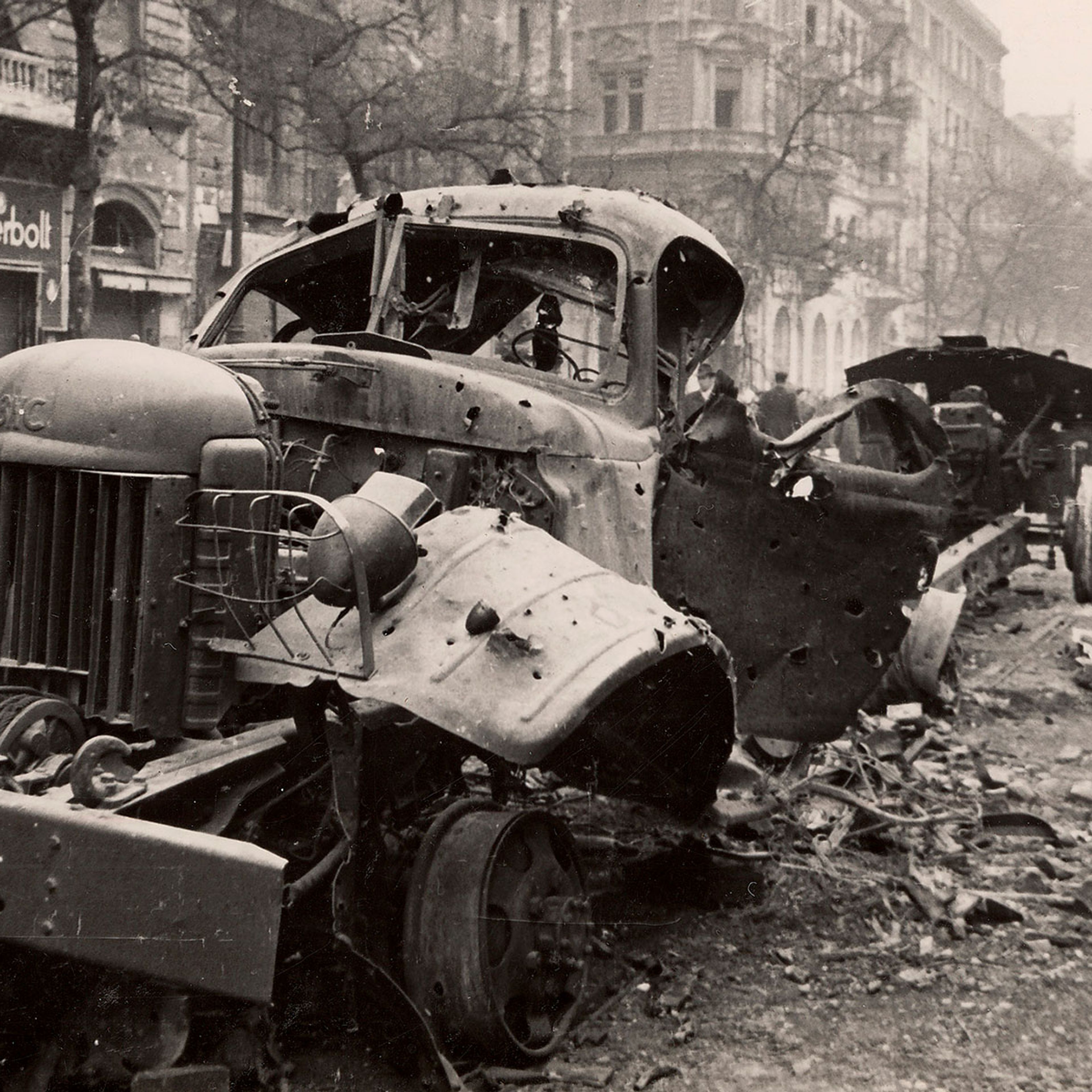
I first went to Hungary after the 1956 revolution. Everything was inconceivably depressing. Bullet holes everywhere. Soviet patrols. Nobody dared speak to you. Freedom, normal life, had been stolen and would never return. For years afterwards I used to revisit the country to check that pensions my grandmother was paying got into the right hands. The country was corpse-like.
Coming in from the airport now is enough to bring a lump to my throat. Budapest has returned to being a great capital city. The communists could not even run Gerbeaud’s, one of the world’s greatest cafes — it is now worth flying to Budapest just for that. Playing truant away from my desk (and from David Calling too, apologies!) I roped John into an expedition into the country in a Proustian search for lost time. We found what we were looking for. The house at Kapuvar has become municipal offices. When I visited Pokvar in the 1960s it was being used as a Soviet tank garage and looked completely dilapidated. Restored, the house now belongs to the Minister of Finance. Only the staircase remains of the interior my parents knew but it was enough to link past and present. The Soviets shot, slaughtered, or stole the horses at Lesvar, and nothing remains of the stud that we could find. I finished my essay by observing that it isn’t the loss of property I mind, but the chance to know this country and these people from the inside. Why, I have twice tried, and failed, to learn Hungarian.
Socialism, said John at one point, is a sickness, and incurable. Hungary gets a bad press because its Prime Minister Viktor Orban is a conservative. Also because Jobbik, a neo-fascist party, has seats in the parliament. The Hungarians I spoke to all think that Jobbik has lost whatever popularity it had, and from here on can only decline.
John has been in London to speak at a conference on the legacy of Mrs Thatcher. When next we meet, I must find out if he thinks present-day Hungary is an outsanding example of how right she was.




Comments