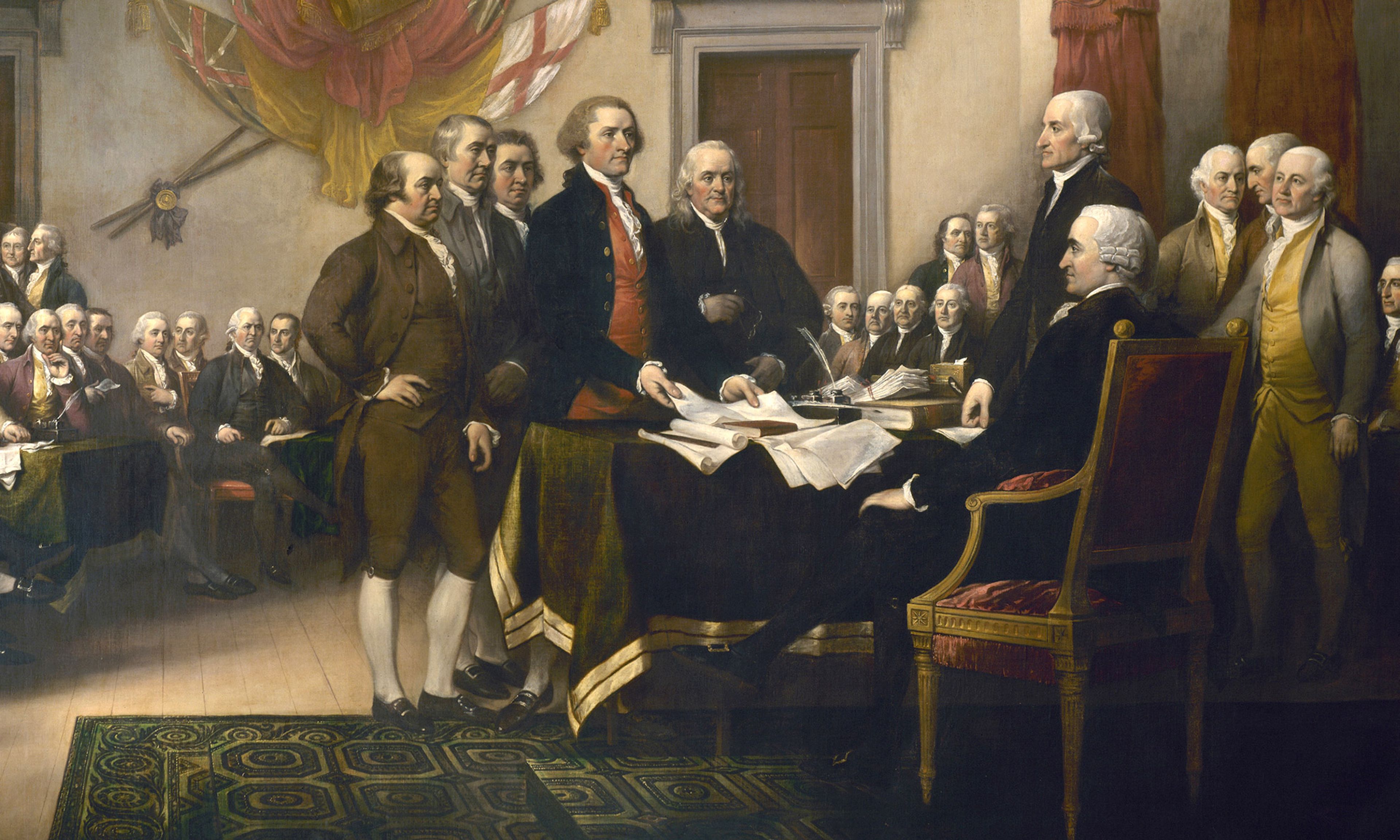
Pay attention to intellectual debates on, let’s broadly call it, “the right,” and you can easily come away with the impression that liberal democracy — the very foundation upon which the American experiments rests — is in intractable decline and inevitable collapse. Because definitions matter, liberal democracy in its usage here denotes a regime established to secure and administer a just order by respecting an individual’s natural rights through a system of ordered liberty, the rule of law, and constitutional procedure.
According to various critiques, liberal democracy has strayed so far from its Judeo-Christian beginnings that its problems are not merely comparable to a head cold that will eventually go away, but to a terminable disease from which death is imminent. We could call this the declensionist critique, from the likes of individuals like Stephen Wolfe, author of the much-discussed The Case for Christian Nationalism. A similar narrative holds that liberal democracy was flawed from its foundation because it was premised on a false anthropology organized around maximizing liberty instead of protecting religion, family, and social cohesion. We could call this the foundationalist critique, evident in the works of figures like Patrick Deneen in Why Liberalism Failed.





Comments