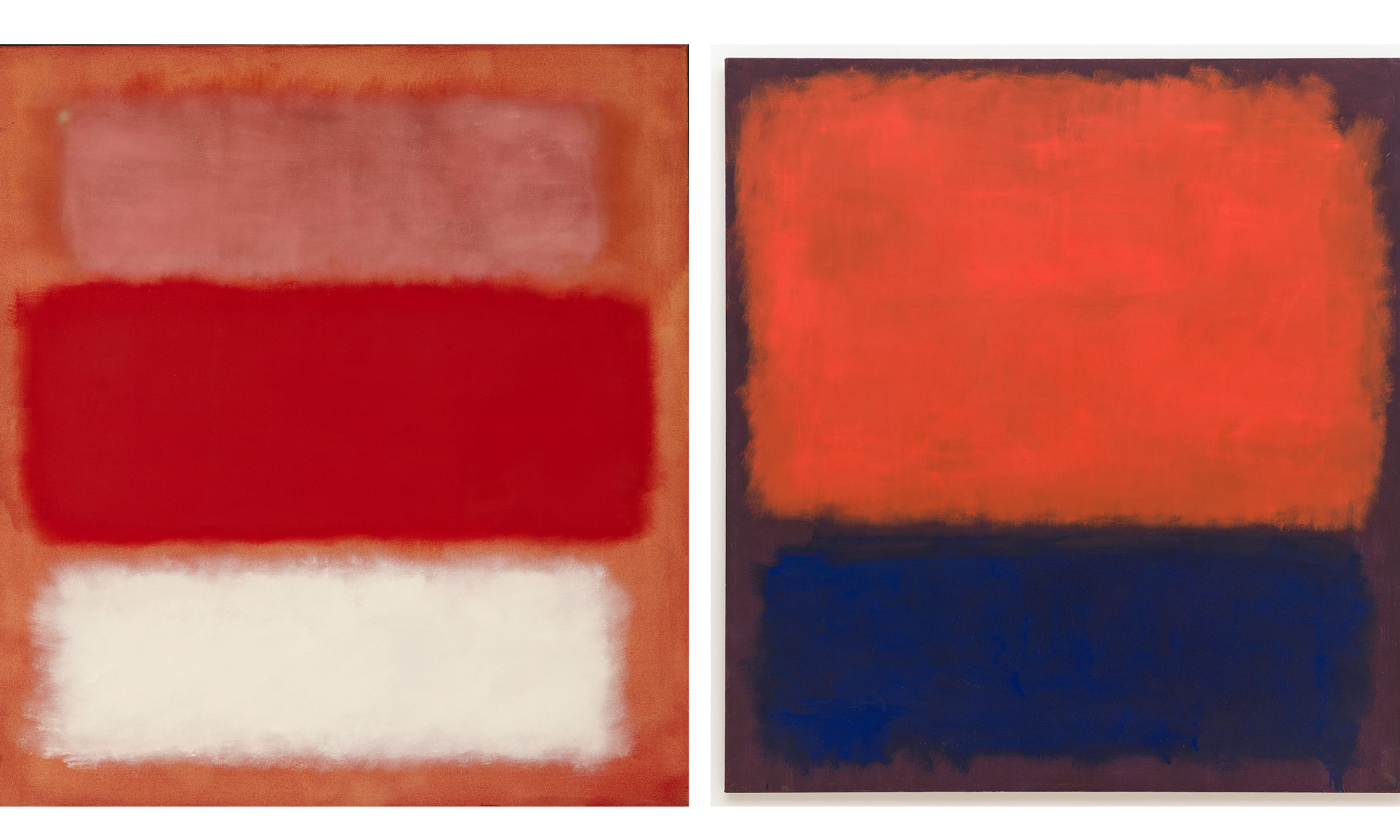
Mark Rothko is the overwrought, impossible, stellar retrospective of the artist at the Vuitton Foundation in Paris. With nearly 120 Rothkos from the 1930s, long before Rothko was Rothko, through to his last, unfinished picture from 1970, it’s an extravaganza. The Vuitton Foundation, in the Bois de Boulogne, is a massive, modern exhibition hall owned by the luxury-brands maker. Two years ago, it presented the brilliant Morozov Collection: Icons of Modern Art, which I loved and was dazzled by. The Rothko exhibition? So much about it was wrong, wrong, wrong. It closed earlier this month, and it’s taken me a long time to read the catalogue and parse my thoughts.
Rothko (1903–1970) is the instantly recognizable Abstract Expressionist painter. During his classic period, a time between the early 1950s and his suicide, Rothko made large pictures, nearly square, depicting rectangular blocks of color stacked two or three high and with ragged, gauzy edges. The rectangles seem to float on a background color. Colors often contrast, sometimes emphatically, but often they differ so slightly, especially in his dark paintings, that they seem at first to be monochromatic. His paint layers are thin, so his blocks sometimes look diaphanous, like puffy clouds. Within the rectangles, the background color sometimes makes ghostly shapes as it bleeds through the paint covering it. These translucent passages look like hovering spirits. I think about the shades, the remains of the dead in Greek myths.




Comments