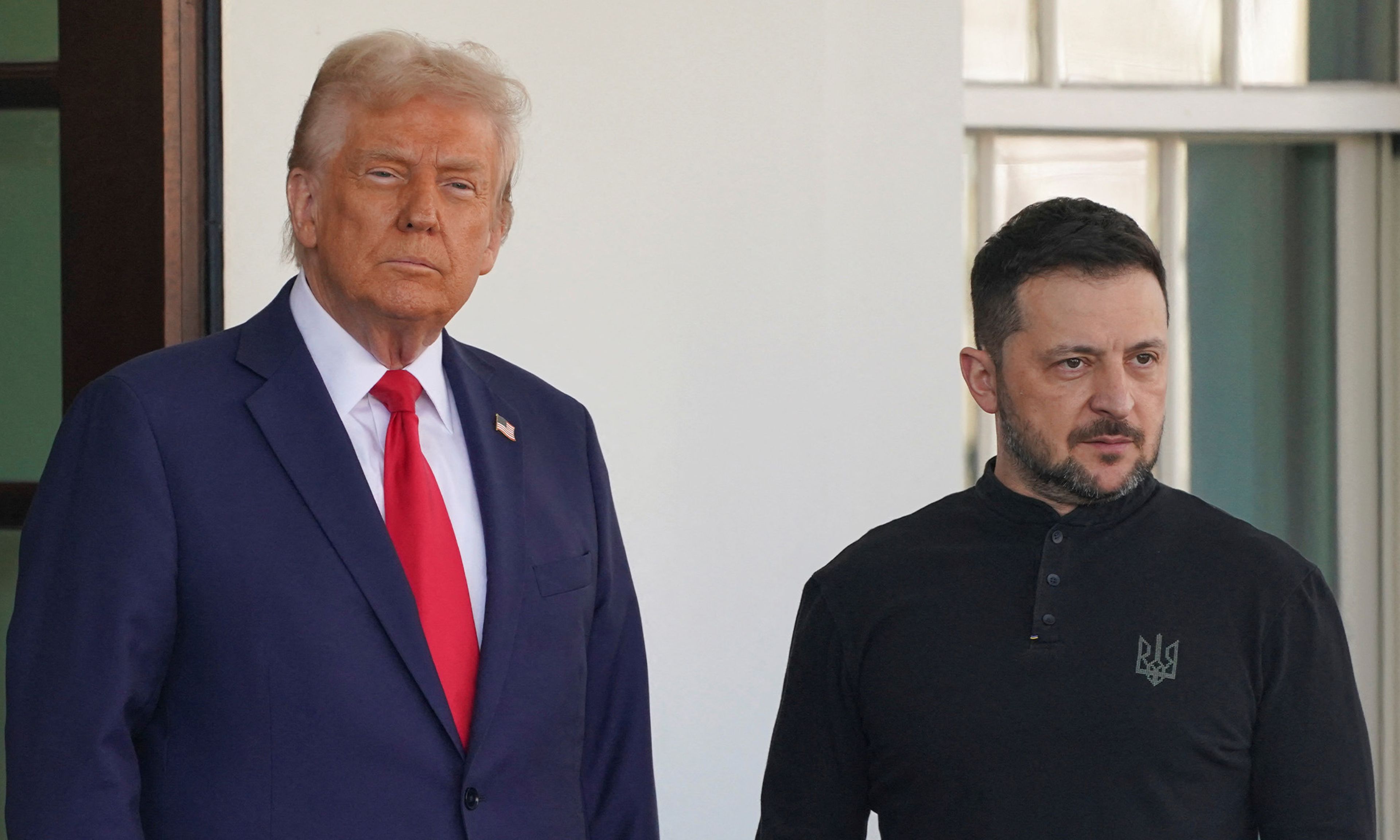
After the meltdown in the Oval Office between Ukrainian President Volodymyr Zelensky and President Donald Trump, European leaders began rushing out statements of support for the embattled Ukrainian leader. They came hot and fast from France, the Czech Republic, and even incoming Chancellor Friedrich Merz of Germany, who said, “Dear Volodymyr, we stand with Ukraine in good and in testing times. We must never confuse aggressor and victim in this terrible war.”
European leaders are partly cooperating with progressive opinion in the United States in the fiction that Donald Trump and JD Vance are turning tail and rushing headlong into the arms of Vladimir Putin. Such an impression may actually work to Zelensky’s benefit: He is now in the impossible position that other nationalists have faced when their zeal and sacrifices meet the demands of a more powerful neighbor for territorial and political concessions. He cannot bless negotiations that end the war by dismembering his country’s territory while providing no ironclad security guarantees. He is not lying when he says he would resign to get Ukraine NATO membership; it would make him a national hero. But he may find himself, like the late President Rhee of Korea, simply sidelined. The United States negotiated the end of the Korean War with the North Koreans and the People’s Volunteer Army of China without the government of South Korea, because no such government could have democratic legitimacy and sign on to the failure to reunify the country. South Korea did not begin its acknowledgement of the armistice until the 1990s.



Comments