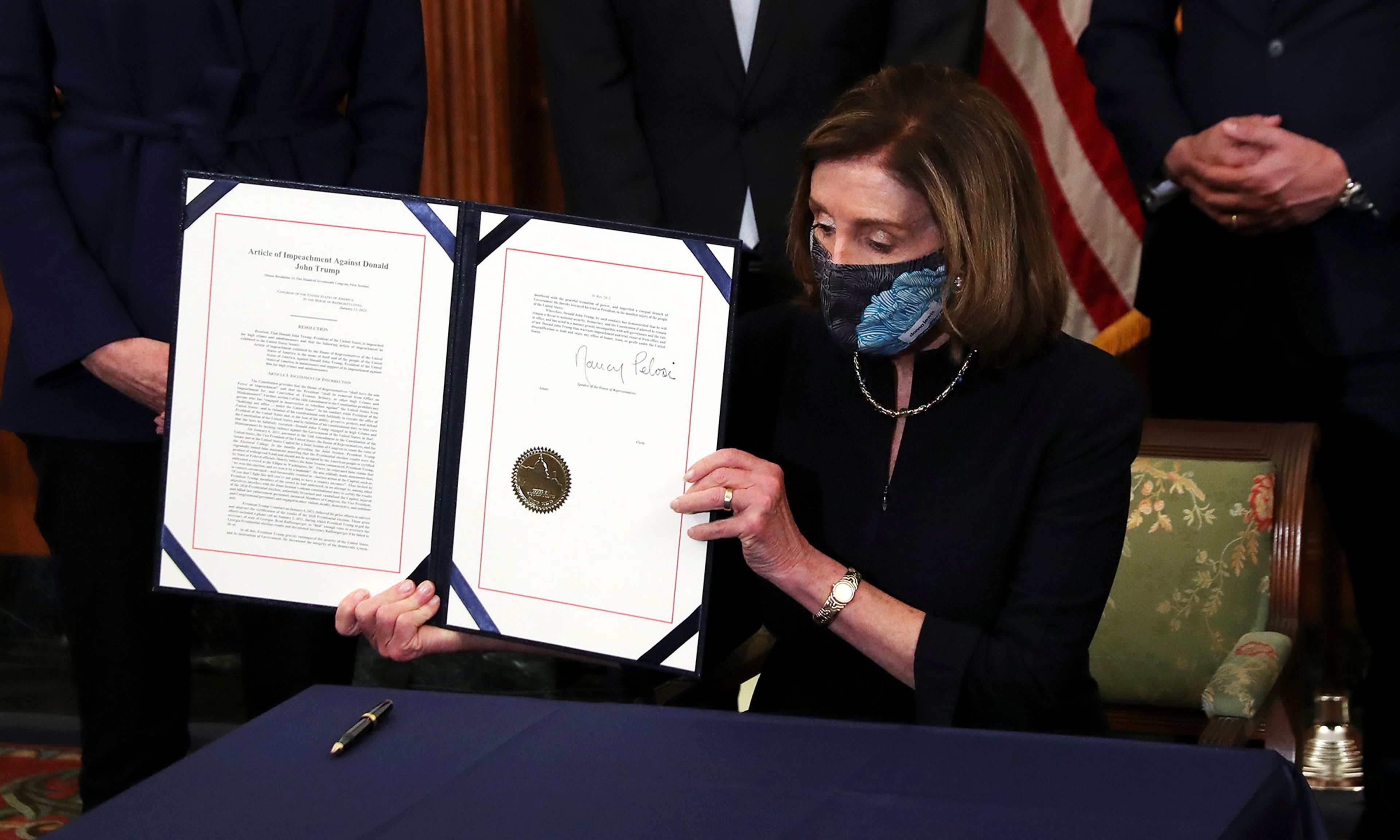
Donald Trump on Wednesday became the first president in American history to be impeached twice. Republican congressional leaders are signaling that they may contribute the necessary votes not just to impeach, but also to convict Trump for his contribution to the January 6 attack on the Capitol. Instead, they would be wise to stop the rush to judgment short of conviction. Impeachment alone, without a verdict of guilt in the Senate, would inflict a sufficient, humiliating verdict on the president’s conduct without doing further damage to the Constitution’s separation of powers.
It should come as no surprise that House speaker Nancy Pelosi led Democrats in the House to impeach Trump. On the day that Congress began officially counting the electoral votes that would confirm Joe Biden’s election as president, Trump gave an incendiary speech claiming widespread voter fraud to a large crowd. “I know that everyone here will soon be marching over to the Capitol building to peacefully and patriotically make your voices heard,” the president declared. “If you don’t fight like hell, you’re not going to have a country anymore.” A mob then descended on the Capitol and forced a suspension of the proceedings. Members of Congress fled into hiding; rioters and Capitol police engaged in pitched battles throughout the House and Senate; and at least five people died, including an officer.





Comments