
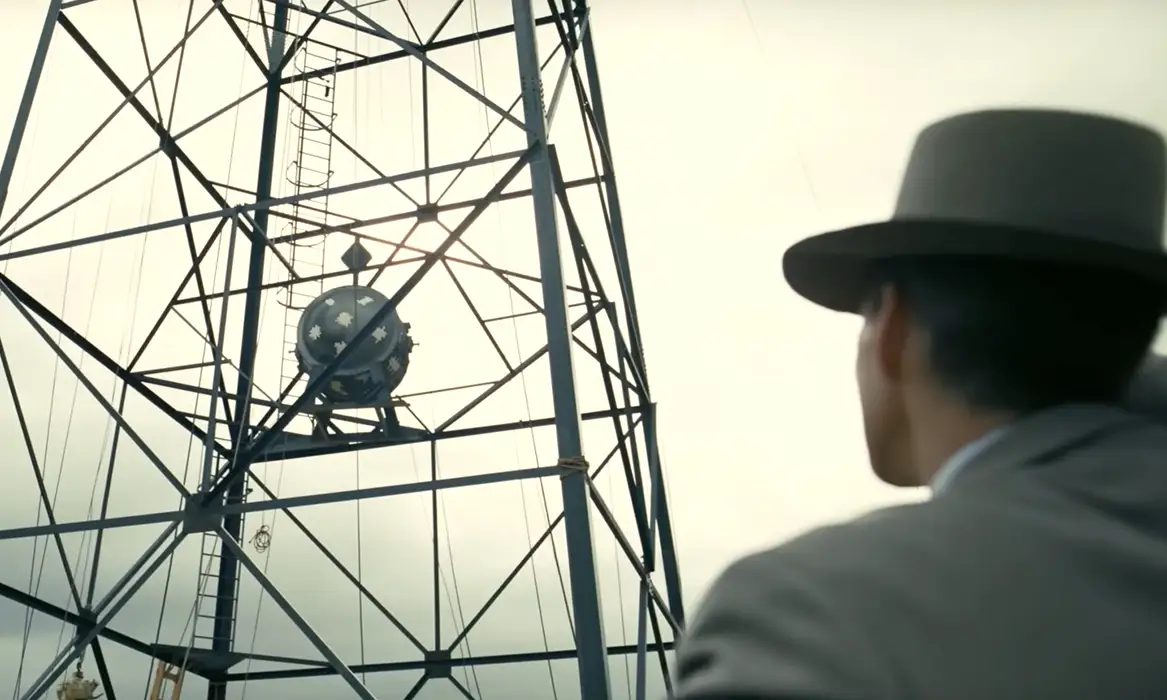
It’s generally considered best practice for film critics to review the movie that was actually made, rather than to judge it against the theoretical movie they wanted to see. But as this is a post and not a formal review, I will depart from that practice and say that, while Oppenheimer was a very good movie, with flashes of greatness, it was also a bit of a letdown.
As with Christopher Nolan’s Dunkirk, which took place in three different timelines portraying the land, sea, and air elements of the evacuation, Oppenheimer is divided into three different narratives woven together. One is a more standard biopic narrative, tracing Robert Oppenheimer’s life from his days as a graduate student, to his time as a physics professor, to his womanizing, to his leading the Manhattan Project, and to his post-war regrets about having unleashed the atomic bomb on the world. Another concerns the 1954 hearing to revoke his security clearance. And yet another involves the 1959 confirmation battle of Lewis Strauss. While I enjoyed the Los Alamos parts of the movie, Nolan, perhaps thinking the story of the Manhattan Project is already well known, seemed more interested in portraying other parts of Oppenheimer’s life. I get that this is supposed to be a movie about Oppenheimer, rather than merely a movie about the development of the bomb, but there is so much focus on the post-war political plot lines that the Los Alamos parts almost become an afterthought. It seems like an odd decision, when given the choice to focus on the world-historical event of the race against the Nazis to get the bomb, to devote so much screen time in a three-hour movie to a commerce-secretary confirmation fight.





Comments
On “Oppenheimer Is Very Good, but Not Great”