
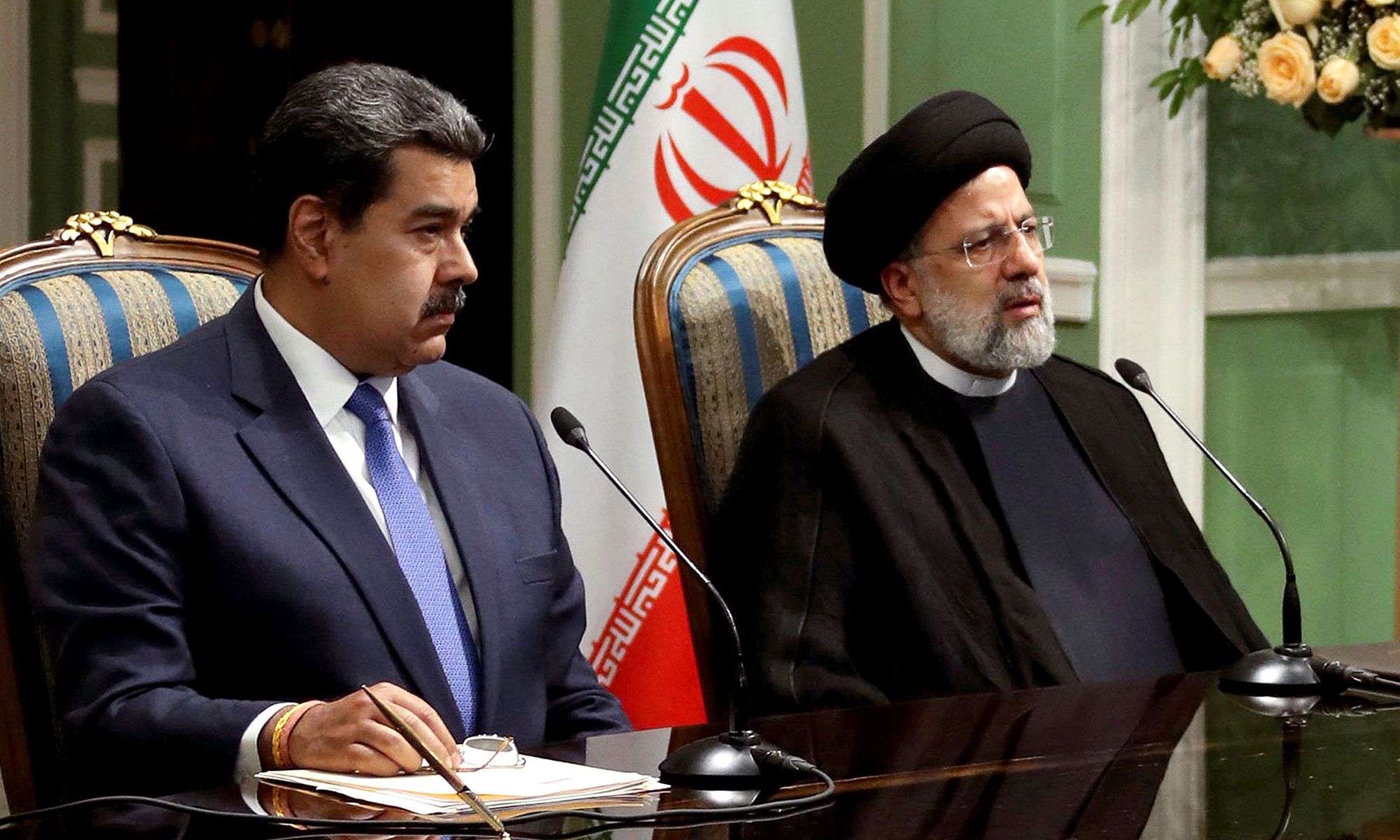
American military strikes on Iran last summer made eminent sense. They did not topple the Iranian regime, or seek to do so, but neither were they a purely symbolic or punitive use of military force. The goal was to seriously degrade, if not eliminate, Iran’s nuclear program, which of course is a nuclear-weapons program. So far as we can tell, they were a significant success in that regard, and at a comparatively modest cost. The result has been to weaken the strategic position in the region of Iran’s regime, a deeply ideological government implacably hostile to, and actively at war with, the United States for 47 years and allied in a new axis with its enemies. (Not for nothing were there reports this week of plans for joint exercises between Iran, China, and Russia in the Gulf of Oman, at the entrance to the Persian Gulf.)
There was a case for the American operation earlier this month that removed Nicolás Maduro, an anti-American tyrant who has allied with our enemies, enmeshed his regime with drug cartels, and so immiserated its people that it has flooded America and the region with refugees. But the Trump administration never made a case for regime change in Venezuela, and while removing the head of an autocracy is a significant strike, the one man is not the entire regime, and it increasingly looks as if the rest of the regime has been left in place, just chastened and under ongoing American threat that pressures it to decouple from our enemies and grant us more favors and access to Venezuelan resources.


Comments