
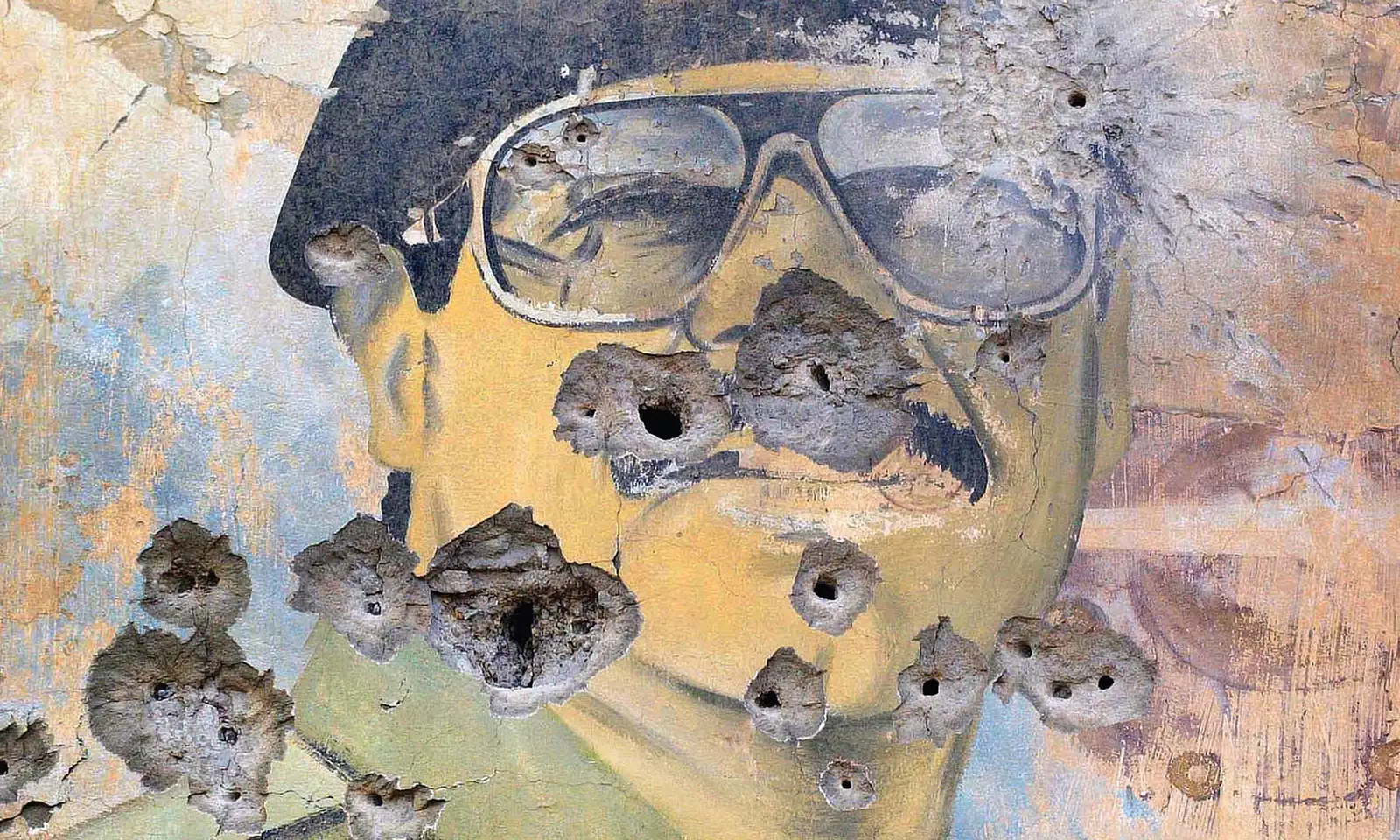
“When the war in Iraq began,” Elliot Ackerman writes in the new special issue of National Review, “we were in crisis.”
“We were young Marine second lieutenants training in Quantico,” Ackerman, now an author, recalls. “Most of us had never seen combat. We were convinced that we would miss our generation’s war. . . . Everyone wanted one of two things: orders to Iraq or orders to Camp Pendleton, in Southern California.”
Ackerman wanted Iraq, even if it seemed like the war there was winding down. He got his wish, and more than he bargained for.
None of us imagined that the war in Iraq would last the better part of a decade. We also didn’t understand how, for many of us, it would become forever commingled with the war in Afghanistan, which would stretch into a second decade.
I left for Iraq in June 2004. At the time, I still believed I’d missed my war. That November, my battalion fought in the Second Battle of Fallujah. I remember sitting, in a dilapidated house between firefights, with a sergeant in our battalion who’d served in the invasion. He was making some point about the fighting then versus the fighting now. He began by saying, “Back in the war . . .” and I had to ask him: “If that was the war, then what the hell is this?”
Twenty years ago — on March 20, 2003 — the U.S. and Britain invaded Iraq. The war and its bloody aftershocks are still with us. It’s true that the U.S. successfully removed Saddam Hussein from power and enforced an international prohibition on Iraqi development of chemical, biological, and nuclear weapons — but the cost was terrible in blood and treasure, and to the fabric of our domestic politics.
In this special issue of the magazine, more than a dozen writers revisit the war and its consequences. Was the invasion, notwithstanding its unforeseen twists and turns, the right call? Or have the costs outweighed the benefits? Have the American people and U.S. policy-makers taken the correct lessons from the Iraq War? How will history view the American-led invasion?
Despite the ossified conventional wisdom, the answers to these questions are more complicated than at first glance.
- Noah Rothman argues that, on balance, the war was a success. “We cannot go back in time and fix the mistakes America made in Iraq,” Noah writes. “But we cannot move forward if we languish in the self-defeating notion that America only made mistakes in Iraq. Americans should be proud of the sacrifices we made to liberate the country from one of the world’s worst dictators and be resolved to take maximum advantage of the new status quo our actions engineered.”
- According to Elbridge Colby, however, “the Iraq War was a great, historic error.”
- Kori Schake laments how we’ve learned the wrong lessons from the war. Worst of all, “our enemies know that to defeat the U.S. they must keep fighting even when they’re losing — because, eventually, we’ll lose interest.”
- Victoria Coates cautions against the American tendency to focus on “spreading democracy” rather than pursuing hard national interests — a lesson that could be applied to Ukraine.
In this issue, Jim Antle, John Bolton, Daniel DePetris, Michael Brendan Dougherty, Andrew McCarthy, Bing West, and more join the debate.
Of course, as with any issue of National Review magazine, you’ll find coverage of the wide world of American life, culture, and politics.
Frederick Hess, in “Our Half-Educated Education Debates” calls out the mainstream press for only presenting one side of the story. John McCormack reports on a supreme-court election in Wisconsin that has grown bitterly partisan and is proving to be consequential on taxes, school choice, and abortion. And Peter Tonguette profiles filmmaker Whit Stillman — the director of Metropolitan and The Last Days of Disco — in “Cinema of Loyalty.”
If you’ve decided to subscribe, right now you can sign up for a print-only subscription for $24. That’s 24 issues of the magazine for just a buck per issue.
Or you can go in for a print-and-digital NRPLUS bundle for only $52. That’s 60 percent off the cover price.






Comments
On “The Iraq War at 20”