
Rich, I couldn’t disagree more re the virtues of the “war on terror” label, for reasons I outlined here:
By framing it as a war on “terror”, you leave yourself politically at the mercy of the terrorists: If there are no planes being hijacked and buildings being blown up, if there is no “terror”, then it becomes harder to make the case that there’s a war. So the well-intentioned “ungainly euphemism” [in Norman Podhoretz’s phrase] wound up confirming to those so inclined that the Bush war was a con, a fiction, merely a racket got up by the Bushitler and the neocons to impose a permanent security state on the nation in which your library books and non-local phone calls are monitored 24/7 in order to protect us from an enemy that doesn’t exist.
Yes, there’s a lot of terrorism out there. But, in a parochial network-news culture, overseas terrorism – Bali, Istanbul, Madrid, London – doesn’t count, and nor do intercepted plots to blow up JFK or the Lincoln Tunnel or this or that military base. I mean by “doesn’t count” that foreign and/or thwarted terrorist acts don’t resonate among the broader American public. To increasing numbers of people, there was an act of terror on a Tuesday morning over half a decade back – and nothing since.
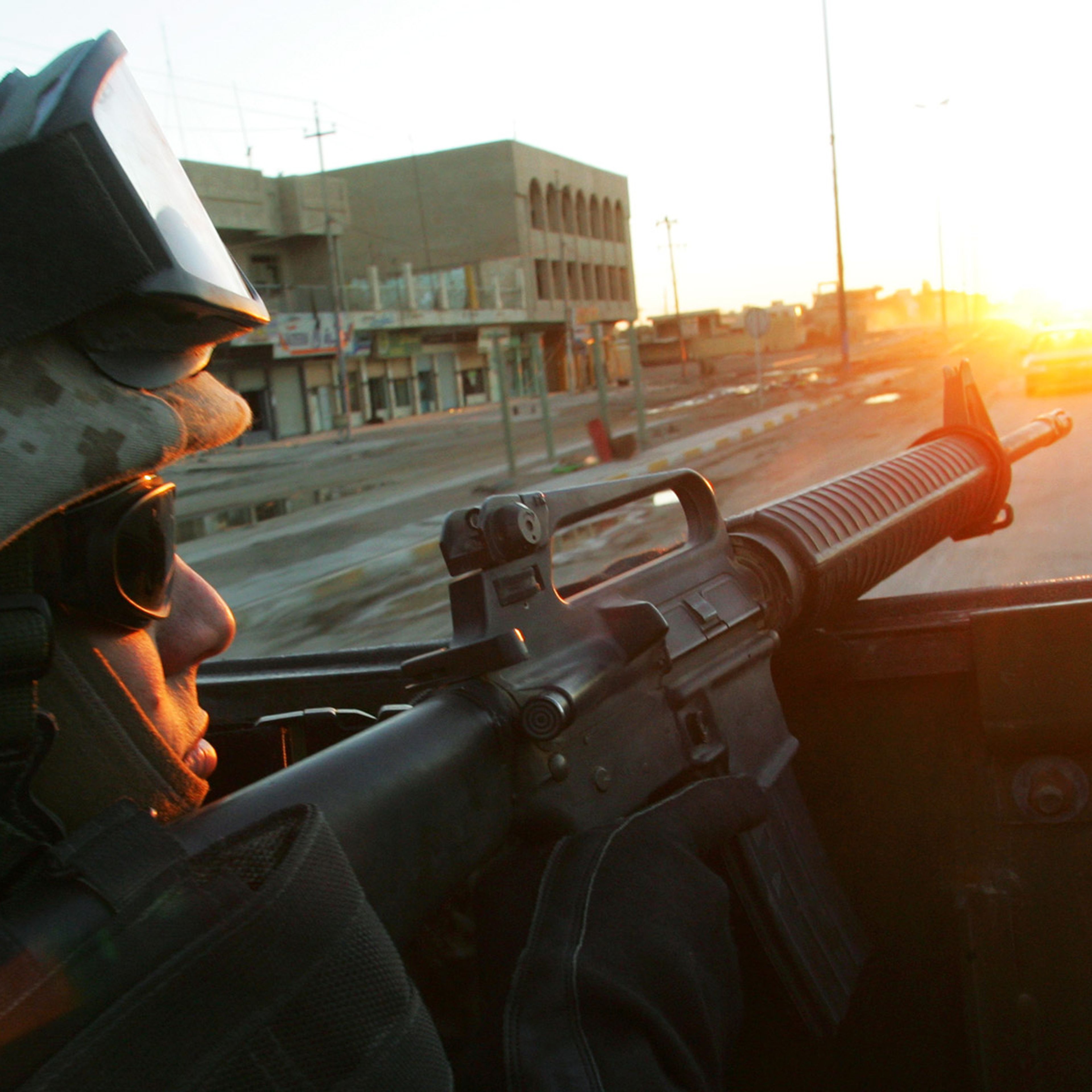
The “war on terror” is also politically a disaster in that it requires immense difficulty to embrace Iraq under that label. Iraq was not a terrorist group but a sovereign state, and, while Saddam certainly sponsored multiple terrorist entities, the semantic leap from a “war on terror” to the occupation of Iraq was so large that it enabled many Democrats to adopt the coy formulation that the “war in Iraq” is a distraction from the “war on terror”.
To sum up, whatever its short-term convenience in the fall of 2001, the war-on-terror moniker is a long-term liability.




Comments