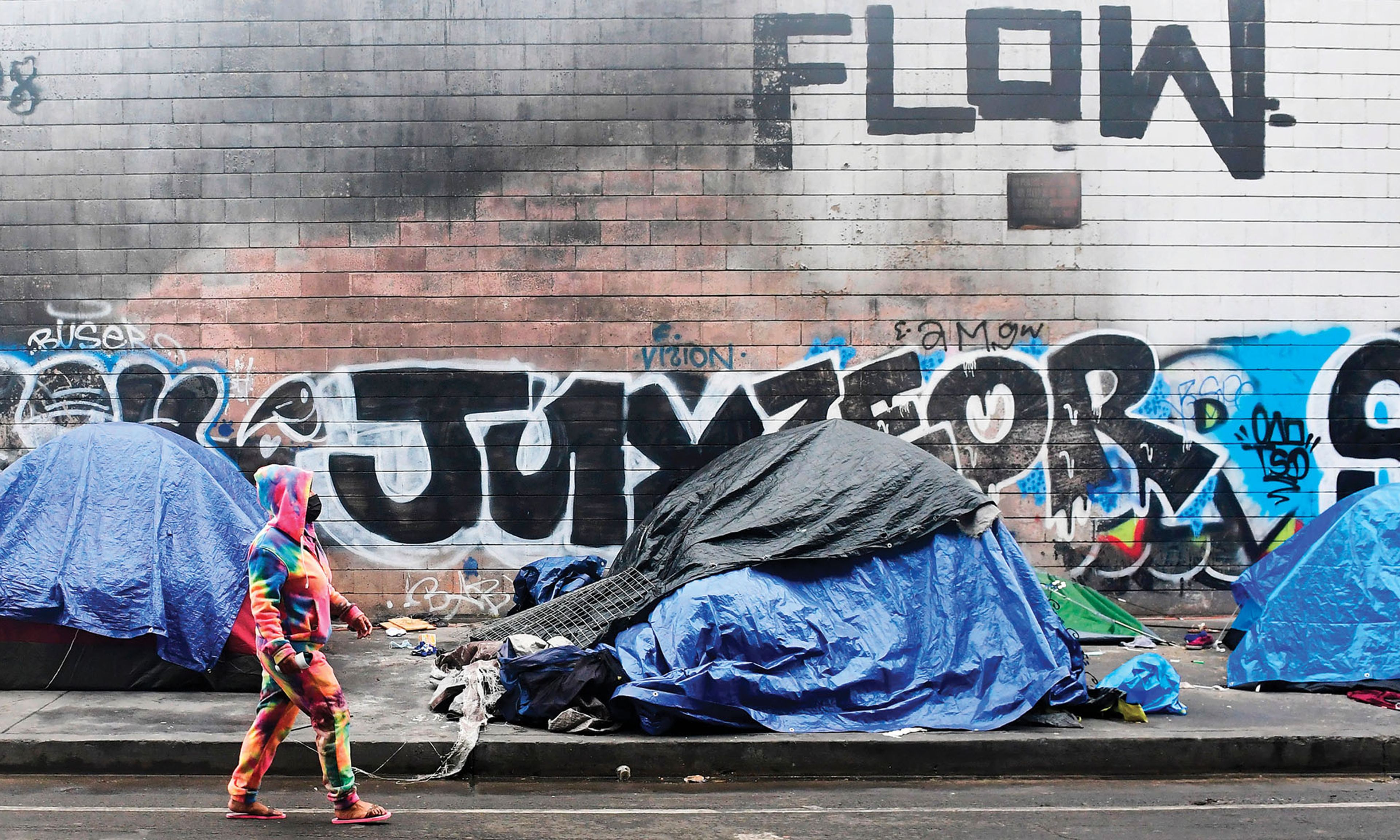
Take a stroll through the downtown of almost any California city and you will quickly run into evidence of the state’s large and growing homeless population. Large swathes of sidewalk, parks, and other public spaces have become virtual tent cities. Issues of public hygiene, crime, and general quality of life are becoming impossible to ignore.
Alongside a decade of unbroken liberal control of its politics, liberals framed California as a “state of resistance” to Trump, and a proving ground for the big progressive ideas they claimed could bring equity nationwide. But ironically, it is often those liberals fondest of denigrating conservatives for heartlessness who fight hardest against providing low-cost housing or homeless services in their neighborhood. “Not in My Backyard” might as well be the state’s official slogan.
It is hard to overstate the size of the problem. California has more than 130,000 homeless, including around 28,000 in the San Francisco Bay Area and 60,000 in Los Angeles County alone. There are more than 8,000 homeless in San Diego. Even relatively small and bucolic Santa Barbara has more than 1,000 people experiencing homelessness. According to data from the U.S. Department of Housing and Urban Development, more than half of unsheltered homeless people in America reside in California.
The state’s homeless population has risen steadily for more than a decade, even as homelessness has declined nationally. California’s homeless population increased by just over 20 percent from 2009 to 2019, while the number of people experiencing homelessness nationwide dropped by about 10 percent over the same time. And, while some large American cities, such as New York and Seattle, have also seen upticks in homelessness recently, from 2014 to 2019, California’s homeless population increased by a larger percent than any other state’s.
COVID-19 has made matters worse, significantly increasing the dangers for those living on the streets and in shelters. In part because homeless shelters — like nursing homes and other congregate-living facilities that have been hit hard by the pandemic — house large numbers of people in a confined space, there were predictions that the disease would spread rampantly among people experiencing homelessness. In a rare bright spot for cities’ and counties’ handling of the pandemic, these predictions were largely incorrect through most of 2020. But the December–January spike hit homeless shelters hard, as it did the rest of California.
And with unemployment this January at 9 percent, according to the Bureau of Labor Statistics — the second-highest rate in the nation — large numbers of people could become unable to afford housing and become homeless.
The state has tried to take advantage of the shutdown of tourism to buy and convert hotels into housing for homeless people. At an average cost of about $150,000 per unit, this is a bargain compared with building or buying other types of housing in most of the state. But with just over 6,000 rooms purchased through the end of 2020, compared with over 100,000 people unsheltered at the beginning of the year, the scale of the project makes it a better campaign talking point than a solution or anything approaching one.
California’s homelessness problem defies both stereotypes and easy fixes.
For instance, homelessness is often attributed to issues other than housing, such as mental health and substance abuse. Obviously, many of California’s homeless, particularly the visible unsheltered homeless seen on the streets, suffer from one or both of these challenges. But far too many Californians experiencing homelessness have simply “fallen to the street” because they lack access to housing that they can afford. According to data from Los Angeles, only about half of homeless people reported that mental-health or substance-abuse issues contributed to their losing housing — issues many individuals develop after housing loss. Consider that, as of February, the median rent for a two-bedroom apartment in California was $1,745 a month, and as much as $3,000 in cities such as Cupertino, with the majority of households spending more than a third of their income on rent. Any interruption in income — because of a lost job, medical problem, or family emergency — can lead to homelessness. Even having a relatively well-paying job is no proof against California homelessness. It is not uncommon to encounter workers, including teachers and government employees, living in tents or their cars.
Nor is California homelessness traceable to large numbers of homeless flocking to the state from elsewhere, drawn by either benefits or the weather. A survey from Los Angeles showed that three-fourths of people experiencing homelessness lived there before they lost housing, and almost two-thirds had lived there for more than 20 years; a survey from San Francisco had similar results. Only 2 percent of respondents to the Los Angeles survey lived outside the United States before becoming homeless.
California does have a generous social-welfare safety net, but that does not appear to translate into benefits for the homeless. Waiting lists for subsidized housing are extremely long, and shelter beds do not cover even a fraction of the need. A report from the state auditor concluded that, despite ample funding, too many communities were failing to provide substance-abuse and mental-health treatment as well as other necessary services.
As complaints from tourists, residents, and businesses have multiplied, many communities have resorted to policing their way out of the problem, enacting a variety of measures to criminalize behavior associated with the homeless, such as sleeping, sitting, or panhandling in public places. One study by researchers at UC Berkeley found that California cities were significantly more likely than the national average to have instituted anti-homeless laws. At least 58 California cities, counties, and towns have passed more than 500 separate ordinances making common behavior by the homeless illegal. For instance, compared with cities in other states, California cities were 25 percent more likely to have laws against sitting, lying down, or other types of loitering, and 20 percent more likely to have a citywide ban on sleeping in public. While nationally only a third of U.S. cities prohibit sleeping in your car or another vehicle, fully 74 percent of California cities do.
According to a survey (part of the UC Berkeley study) of the homeless in San Francisco, 45 percent of those living on the street, 46 percent of those camping in parks, and 20 percent of those living in a vehicle reported being approached by police at least once monthly.
But in the absence of any larger plan, police actions do little more than move the homeless from place to place. Worse, large-scale sweeps often lead to the destruction or confiscation of tents and other property, including blankets, sleeping bags, cash, identification, and prescription medications. Roughly 46 percent of homeless people in San Francisco reported having had belongings confiscated within the past year, and 38 percent said those items were destroyed.
Such actions are particularly counterproductive. If a person is living in a vehicle and the vehicle is then towed, police have deprived the person not only of what is likely his most valuable asset but also of his residence and his ability to get to work. Similarly, confiscation or destruction of people’s personal property makes their life harder, and the loss of identification can make it especially hard to access services, find housing, or gain employment. The loss of medications can end up posing dangers to both the homeless and the community.
On the other hand, California’s laws surrounding conservatorship make it nearly impossible for authorities or families to place mentally ill homeless people into treatment or shelter unless they themselves agree to it. Given the history of abuse under conservatorships, especially for women and LGBTQ youth, as well as others with lifestyles out of the mainstream, it is important to make sure that such laws protect civil liberties. Even so, conservatorship can be an important first step into long-term support and treatment that helps get and keep people off the streets. On the other hand, counties must do a better job of providing mental-health services (for which they receive significant state funding) so that there are mental-health resources available for people under conservatorship.
Simply ignoring the problem is not going to make it go away. Beyond the moral outrage of cities’ so clearly failing their most vulnerable residents, homelessness inflates the cost of policing, health services, and other budget areas when these services could be provided more easily or made unnecessary if people were sheltered or housed.
Ultimately, a large part of the blame lies with California’s overarching regulatory state.
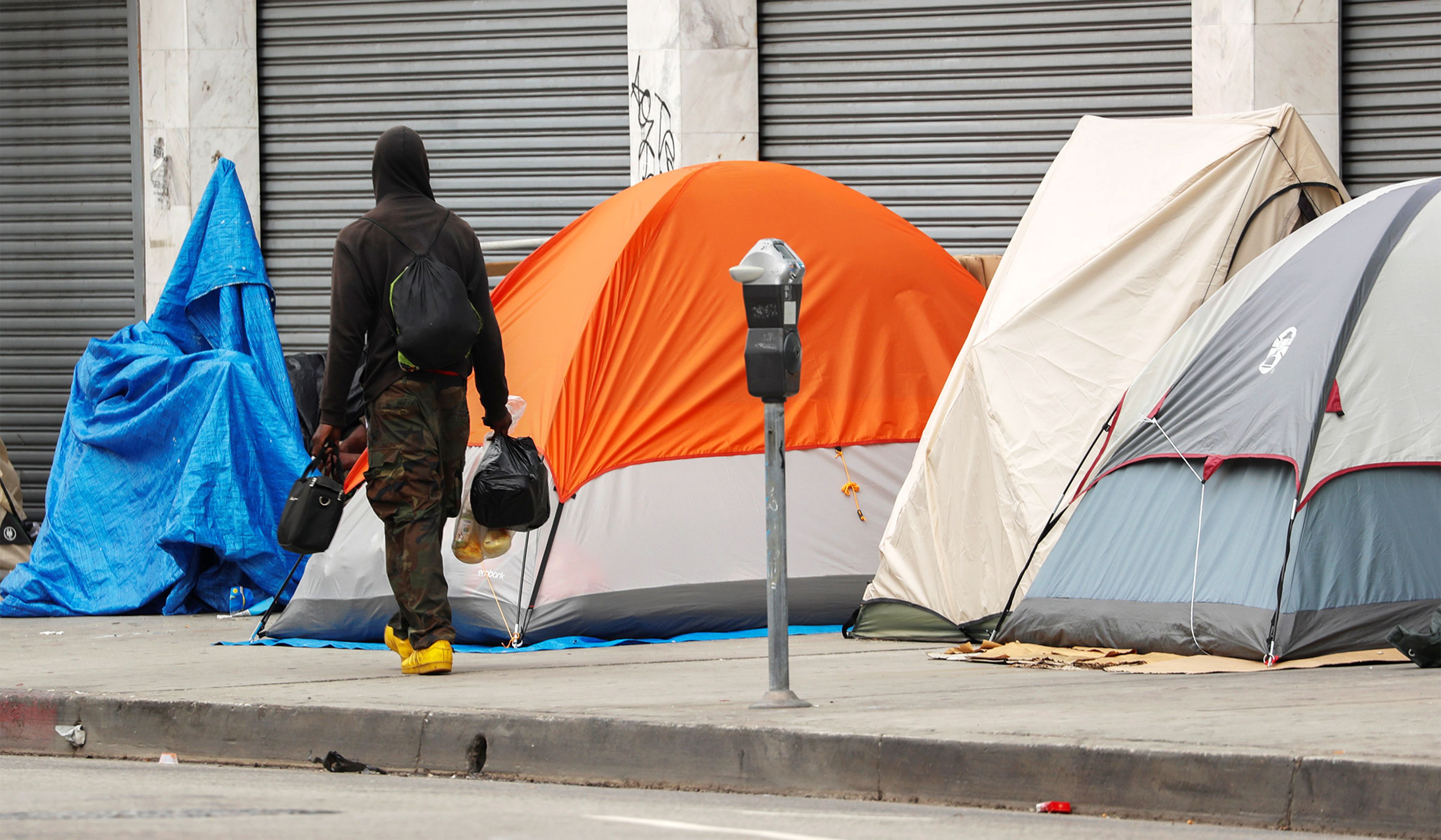
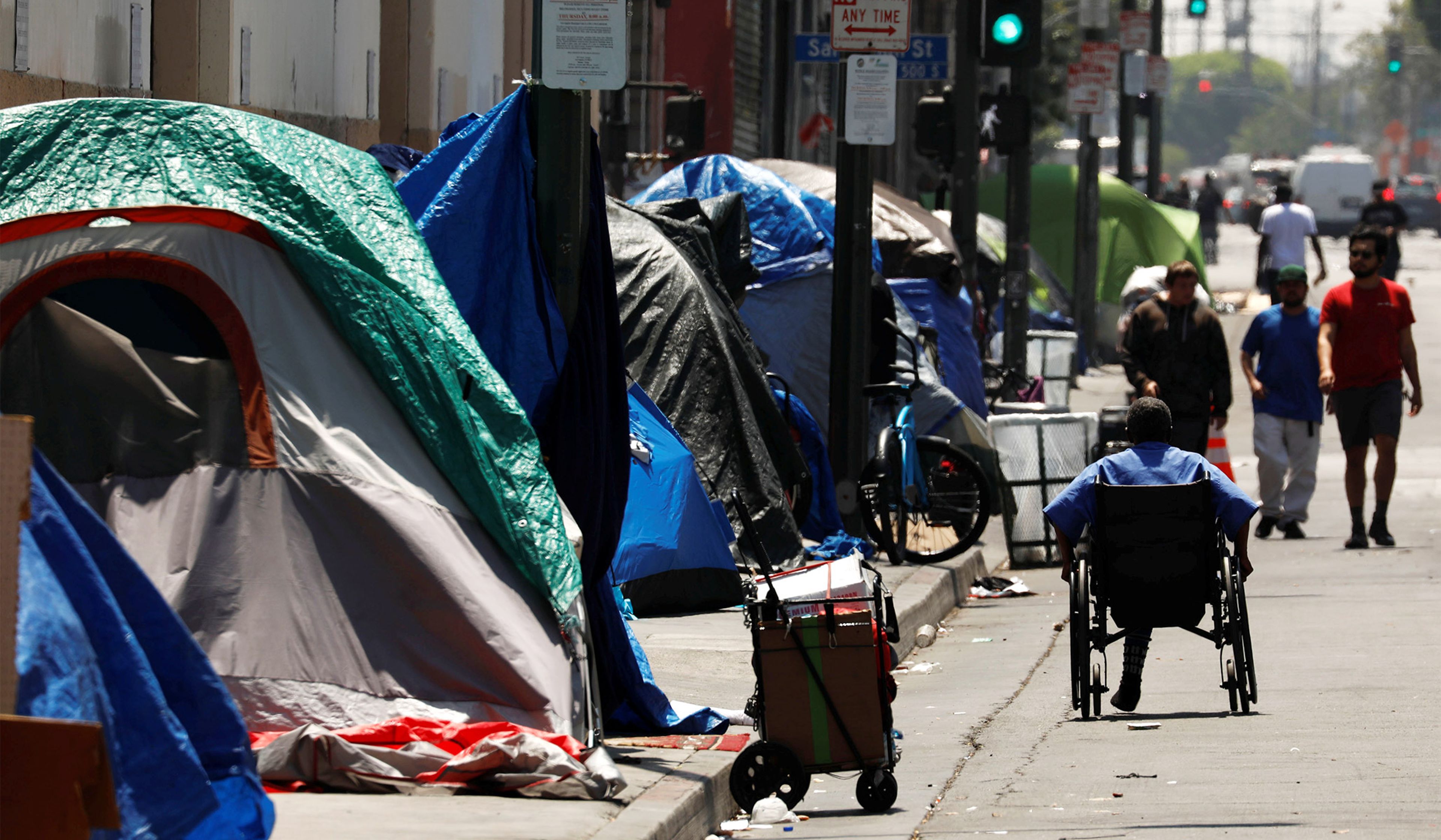
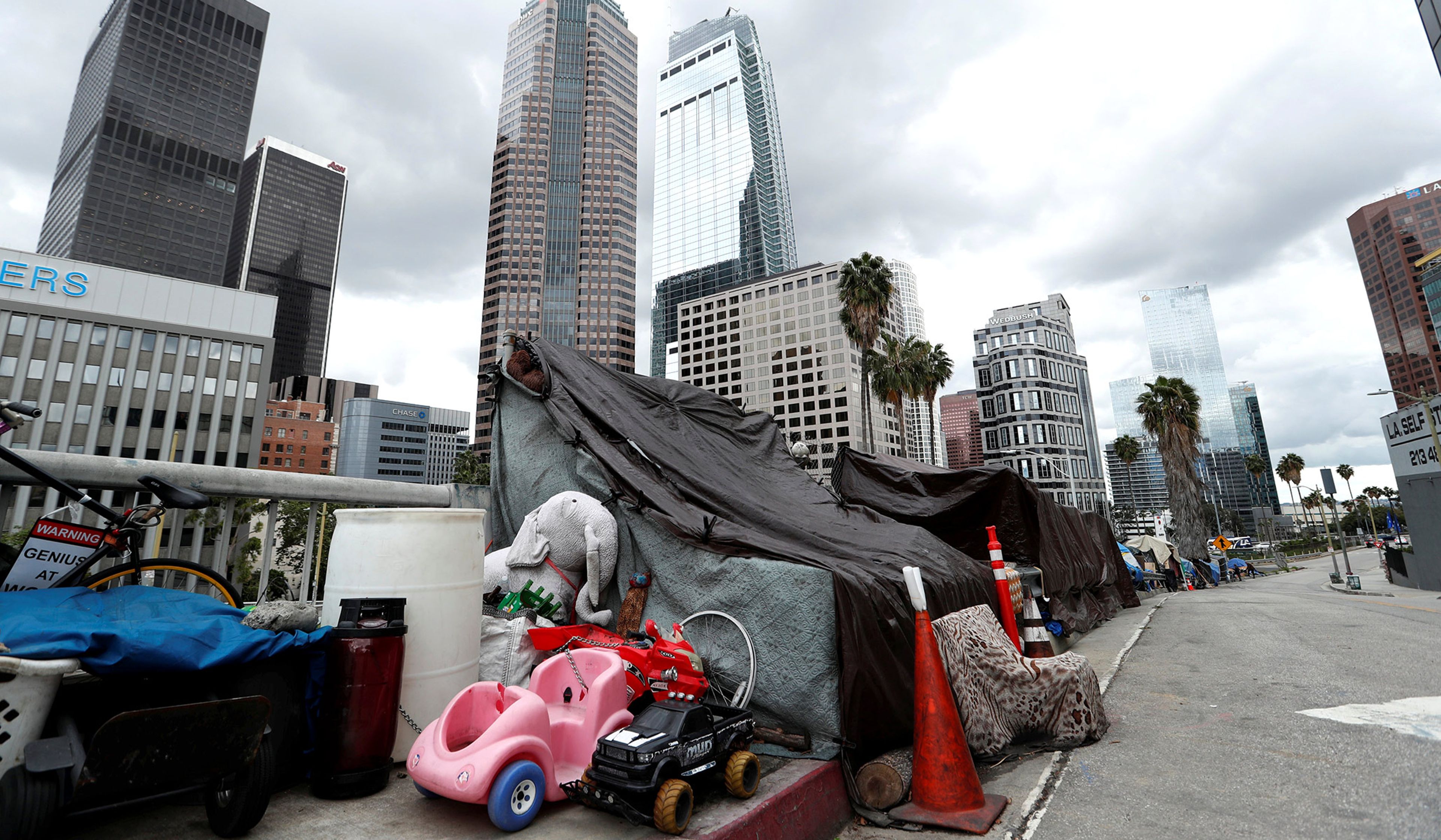
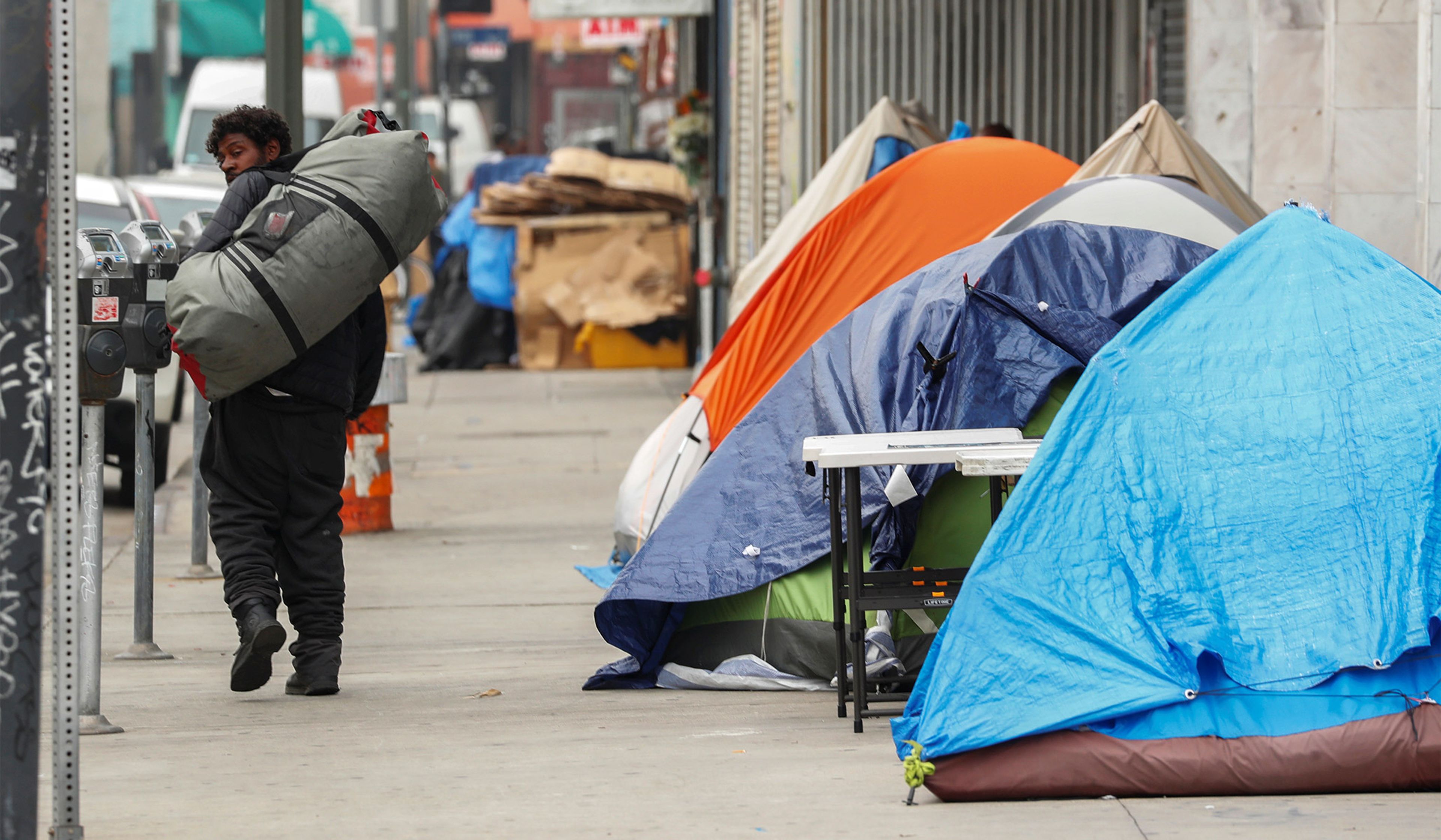
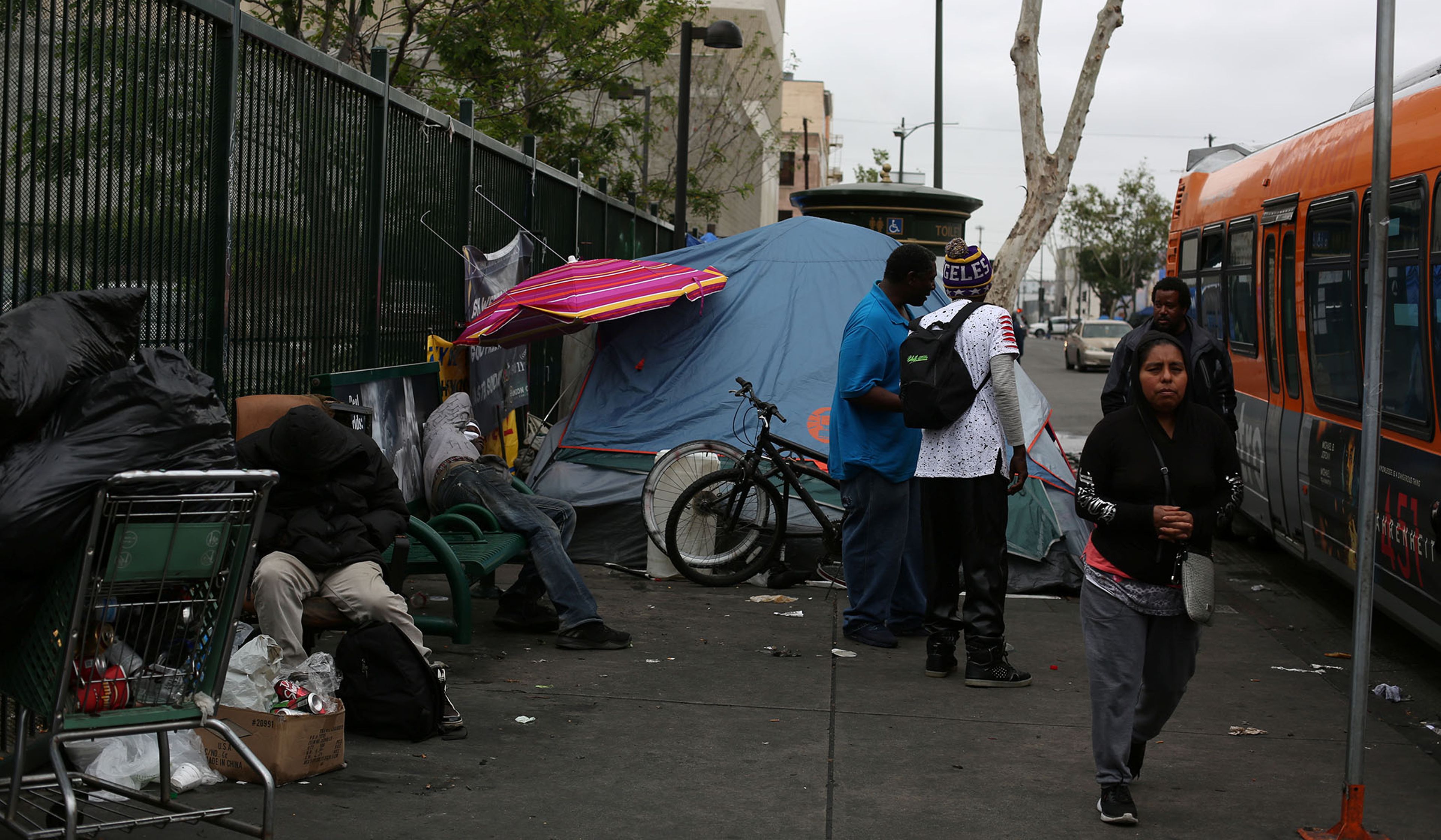
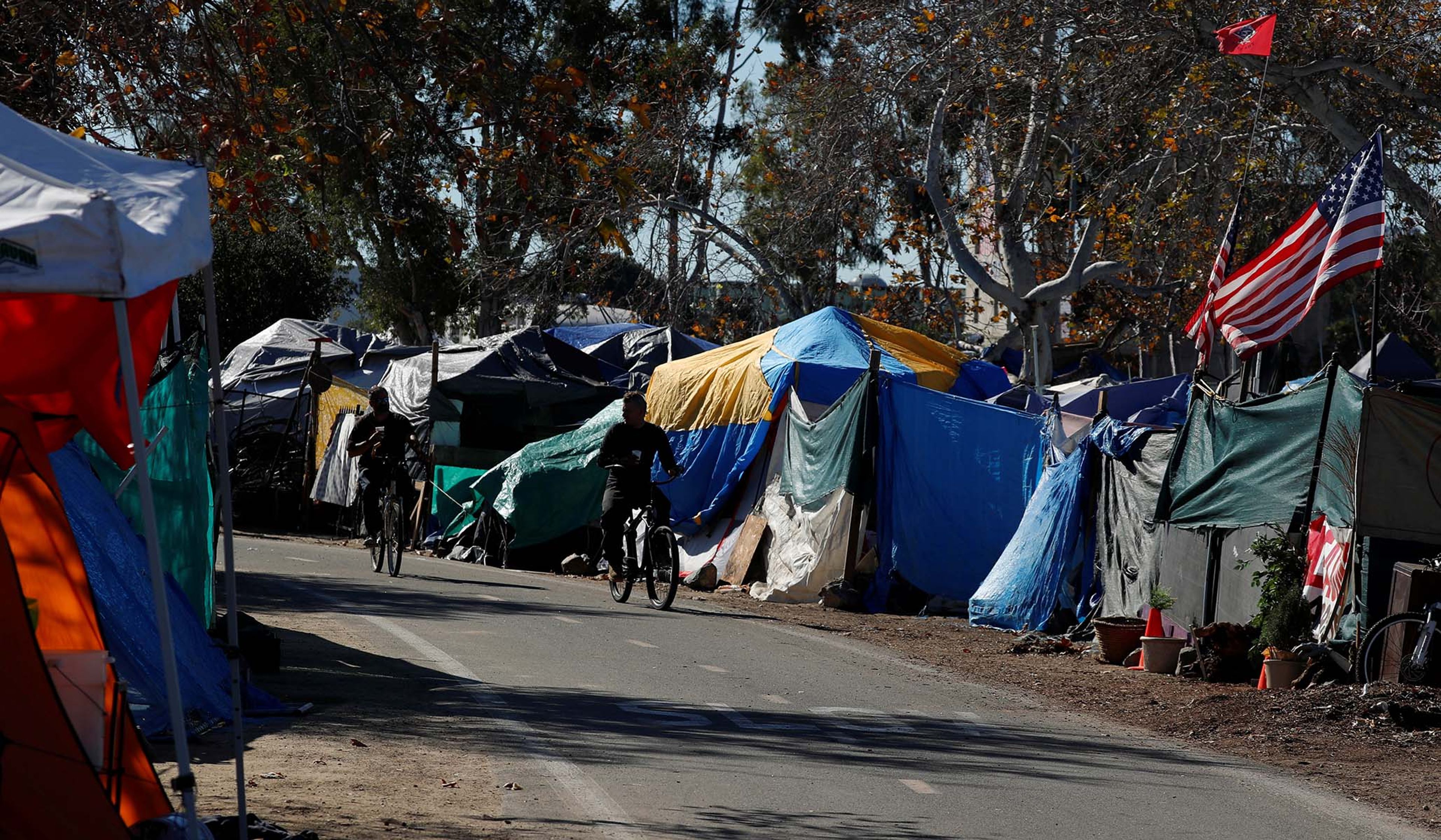
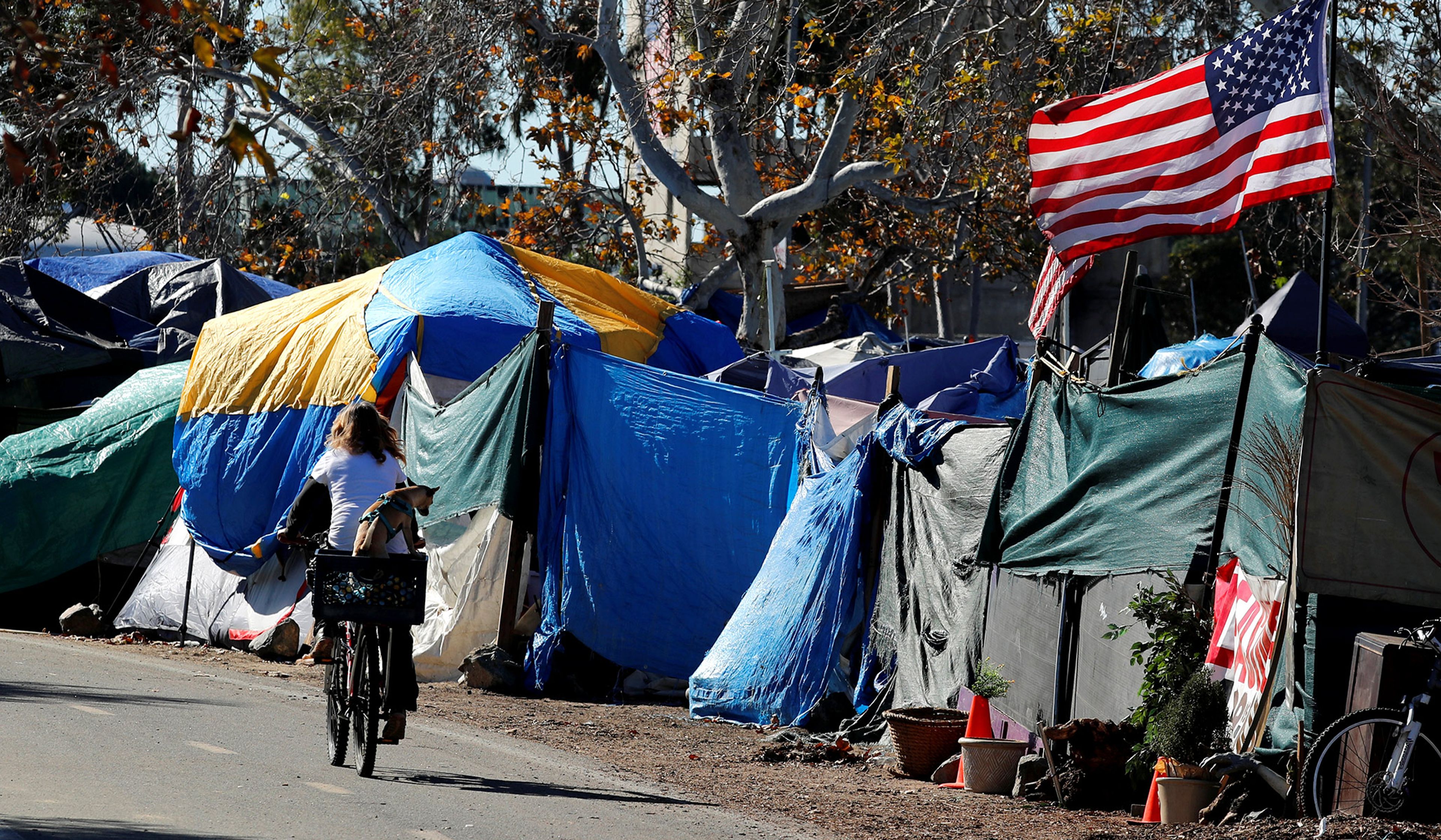
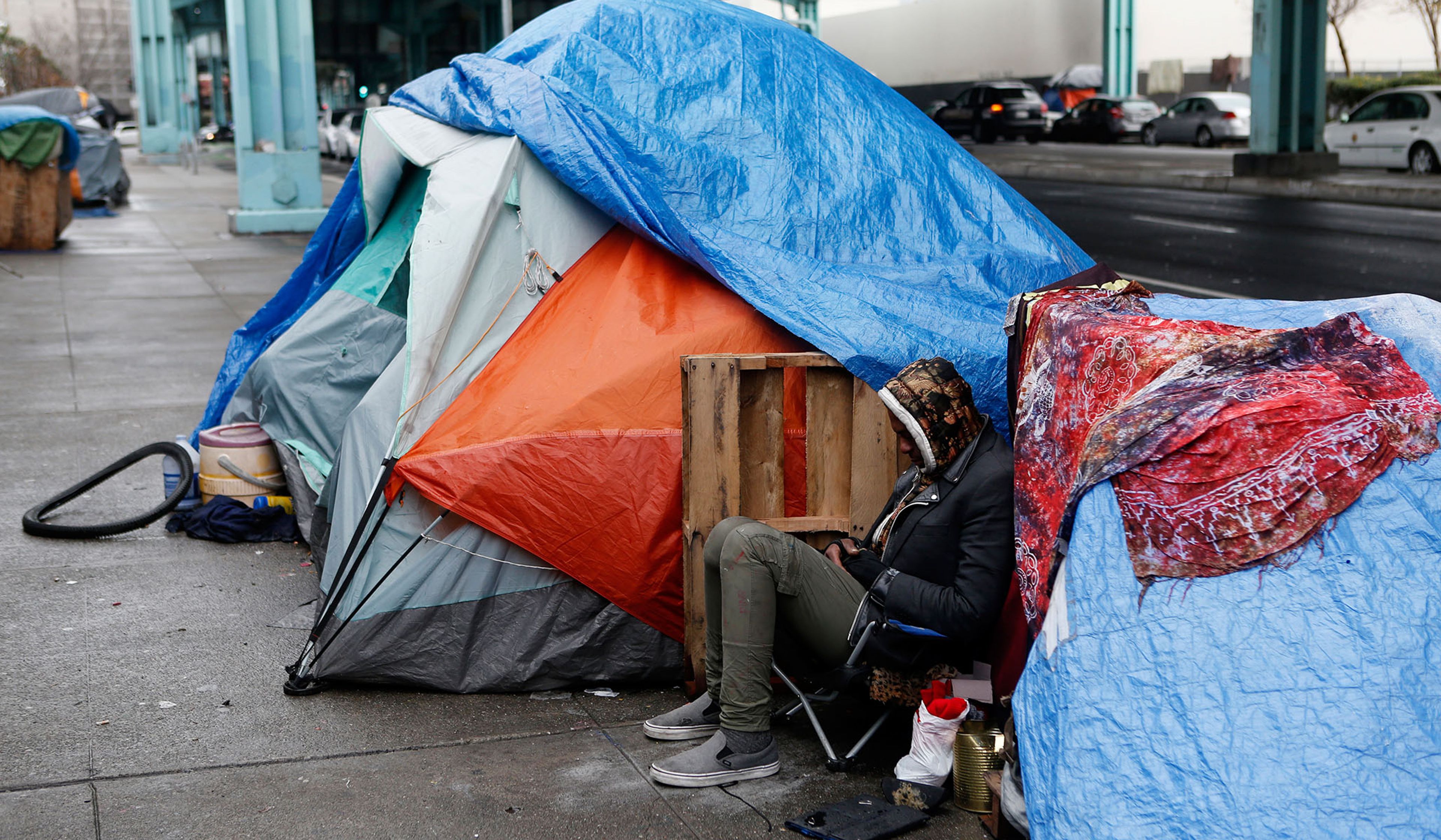
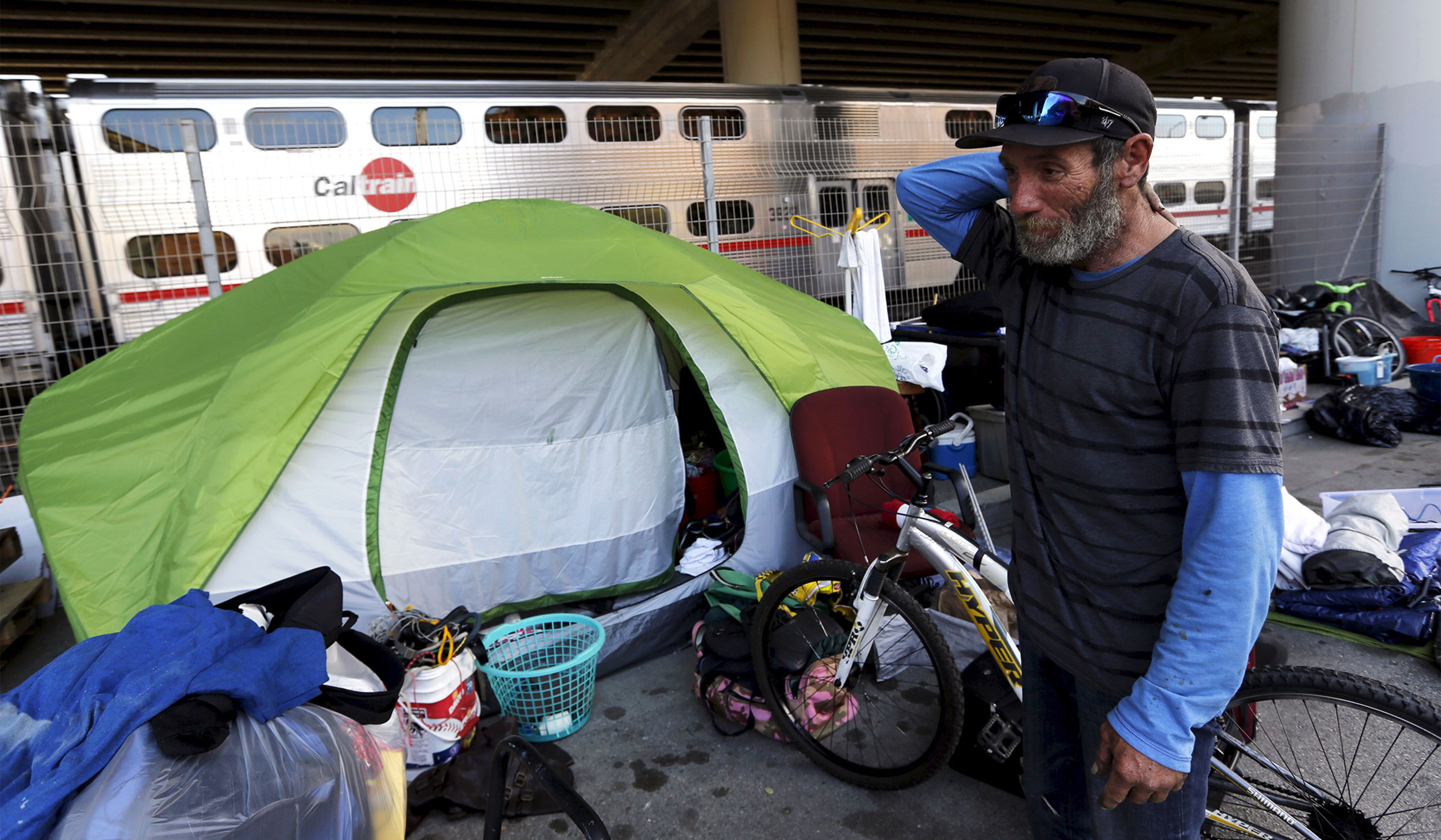
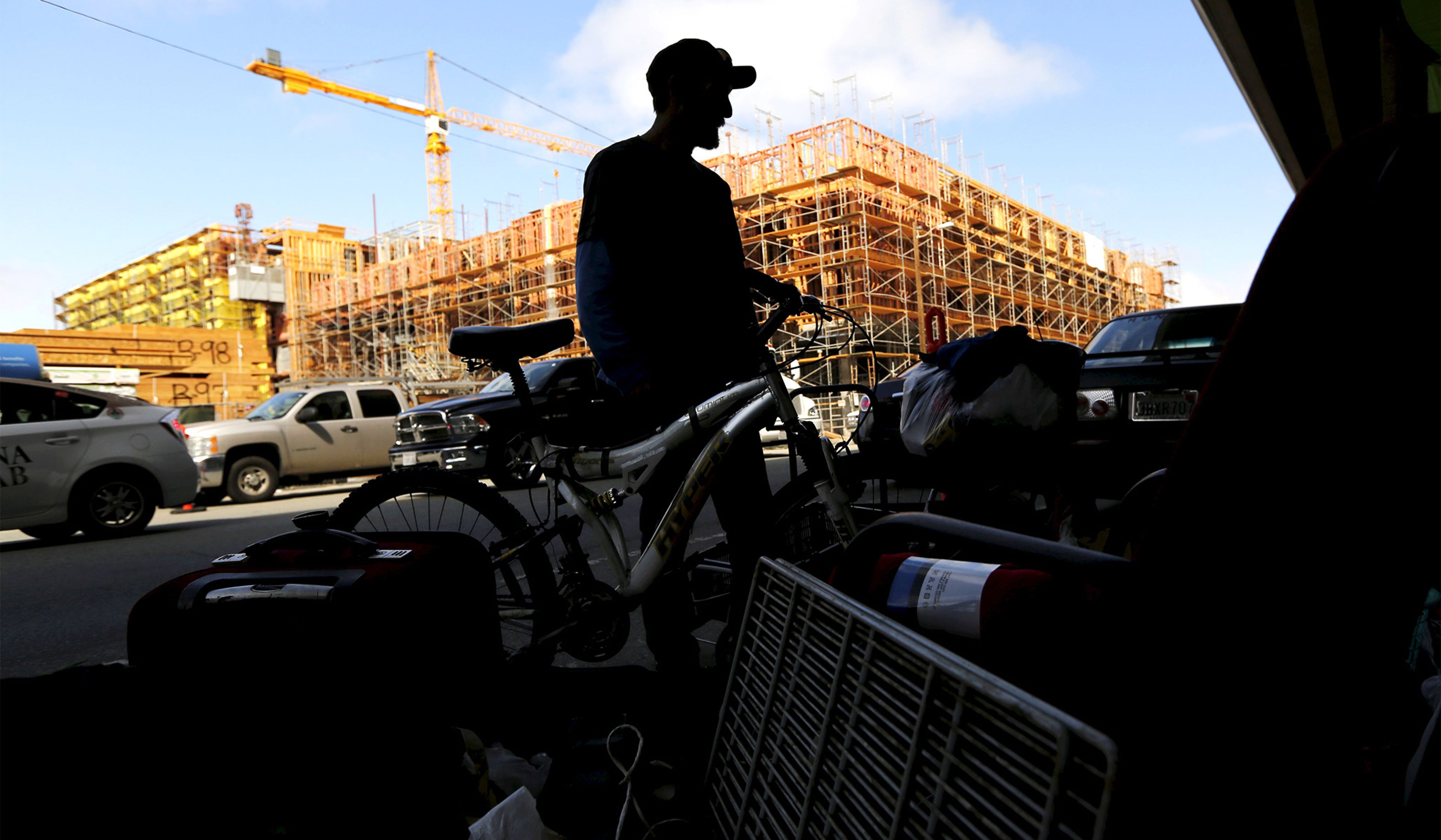
Tents and tarps erected by homeless people in the skid row area of downtown Los Angeles, Calif., June 4, 2019.
Mike Blake/Reuters
Any long-term solution to California’s homelessness crisis will require more affordable housing, and that will mean reducing the regulations that make it nearly impossible to build new housing in the state. Indeed, it’s hard to find a more obvious example of the laws of supply and demand than California’s housing market.
Some of the most restrictive zoning requirements in the nation (as of 2018, the average California municipality zoned three-quarters of its residential land for single-family homes only), enormous building fees that can total as much as $70,000 per apartment and over $100,000 for a single-family home, and environmental restrictions such as the notorious California Environmental Quality Act (CEQA) combine to delay or prevent new housing in large swathes of the state. By some estimates, the state is 3.5 million units short of the housing needed to meet current demand. It is no wonder that housing costs are through the roof.
It is not just housing that is blocked by California overregulation. CEQA has also been used to block the building of shelters and the provision of services for the homeless. Given that CEQA opens the door to often frivolous lawsuits, neighbors can sue to delay much-needed new shelter space, and they have done so in several cases.
Solving California’s problem of homelessness will be difficult, but the way forward is clear: California needs to deregulate land use and permitting processes to make it easier to build homes. This will help keep housing prices down and help hold the homeless population to a more manageable level. The same reforms will make it easier to build shelters and supportive housing, which will help get and keep people off the streets. New and expanded mental-health resources are necessary to help people with those challenges. It will also be necessary to reform conservatorship laws that currently would prevent people from accessing those solutions. Before the COVID pandemic hit, homelessness was at the top of California’s agenda. It likely will be there once again when the pandemic ends, so now is the time to start making these reforms and helping the most vulnerable Californians.












Comments