Anthony Trollope rose six days a week at 5:30 and wrote 2,500 words, and went to his reward with 47 novels to his credit. And he wrote The New Zealander.
The title comes from a, to the Victorian mind, universally known quote from Macaulay (1840): “And she [the Catholic Church] may still exist in undiminished vigor when some traveller from New Zealand shall, in the midst of a vast solitude, take his stand on a broken arch of London Bridge, and sketch the ruins of St. Paul’s.”
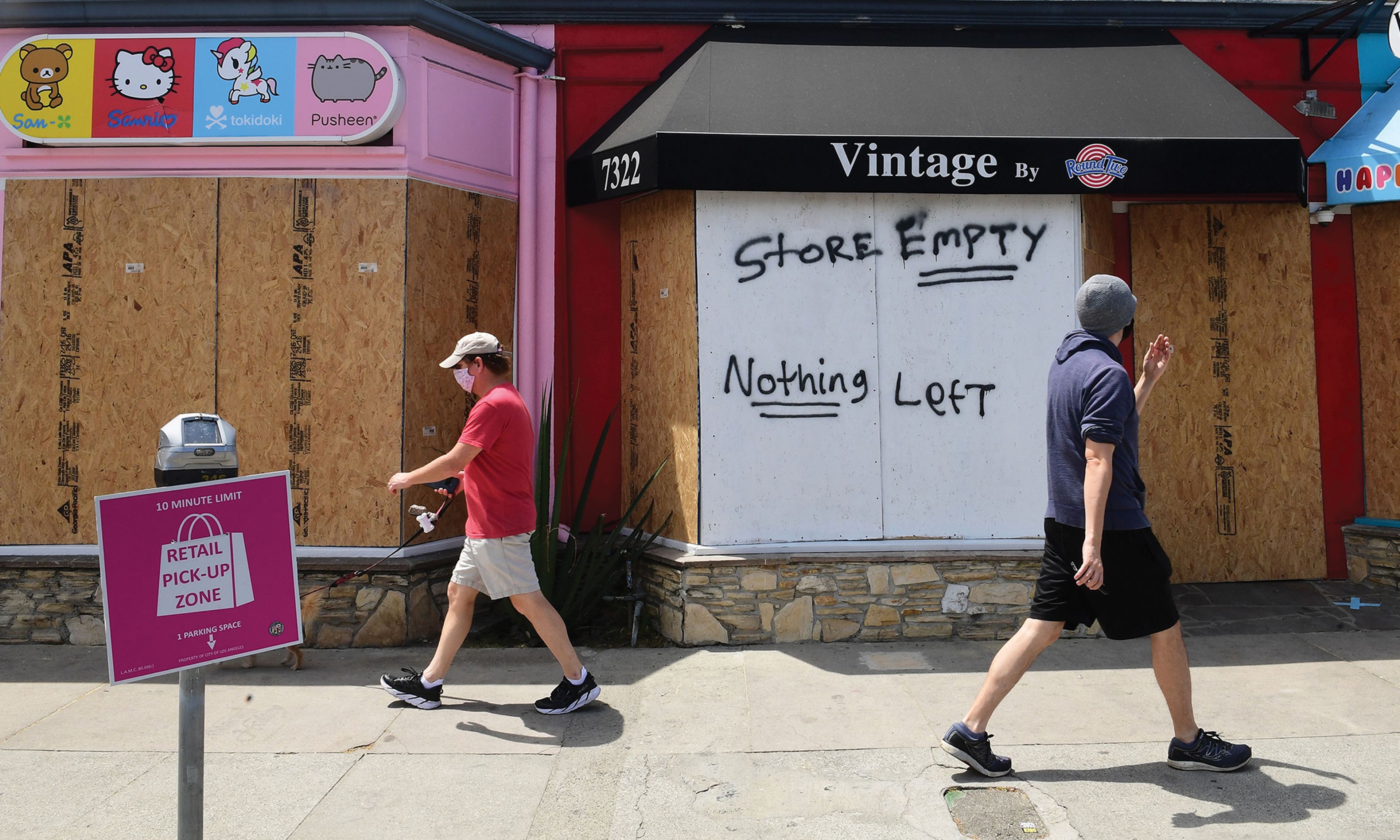
Trollope’s New Zealander (1855) is a collection of essays on the corruption and decay of contemporary British society, culture, and morals, but they could have been written about the California of today; as, indeed, they were written about that which we, in our continued abundance, share with Victorian England: “the inevitable result of prosperity and peace; that is, cowardice” (Duff Cooper).
California, with the world’s fifth-largest economy, is as dedicated to self-destruction as was 1914 Europe. Was there no alternative to the Great War? Could no one have stopped it?
Siegfried Sassoon reports in his Memoirs of an Infantry Officer (1930) that, after three years in the trenches, he wrote to his commanding officer demanding that he, or someone in authority, state the war aims. Sassoon was a decorated, combat-wounded officer, and rather than court-martial him (which was then their legal right), the military authorities judged him mentally incompetent and sent him to an asylum.
Today we, here, where it is always “either 72 degrees,” have real problems incident to prosperity: illegal immigration, technological change, homelessness; and, to round out the entertainment, the cry against problems whose evanescence is their most plaguing trait — systemic racism, micro-aggression, white privilege, and so on. We know that a disagreement over a real slight may potentially be healed but that one over a slight merely imagined will persist forever — its persistence being its own purpose, as hypochondria, a disease for exercising control, is not a problem but a solution.
Trump’s great crime was that of Galileo or Milton Friedman, pointing out that our problems could be solved by simpler solutions, given an honest analysis and a bit of will. This brings to mind the wisdom of a California sage, Sam Goldwyn, who once stormed into his office declaiming, “I want someone here to tell me what’s going on if it costs them their job.”
The prosperous person may employ a housekeeper; and, if increasingly wealthy, two or three, and then a household “manager” to oversee them; and, if downright rich, a pilot, a yacht captain, and (within my experience) a second “chase boat,” to transport the jet ski, helicopter, and security team.
Government is, finally, just the agglomeration of individuals as wicked, misguided, and sinful as ourselves. Our laws exist to keep in check those we elevate to power; for they will certainly misuse it.
They may build the “train to nowhere,” a solution to a problem that does not exist; or let the schools decay to a position of 37th in test performance, out of a possible 50, all the while, and of necessity, raising taxes. They will not, any more than Goldwyn’s office boy, speak up to destroy their jobs. They will raise taxes to drive capital and business out of the state and, then, appalled by the drop in tax revenue, respond by further raising taxes.
Trollope’s New Zealander tries to recreate the reasons for the destruction of England from the runes left on the remaining stones of the cathedrals.
Could they not see, the Tourist wonders, that their hypocrisy was leading them to ruin? That the legal system was absurd, the legislators corrupt, the press scurrilous — were they insane? Could Californians of our day not see (he might reflect) that the “problem” of immigration could not be addressed without a preliminary agreement about the purpose of immigration? (Sassoon asked for a definition of the aims for which the Great War soldier was risking his life, and was confined in an institution.)
And what of homelessness? Good-willed Californians voted to allow the homeless to live on the Venice beaches, transforming a delightful residential community into a hellhole, regularizing crime, vagrancy, indecency, and disease. See also the once-magnificent city of San Francisco, where a mobile populace has left its heart while taking its income to Arizona and Texas.
Are the problems of today’s California insoluble?
A friend lives on the canals in Venice, Calif., and reports that the “insoluble” problem of homelessness in his neighborhood has just been cured. The vagrants are gone, their refuse and excrement are gone, the projected homeless shelter is canceled, as if by magic overnight.
The magic is that the offspring of a Very High Government Official has moved in. Are his interests to be respected more than those of an ordinary taxpayer with no connection to power? Of course.
That’s why the Constitution demands frequent elections. But power, like our friend the shark, must be constantly feeding, for to rest is to starve, and to become weak is to become prey.
So power, in a democracy, instantly comes to see that its life depends on reelection, and it would be a foolish individual or organization indeed which did not perceive that the complex and demanding drudgery of training the football team could be overcome by changing the rules and bribing the ref. “Diversity” and “affirmative action” are changing the rules, as is gerrymandering; and the forsworn behavior of “the Ref” (the media) is beneath the polite notice of the readership of this honest periodical.
The Californians of today, it seems, find it beneath their dignity to address the state’s problems; but those who would supplant them note that this reluctance indicates a citadel that will not stoop to plebeian concerns of defense and maintenance.
Power corrupts because it is addictive. It is an irresistible compulsion to repeat destructive behaviors, an anguished craving that can be stilled only by their repetition.
A life in Show Business blinds one to the fact that the majority of citizens do not spend every moment of every day obsessed with their fortune, fame, and public persona. To the neophyte and the star, as well as the has-been, the telephone may, at any moment in life, bring “the good news from Ghent.”
Reformers wonder why the criminal does not expend his energy to better effect on productive work, and can’t he see that he would thus be more prosperous? But the criminal will not trade his addiction for prosperity as he, finally, doesn’t want prosperity — he wants his fix.
The gambler doesn’t play to win, he plays because he’s addicted, as those snakebit by show business are poisoned, finally, not by the promise of fame and fortune but by adrenaline.
So it is with the politicians. At the local level, ordinary citizens, the school board, the water board, the board of supervisors, and so on, are first exposed to power, and many go mad. They may have run and won for some or all of the best reasons, not excluding duty and civic pride, but a certain percentage, here, as everywhere, will lack that defensive gene which metabolizes power — just as some lack defense to alcohol. Power to this individual is not a gift, a pleasant possession, or a wonderful diversion, but a compulsion; he is no more concerned with its uses or effects than is the crackhead with his acts’ social implications. The successful dogcatcher, city-council member, representative, and on up the ladder will accrue and accept the perks of his place; the beginner taking home the odd pencil from the conference room, the more advanced amassing fortunes from inside information, favor-trading, graft, treason, and so on.
But, to compare these to the gambler: If the unfortunately powerful were offered all the money, all the illicit sex, and so on, in the world, would they go home? To do what? To be “treated just like everybody else” by a populace they despise for its gullibility?
Why are the halls of our Congress thronged with geriatric crooks? Illicit sex, immunity, and graft are perks of the successful, and a handy explanation for politicians’ protracted persistence in office; just as “the possibility to do good” explains to them their entrance. But the gerontocracy, whose last job, if they had one, was delivering newspapers, won’t go home, as they can’t “go” home — they “are” home, at the big table, in the most thrilling of games.
The addicted gambler, “stuck and steaming,” sits behind his dwindling pile of chips and tells the spouse or friend come to extract him, “Just wait till I lose this.”
The “this,” in our case, is the State of California.












Comments