
Louise Brown, the world’s first “test tube baby,” was born in 1978, ten years to the day after Pope Paul VI issued Humanae Vitae. It was a resonant coincidence. The papal encyclical is best known for reaffirming the classical Christian prohibition on contraception, but it also condemned as immoral attempts to separate procreation and sex from the other end. In the decades since then, in vitro fertilization has become a nearly universally accepted social phenomenon. Some states even require health insurers to cover its costs.
Catholic teaching on contraception may be widely ignored, even by most Catholics. But most Catholics are not even aware of their church’s teaching on IVF. The pro-life movement has had very little to say about this form of “reproductive choice,” and evangelical pro-lifers have often supported it.
But questions about the ethics of IVF, at least as it is currently practiced in America, are now being more frequently asked. Nadya Suleman, the “octomom” from California, set off a national discussion when she had eight babies using assisted-reproduction techniques, even though she already had six children, was not married, and could not support herself. IVF has led sporadically to freakish news stories. A doctor went to jail in 1992 for substituting his own sperm for that of the intended fathers. A British couple in 2006 reportedly abandoned their daughters, conceived using IVF, because they wanted boys. Courts have repeatedly had to deal with bitter struggles between parents over the embryos they had conceived. But it is not these stories so much as other technological advances that are renewing the controversy over IVF.
The development of embryonic-stem-cell research as a field of inquiry is one such advance. During the Bush administration, many congressmen thought that the federal government should fund stem-cell research using some of the many unimplanted embryos produced by IVF clinics. That debate led pro-lifers to begin asking why the clinics were producing, and often destroying, so many embryos in the first place. The clinics’ ever more sophisticated methods of screening embryos for their genetic traits before implanting them are also giving new strength to fears about “designer babies.” Medical researchers, finally, are increasingly raising questions about the health of the children produced by IVF.
While the issues involving IVF may be acquiring new prominence, none of them is novel. The debate over IVF in the 1970s largely concentrated on whether the efforts to develop the technique constituted unethical experimentation on embryos and children, as Paul Ramsey, a founder of bioethics, argued. He feared that IVF would not be safe for the children created, and thought that making it safe would require a process of trial and error that was itself unacceptable.
Leon Kass raised the same concern. He also warned, presciently, that IVF would produce “surplus” embryos that would then pose nearly insoluble dilemmas. (In particular, he warned, in 1972, that we would be tempted to use the embryos for experiments.) His most fundamental objection was that IVF would change our conception of ourselves. “We have paid some high prices for the technological conquest of nature, but none perhaps so high as the intellectual and spiritual costs of seeing nature as mere material for our manipulation, exploitation, and transformation. With the powers for biological engineering now gathering, there will be splendid new opportunities for a similar degradation in our view of man. Indeed, we are already witnessing the erosion of our idea of man as something splendid or divine, as a creature with freedom and dignity. And clearly, if we come to see ourselves as meat, then meat we shall become.”
The Catholic rejection of IVF is rooted in similar premises, ones that are relevant to today’s debates. Catholicism is not against all assisted-reproduction techniques: It does not condemn the use of fertility drugs by married women. It objects in principle to IVF for two reasons. IVF, like contraceptive sex, is taken to “instrumentalize” the body, to use it as the mere tool of the conscious, desiring self. Worse, it threatens to change the status of children, from gifts to products of manufacture. Anyone who worries about the prospect of “designer babies” can see what underlies the Kass/Catholic position, even if he does not share it. That British couple seems to have seen the children IVF made possible as products that could be returned.
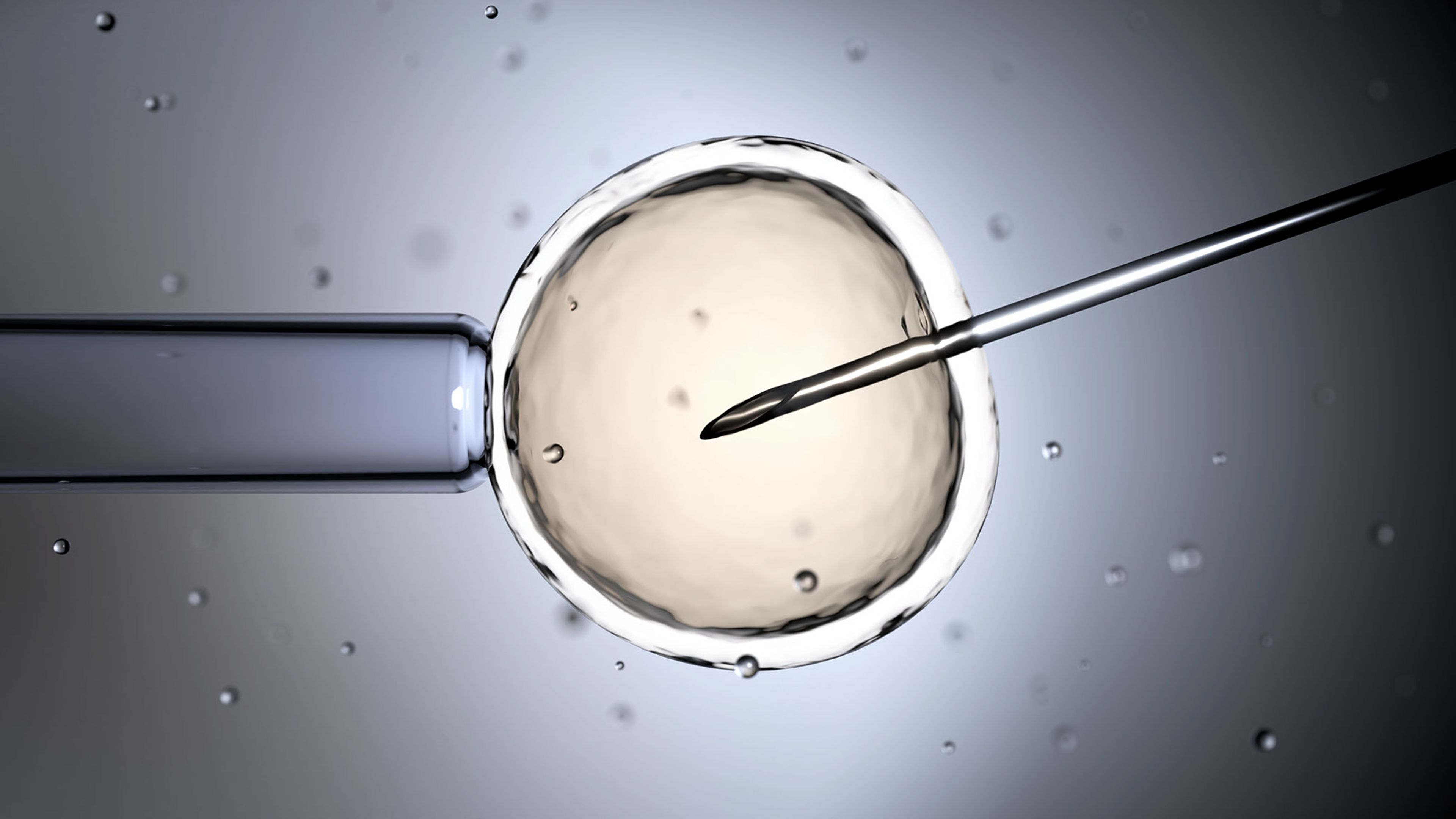
Another class of objections concerns practices that, while not intrinsic to IVF, often accompany it. For the sake of efficiency, American IVF practitioners often create multiple embryos for each female patient. Many of those embryos are never implanted in the womb, creating an ethical quandary. Pro-lifers believe that “discarding” these embryos is a species of homicide and as such grossly unjust. But freezing the embryos indefinitely is at least disquieting. IVF also often involves implanting multiple embryos, and thus often leads to multiple pregnancies. Such pregnancies can be dangerous, and many mothers with them then opt for “selective reduction.” The least viable, or least desired, embryos are weeded out. (A particularly fatuous bioethicist insisted to the New York Times during the “octomom” controversy that selective reduction was not the same thing as an abortion since it did not end a pregnancy.)
The mass creation and destruction of “excess” embryos — the terminology is symptomatic of the dehumanization involved — illustrates that some slopes are indeed slippery. When people said that IVF would lead to such evils they were dismissed. In 1980, the longtime feminist columnist Ellen Goodman wrote an approving piece about the opening of an IVF clinic. “A fear of many who protest the opening of this clinic is that doctors there will fertilize myriad eggs and discard the ‘extras’ and the abnormal as if they were no more meaningful than a dish of caviar. But this fear seems largely unwarranted. . . . Now we have to watch the development of this technology — willing to see it grow in the right direction and ready to say no.” Needless to say, that “no” never came, either from Goodman or from society at large.
IVF has facilitated some of the changes in family structure that social conservatives decry. In some places, such as California, doctors are forbidden by law to discriminate against single patients based on their marital status. While IVF has not, of course, driven the increase in illegitimacy over the last four decades, there does seem to be something particularly wrong about deliberately bringing a child into the world without a mother and a father married to each other. IVF has been central to such innovations as lesbian parenting and, more recently, “arranged parenting.” Liza Mundy publicized this last practice in her 2007 book on assisted reproduction, Everything Conceivable: You can advertise for someone to have a baby with you using IVF, and work out the custody arrangements beforehand. “Arranged parenting” is, in other words, a way to deliberately bring a child into a familial set-up that looks like the aftermath of an amicable divorce.
Because of the desire of patients and the industry for privacy, it is harder to assess patient outcomes than you might think. In 2004, the president’s council on bioethics, then chaired by Leon Kass, reported, “There is no comprehensive, uniform, and enforceable mechanism for data collection, monitoring, or oversight of how the new reproductive biotechnologies affect the well-being of the children conceived with their aid, the egg donors, or the gestational mothers.” But we do know that twins and triplets are more likely to die in infancy than singletons, and that IVF increases the number of multiple births. Infants who were conceived through IVF seem to be born prematurely more often, and have lower birthweights, than those conceived the old-fashioned way. The Centers for Disease Control has reported that babies conceived through IVF also seem to have a slightly increased risk of several birth defects.
But while concern about the world that reproductive technology is creating is rising — some of the reviews of Mundy’s book were by clearly uneasy liberals — the industry retains enormous goodwill. The desire of infertile couples to pass on their genes should not be underestimated. The emotional associations people have with fertility treatments are positive. They have brought great joy into a lot of homes. It is nothing like abortion, which most people, wherever they stand on its legal status, see as a sad event.
Sophisticated defenders of embryo-destructive stem-cell research have frequently suggested that pro-lifers are morally unserious in their opposition to it, because otherwise they would take on IVF. Pro-lifers have for the most part brushed off this debater’s point, instinctively concluding that there is no reason that they should be the only political actors who are not allowed to pick their battles. But a reform of the industry ought be among the long-term goals of the pro-life movement.
It should be on other people’s agendas as well. Many supporters of legal abortion aver that their position implies no devaluation of human life. Their views, they say, are rooted in a desire not to intrude on the bodily autonomy of pregnant women, particularly those in difficult circumstances. This category of pro-choicers ought to be open to taking some steps to stop the destruction of human embryos when these considerations do not apply.
Many European countries limit the number of embryos that can be implanted in a reproductive cycle. States in the U.S. could follow their lead, thus reducing the chance that embryos will be “selectively reduced” and reducing the danger of multiple pregnancies to women and children — albeit at the cost of also reducing the efficiency of the process. We could also limit, as Italy does, the creation of embryos to the number that a couple could reasonably be expected to implant. Here technological development may work in favor of reform. We now have the capacity to freeze eggs and, if desired, fertilize them later. Freezing embryos should no longer be necessary for IVF to proceed.
Other reforms are worth pursuing even for those who place little or no value on human life in its early stages. It would make sense to collect more data on health outcomes and disclose the findings to prospective patients. Surely consumer protections in this field should be stronger, not weaker, than in others.
Americans United for Life, a pro-life group, has put maps on its website that show which states impose these types of regulations. Those maps are, for the most part, a sea of white, since few states do. But interest in legislation is rising. Georgia is considering a bill to restrict the number of embryos that can be created in any reproductive cycle. Louisiana has in recent years prohibited the intentional destruction of IVF embryos. My guess is that we are going to see more such legislation in the next few years. Even if this legislation accomplishes nothing else, moving the practices of the IVF industry from unknown and unquestioned to debatable will itself be an improvement.











Comments