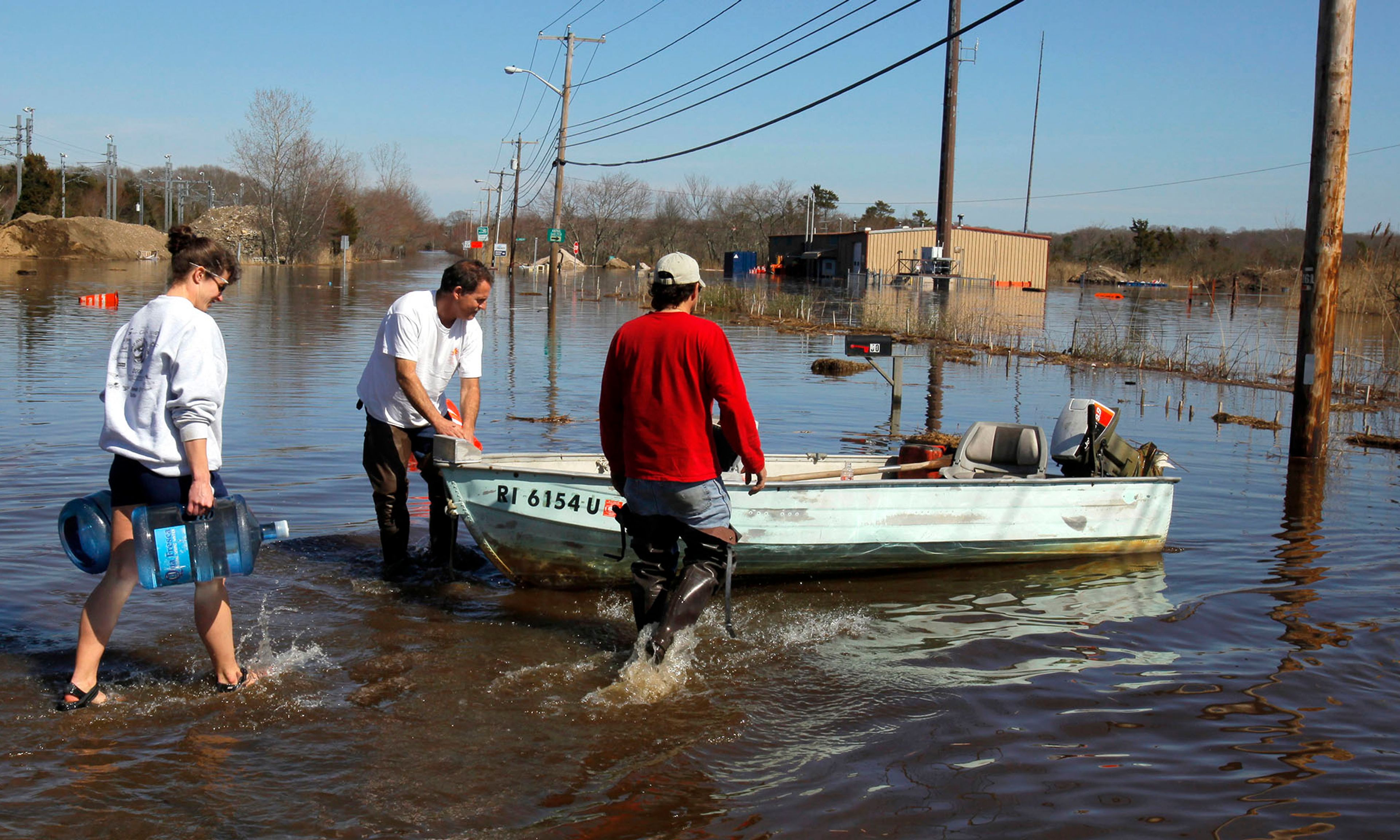
Acceptable Risk?
In his article “Preferred Risk” (July 5), Iain Murray states that “the National Flood Insurance Program (NFIP), which encourages building in high-risk areas, [exposes] taxpayers to huge liabilities.” I disagree.
While it may seem that offering people flood insurance will encourage them to build in areas that are subject to flooding, just as having collision coverage encourages reckless driving, the NFIP is actually set up to discourage development in flood-prone areas. And while the NFIP ran into the red after Katrina, it is supposed to remain solvent. Whenever NFIP is solvent, people with flood insurance are paying the full cost of the risk they’re taking.
Homeowners can purchase flood insurance only in communities that participate in the NFIP. In order to participate, a community must adopt base ordinances from FEMA that encourage sound development. Residents in communities without these ordinances may construct within flood-prone areas anyway, and in a manner less than sound: bridges that do not allow sufficient flow of water, acting as dams during floods; septic systems; propane tanks. The result is that when a flood does occur, other property owners face higher waters filled with hazardous materials.
The only way to fully prevent development and construction in flood-prone areas would be to extinguish development rights on those properties. If a community does this without purchasing the properties (which few communities can afford to do), the property owners could sue. By implementing FEMA’s requirements for development within the floodplain, communities can ensure sound development.
Justin Gindlesperger
Boulder, Colo.
Iain Murray Replies: The NFIP may appear to be designed to encourage “sound development,” but in practice it hasn’t worked that way. There are several studies on the Competitive Enterprise Institute’s website that explain the problems with the NFIP in great detail. This quotation, from Eli Lehrer’s July 2008 paper “Reforming the National Flood Insurance Program after 35 years of failure,” summarizes this particular issue:
A study from the National Wildlife Federation describes the dimensions of this problem. Many properties, including some supposedly located in “safe” areas, have sustained loss after loss with almost no end in sight. David Conrad, the report’s author, put it well in a conversation with the author: “Even if it were enforced properly, the ‘100 year flood plain’ standard would mean that a home would have about a one-in-four chance of flooding in the course of a mortgage.”
As for the funding, the program has cost taxpayers billions of dollars despite promises that it would sustain itself. The NFIP is broken and is in need of serious reform.
Corrections
Mario Loyola’s “Beyond the Spill” (August 2) stated that Richard Epstein is a University of Chicago law professor. Epstein is now employed at the New York University Law School. Also, the Obama administration’s original offshore-drilling moratorium affected 33 drilling projects, not 100.











Comments