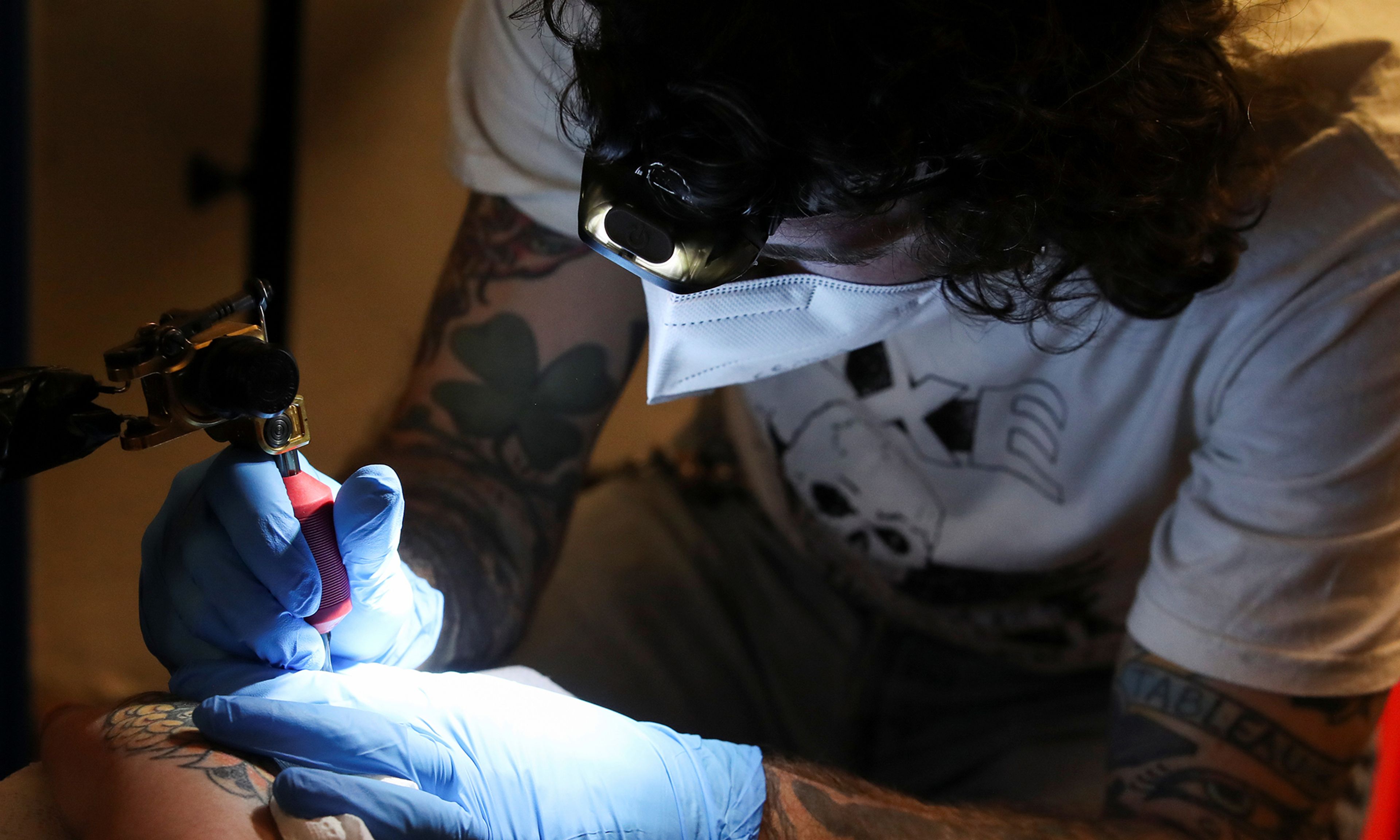
All my early life the only tattoos I ever saw were on sailors, and the only sailors I ever saw were in cartoons, in the newspapers, or on TV. The sailors flaunted anchors or Cupid hearts; skulls and crossbones if they were pirates. Sometimes their tattoos moved for comic effect. The battleship on the bicep of one cartoon hero would fire broadsides at his rivals in amour. None of my friends in any grade of school (suburban public schools, Ivy League) spoke of tattoos or tattooing. My father, albeit a made member of the managerial class, was a brakeman’s son who had served in the Army Air Forces, yet he never spoke of tattoos or tattooing either.
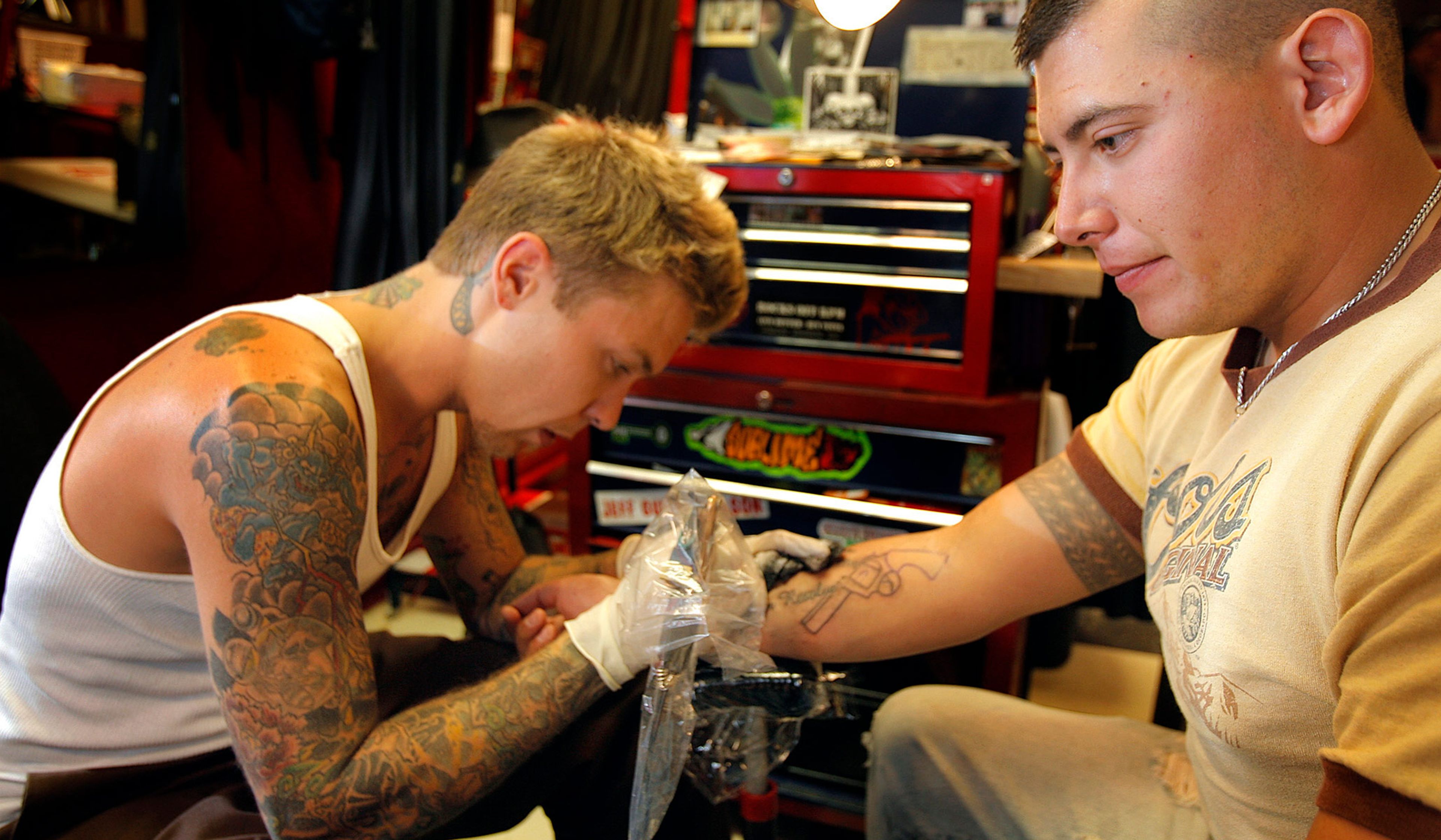
Now tats are everywhere. They are the property, not just of celebs, but of ordinary, all-the-time people — people you know, people you meet, people standing in line at the supermarket. Tats appear, logically enough, on persons who, if not sailors, share the social space of sailors — that is, men: policemen, firemen, moving men, sanitation men: persons (women now too) whose work requires brawn as well as wit. One friend of mine, a man by birth, grew up in a white slum. His father beat him, regularly. When his father ailed he nursed him; when his father died he got tattooed with a heart and his father’s name. Love hurts.
The other day I summoned two men to my house upstate. A leak from the washing machine had seeped under the floorboards of the adjoining room, causing them to rot. The men removed crumbling wooden splinters, felt under the sideboard, poked exploratory knives through the plywood and foam to the slab. One was silent, Hispanic, dressed in long pants. The other was older, white, in shorts. This man’s shins and calves were dark with swirls of tats. When he hoisted the sofa or pulled out the washing machine, his muscles moved the swirls. Nothing surprising here.
What no longer surprises but still startles is the vogue for tats among young women not in the lifting and hauling professions. My wife and I talked recently with a waitress at one of our regular places. A regular place has to have convenience, good food, and agreeable staff, at least two, preferably all three. The weather this month has been drenching or stifling; this day was the latter, and the waitress’s shorts and short-sleeved shirt revealed an array of tats, the largest of which was the head of a husky. —Is that applied? I asked. (I know fake tattoos can be drawn on temporarily.) —No, she answered, they were all real. —How much did they cost? —The dog, she said, pointing to him, cost $400. —How long did it take to get? (It was an elaborate composition, with background and shading.) —Four hours, she said. —[Silent !] What do you do all that time? —I bring friends to talk to me. Sometimes it’s hard when you have to keep your arm in a position (she demonstrated). I like them as souvenirs when I go places. I haven’t gotten any new ones, she concluded, because I don’t have any money.
I thought about this. Four hours? I never talked to my analyst for four hours straight. In four hours you can read 20 chapters of War and Peace. And $400? That could buy you 16 blouses from an online seller of remnants, or one pair of Chicom sneakers. And at the end of the day, or when your taste changes, you can take blouse or sneakers off. Skin, less easily. Will our waitress like the husky in five years? In 50? Grammy, what’s the doggie?
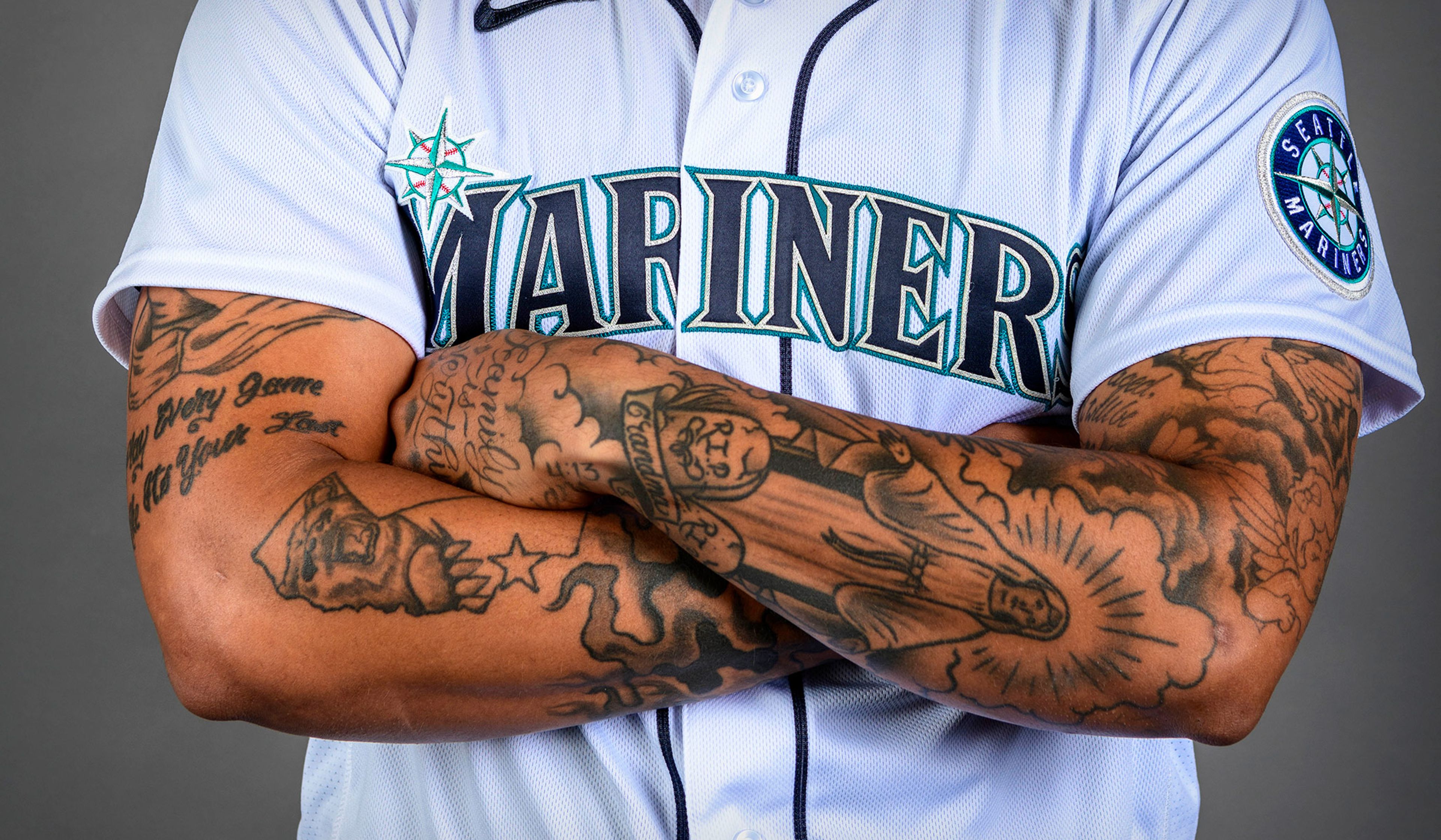
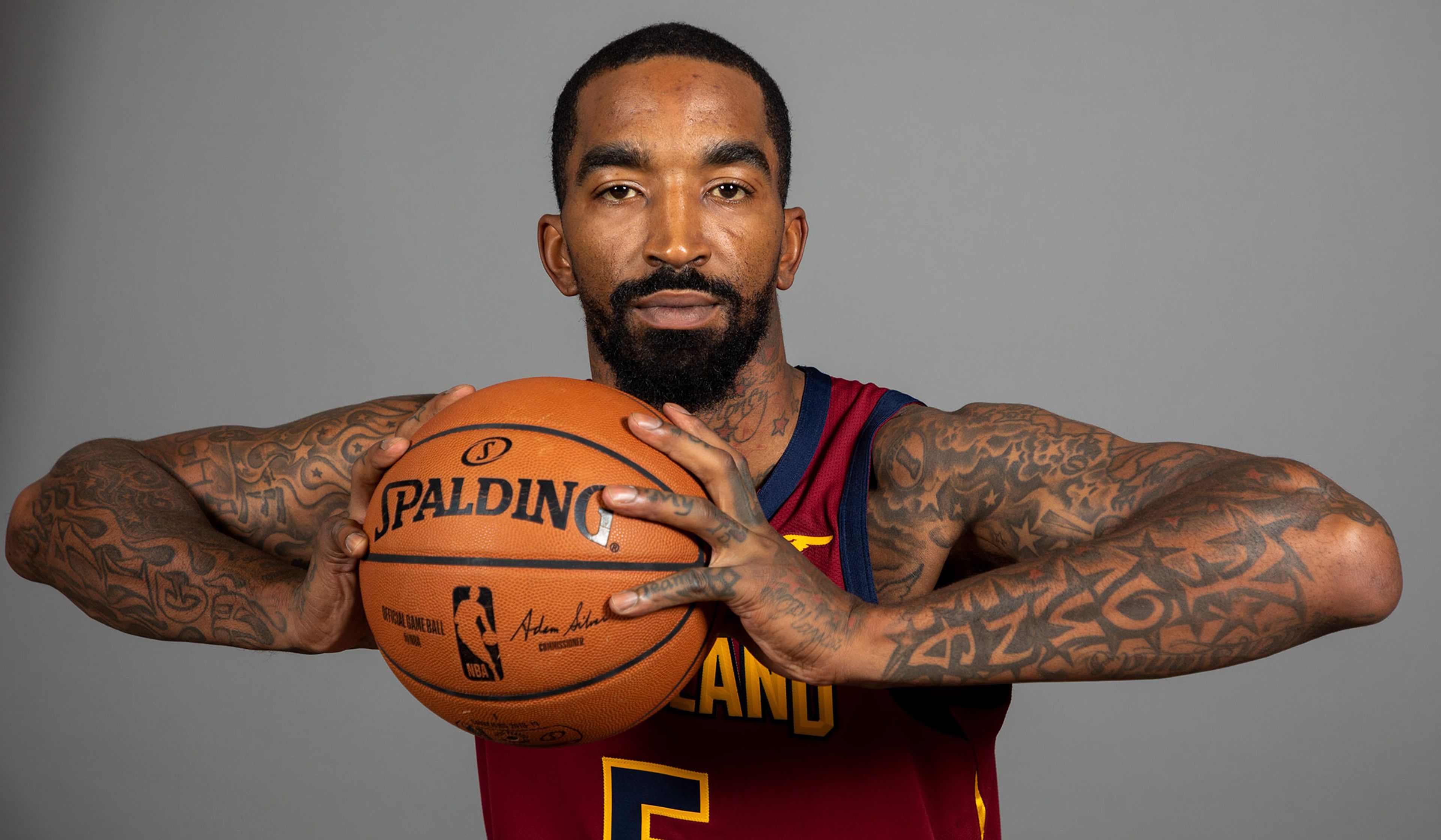
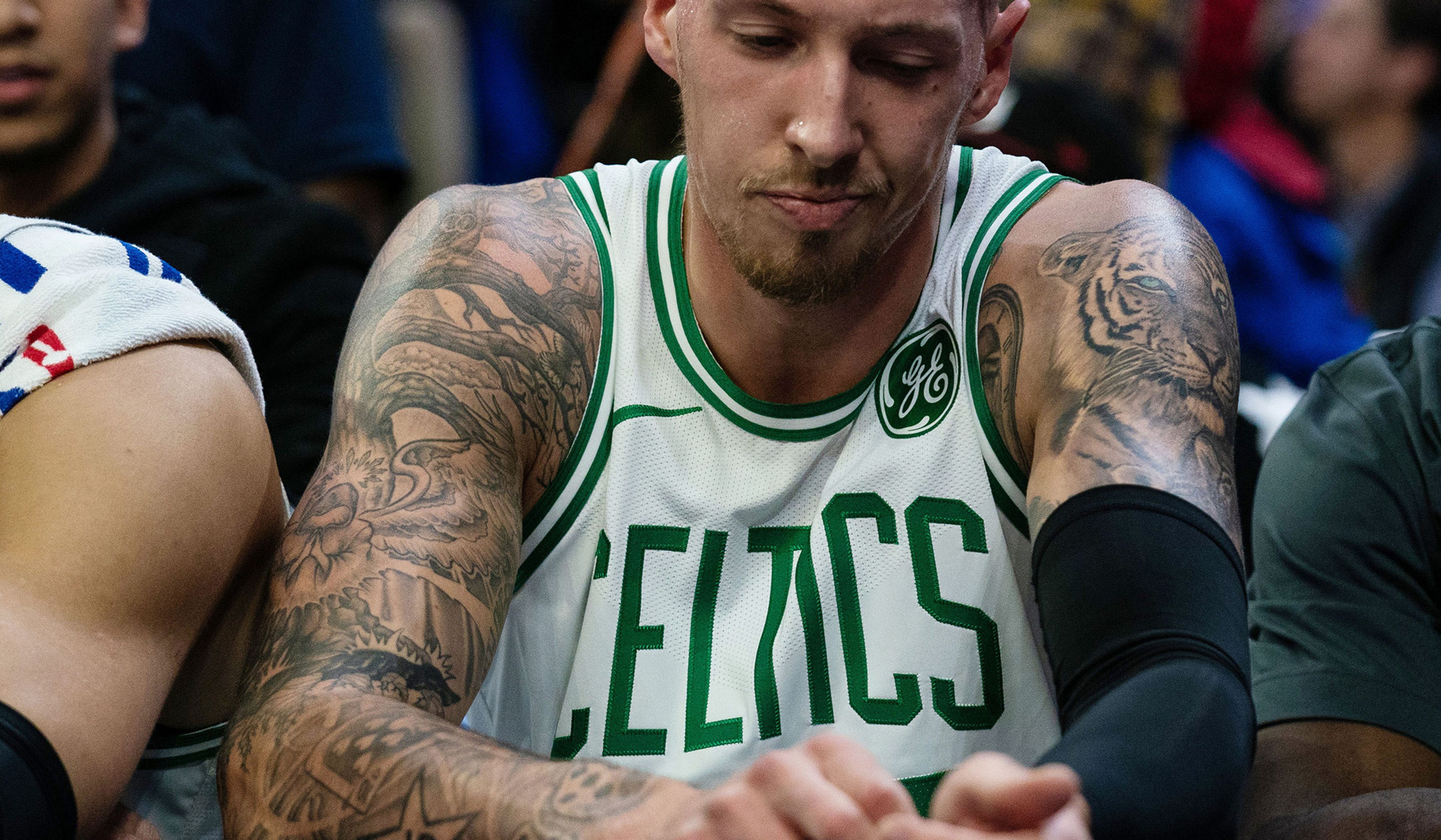
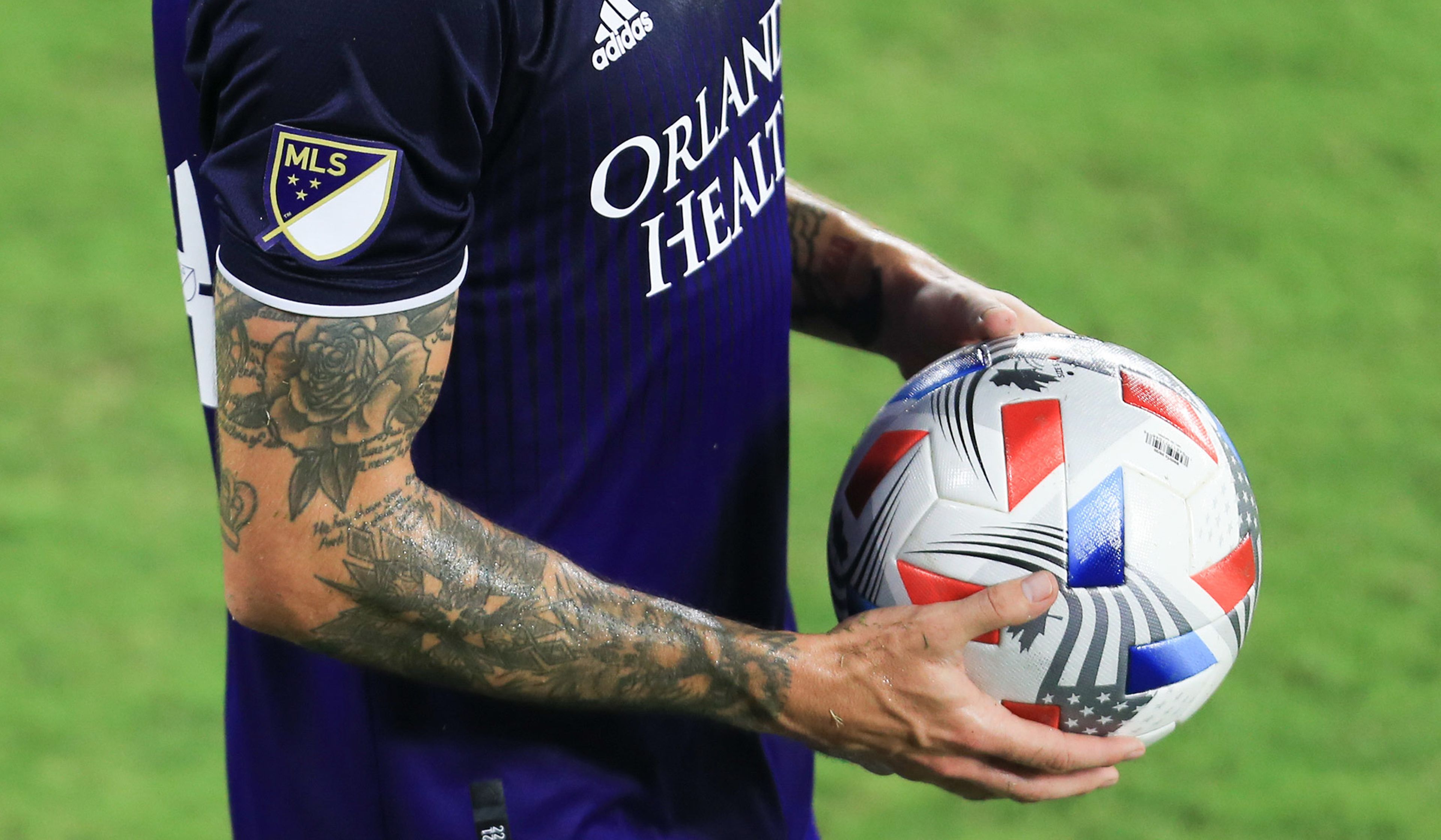
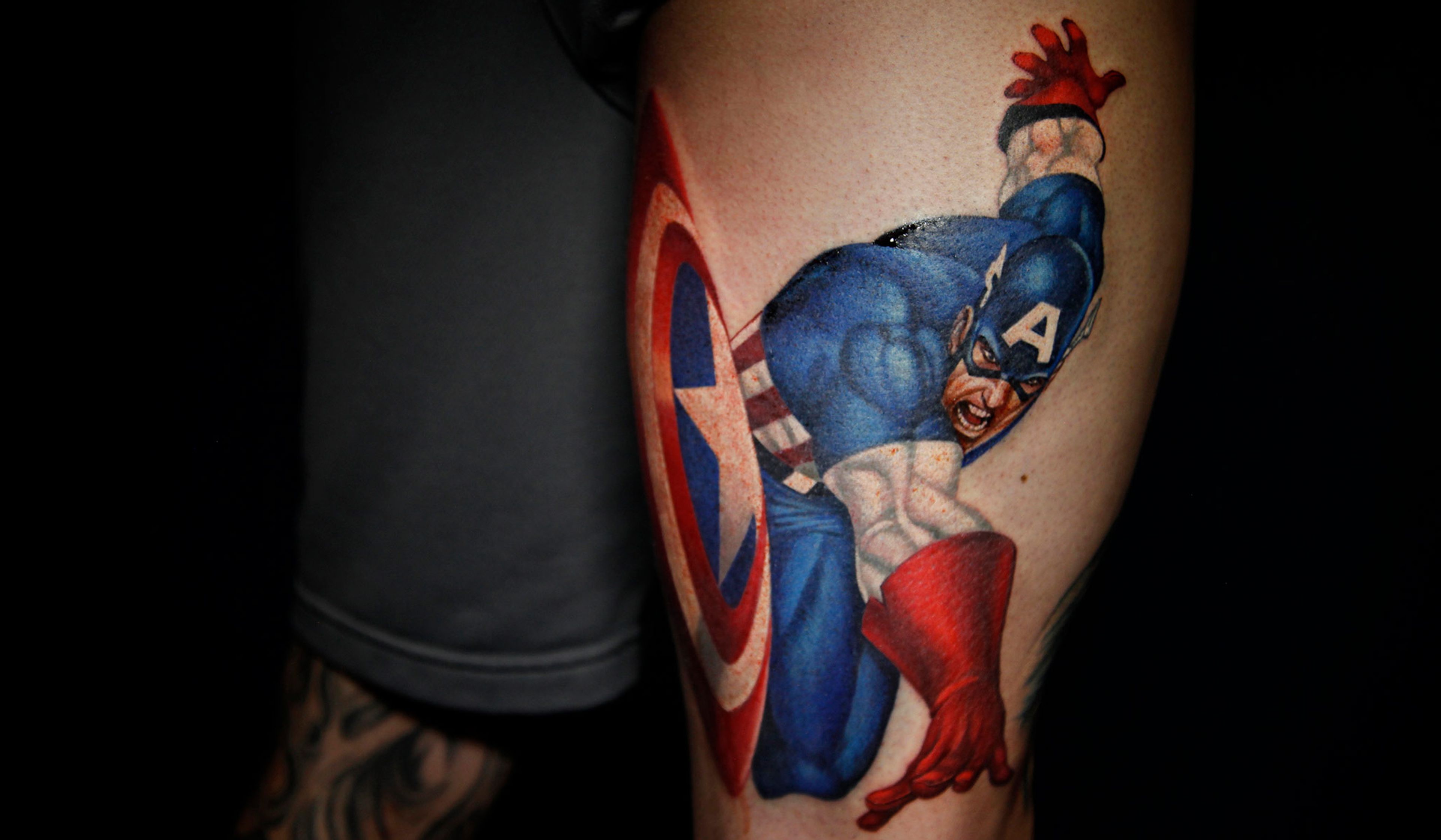
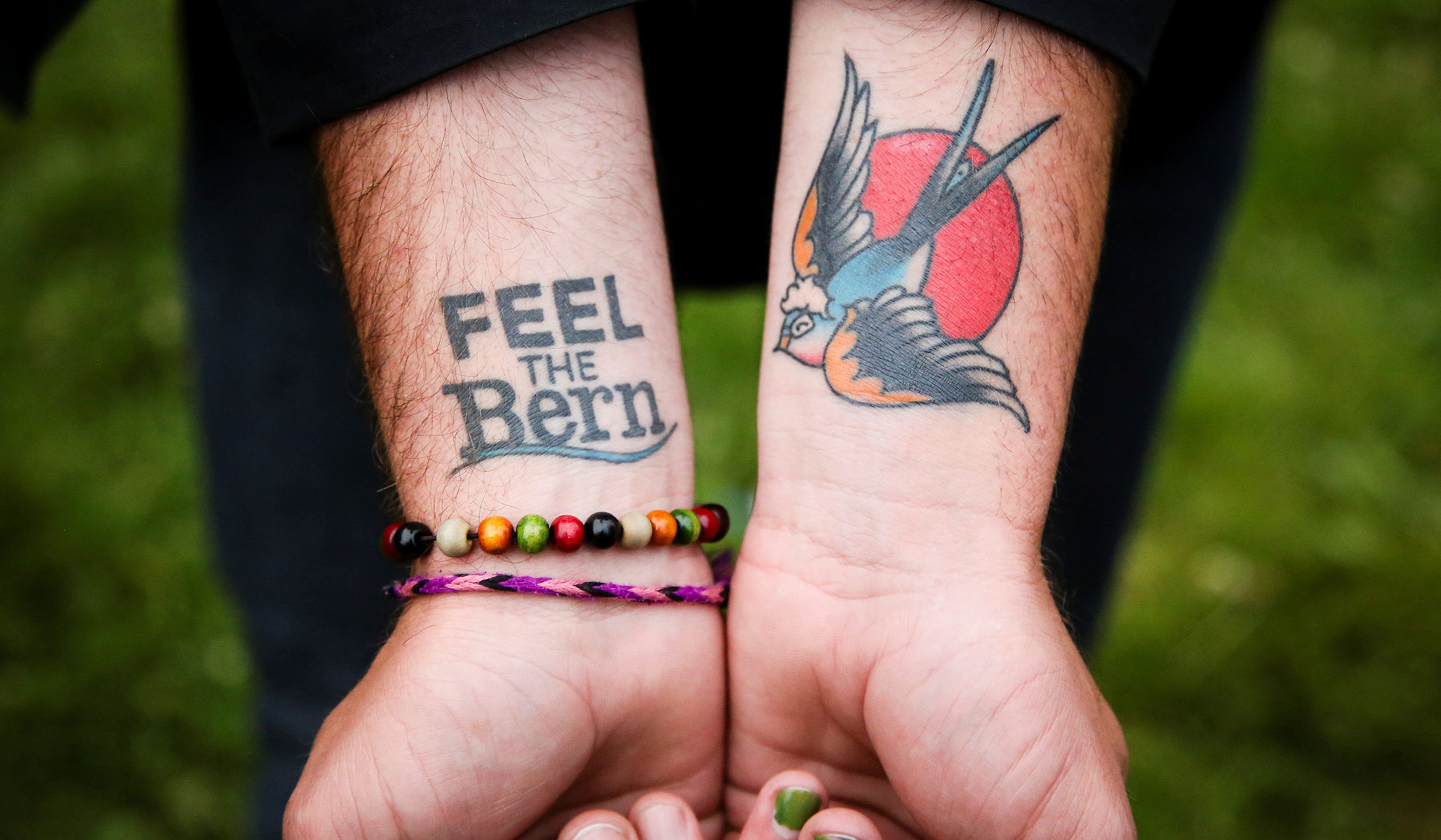
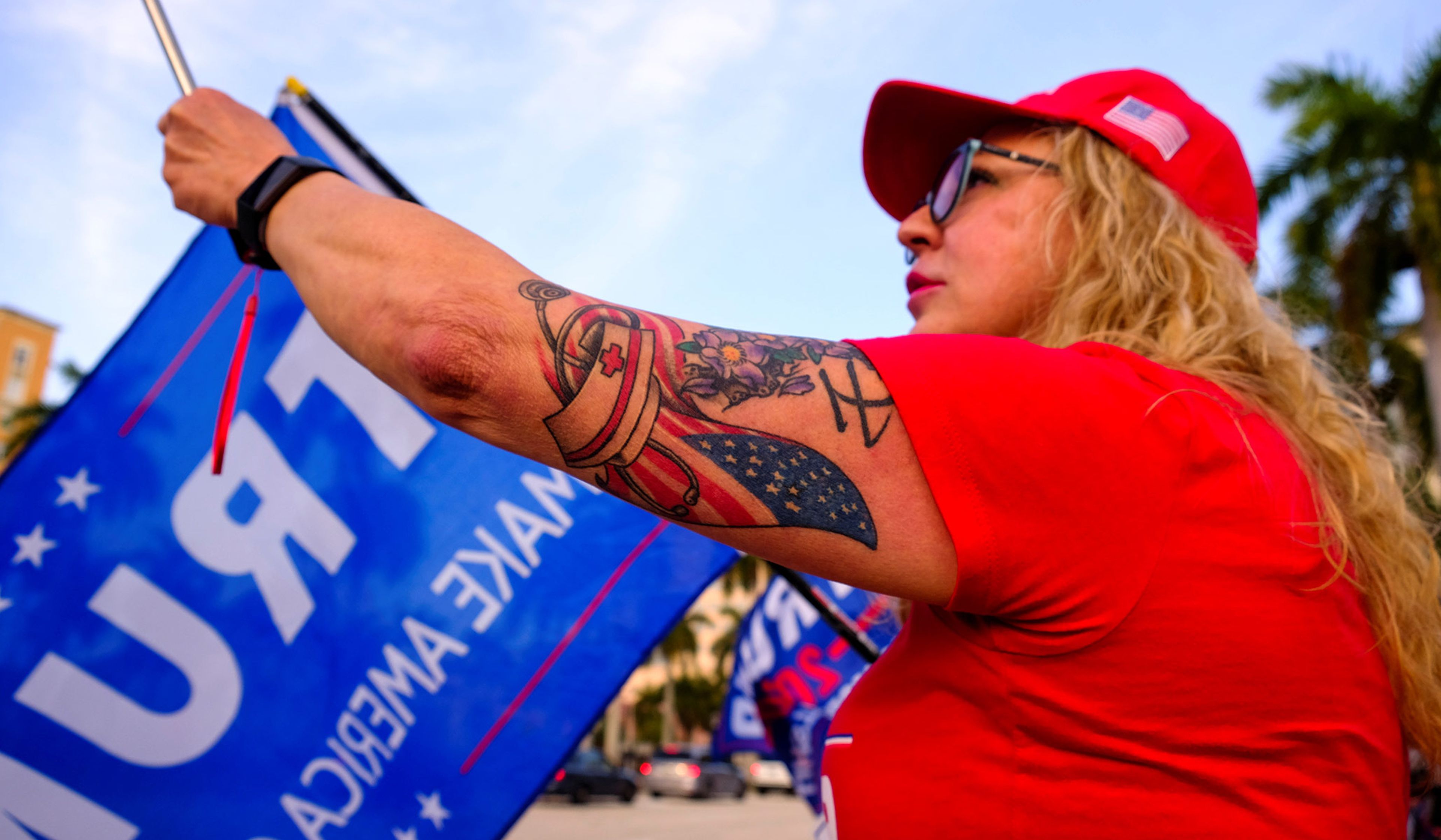
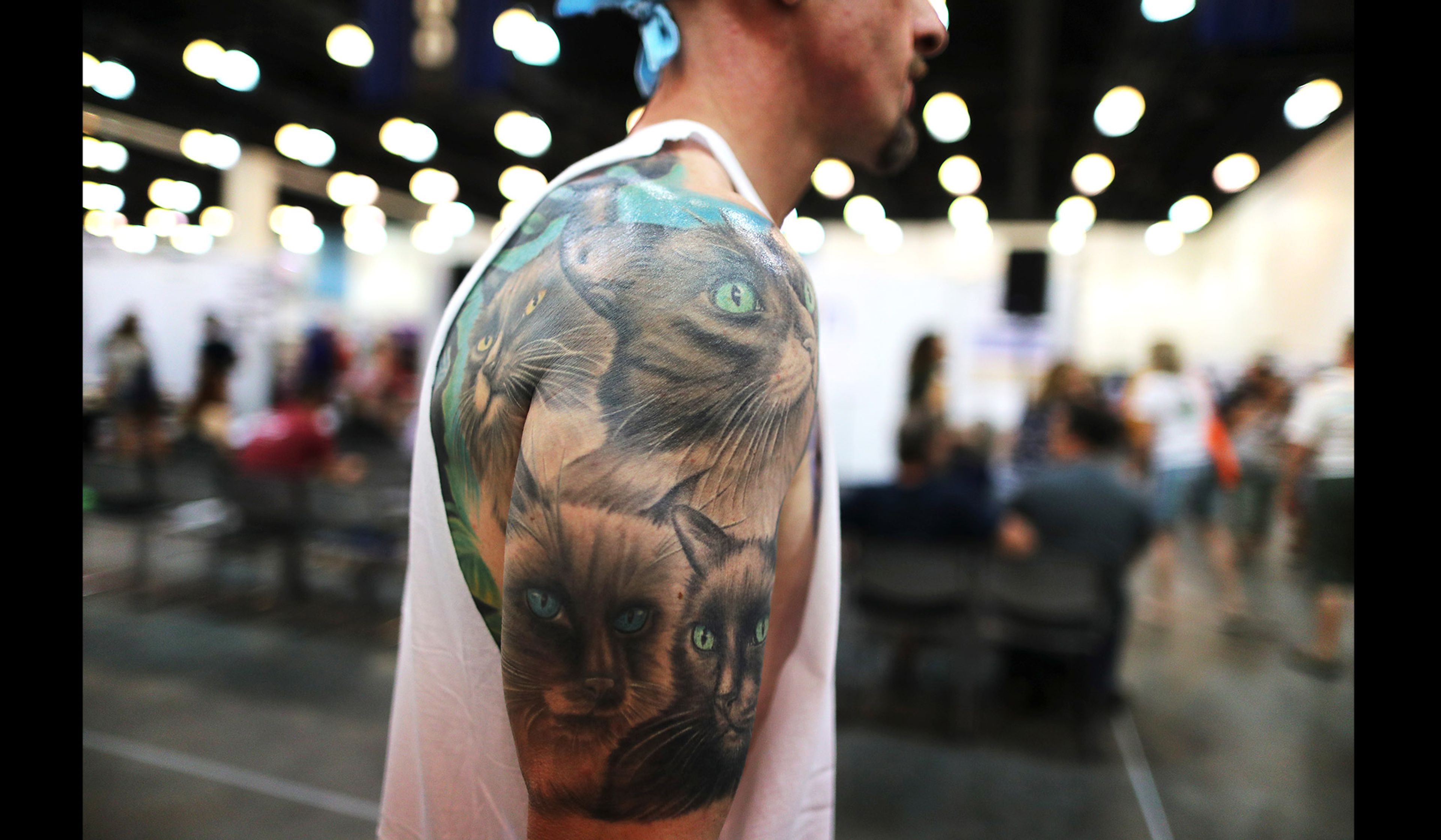
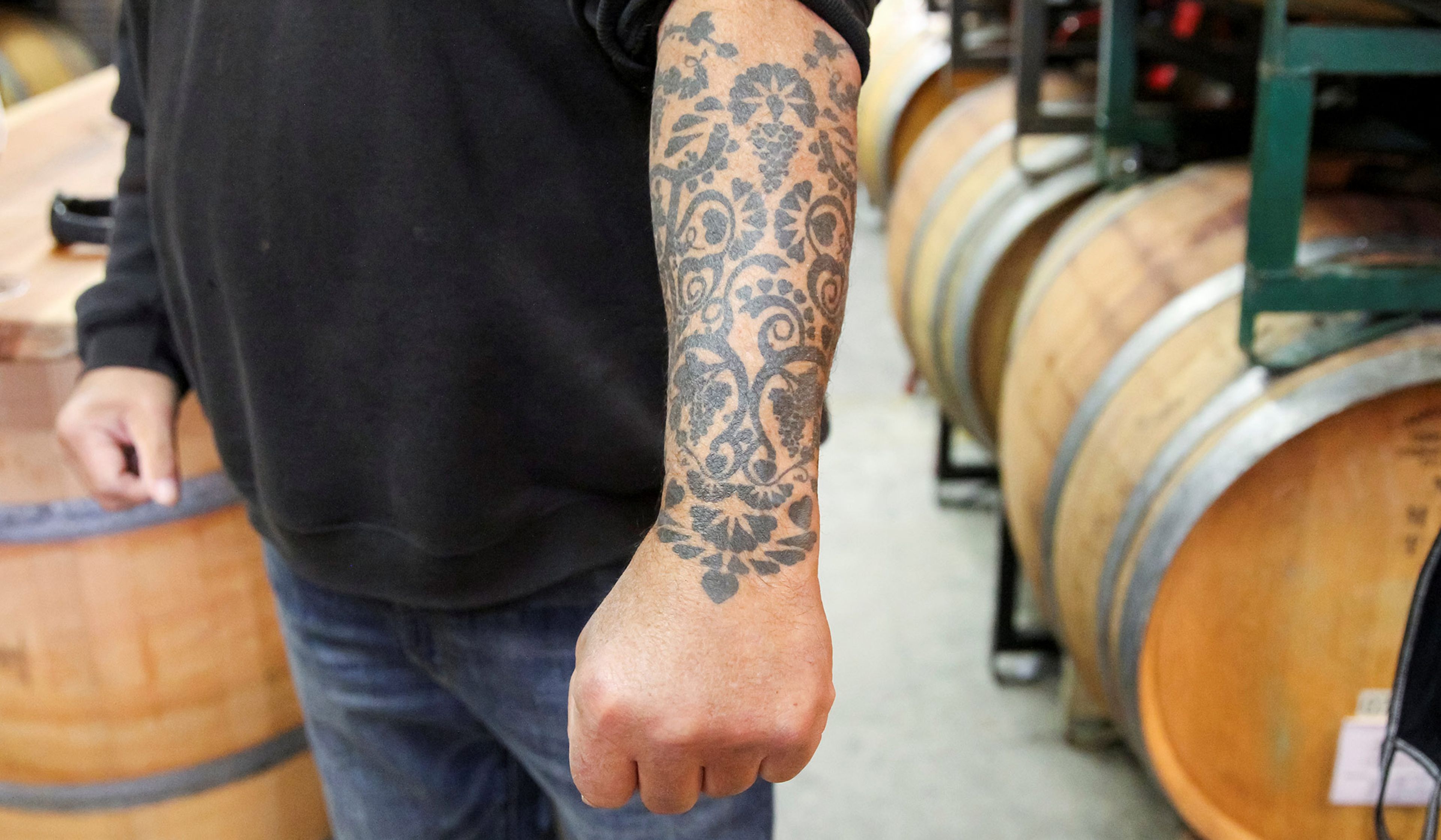
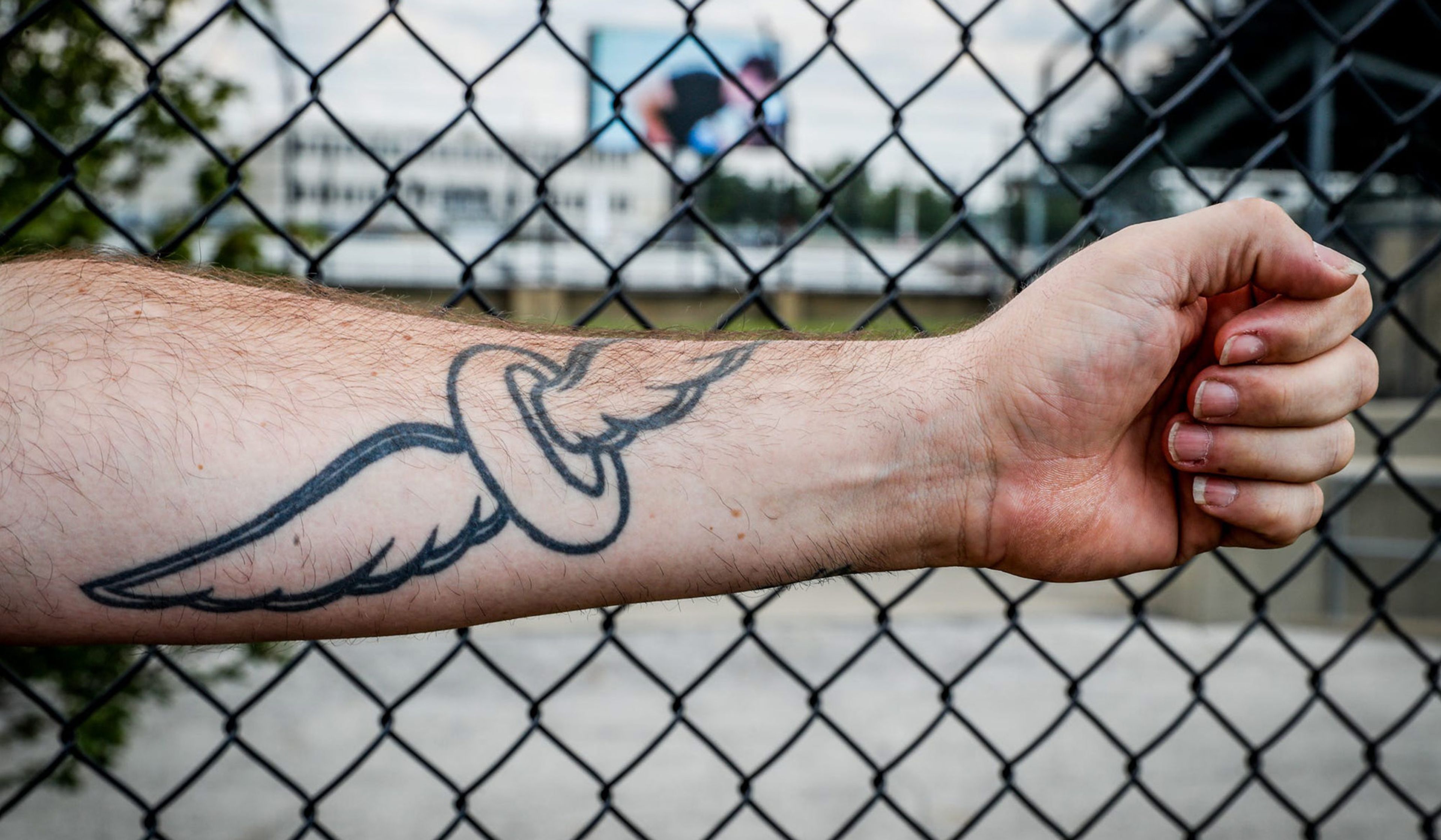
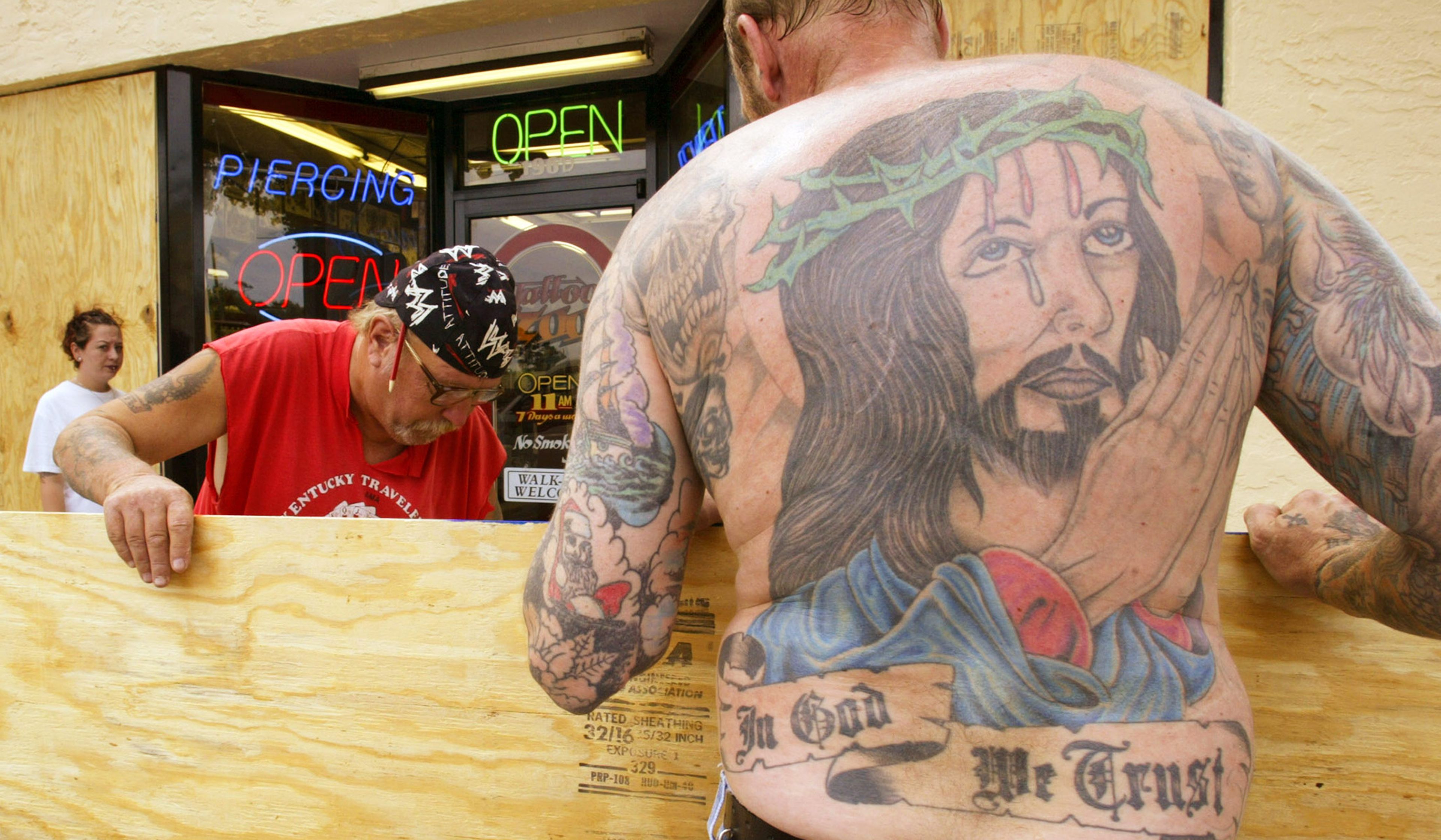
The tattooed forearms of Seattle Mariners starting pitcher Taijuan Walker (99) at spring training media day at the Peoria Sports Complex in Peoria, Ariz., February 20, 2020.
Jerome Miron-USA TODAY Sports
My thoughts are as the wind. The moribund downtown of my upstate town is a row of wooden storefronts between a hillside and the creek. Only two of them are now occupied, one by a storefront church, the other by a tattoo parlor. Soul and body, holding the fort.
Tattoos I think differ from piercings; they seem to be less pathological, less body boundary markers for those apt to lose track than advertising, which is the mark of the age. Tattoos recall the ads of commerce — flat-screen billboards flashing spectral messages at subway entrances and tunnel approaches; pop-ups on start-up menus (is everyone tired of dancing Joe Biden yet?). They recall still more the ads we put up ourselves: bumper stickers (the rear window of your hatchback tells me you hiked the Appalachian Trail, you are a proud Somewhere U parent, and you like black people); lawn signs (Lock her up. Coexist.); billed caps (the messages on these float above our heads like speech balloons); T-shirts (no one it seems is satisfied anymore with just a color). Who can hate this? Congress shall make no law abridging. Go ye into all the world.
So tattoos are not so bad, but maybe — not so good either. Start with the ubiquity of proclamation, of which they are a subset. One of the sources of civil peace, if not civilization itself, is knowing what not to say, and when not to say it. The late Keith Mano wrote that Americans will talk about their sex lives at the drop of a hat, but ask them how much money they make, they clam right up. Perhaps we should withhold more about every opinion, activity, or association, until asked, or until it becomes relevant.
The permanence of the tattoo sets it apart from other statements. Getting a tattoo is a choice, an exercise of free will, but it is revocable only with difficulty. Marriage and parenthood are revocable only with difficulty too, but they supply new situations requiring new choices every day. A tattoo just sits there. Soap and water won’t dim it. That’s why cowboys put them on cattle.
There is a 20th-century comparison waiting to be made here, but I won’t. My tattooed friends are Americans, they are too good for that. Let them enjoy. I pass.










Comments