The American WASP is back, as loathed and resented as ever. Newscasters are not yet calling us WASPs because the acronym for white Anglo-Saxon Protestant more or less faded away after the ethnic-awareness movement of the ’70s and millions of younger Americans may not know what it means, so the cable cabal have found a suitable substitute: A WASP is the “blue-eyed blond” who would not be stopped by Arizona state troopers looking for illegal aliens.
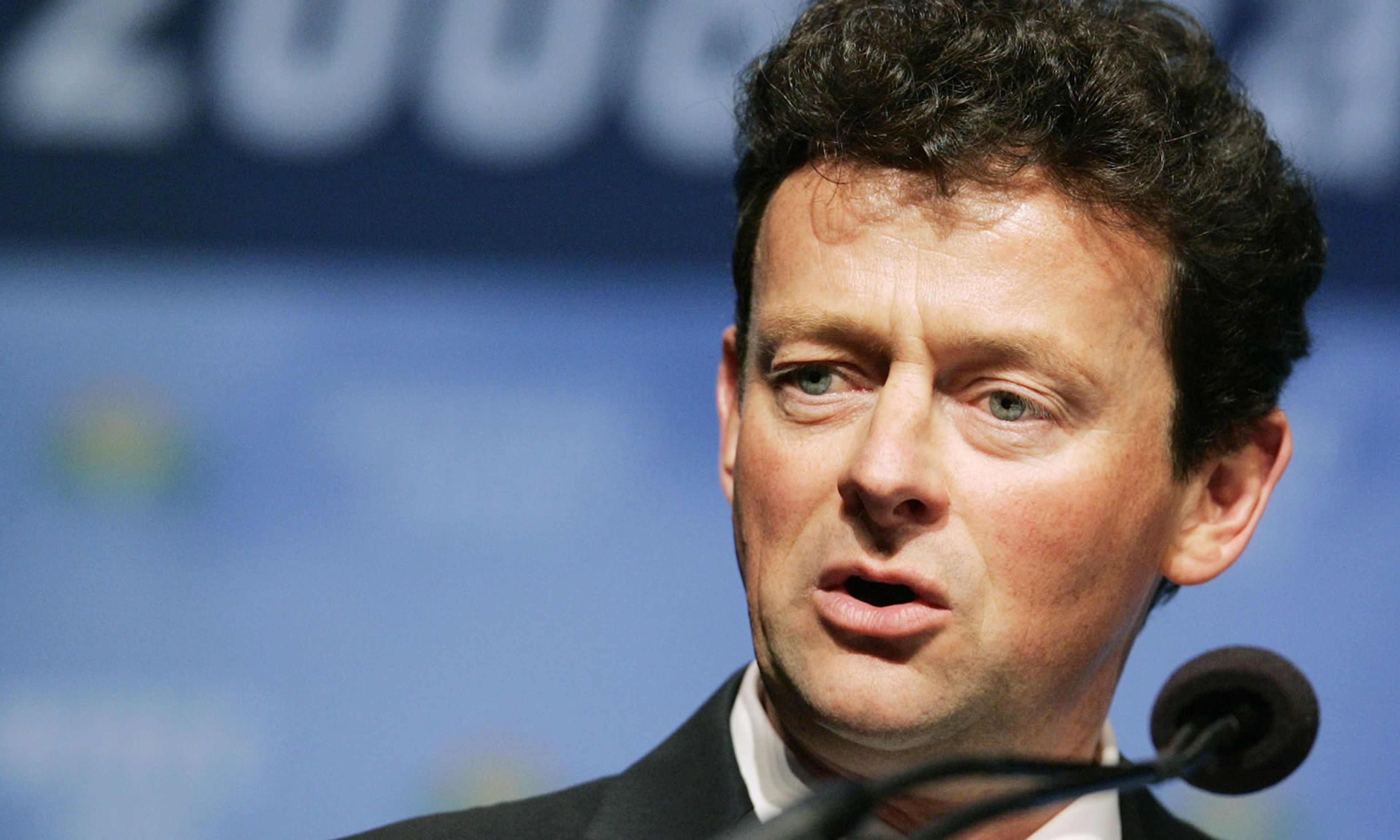
References to this blue-eyed blond have become ubiquitous lately but they have nothing to do with our border problems. I know a code word when I hear one and this one is spilling Anglophobia the way BP is spilling oil. The difference is that the oil spill was a joint effort in human error, but the Anglophobia is the effortless single-handed work of Tony “The Twit” Hayward. Or, Tony “Supercilious Is His Middle Name” Hayward. Or, Tony “To Know Him Is to Hate Him” Hayward. Or, to really nail it down: Tony “I’m Even More Repulsive than Heckuva-Job-Brownie” Hayward. And, just for the heckuvit, he looks exactly like the actor who played Tony Blair in The Queen.
Hayward’s insufferable Englishness reminds us of the cultural conditions that ignited the ethnic-awareness movement. Those were the days when WASPs were called “real Americans” and everyone else was called a “dirty little” something or other and ordered to “melt.” Every top banana wanted a secretary with an English accent to intimidate callers and John Houseman did his investment-house commercials while eating a boiled egg from a tiny eggcup. It was Englishness that counted, not mere Britishness: Scots-Irish and Welsh need not apply.
Much of the Anglophobia WASPs endured was deserved, or at least understandable, and happily, when ethnic awareness had run its course and everyone settled down, we entered an era of good feeling that saw the emergence of Anglophobia’s flip side: Anglophilia.
The genial Alistair Cooke was a big help. A cross-section of America watched Masterpiece Theatre’s Upstairs, Downstairs, but the H-dropping servants got equal (or even better) billing, and everyone’s favorite was Ruby the kitchen maid.
Nobody ever expected the English to win plaudits for emotional warmth, least of all from Americans, but it happened. When public TV ran the BBC comedy Keeping Up Appearances, London-centered Americans became aware of the North of England, specifically their affectionate custom of putting the word “our” in front of the names of kinfolk. The characters call each other “our Rose,” “our Daisy,” and even “our Hyacinth,” though no one can stand her. The last North Country character to make Americans cry was Lassie, but the region became Ground Zero in our relentless hunt for family values. Huggable-lovable-adorable English people were in — even in commercials, like Geico’s gecko, now as popular as Morris the cat, and Travelocity’s roaming gnome, even though we had not previously known what an English garden gnome was.
To me our latter-day Anglophilia is indebted to Judi Dench, Helen Mirren, and the witty raconteur Quentin Crisp (he called himself “the last of the stately homos of England”), but the hands-down winner, I’m sorry to say, was Princess Diana, who forged a Special Relationship all her own when she developed so many neuroses and eating problems that she in effect became an American. With the deft slyness of a certifiable nutcase she managed to transfer all the old stereotypes of English stuffiness onto the shoulders of her husband, freeing up her countrymen to be emotion-wracked hysterics and her sons to be regular guys.
Now that Prince Charles is out and Tony “Stuff It” Hayward is in, we need to find a rationale for the abrupt return to Anglophobia he has generated, something that explains how and why he is the way he is. Comparing him to a monster of English history won’t work because there really weren’t any, not in the Ivan the Terrible sense. King John, who murdered his nephew, posed huge political problems but otherwise the two are nothing alike; John was a dirty-minded loudmouth who picked his nose. George III also infuriated Americans but not for his personal qualities; nobody knew what they were because nobody had ever seen him. As for Oliver Cromwell, he was a prig but not a snob.
My candidate is James II (1685–88) who, thanks to bottomless reserves of tone-deafness, took only three years to bring about what became known as the “Glorious Revolution.” The younger brother of the heirless Charles II, James Stuart was the polar opposite of the popular, easygoing, pragmatic Charles. Both were Roman Catholics but Charles, bowing to what was by then a Protestant majority, was content to practice Catholicism in secret. By contrast, James “I Want My Religion Back” Stuart announced his Catholicism and refused to let his heiress presumptive, Princess Mary, be confirmed in the Church of England. Charles intervened and she was confirmed anyway, leaving James “I Want My Daughter Back” Stuart to his favorite activity: sulking. Now a widower, he married an Italian Catholic princess who gave him a son after he succeeded his brother as king. The specter of a new Catholic line was too much for Parliament. James “I Want My Throne Back” II was exiled to France, where he spent the rest of his life infuriating the court of Louis XIV with his finger-in-the-eye personality, eventually becoming the grandfather of English history’s most overrated public-relations darling: Bonnie Prince Charlie.
To find the closest approximation to our antihero, however, we must look not to fact but to fiction, and we don’t have to look far. Who brought disaster to a family by the sea? Who was David Copperfield’s idolized friend at school? The suave, handsome, polished English gentleman incarnate? None other than Tony “Just Call Me Steerforth” Hayward.











Comments