Hollywood rarely produces effective love stories for men. I don’t mean a romantic comedy that some men might find themselves liking, if dragged to the theater by their wives — those are rare, but they certainly exist. (I’m partial to Bridget Jones’s Diary myself.) And I don’t mean a gross-out comedy with a romantic ending tacked on to make the ladies happy: The last act of Wedding Crashers may be drenched in estrogen, but a romance for guys it isn’t.
No, I mean a romantic film that reverses the normal gender dynamic, by inspiring a shock of recognition in the male psyche and indifference or even dislike from the female of the species. I mean a movie whose central theme is love — love, I said, not sex — that men like more than women.
The closest recent cinema has come to this unusual achievement is probably the angsty masculine quest narratives associated with the talented Cameron Crowe and the talentless Zach Braff — movies featuring young men in search of themselves, and the young women they fall in with along the way. These females usually belong to a species that Nathan Rabin, a scribe for The Onion, has memorably dubbed the “Manic Pixie Dream Girl.” Think of Natalie Portman in Garden State, or Kate Hudson in Almost Famous, or Kirsten Dunst in Elizabethtown – creatures conjured up, as Rabin puts it, by “the fevered imaginations of sensitive writer-directors to teach broodingly soulful young men to embrace life and its infinite mysteries and adventures.”
But are these movies really love stories? As Rabin’s description suggests, your typical Manic Pixie Dream Girl (MPDG, henceforward) is a means to an end, rather than the end itself. The point of such films is the hero’s journey from self-doubt to self-possession: Whether he gets the girl is less important, in the end, than whether she can help him be all that he can be.
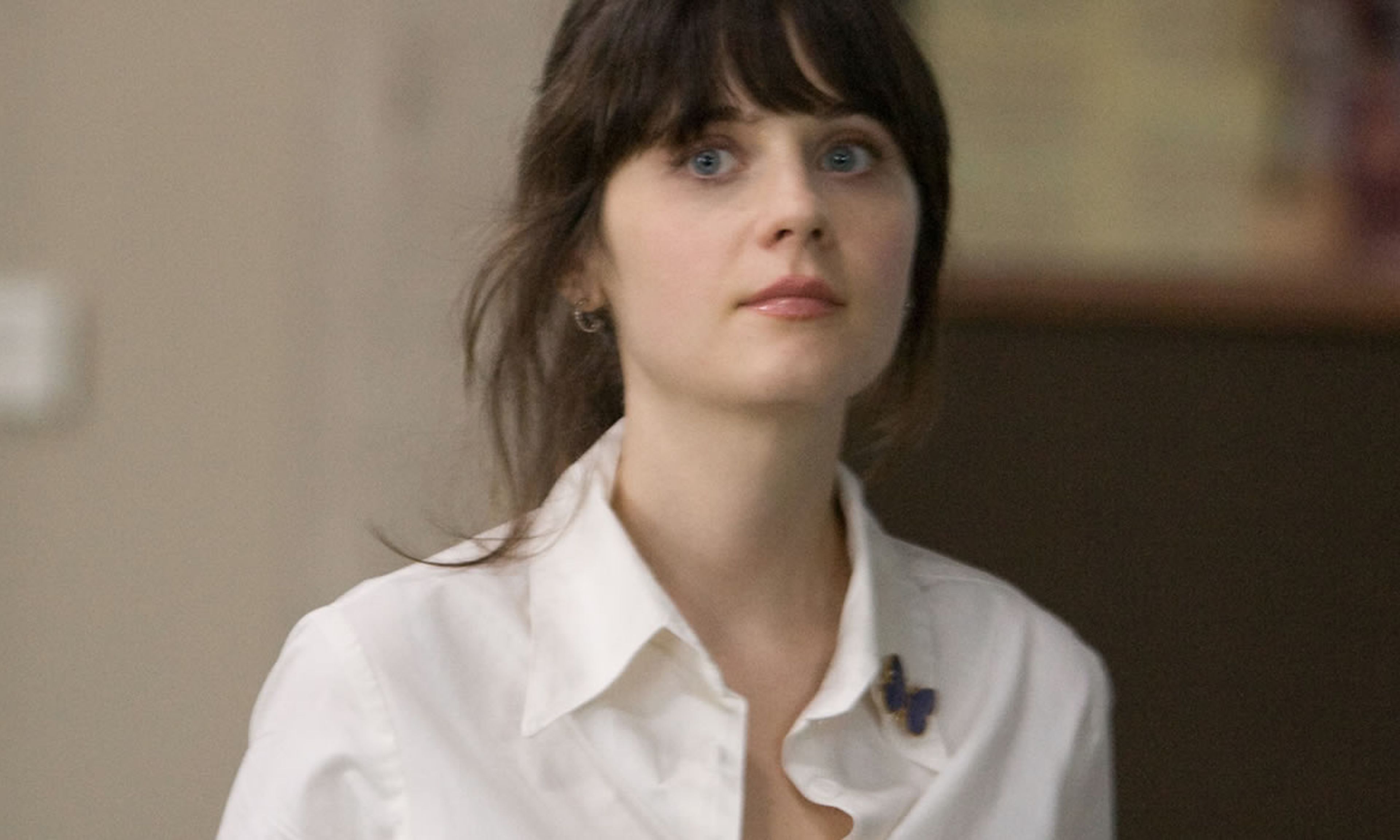
There are moments when this summer’s (500) Days of Summer, a love story with a fractured timeline and a host of clever gimmicks up its sleeve, feels like just another MPDG film. Tom, our sensitive twentysomething hero (Joseph Gordon-Levitt), whiles away his days writing copy for greeting cards. The quirky, lovely, mysterious Summer Finn (Zooey Deschanel) comes along and snaps him out of it. She has bangs, wears hipster housedresses, and listens to all the right bands. They sing karaoke together, and watch The Graduate, and play house in Ikea. By the end of the movie, he’s ditched his pointless, inauthentic job and enrolled in architecture school. Hurrah!
Except that along the way, he’s been absolutely and completely destroyed by her — and this, not his self-actualization or career awakening, is the substance of the movie and the source of its interest and appeal.
“This is not a love story,” a wry, omniscient narrator intones. “This is a story about love.” Whether that distinction makes sense I’m not quite sure, but the point is clear enough: This isn’t a film about what love can do for you (the point of every MPDG movie), but what love can do to you. In other words, don’t expect a happy ending, folks, and expect a lot of suffering.
Admittedly, (500) Days of Summer is a tragicomedy, not an outright tragedy, and it concludes on something like a high note. But it captures, more successfully than any recent movie, exactly what it means to be a young man in love with a woman who likes you back but doesn’t love you back. And what that means is false hopes, premature euphoria, mounting uncertainty, growing desperation — and, eventually, misery.
(500) Days of Summer plays around with this trajectory, leaping back and forth through time, from Day Eight of the Tom-Summer love affair to Day 268, then backward to happier times, then forward again to loss, denial, and despair. It sounds gimmicky, but the fast-forward/rewind works: Crucial conversations, months apart, are juxtaposed; dysfunctional patterns are exposed; and the essential hopelessness of Tom’s quest is never far from view. The structure fits with the way failed relationships are remembered — not as a long descent from joy to sorrow, but as a jumble of competing memories, all of them potent, none of them lost.
The movie has plenty of false notes: Some characters are too precious — like Tom’s wise-child little sister, precocious and unbearable — and others are too stock, and the narrator’s interjections quickly start to grate. But there’s an awful lot here that’s shockingly true, and shockingly effective. (The best sequence, near the end, plays a party at Summer’s house in split-screen: On one side we see what Tom hopes will transpire; on the other we see what really happens.) This isn’t just a movie about the way a certain kind of man experiences a certain kind of love affair. It’s a movie about the way our age’s mix of ambiguities and promiscuities — the collapse of bright lines separating friends from lovers, sex from commitment, and casual relationships from serious ones — makes doomed love that much easier to stumble into.
I can’t imagine very many women caring for it, though. We see Summer Finn only through Tom’s besotted eyes, which means that she’s alluring, capricious, opaque, and not particularly relatable. If you can’t imagine falling in love with Summer, you probably won’t like her very much. You’ll think that this is a love story — or, sorry, a story about love — made by men for men, in which the female psyche gets short shrift.
And you’ll be right. But that’s precisely what’s so good about it.












Comments