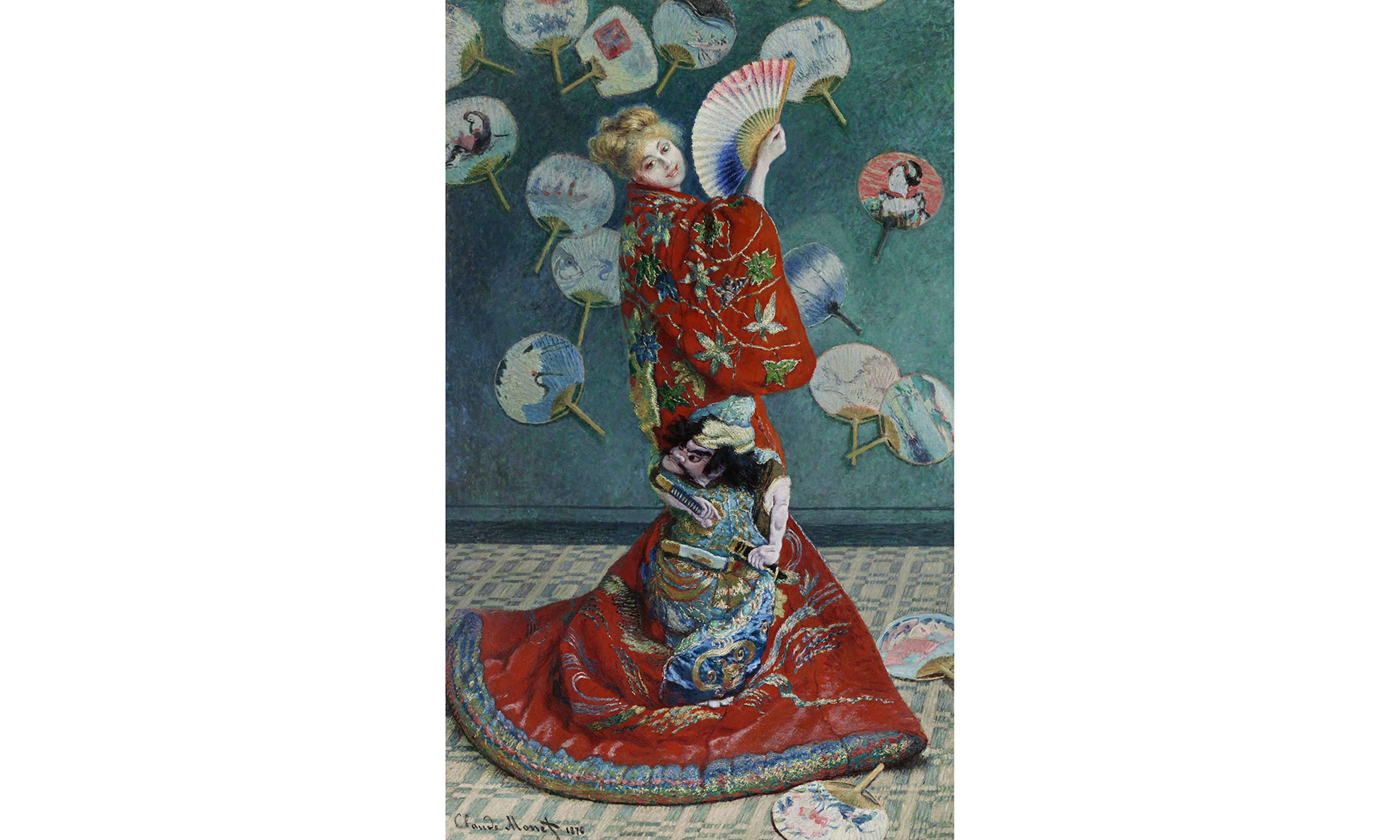
The work of re-educators is never done. Too much is at stake — power, jobs, research grants, the thrill of the chase, the drama of victimhood — for the process to be brought to any sort of close. So microaggression, an abomination so new that spellcheck can only heckle, becomes a thing, like all those new things — such as “privilege” as a verb, cis and that and all the rest — designed not to encourage people to think harder and wider, but to impose one narrow script, inventive only in the various ways it finds to deliver the same message about an oppressive, unregenerate America where old monsters still roam.
And that brings me to the kimono kerfuffle that erupted over an exhibit at Boston’s Museum of Fine Arts (MFA) earlier this summer. Naturally, it all began with a Dead White Male, in this case Claude Monet and his 1876 painting La Japonaise. The opening up of the hermit empire in the middle of the 19th century had sent Japanese art to the West. France was entranced, swept up in a phenomenon — Japonisme — that Monet both embraced and, in the ironically entitled La Japonaise, mocked. His subject was his wife Camille, sinuous and giddy in an elaborate — and authentic — red kimono, fluttering a fan in a room where paper fans not only line the walls but, playthings of just minutes before, lie scattered across the floor that is itself covered by (of course!) a tatami mat. Both underlining and subverting the dress-up, the dark-haired Camille is wearing a blonde wig, no Japanese she.











Comments