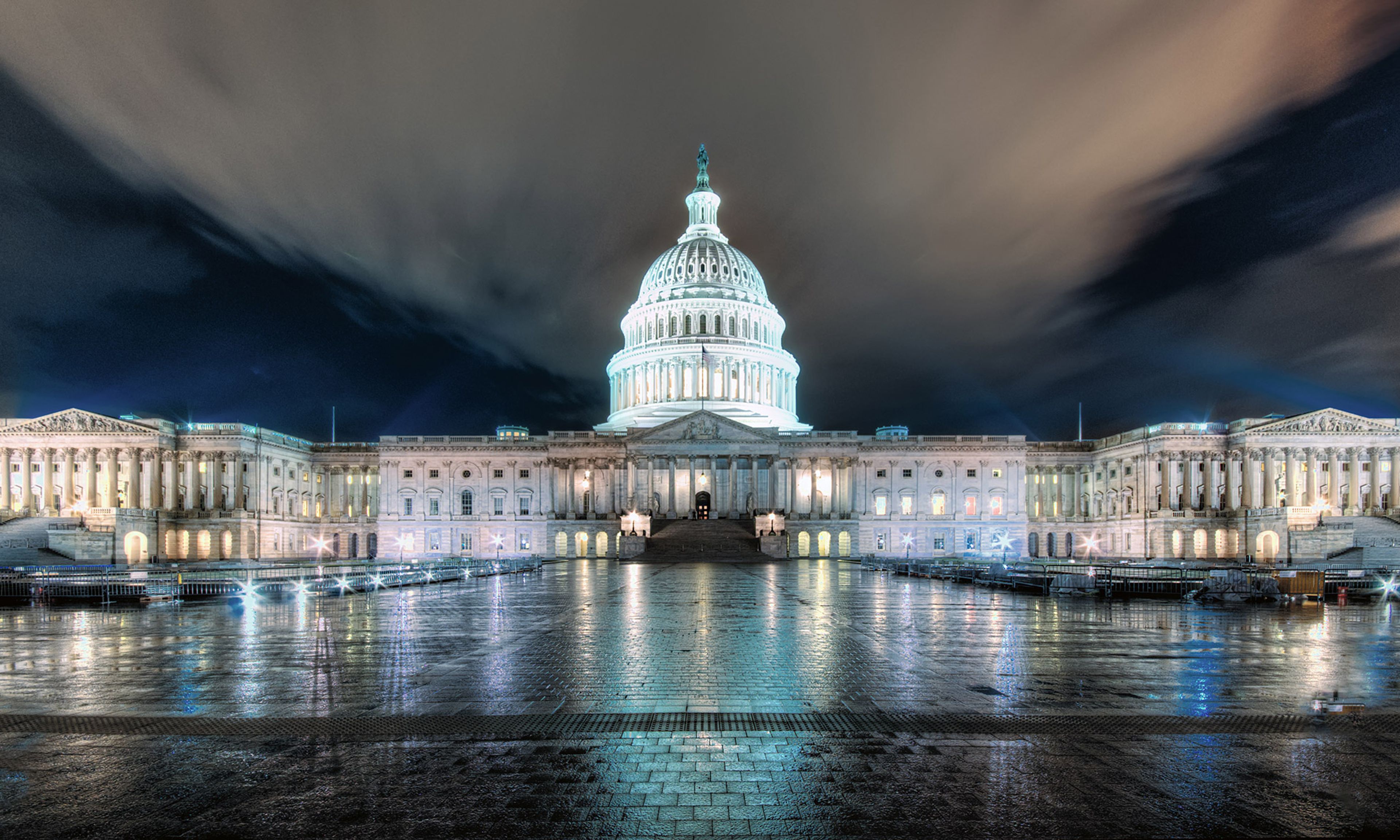
With President Trump’s poll position having slumped in recent weeks, Democrats are upbeat. Many are talking openly and optimistically about the prospect of their party’s winning a majority in the Senate. Those hopes may yet be dashed. However, this heady environment has sparked a surge of liberal enthusiasm for ending the upper chamber’s legislative filibuster.
There are reasons for objective observers to throw cold water on these hopes. While Democrats certainly have a path to a Senate majority, much will doubtless change between now and November. Even if the Democrats manage to win a Senate majority, it proably will not be large enough to overhaul the body’s rules to the liking of the Left.
Nonetheless, pressure is building in Democratic circles to eliminate the filibuster once and for all. According to reporting in The Hill, Oregon senator Jeff Merkley, one of the chamber’s most outspoken liberals, is circulating “nuclear option” proposals to end the already attenuated filibuster. Delaware senator Chris Coons, who frequently masquerades as a moderate, made clear his support for abolishing the procedure should it prove a barrier to a hypothetical Biden agenda. When Majority Leader Mitch McConnell, of Kentucky, cautioned against filibuster reform, MSNBC host Rachel Maddow responded with a tweet reading, simply, “LOLOLOL.”
This marks a shift from a year ago, when Senate Democrats were more divided on the question. At that point, Elizabeth Warren, of Massachusetts, was pushing for eliminating the filibuster as part of her misbegotten presidential campaign. Under pressure, Minority Leader Chuck Schumer, of New York, said in July that nothing was “off the table” when it came to the filibuster, and Dick Durbin, of Illinois, the No. 2 Democrat in the Senate, made similar noises.
Yet at that point, numerous other Democrats seemed reluctant, including Bernie Sanders and Kamala Harris, neither of whom could be described as a “moderate.” Virginia’s Tim Kaine, who like Coons has mastered the art of getting the D.C. press corps to call him a “moderate” for little discernible reason, also expressed concern.
Now the ranks of reluctant Democrats seem to be shrinking. Many of those mentioned above are changing their tune or avoiding the question, leaving a smaller cadre of liberal senators expressing skepticism about the nuclear option. Angus King, of Maine, an independent-in-name-only, has expressed discomfort with the move. Dianne Feinstein, of California, certainly no moderate, has also said that she believes the legislative filibuster serves the Senate well. Joe Manchin, of West Virginia, whose overwhelmingly conservative voters would no doubt object to greasing the skids for liberal legislation, says he opposes the nuclear option in no uncertain terms. According to a Politico profile from late last year, Arizona’s Kyrsten Sinema likewise opposes the move.
If these four continue to hold out, Democrats will need to do much better than expected in this fall’s Senate races to have the numbers required to kill the filibuster once and for all.
Why the reluctance? For all the furor on the left, these senators likely realize that eliminating the filibuster could come back to bite the Democrats. Most obviously, the successful Senate confirmation of 200 federal judges to date during Donald Trump’s first term ought to encourage caution on the Left. That torrid, record-breaking pace has been made possible by Democrats’ decision under Harry Reid in late 2013 to kill the filibuster for judicial appointments. Then the minority leader, Mitch McConnell, presciently told his Democratic colleagues, “You’ll regret this, and you might regret it even sooner than you might think.”
Those Democrats taking time to reflect know that a Biden midterm in 2022 could very easily hand a filibuster-free Senate majority back to the Republicans. The GOP would mainly be playing defense during that cycle, defending GOP-held seats in Wisconsin, Pennsylvania, Ohio, Florida, and North Carolina. However, a midterm popular backlash à la 2010 could put in play a number of the seats Democrats need to win to get a majority, including hypothetical incumbents in Georgia and Arizona, as well as the seats already held by Democrats in Colorado, Nevada, and New Hampshire.
A resurgent Senate GOP, especially under the capable leadership of McConnell, would no doubt exploit a simple-majority rule for passing legislation to the hilt. Beyond this obvious turnabout-is-fair-play scenario, the nuclear option’s other, longer-term political effects should give Democrats pause.
First, a major procedural change would create immense uncertainty for Democratic incumbents. In my conversations with current and former Senate GOP staffers, I find near unanimity in predicting one outcome: In the short term, the nuclear option would create chaos. The Senate would immediately come to look a lot more like the House, where the speaker rules with an iron fist. In a purely majoritarian Senate, the majority leader becomes the gatekeeper for lawmaking. Anything that reaches the floor of the Senate would presumably become law with relatively little deliberation, as the need to build consensus went out the window. At least in the short term, this would likely make lawmaking even more polarized than it already is.
To put this in concrete terms: Chuck Schumer, newly empowered, would have to navigate treacherous political waters with a deftness he has not, to date, shown. Likewise, individual senators would face countervailing political pressures, pressures that would pit their general-election prospects squarely against the priorities of the partisans in their primary electorates.
As the political scientist David Mayhew notes in his book Partisan Balance, the filibuster functions as a kind of “intensity net” that scuppers legislation that the majority may support mildly but that roughly a third of the chamber opposes fiercely. Senators can play both sides of this net. If a bill beloved by the base will certainly fail, they can vote for it without worrying about paying in the general election for its material consequences. Conversely, a bill doomed to failure can be an opportunity to burnish one’s bipartisan credentials by crossing the aisle without the consequence of passing policy. Manchin is the master of this strategy, always there for a bipartisan vote when it no longer matters.
Senators would lose the ability to use the filibuster to take conspicuous albeit doomed stands on major issues. While the “talking filibuster” has become a comparatively small part of the chamber’s daily life, it is still on the books. Any senator can hold up the business of the world’s greatest deliberative body so long as he or she can keep standing and talking without rest. A decade ago, Bernie Sanders raised his national profile considerably by speaking for nine hours against a bipartisan tax deal. Three years later, Rand Paul, of Kentucky, filibustered the nomination of John Brennan to be CIA director, to raise concern about America’s drone program. (Paul’s filibuster would be impossible today thanks to Reid’s decision later that year to go nuclear on almost all nominations.) In 2016, Chris Murphy, of Connecticut, spent nearly 15 hours advocating a House gun-control bill. These efforts were doomed to fail from the start, but they dramatized the stakes of specific policies and, especially in Sanders’s case, paid long-term political dividends.
In many respects, over the last two years the filibuster has protected Democrats from their worst political instincts. The Democratic majority in the House has gleefully passed extreme bills, most recently an overwhelming vote to grant statehood to the District of Columbia. D.C. statehood polls poorly nationwide and would be a poison pill for senators outside liberal coastal enclaves. Yet a Senate Democratic majority freshly sans filibuster would feel intense pressure to take up and pass just these sorts of bills. Radical pieces of legislation with little to no chance of passing today might, with just a few seats changing hands in the Senate, become close-run things.
Put differently: Self-styled moderates in both parties would lose the ability to cast “free” votes, i.e., votes that help them appeal to swing voters in November by making them appear less partisan, even as those votes do not change the outcome of a particular bill. They would have to be willing either to murder the aspirations of their base voters or to risk being tarred as out of step with the broader electorate back home. In an era with increasingly fierce primaries and increasingly frequent wave elections, either option is politically risky.
Given such an uncertain environment, political mistakes would almost certainly be made — mistakes that in-cycle incumbent senators in the majority would pay for in the next election. Changes in behavior to correct for initial extremism, both among the rank-and-file and in leadership, would happen only over time, and likely only once voters had had an opportunity to punish incumbents at the ballot box. A hypothetical Republican minority would be able to watch and learn as the Democratic majority groped its way through the new political landscape.
At the same time, the minority party would lose its primary consensus-forcing mechanism. Without the legislative filibuster, it would probably pursue two strategies: a full-force public-relations campaign against vulnerable majority-party senators facing reelection, and procedural guerrilla warfare in the chamber.
Politicians loathe going out on a limb politically, but in a filibuster-free Senate, majority-party senators would be forced to take public positions on House bills early to encourage moderation. Activist groups would, likewise, learn to exert continuous public pressure, no doubt abetted by social-media-savvy members of the House on the Democratic Party’s left fringe. All of this would create heightened pressure on moderate Democrats, increasing the risk of making a costly political error.
Unable to bargain over the substance of legislation via the filibuster, minority-party senators would instead play for time behind the scenes as much as possible. The standing rules of the Senate allow individual senators, provided they have the support of party leadership, to prevent any motion from reaching the floor. These “secret holds” gum up the works of legislation and would become ubiquitous. Out in the open, senators would force cloture votes on actions large and small to waste weeks of floor time. Inane amendments designed to force conference committees on all House bills would sprout like mushrooms. Dilatory tactics would become standard operating procedure.
Procedural pushback would filter down to the committees as well. Today, some committees have quorum rules that require members of the minority to be present for the committee to conduct business. If the majority began to advance extreme legislation without bargaining, the minority party would no doubt weaponize these rules, refusing to show up as a means of shutting down committee work. The increased risk that any bill that reached the floor would pass would leave few choices. And should the committees elect to remove minority-party-representation requirements, effectively going nuclear on their quorum rules, they would be further removed from the legislating process.
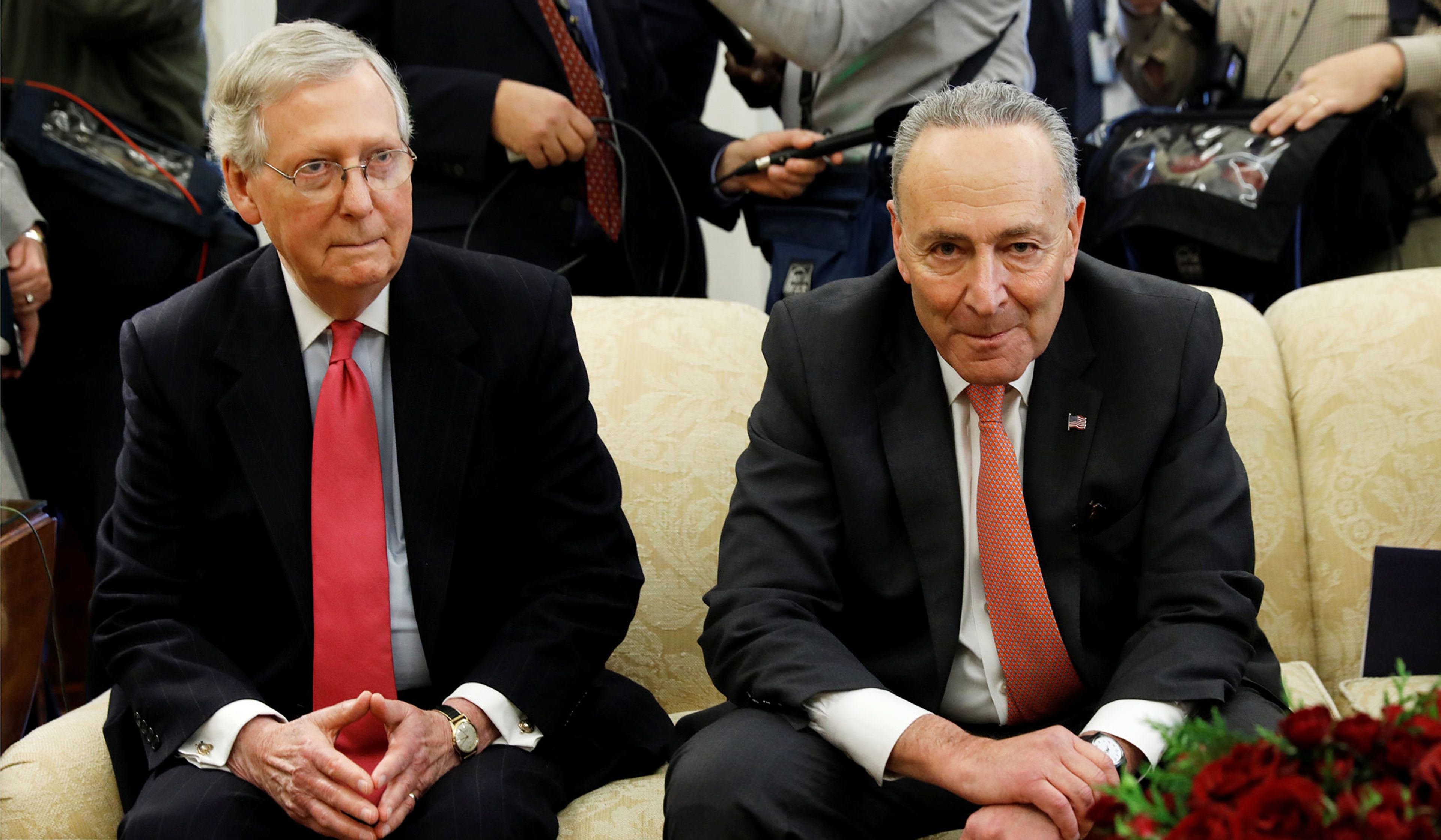
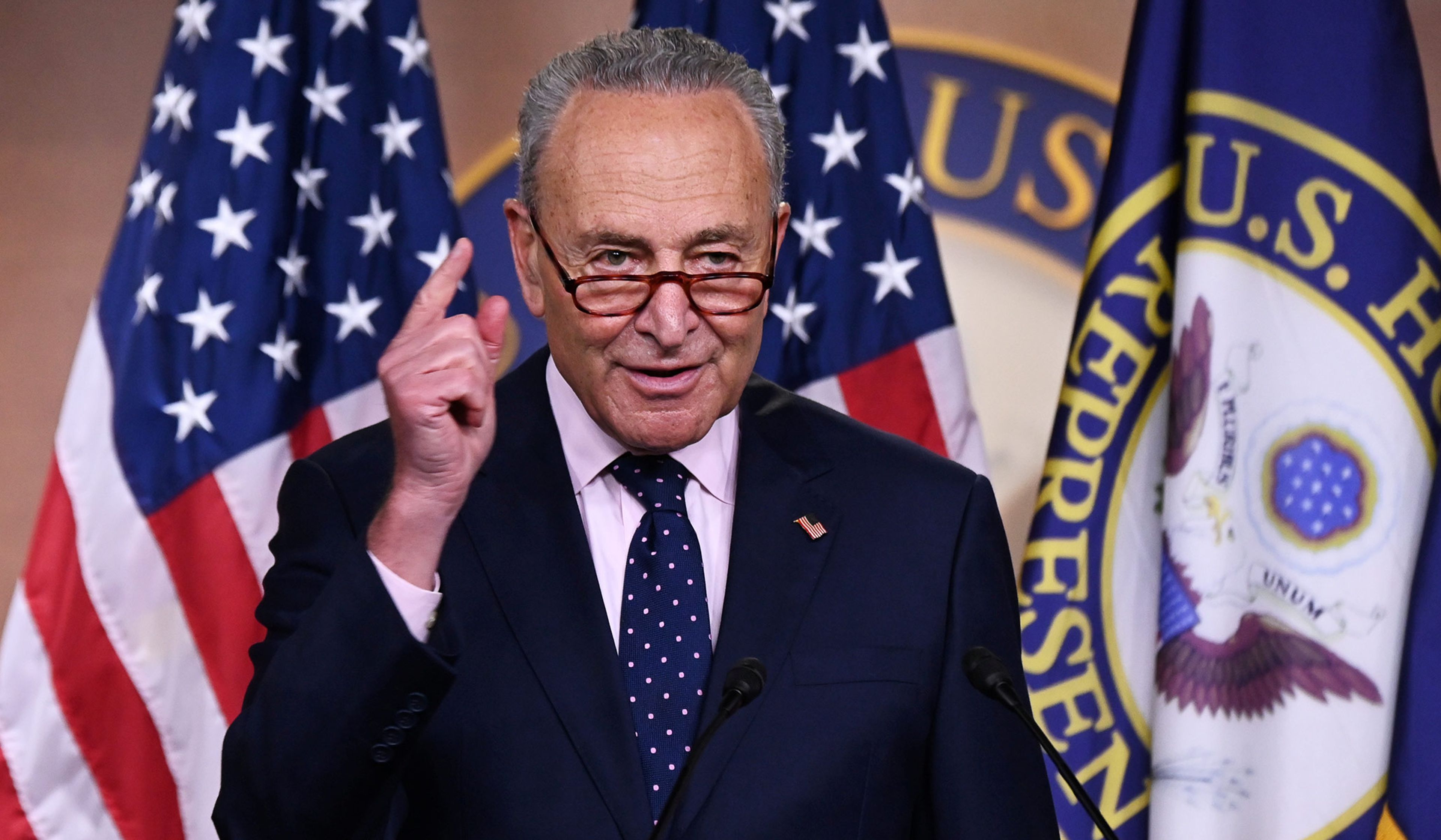
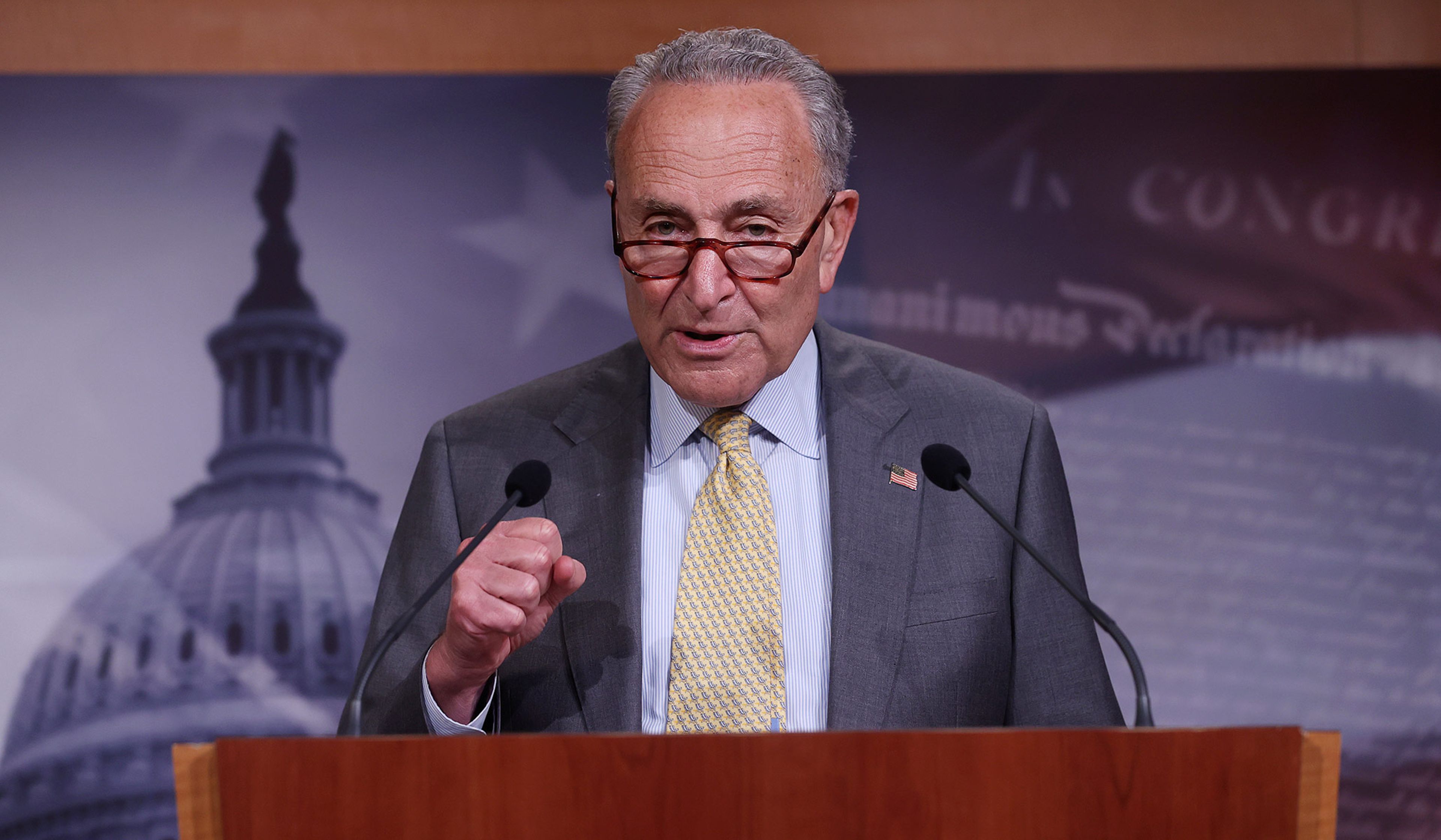
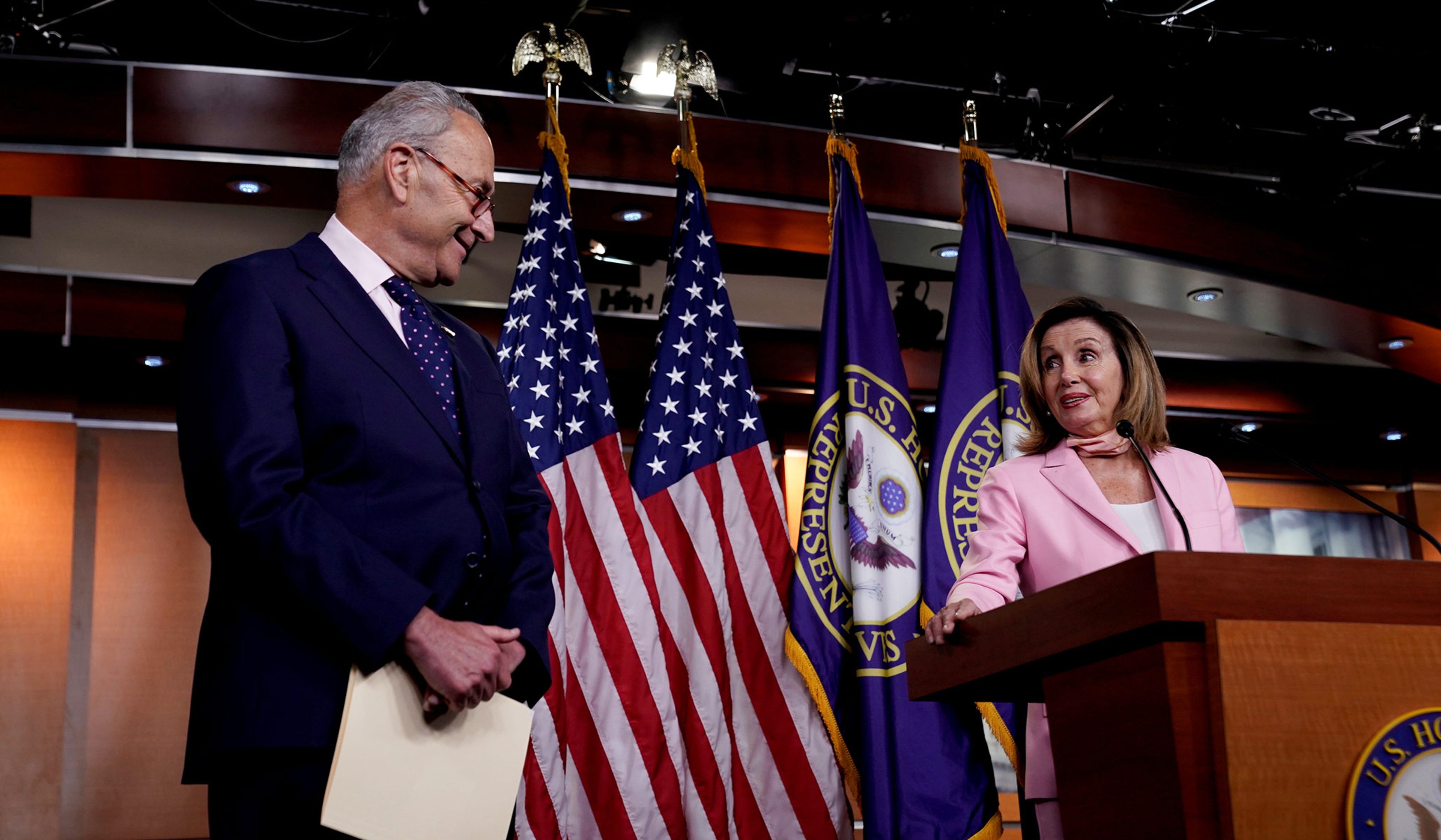
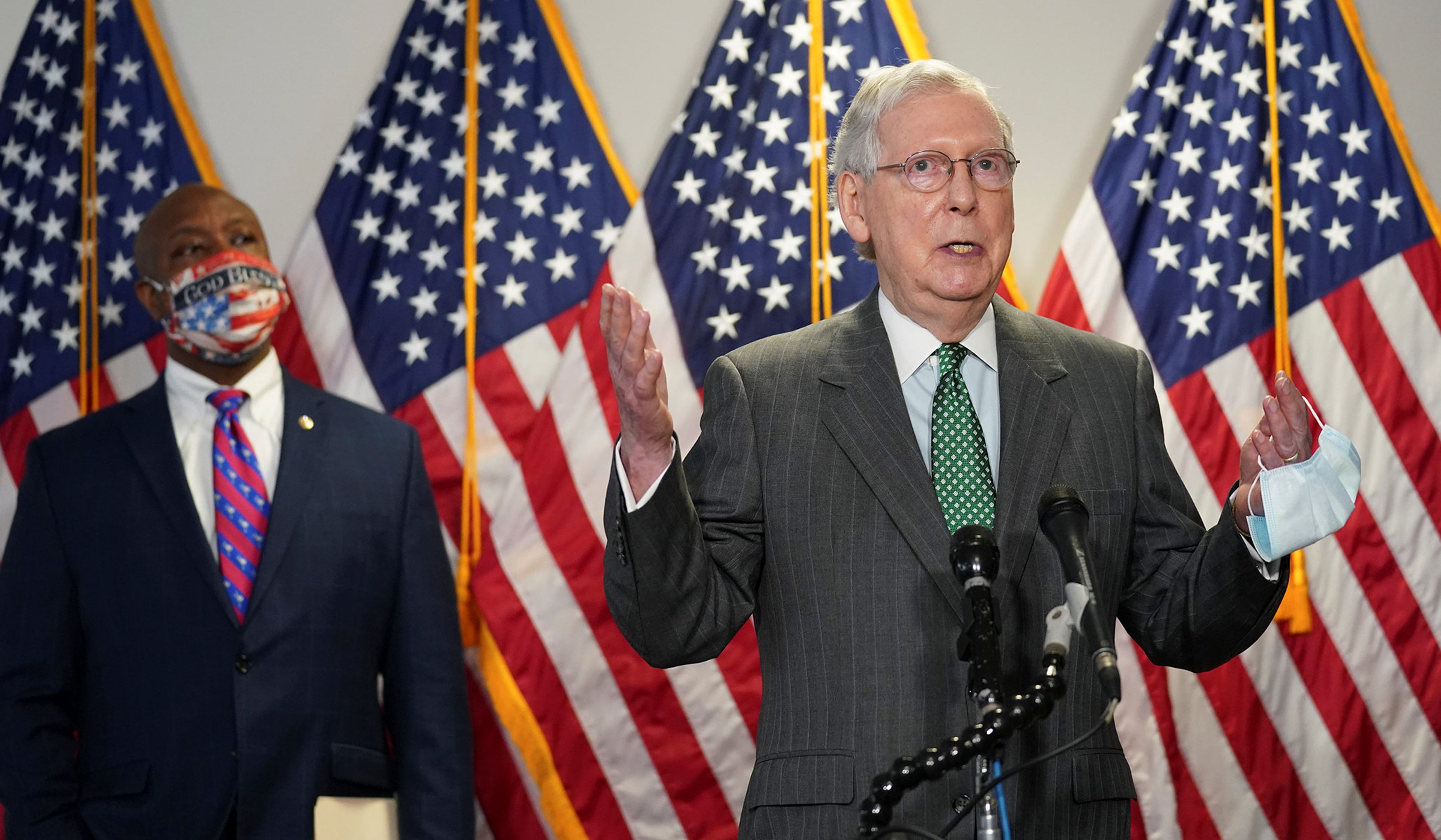
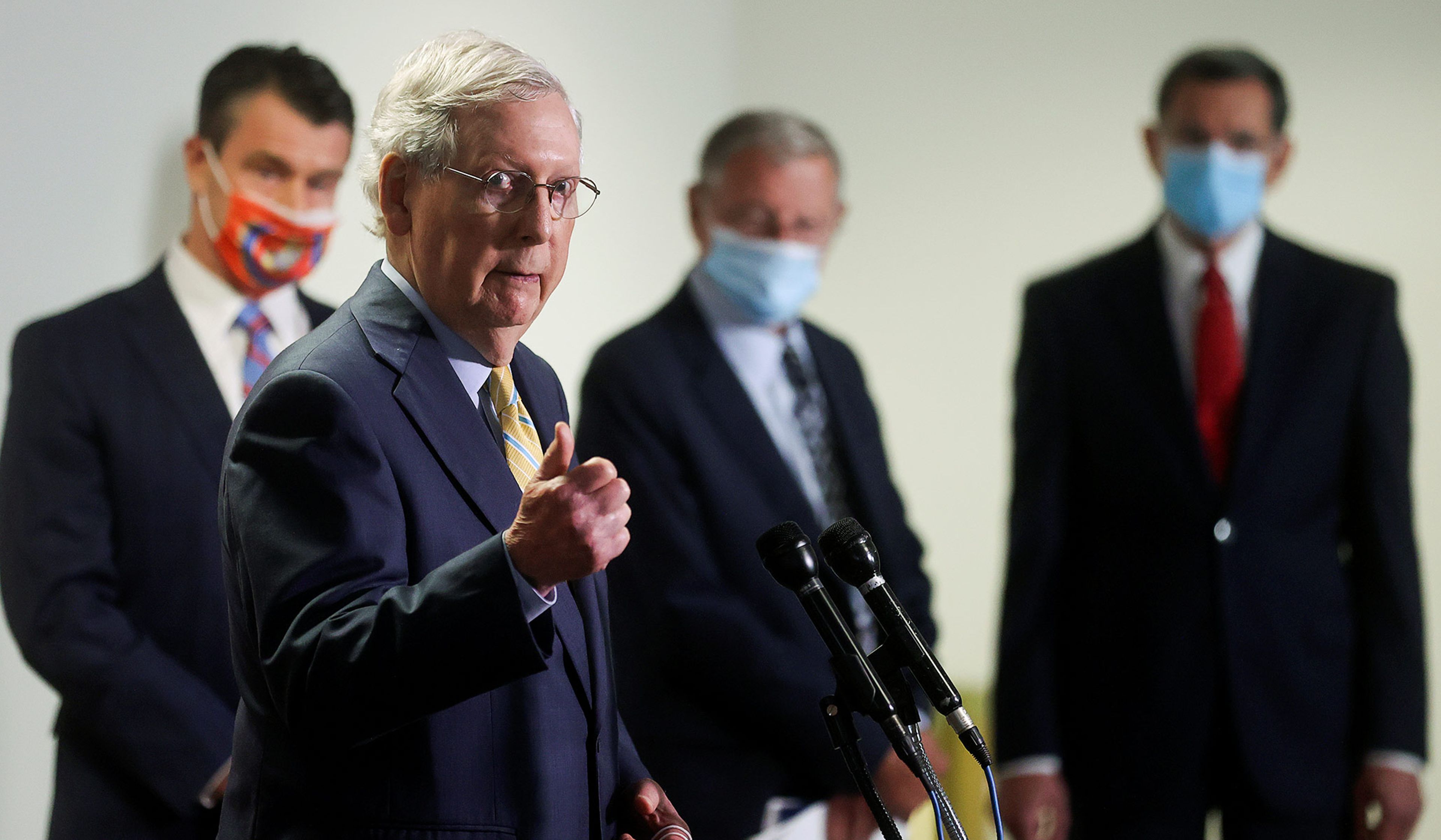

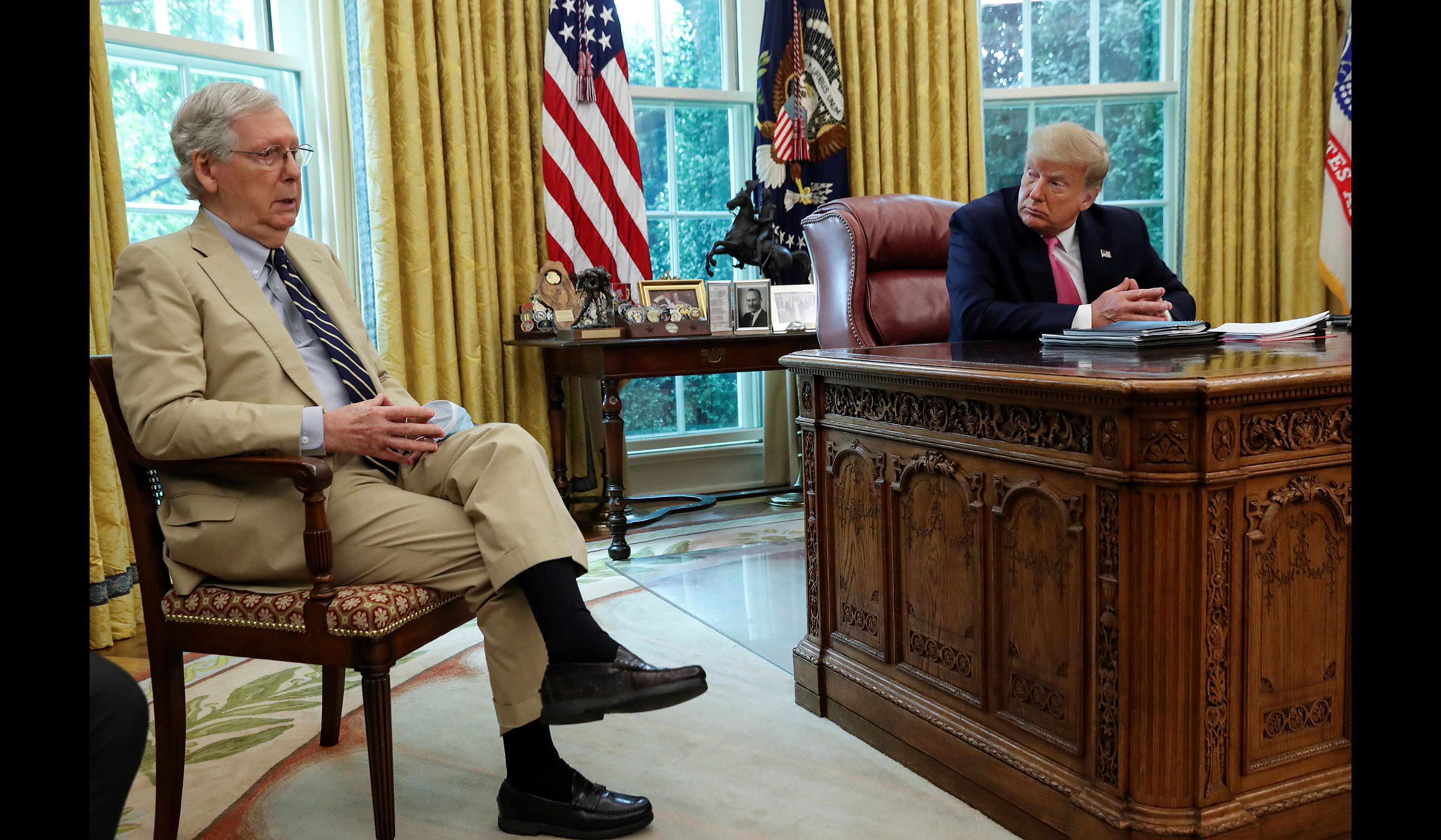
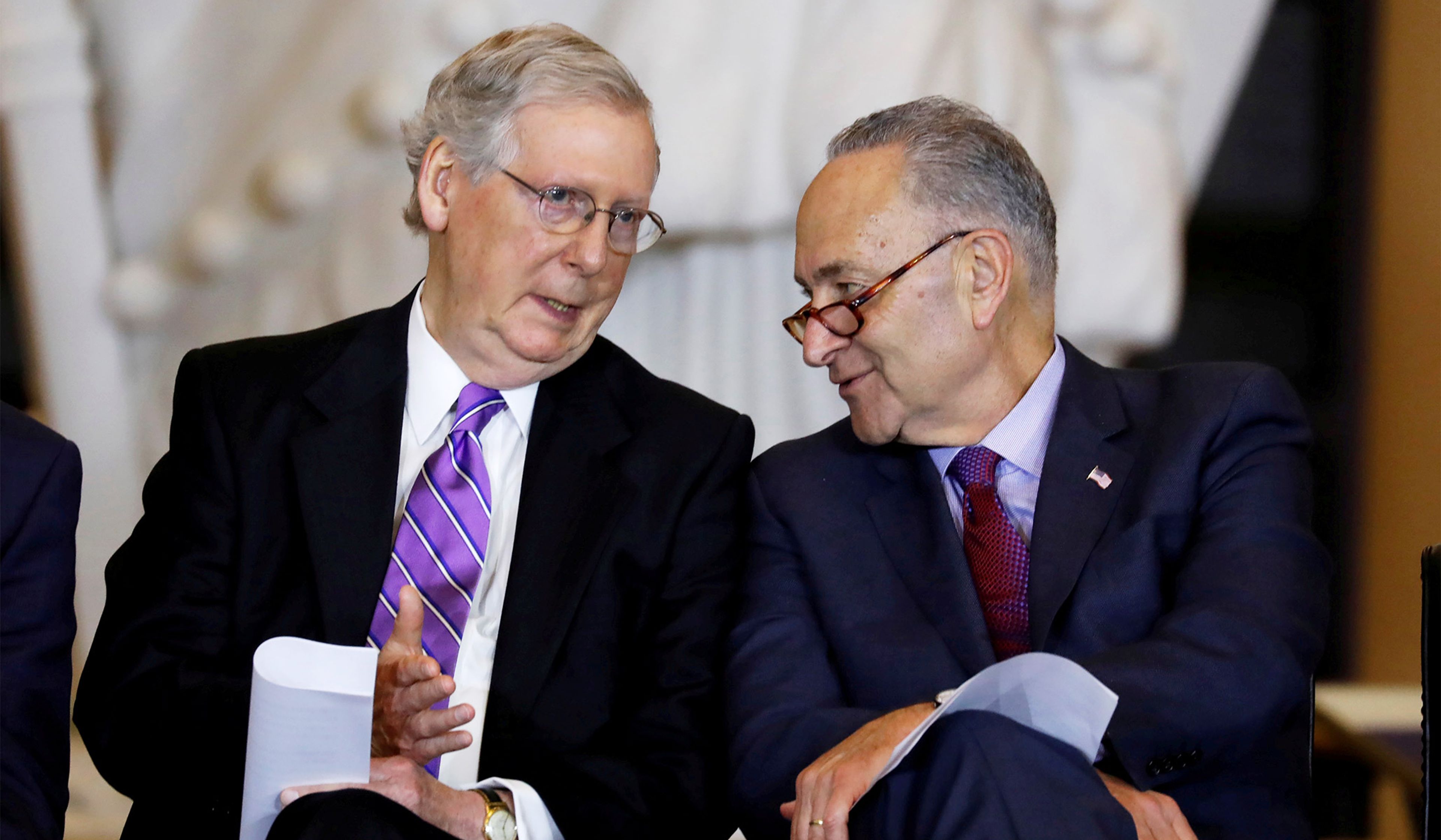
Senate Majority Leader Mitch McConnell (left) and Senate Minority Leader Chuck Schumer take part in a meeting with President Donald Trump and other Congressional leaders in the Oval Office at the White House, December 7, 2017.
Kevin Lamarque/Reuters
All of this would serve to damage whatever goodwill remained in the Senate. It would also place considerable strain on intraparty relations across the two chambers. The Senate majority leader would learn to pressure the speaker of the House, either to temper extreme House bills or to write legislation as an opening bid for bargaining. Conference committees would become the primary sites for legislating.
Still, a Majority Leader Schumer looking to protect his conference could easily find himself at loggerheads with a Speaker Pelosi attempting to fend off radical factions in her conference chamber. Is Chuck Schumer willing to declare the priorities of the Left dead on arrival? Is he prepared to watch senators defect and vote down these efforts on the floor?
Last, but certainly not least, a hypothetical President Biden, a creature of the Senate, might find himself missing the filibuster after a strong GOP showing in the 2022 midterms. After Republicans took control of the upper chamber in 2014, Harry Reid used the legislative filibuster to shield President Obama from having to veto Republican priorities. Should Republicans retake both chambers two years into a Biden presidency, the incumbent would have few instruments available to avoid using his veto pen. No president running for reelection wants to choose between obstructionism, which mobilizes the other party’s base, and accommodation, which saps energy from one’s own.
Under these conditions, the majority leader could extract brutal concessions on legislation in return for judicial confirmations — or vice versa. Those are precisely the sorts of concessions that could feed a primary challenge to Biden from the left. Biden’s advanced age, ideological amorphousness, and limited retail skills on the trail would make him vulnerable to just such an endeavor. A weakened, fragmented Democratic Party might, in turn, hand over unified power to the GOP after 2024, with no legislative filibuster to stand in the way of a conservative agenda. That prospect is almost enough to make one hope that the Democrats choose the nuclear option after all.












Comments