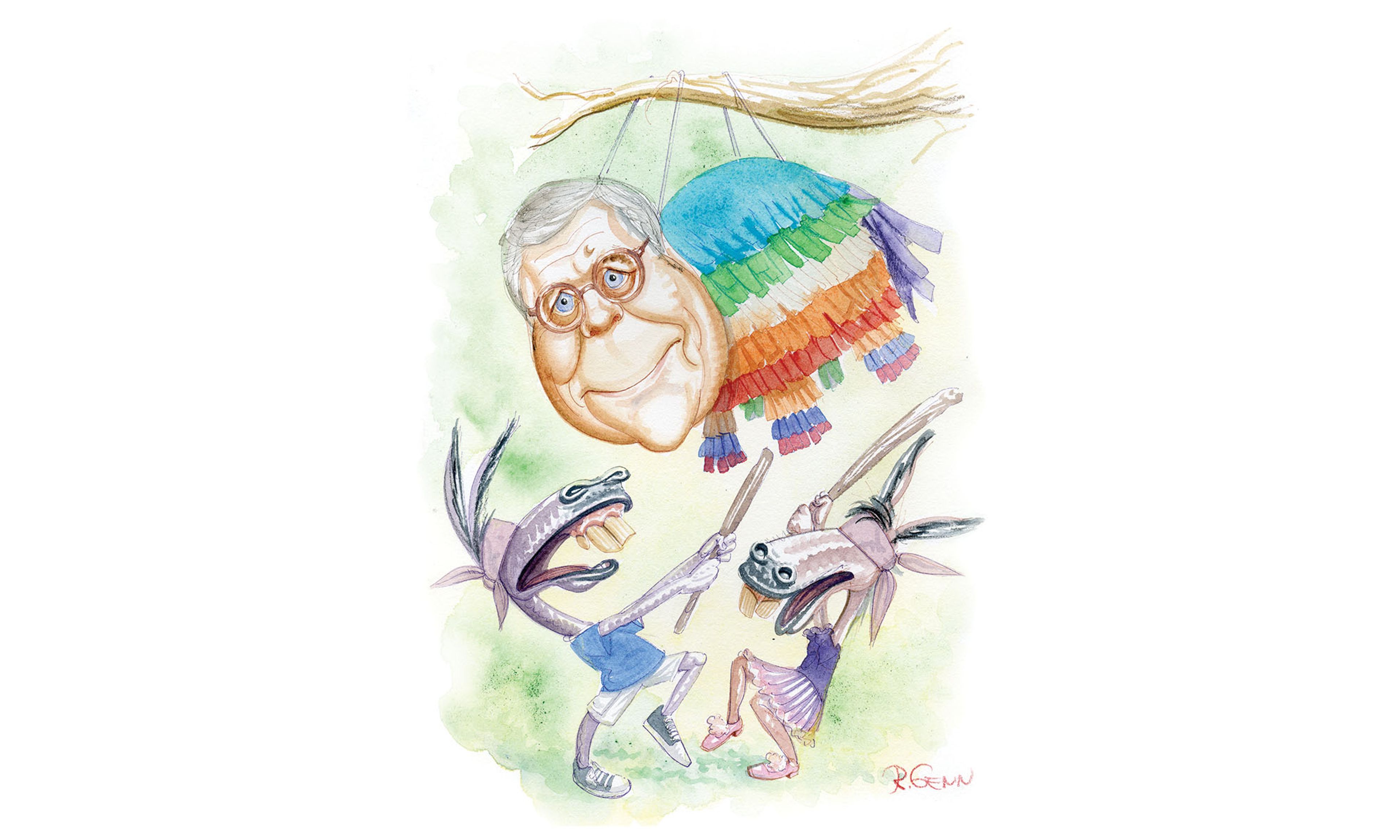
• In memory of the late Herman Cain, please join us in saying nine Hail Marys, nine Our Fathers, and nine Glory Bes.
• As the campaign rounds the clubhouse turn, a group of touts are busily sowing the homestretch with nails — Never Republicans, enemies of Donald Trump who seek to defeat not just him (he is doing a capable job of that unassisted) but all other Republicans too. In their view the GOP, like the village in the Vietnam War, must be destroyed in order to be saved. The eminence among them is George Will, journalistic treasure and longtime friend of NR. They do not consider that a hollowed-out party would be even more likely to remain in the hands of an aggrieved Trumpist rump. They ignore besides the example of two Republicans. Abraham Lincoln began life in a party that failed, the Whigs. He never raised a hand against it, staying with it loyally to its end. A century later Ronald Reagan enounced the Eleventh Commandment: Thou shalt not speak ill of a fellow Republican. Trump is a corsair, with no more loyalty to the GOP than someone who rents a car from Hertz. It is one more way his critics should not emulate him.
• Joe Biden says he wants equality. Who could be against that? But when politicians talk about inequality, watch your wallet — and the Constitution, too. Biden’s elephantine race-and-gender equality plans are a potluck of 1970s rehashes and cutting-edge progressive lunacy, with heaping side orders of federal spending and racial classifications. Biden would pretend the Equal Rights Amendment has already been ratified (even Ruth Bader Ginsburg rejects this contention) and ratify the radical-feminist U.N. Convention on the Elimination of All Forms of Discrimination Against Women. He wants $7 trillion in new spending, including $2 trillion on a Green New Deal. He would restore funding for Planned Parenthood, restart the legal assault on the Little Sisters of the Poor, revive unilateral Obama orders on asylum, and raise the minimum wage to $15 for waiters, plus tips. Biden believes the Fed, instead of focusing on sound money and stable banks, “should aggressively enhance its surveillance and targeting of persistent racial gaps in jobs, wages, and wealth.” An unelected body that puts “racial” and “surveillance” in the same job description should alarm anyone. The mask of the Biden campaign is the candidate’s supposed centrism. The reality is more than America can afford.
• Reopening schools for in-person instruction this fall should be a priority, but it will not be possible everywhere, and difficult judgments will have to be made. Many parents will be outraged if a school system seems to be dragging its feet, but the outrage would be stronger still if schoolchildren cause a deadly outbreak. Evidence is limited, since we did not conduct a controlled experiment about the spread of the disease among schoolkids this spring. We can say, however, that a rational policy is being undermined by the brazen opportunism of teachers’ unions. The Los Angeles union says that schools can reopen if there is a moratorium on charter schools and Congress passes Medicare for All. It has also been seeking limits on how long teachers should have to work online. A union official in Miami-Dade County told the New York Times that teachers might not perform well online out of discomfort at sharing images of their homes. One side-effect of COVID-19 may be bringing home to more Americans that the teachers’ unions don’t represent the interests of children.
• “Largely peaceful” has become an absurd journalistic trope denoting protests that descend into violence. Portland, by this way of thinking, has been largely peaceful for weeks now — peaceful protesters show up at the federal courthouse and eventually dissipate, then later in the night black-clad anarchists arrive to try to burn the place down and assault the federal officers guarding it. In response to the mayhem, the Trump administration sent additional forces to protect the building and arrest people breaking the law. This caused outrage among Democrats, who — as the House Judiciary Committee hearing with Bill Barr amply demonstrated — have looked past the violence of the rioters, and instead focused all their ire on the federal officers. Now, a deal has been struck between the feds and Oregon. The federal officers will pull back, assuming that the Oregon state police maintain order. If they can actually keep the streets around the courthouse peaceful, rather than largely peaceful, it will be a win-win.
• Barack Obama stole the show from the deceased at Representative John Lewis’s funeral by demanding statehood for Puerto Rico and D.C. and an end to the Senate filibuster, which he branded a “Jim Crow relic.” Never mind that unlimited debate in the Senate predates Jim Crow by over a century; he’s rolling. The hypocrisy is pungent: As a senator, Obama tried to filibuster Samuel Alito’s Supreme Court nomination and blasted Republicans for even considering limiting the filibuster. It was wrong, he said, “for one party . . . to change the rules in the middle of the game so that they can make all the decisions while the other party is told to sit down and keep quiet.” “An end to democratic debate,” he lectured us then, would mean that “the fighting and the bitterness and the gridlock will only get worse.” Indeed. The filibuster is democracy’s sobriety checkpoint, preventing the passage of new, often permanent nationwide legislation without the building of either large partisan majorities or bipartisan coalitions. Laws that surmount those obstacles — such as the civil-rights laws of the 1960s — are apt to prove durable. Besting the filibuster takes time, persuasion, and deliberation. Since when are these bad things?
• The Cato Institute published a national survey showing that self-censorship and partisan cancellations are becoming the new normal. Some 62 percent of citizens say the polarized climate in 2020 prevents them from stating things they believe to be true lest they cause offense. In 2017, this number was 58 percent. More unsettling, among strong liberals, 50 percent say they support firing Trump donors, while 36 percent of strong conservatives say they support firing Biden donors. Among Republicans with postgraduate education, 60 percent fear they would lose their job if they expressed an unpopular political view. We are bringing back the “silent majority” — this time fearful rather than merely taciturn.
• Police in Washington, D.C., arrested two pro-life demonstrators who were part of a group writing “Black preborn lives matter” in chalk on the public sidewalk in front of a Planned Parenthood clinic. According to the groups that organized the demonstration, D.C. had issued a permit allowing them to paint the message, though the city’s Department of Transportation hasn’t confirmed that. Earlier this summer, D.C. mayor Muriel Bowser herself commissioned a painting of the slogan “Black Lives Matter” on the street just outside the White House. Shortly thereafter, city officials permitted protesters to paint the slogan “Defund the police” right beside Bowser’s slogan. If the city did indeed issue the pro-lifers a permit, the arrests were an egregious abuse of authority. If the city didn’t issue the permit, its failure to do so was an example of illegal viewpoint discrimination. The demonstrators were defending equal rights, and deserve them.
• Where the law fades, new authorities will try to replace it. Black Lives Matter activists have been presenting demands to a number of businesses in NuLu, a business district in downtown Louisville, Ky., that has been the focus of long-running bitterness over gentrification. Louisville was also where EMT technician Breonna Taylor was killed by police during a “no-knock” raid in March. According to the Louisville Courier-Journal, the demands included hiring a percentage of staff in line with the African-American share (23 percent) of Louisville’s population. The businesses were also to agree to purchase 23 percent of their inventory from black-owned retailers (or pay a monthly donation equivalent to 1.5 percent of sales to local black nonprofits). Their staff would have to undergo “diversity and inclusion training.” The businesses would also have to “display a visible sign that increases awareness and shows support for the reparations movement.” For those who had not earned the right to display this badge, “repercussions for non-compliance” were detailed. A good number of businesses have gone along, but Cuban-American restaurateur Fernando Martinez, who was born and raised in Cuba and knows a thing or two about authoritarianism, declined to sign up, posting on Facebook that “there comes a time in life that you have to make a stand and you have to really prove your convictions and what you believe in.” Now we’ll have to see what Louisville believes in.
• Two issues ago, we opined on the nomination of Anthony J. Tata to hold the top policy job in the Pentagon. Tata is a retired Army general who turned Fox News commentator. We recommended that President Trump nominate someone else. Not only Democratic senators but Republican ones too questioned the judgment of someone who once tweeted, for example, that Barack Obama was “a terrorist leader.” Senate Republicans delayed a hearing on the nomination. So Trump appointed Tata to a job in the same Pentagon office that does not require Senate confirmation. What Tata will be doing is not entirely clear. “This is a flagrant end run around the confirmation process,” one Democrat, Senator Jack Reed (R.I.), fumed. A perfectly legal one, yes, but a violation of the spirit of our system.
• The New York Times reported that our ambassador to the United Kingdom, Woody Johnson, “told multiple colleagues in February 2018 that President Trump had asked him to see if the British government could help steer the world-famous and lucrative British Open golf tournament to the Trump Turnberry resort in Scotland.” The paper further reported that our deputy ambassador, Lewis A. Lukens, had emailed the State Department, relating what had happened. President Trump flatly denied that he had ever spoken to Johnson about Turnberry. We wish we could accept the denial at face value — but Trump has never quite learned the separation of government and personal business.
• Critics of corporate bailouts have long argued that having politicians “pick winners and losers” in the marketplace is a near-guarantee of corruption — and here comes Larry Householder, offering proof. Householder, the speaker of the Ohio state house, has been arrested on federal corruption charges. Four Republican allies and a nonprofit, Generation Now Ohio, also face charges in the racketeering investigation. At issue was a $1 billion bailout for a failed nuclear-power business involving two plants owned by FirstEnergy Solutions of Akron. Householder and Republican colleagues led the way on that bailout, and federal prosecutors say they did it for some $60 million in payments laundered through a phony nonprofit. If there is any good news in the Householder case, it is that old-fashioned investigative work can still root out conspiracies of this nature. Corruption in state-level party organizations is a longstanding problem, and among those charged in the Householder affair is Matthew Borges, former chairman of the Ohio Republican Party. Political corruption is an attack on the foundations of self-government, and, if convicted, Householder et al. should face the harshest punishment offered by the law.
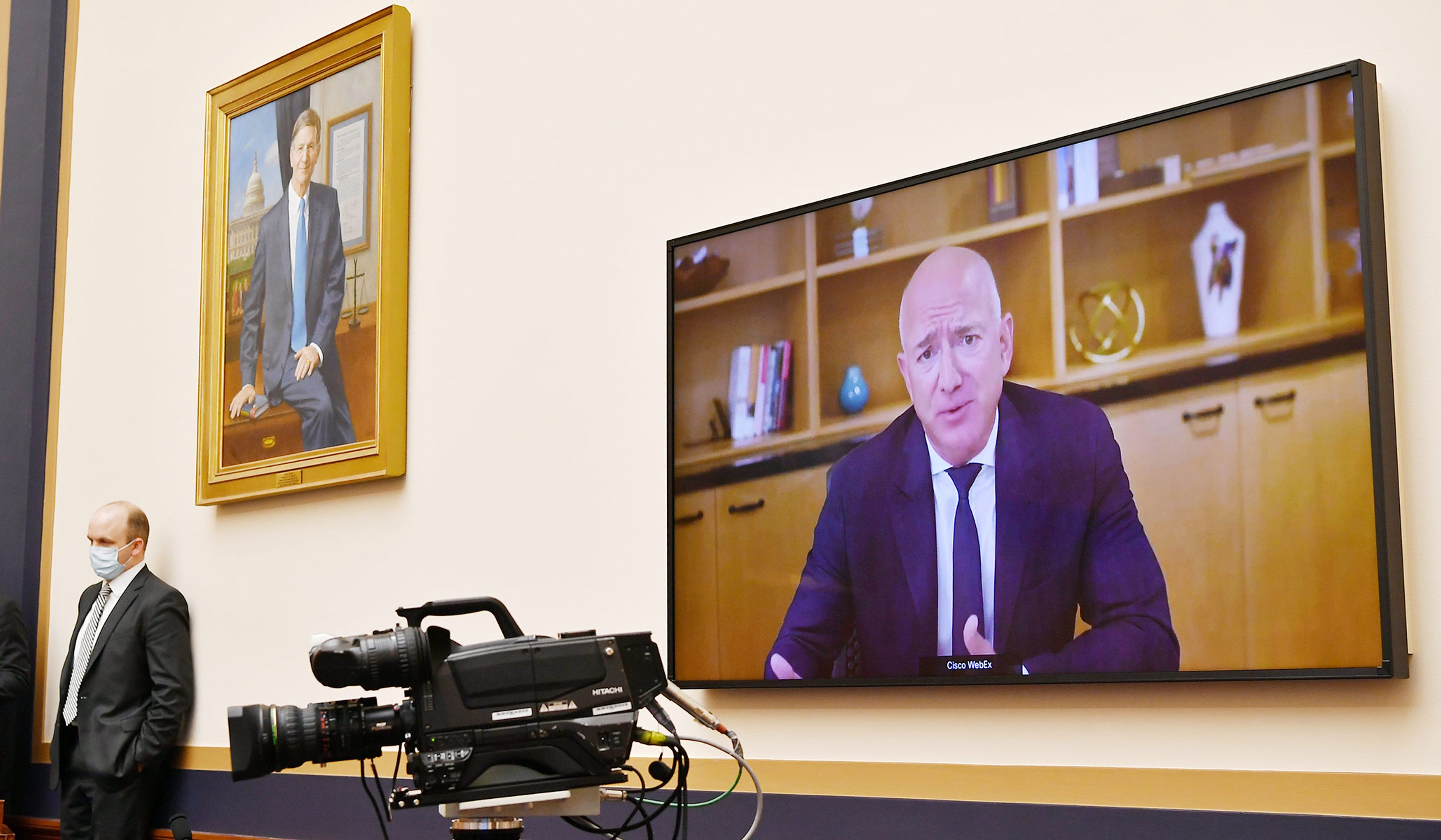
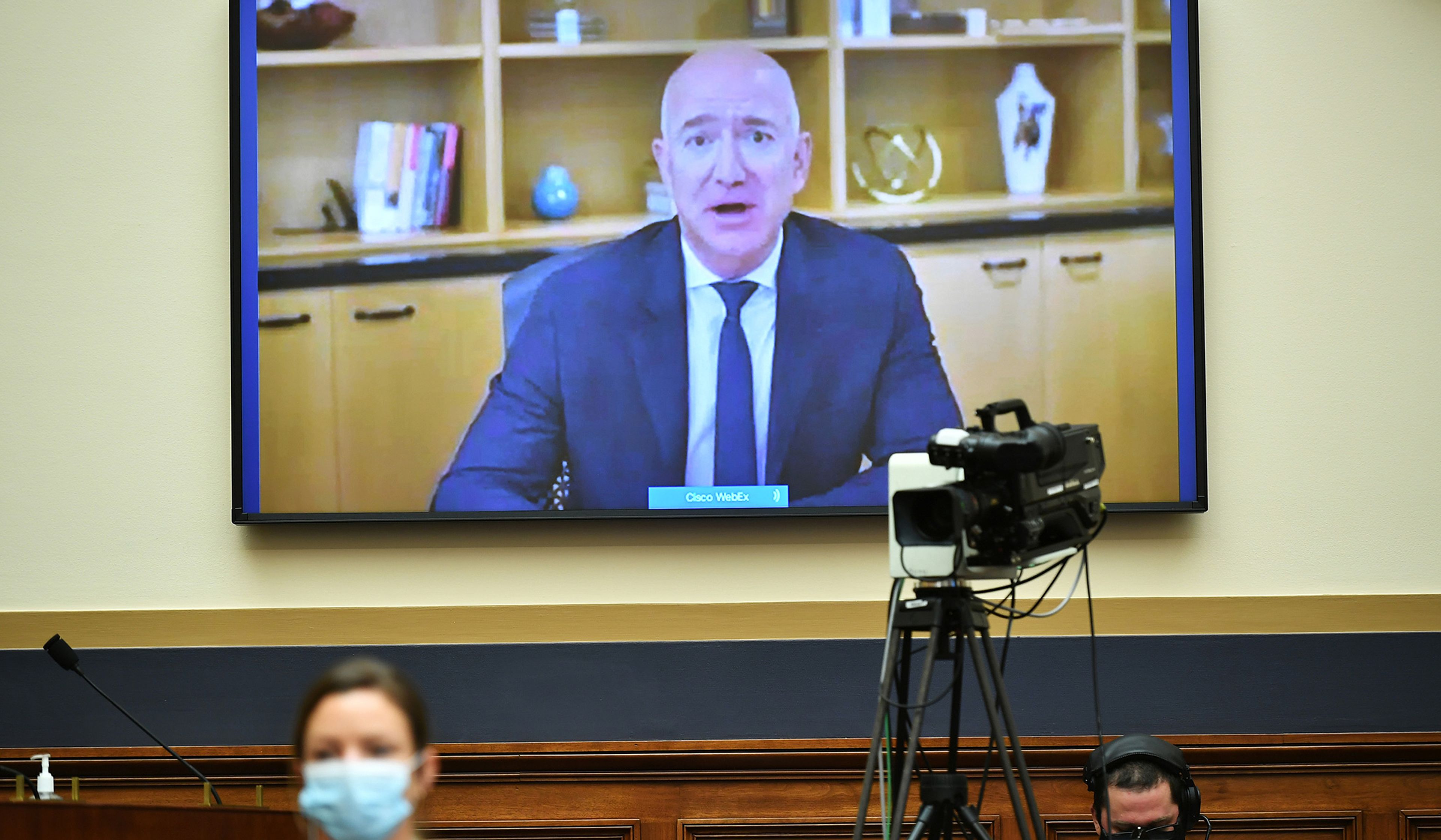
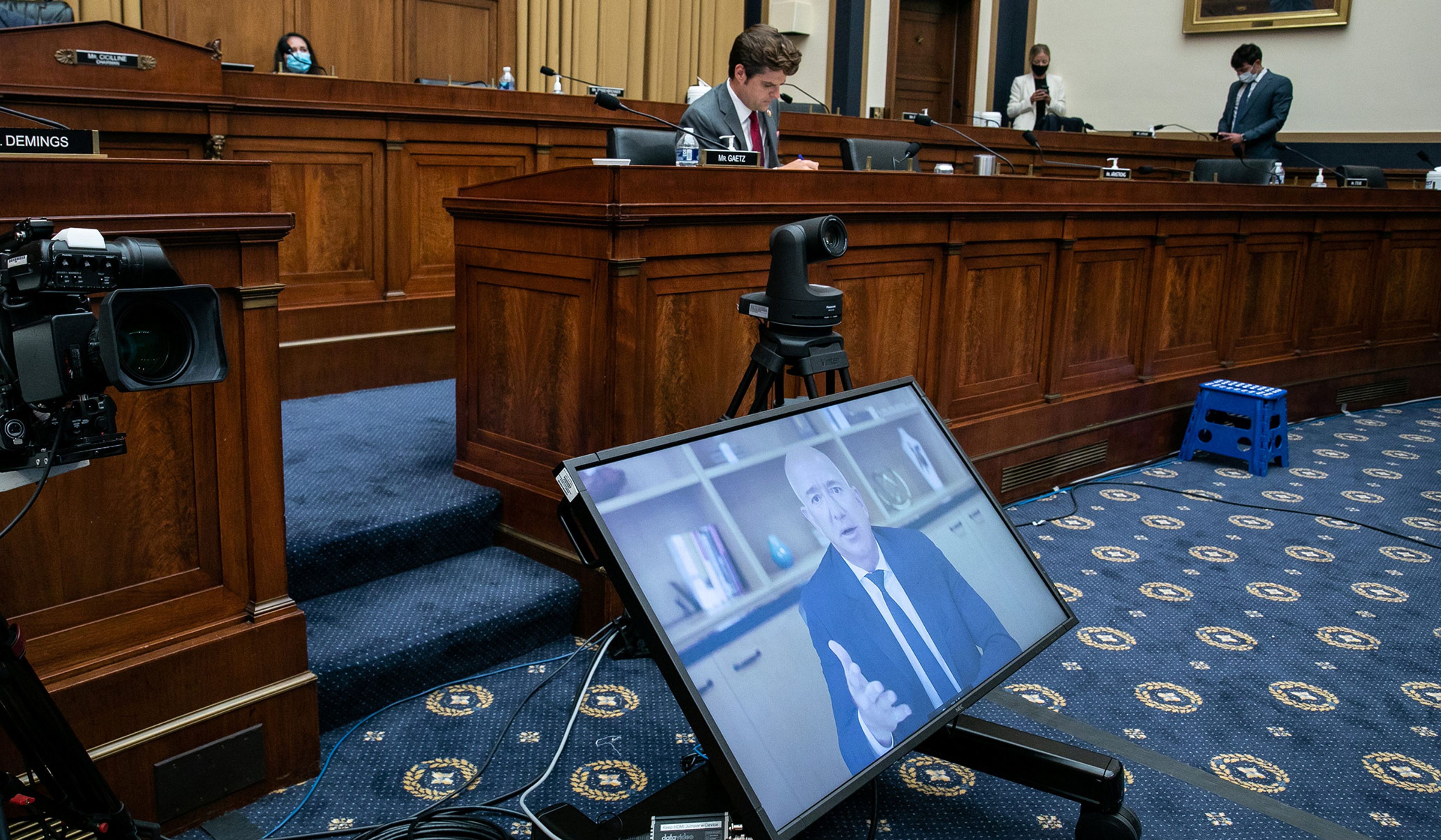
• During the House Judiciary Committee’s antitrust hearings, Matt Gaetz (R., Fla.) asked Amazon CEO Jeff Bezos why the company uses the Southern Poverty Law Center to help determine which organizations can receive donations through the AmazonSmile charity program. The SPLC has repeatedly beclowned itself by slandering conservative individuals and nonprofits and mainstream Christian ministries as hate groups and extremists. Among the smeared have been the Alliance Defending Freedom, the Family Research Council, and HUD secretary Dr. Ben Carson. “I’m going to acknowledge this is an imperfect system,” Bezos replied. “I would love suggestions on better or additional sources.” In this case, subtraction should be the first step.
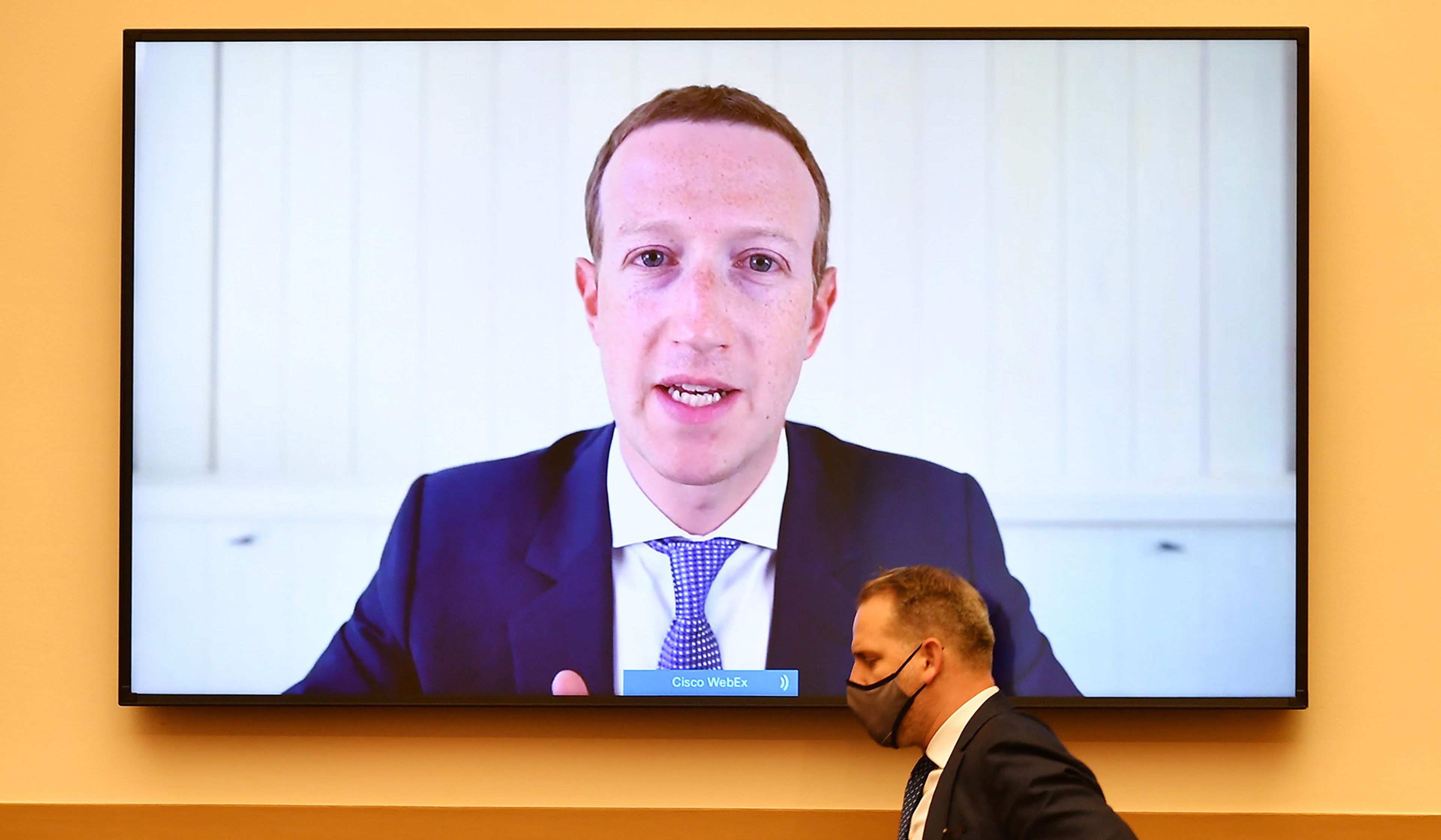
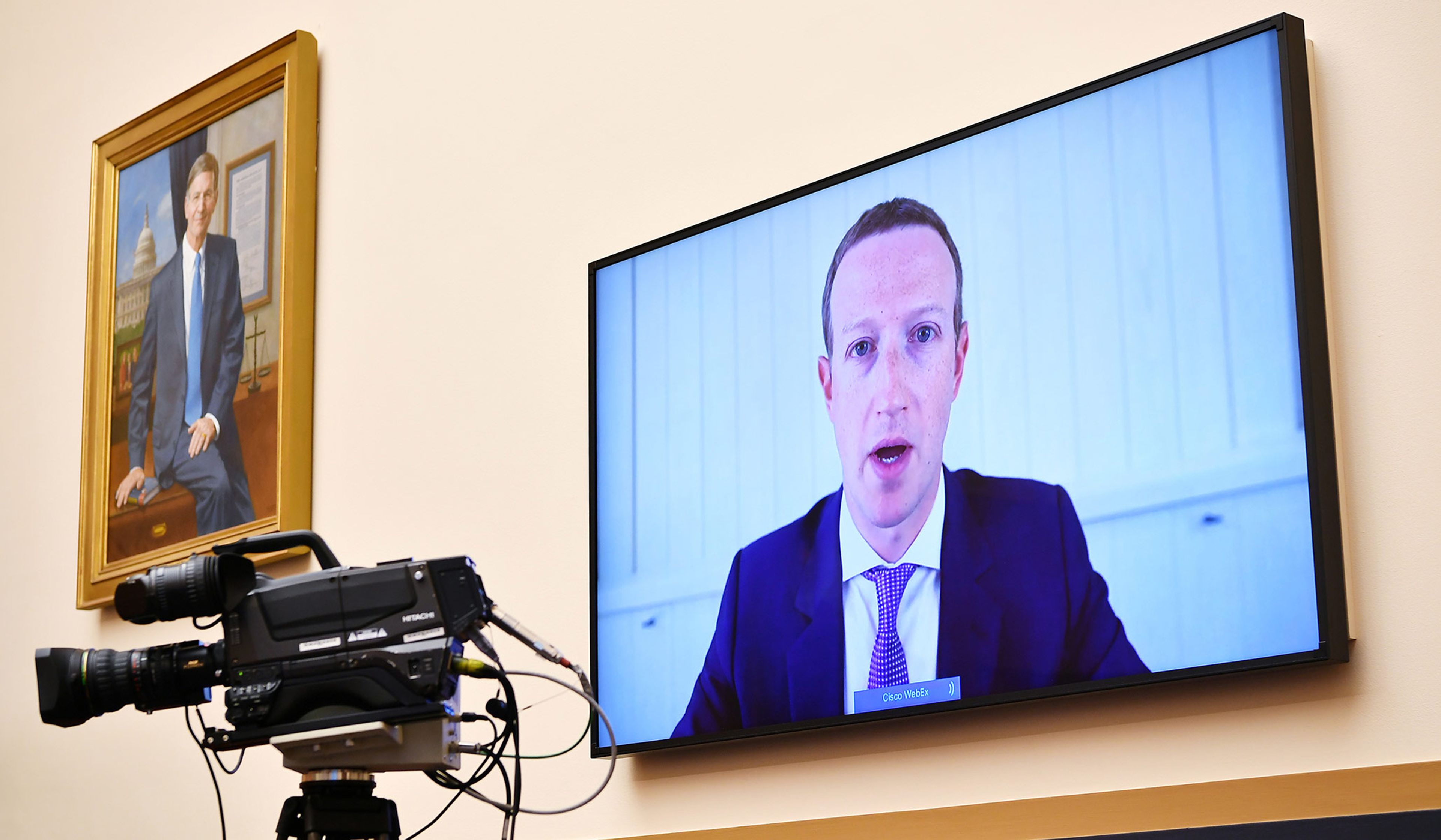
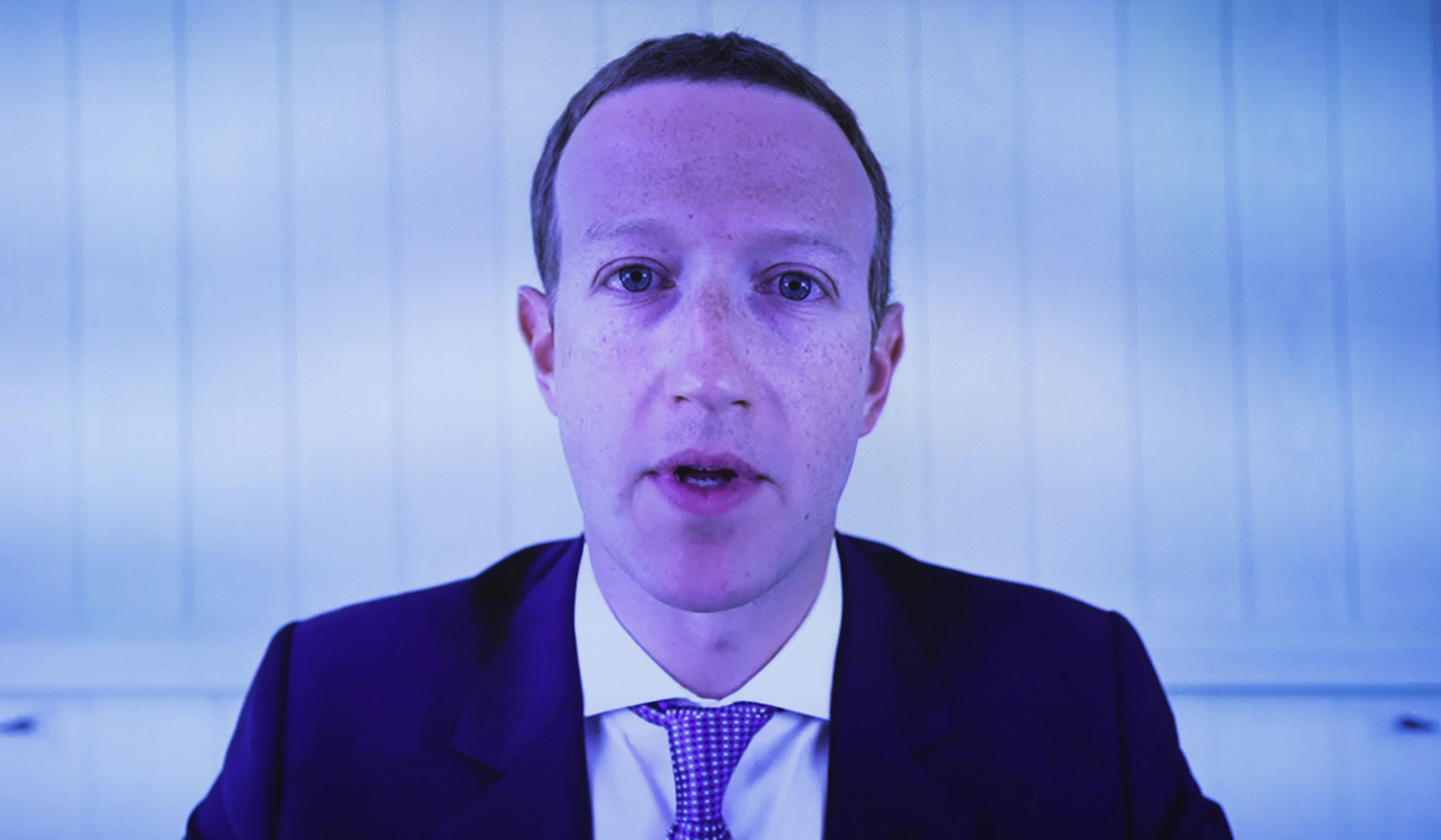
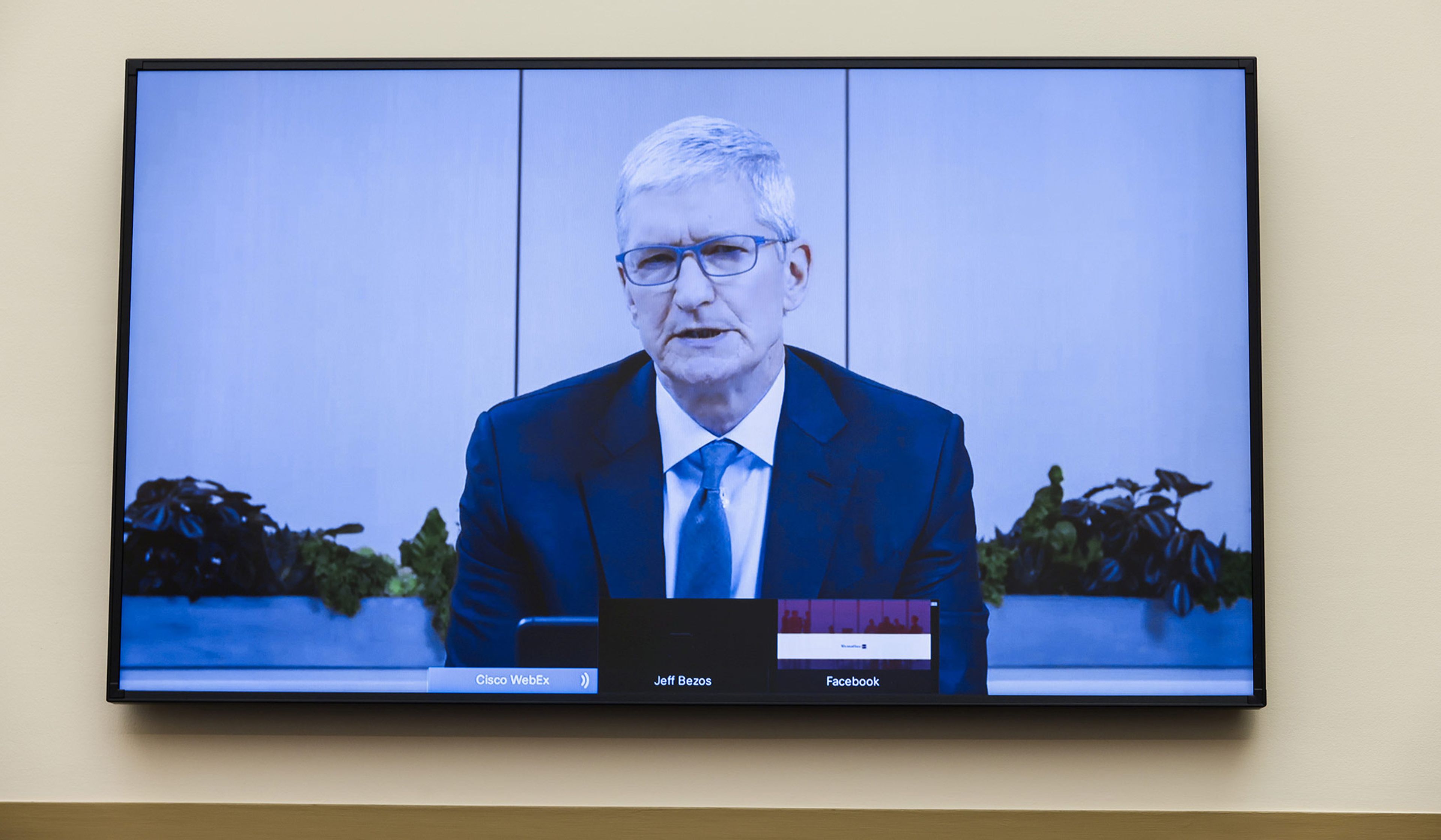
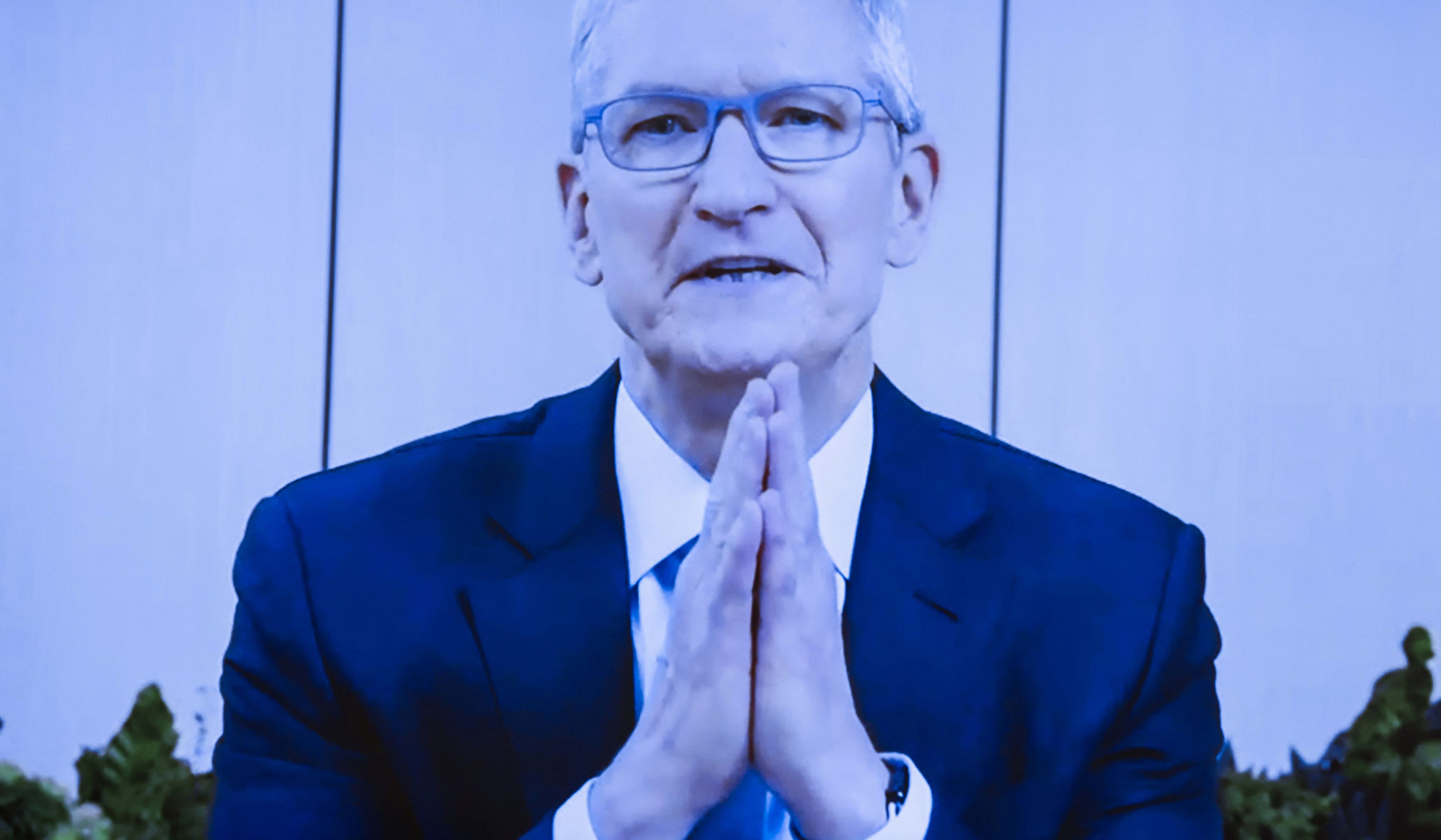
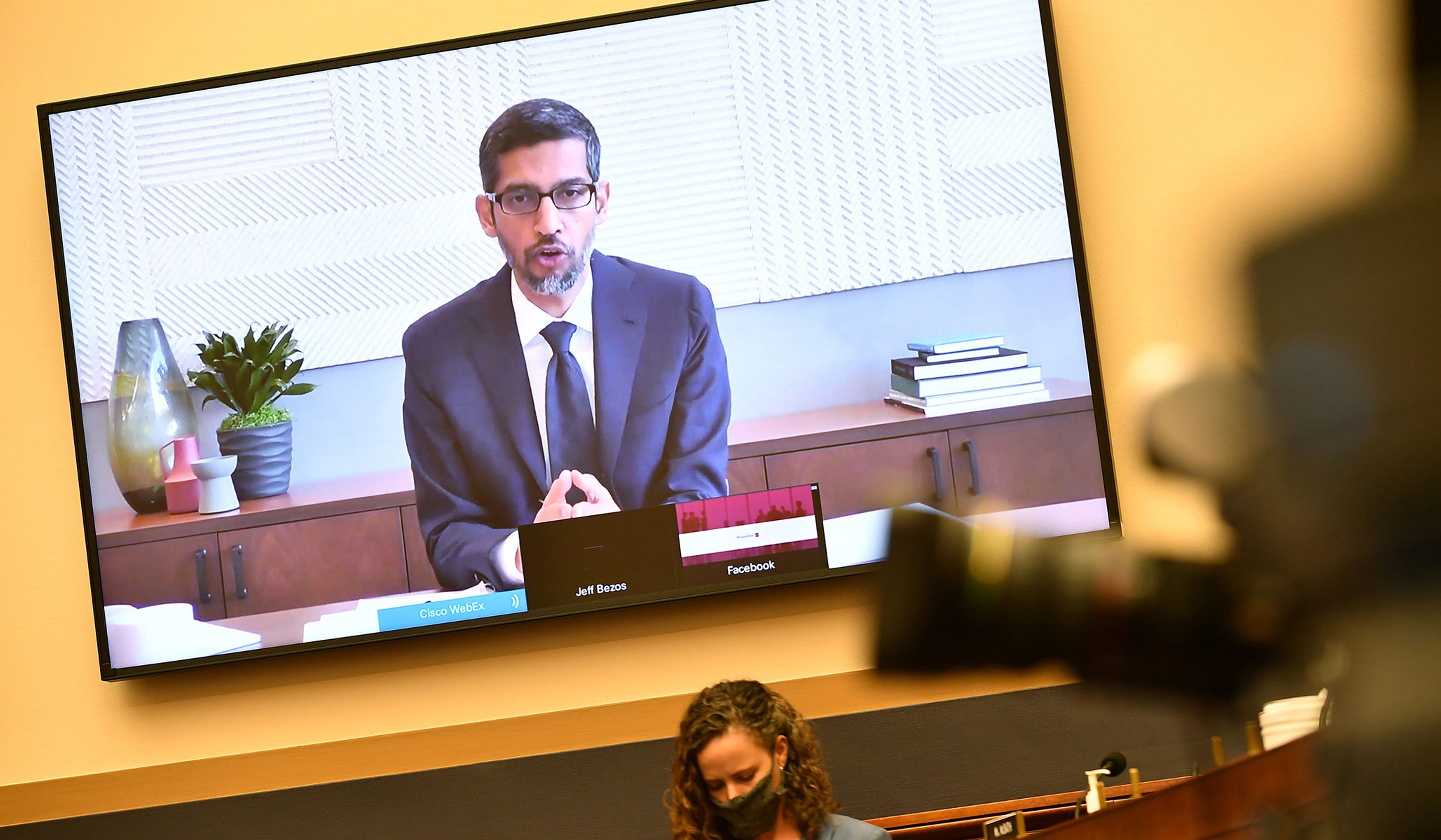
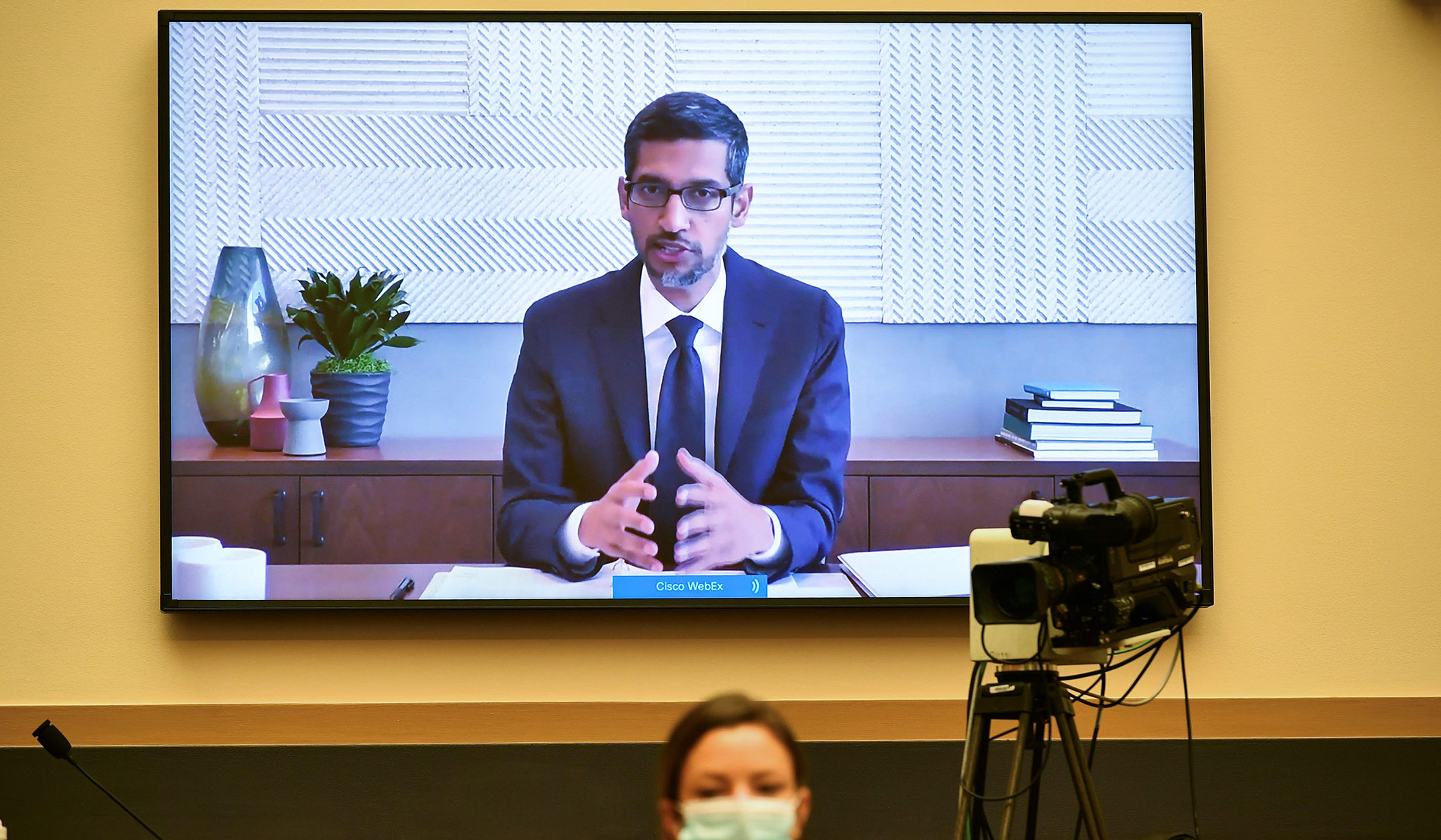

Facebook CEO Mark Zuckerberg testifies before the House Judiciary Subcommittee on Antitrust, Commercial and Administrative Law on “Online Platforms and Market Power” on Capitol Hill, July 29, 2020.
Mandel Ngan/Pool/via Reuters
• Following the economic statistics too closely this year will induce whiplash. That’s because the economy is stopping and starting in response to trends in the spread of coronavirus, and because the statistics are often snapshots of the economy’s performance from a few weeks or months ago. The statistics are also reported in unhelpful ways. All of this came together on the release of the news that the economy had contracted by 9.5 percent in the second quarter, with media outlets hyping it as an “annualized rate” of 32.9 percent. The truth is bad enough: The economy is very weak and will remain so until people feel safe enough to resume normal economic activity on a sustained basis. Discount scary numbers that reflect the past, and discount as well signs of rapid recovery until they have lasted a while.
• Senator Josh Hawley (R., Mo.) says that he won’t vote for any Supreme Court nominee unless he has said in public that Roe v. Wade was wrongly decided. There is nothing in principle wrong with his conditioning his vote on such a declaration, and a lot right with it: Roe was an act of raw judicial power, as Kennedy appointee Byron White said at the time, unmoored from the text, original meaning, history, purpose, and structure of the Constitution. Senators ought to evaluate judges on, among other things, whether they will embrace absurd constitutional interpretations that usurp power for themselves. In that way, senators can serve as checks on that power. The prudential difficulty is that a nominee inclined to oppose Roe may not be able to be confirmed if forced to declare a position. Justice Clarence Thomas, the only justice on the Court who has clearly stated his opposition to Roe, would not have been confirmed if he had said it before the Senate vote. Neither would Justice Brett Kavanaugh, who has voted to uphold restrictions on abortion. Justice Neil Gorsuch might not have made it. Moreover, a commitment that Roe was wrongly decided isn’t the same as a commitment to overturning it. The senator’s frustration is amply justified, his tactic misguided.
• Trump said that he would ban the popular video-sharing app TikTok — but a few days later he reversed course, giving Microsoft until September 15 to strike a deal to buy it from ByteDance, the app’s Chinese parent company. TikTok’s American employees claim that the app’s user data stays in Singapore and the U.S. However, ByteDance’s well-documented collusion with the Chinese Communist Party has convinced the likes of Chuck Schumer and the Biden campaign that TikTok cannot be trusted. A “ban” by itself would not be foolproof — unless the U.S. government restricted Web traffic to the app. Barring that drastic move, facilitating TikTok’s acquisition by an American company would be a victory in the strategic competition with China. To completely eliminate any security threat, the Trump administration must make sure that Microsoft brings all of the app’s operations back to the United States. This would be no small feat, but Microsoft has the resources for it. The administration has been right to work to neutralize this potential threat (even if the president has muddied the waters by demanding, absurdly, that Microsoft pay off the U.S. Treasury as part of any deal). According to Mike Pompeo, the administration might focus on the Chinese messaging app WeChat next. There’s more work to do in countering Beijing’s long reach into cyberspace.
• The Trump administration has indicated that it may be willing to waive the death penalty in the event of the successful prosecution of two British-born Islamic State terrorists — Alexanda Kotey and El-Shafee El-Sheikh — whom our military has detained in Iraq. Among the victims of the ISIS cell, nicknamed “the Beatles” for their London accents, were Americans James Foley, Peter Kassig, Steven Sotloff, and Kayla Mueller, who were barbarically tortured, raped, and beheaded, along with 23 other Western hostages. After Kurdish forces captured the terrorists, the British Home Office feared that various legal restrictions might cause Kotey and El-Sheikh to walk free if their prosecution was attempted in the U.K. For that reason, the pair were stripped of their citizenship, and then–attorney general Jeff Sessions agreed for them to be extradited to the U.S., where, pending a successful prosecution, capital punishment could be used. In March of this year, however, the U.K. Supreme Court found in favor of one of the terrorists’ mothers, ruling that due to European human-rights laws, the British government could not share intelligence about the men unless the U.S. agreed to forgo the death penalty. Only the Department of Justice knows whether or not it has enough evidence to prosecute the pair without the U.K.’s help. If they do not, however, then waiving the death penalty is the fastest way to bring them to justice and ought to be pursued.
• One could be forgiven for believing that the Chinese government would at least attempt to cast its takeover of Hong Kong as a national-security measure. Mainland officials say that the new Hong Kong security law, under which they have arrested people for possessing banners that say “Hong Kong Independence,” is intended to combat terrorism and sedition. As if to put the lie to that claim definitively, Beijing has delayed elections for Hong Kong’s Legislative Council by a full year. It’s no mystery why: Last time Hongkongers went to the polls, in November of last year, they awarded 86 percent of contested seats to pro-democracy candidates. The election delay marks the latest in a series of violations of the Hong Kong Basic Law — and, by extension, the Sino-British Joint Declaration — by the Chinese government. The White House should swiftly impose sanctions on those responsible for Hong Kong’s repression, as recent legislation enables it to do. A weak response will embolden Beijing to double down on its belligerence.
• Canada’s new annual report on “medical assistance in dying” shows that about 14 percent of the 5,631 Canadians killed by doctors last year asked to be lethally injected because of “isolation or loneliness.” Among the other reasons given for seeking physician-assisted suicide were “loss of ability to engage in enjoyable activities,” “inadequate control of pain (or concern about it),” and “perceived burden on family, friends, and caregivers.” Canada is working to expand the reasons that someone can qualify for lethal injection. The amelioration of suffering is central to civilization, and snuffing out sufferers as an alternative is a sad retreat from it.
• Hungary’s largest independent news website, Index, has been hollowed out. Miklos Vaszily, a businessman with a history of refashioning independent media organizations into reliably pro-government outlets, acquired a stake in Index earlier this year. In July, the editor in chief, Szabolcs Dull, was fired. Two days later, 70 of the 90 editorial staff resigned, after meetings with management to seek Dull’s reinstatement. In Hungary, state advertising is placed in media that support the ruling Fidesz party and Prime Minister Viktor Orban. It is withheld from dissenting outlets, creating an economic incentive for them to give up the fight. The government’s effort to seize control of the media landscape is legal. It’s also contrary to the spirit of liberal democracy, but that’s the point. Orban promotes a vision of “illiberal democracy,” whose “stars” include, by his reckoning, Putin’s Russia, Erdogan’s Turkey, and Modi’s India. Though they overlap, conservatism and the Right are not coterminous.
• Margaret Sanger may have founded Planned Parenthood, but its Manhattan Health Center will no longer bear her name. Talks are underway to rename Margaret Sanger Square in Greenwich Village. Sanger’s support for eugenics and alliances with racists have finally caught up with her, even among her ideological descendants. She evangelized for birth control to cull the “feebleminded” from the population and develop a “greater American race.” But she did not advocate abortion, which she considered a form of infanticide and associated with “the life of savage people.” Planned Parenthood commits roughly one third of all abortions in the U.S. It has more to answer for than Sanger’s vile views, and is guilty of much more than its current ingratitude toward her.
• It was only the day before yesterday when an athlete could elicit nationwide controversy by kneeling during the national anthem. Now you create a stir if you don’t kneel. Jonathan Isaac of the Orlando Magic chose to stand during the anthem before a game against the Brooklyn Nets; he also chose not to wear the Black Lives Matter T-shirt that all the other players had on. He was the first player in the league to stand for the anthem since teams restarted play in July. Isaac explained his choice, based on his religious principles, to his teammates before the game, and while Twitter created its usual insta-fuss, we are happy to report that virtually no one in the real world, or even in the NBA’s anti-COVID isolation “bubble,” criticized Isaac’s decision. The fact that he felt he had to justify showing respect for his country’s anthem and flag is obviously discouraging, but, at least in this instance, people seemed to accept the idea that someone can love the U.S.A. and oppose racism without being expected to take sides between the two.
• Rutgers University’s English department announced that it would honor “linguistic diversity” by reducing its emphasis on “traditional grammar.” Instead, professors will adopt a “critical” approach to the university’s writing curriculum — that is, they will encourage the use of nonstandard academic English so as to be more inclusive. The move is part of a wider series of anti-racist initiatives. Among other measures, multiple departments have added activist-writers such as Ta-Nehisi Coates and Michelle Alexander to the syllabi of mandatory courses. Students majoring in English will be required to take classes in African-American literature, and their professors will receive extensive anti-racist “training.” While the announcement has received the praise of Black Lives Matter activists, some students consider Rutgers’s measures deeply condescending. Perhaps some future university administration will have the sense to apologize for them, ideally in the standard English of the day.
• Senator Tom Cotton (R., Ark.) wants to pull federal funds from any school that uses the New York Times’ “1619 Project” curriculum. Curricula have long and rightly been under local control. But since federal money is supposed to pay for the education of children, there can’t be any principled objection to trying to keep it from being diverted to miseducation. The tension between these two considerations is one reason to wonder whether federal funding of K–12 education, which has not obviously served to promote learning, is a good idea.
• Trader Joe’s uses whimsical names for its foreign-food products: “Trader José’s,” “Trader Giotto’s,” “Trader Ming’s,” etc. These names proved a target for wokistas, who circulated a petition demanding that the names go. At first, it seemed that Trader Joe would buckle. But, in the end, the company stood firm, saying, “We disagree that any of these labels are racist,” and “We do not make decisions based on petitions.” Bravo (as they say in Italy).
• Cries for racial justice ring out in every quarter, including in classical music. Recently, some people have called for an end to blind auditions — a process by which musicians compete for orchestra jobs behind a screen. The screen has been important to many musicians, many auditioners, over the years. It has helped fill American orchestras with Asians and women. The way to get more black musicians into orchestras is to concentrate on music education, especially at early stages. Fortunately, this is happening. Orchestras are likely to reflect this development before long. To admit musicians without a blind audition is to taint the status of such musicians.
• The Upper Midwest is replete with Americans of Scandinavian descent, and in St. Johns, Mich., you will find a bed-and-breakfast called the Nordic Pineapple. What you won’t find is the Norwegian flag the owners used to display, along with the Stars and Stripes. Passersby mistook the Norwegian flag for the Confederate flag, and harassed the owners about it. So, with a heavy heart, and some bewilderment, the owners took the Norwegian flag down: a victory over intelligence, if not oppression.
• At a moment when national unity is under attack, and the bonds of affection are beyond strained, many publications have decided to capitalize “black” and (less often) “white” — to indicate a Black people and a White people, a Black culture and a White culture. (Would the White culture include s’mores and badminton?) Without naïveté and sweeping-under-the-rug, Americans should rediscover the national ideal of E pluribus unum. These capital letters are worse than hyphens.
• Opening Day in July. Stands empty except for cardboard cutouts representing absent fans. Toronto playing its home games across the border, in Buffalo. The pandemic has forced Major League Baseball in 2020 to make some big adjustments. Owners, league officials, players, and umpires hashed out their differences after long negotiations and have improvised a baseball season of sorts. Bravi! But attenzione! Twenty-one Miami Marlins players and coaches soon tested positive for COVID. The St. Louis Cardinals have reported 13 positive tests. Games have been postponed. Then more games. Red Sox pitcher Eduardo Rodriguez ended his season after testing positive and suffering a heart ailment linked to the coronavirus. The 2020 MLB season, fragile from the beginning, is scheduled through the end of the postseason in the fall. If the virus defeats that plan and MLB deems it prudent to shut down before the last game of the World Series, so be it. Wait until next year — when we can, let’s hope, even go out to the ballgame.
• “I’m an integrationist by principle & a segregationist by taste,” Flannery O’Connor wrote to a friend in 1964. “I don’t like negroes. They all give me a pain and the more of them I see, the less and less I like them.” Her private correspondence includes more in that vein. Some of her defenders argue that she was joshing, playing the part of one of the bigoted characters she exposed in her fiction. Beyond dispute is that, in her life as in her art, she gave voice to racist sentiments. In a new book on the topic of O’Connor and race, Angela O’Donnell stresses the complexity and nuance of the more troubling passages. In The New Yorker, Paul Elie expressed his skepticism of O’Donnell’s charitable reading. Overnight the disagreement escalated into a cause célèbre. Wringing his hands, the president of Loyola University Maryland removed O’Connor’s name from a residence hall. He should put it back. “In her fiction, the dignity of African American persons and their worth is consistently upheld,” he acknowledged, “with the bigots being the object of ridicule.” To wit: O’Connor saw her sin, confessed it to friends, and repudiated it in her work. That is enough.
• In 1873, Father Damien, a Belgian Catholic missionary priest in Hawaii, volunteered to serve as chaplain to a leper colony on the island of Molokai. There he lived and worked with the lepers for the next 16 years, eating with them, teaching school, painting their houses, building coffins, and digging graves, in addition to saying Mass and administering the sacraments. He contracted the disease and died in 1889. He was canonized a saint 120 years later. A statue of him stands in front of the state capitol in Honolulu and in the National Statuary Hall in the U.S. Capitol. In an Instagram story on “patriarchy and white-supremacist culture,” Representative Alexandria Ocasio-Cortez pointed to the Father Damien statue as an example of a colonizer honored at the expense of the people colonized. Of all the statues to pick on . . . She later elaborated, nodding to Father Damien’s good work, explaining that we need to add to our pantheons of national heroes more women and nonwhites. Fine, but let’s not cancel saints.
• Milos Jakes belonged to the old school of Communists who did whatever Moscow wanted. Aged 23, in 1945 he joined the Czech Communist Party and never looked back. Sent to Moscow to learn the ropes at the Soviet Party School, he met and befriended Mikhail Gorbachev. When the Soviet army invaded Czechoslovakia in 1968, Jakes came into his own with a program known as Normalisation, which meant shutting the country down. In the end, Gorbachev proved Jakes’s nemesis. No sooner did Gorbachev take over and begin his reforms than Jakes was put in a quandary. Opposing everything Gorbachev stood for, he had to praise him. In 1987 he became general secretary of the Czech Communist Party, and only two years later he was swept away in the Velvet Revolution. By then, he was lucky to escape retribution. He was tried for not preventing border guards shooting at escapers. Unable to come to terms with what he had done, he carried on promoting his beliefs until he died, aged 97. R.I.P.
• Olivia de Havilland, a British-born, newly naturalized U.S. citizen, joined the Hollywood chapter of the Citizens’ Committee in 1944, taking it for what it appeared to be, a pro-Roosevelt public-policy advocacy association. After discerning that it was in effect a Communist front group, she recruited Ronald Reagan to draft a declaration whereby they and other members would establish the outfit’s independence of the Party line. Communist and anti-anti-Communist members shot down their effort. De Havilland, Reagan, and other Hollywood figures resigned in protest, sapping the group’s relevance and scoring a victory for anti-Communism in the film industry. Despite that achievement and her support for Truman’s prosecution of the Cold War, the House Committee on Un-American Activities summoned her on the suspicion that she was a Communist sympathizer. “I wore a red suit,” she later recalled, “and I said, ‘Please don’t think that the color explains my political opinion.’” She fought Hollywood studios for actors’ rights. She won. From 1935 to 1988, she appeared in 49 movies, for which she received dozens of major awards and honors, including the National Medal of Arts in 2008. She was Melanie Hamilton, noble, unforgettable, in Gone with the Wind. Dead at 104. R.I.P.
• Herman Cain grew up in Atlanta. Son of a chauffeur and a cleaning woman, he went to Morehouse, and went on to become an executive at Pillsbury and Godfather’s Pizza, a director and chairman of the Federal Reserve Bank of Kansas City, and CEO of the National Restaurant Association. He vaulted into politics by challenging President Clinton about the employer mandate of his health-care plan. This second career climaxed with a presidential run in the 2012 cycle. Cain was part of a trend, begun by Jesse Jackson and Pat Robertson, of non-officeholders running for the presidency (generals were hitherto the main exceptions). His campaign ended abruptly amid charges of sexual harassment, which he denied. Cain was a firm backer of that most successful of all non-officeholders, Donald Trump. He succumbed to the coronavirus at age 74. He will be remembered for his ebullience and verbal gusto, delivered in his rich Georgia accent. R.I.P.
VOTING
Don’t Delay the Election, Prepare for It
President Trump outdid himself with a tweet floating the idea of delaying the election, an incendiary and absurd idea unworthy of being spoken — or even thought — by a president of the United States.
Top congressional Republicans poured scorn on the idea, and the Trump campaign backed off.
The president obviously doesn’t have the power to delay the election. The Constitution gives Congress the power to fix the date of the election, and since 1845, it’s been the first Tuesday after the first Monday in November. This is such an ingrained tradition that it is part of the warp and woof of American democracy.
The proximate cause of Trump’s tweet was his frequently expressed opposition to mail-in voting. We, too, prefer in-person voting, as a matter of ballot security and civic ritual. Given concerns over any sizeable gatherings of people during the pandemic, though, states are inevitably embracing more mail-in voting.
This raises the prospect of an excruciating overtime after the election if it’s close, because it takes so long to count mail-in ballots. This, in itself, will serve to undermine faith in the process, but it doesn’t justify the president of the United States’ undermining it further (in large part because he wants an excuse if he loses).
The president is convinced that more widespread voting by mail will aid the Democrats. It’s not clear that this is true, especially given that older voters, who lean Republican, are especially inclined toward it. Nor is mail-in voting the sink of corruption the president portrays it as. It needs to be carefully monitored, but more than 30 million people voted by mail in 2016 without corrupting the outcome.
The real problem is the aforementioned prospect of delayed tallies. Our colleague Yuval Levin of the American Enterprise Institute suggests that Congress should push back the deadlines, on a one-time basis, for receiving final results from the states and for the formal meeting of the electors (currently December 8 and December 14, respectively). Any such changes are highly sensitive, but it’s best to do them now rather than in the midst of a slow-counting train wreck.
It doesn’t matter how much Trump hates the idea: This is going to be an unusual election, and it’s better to prepare for it than to inveigh against it.











Comments