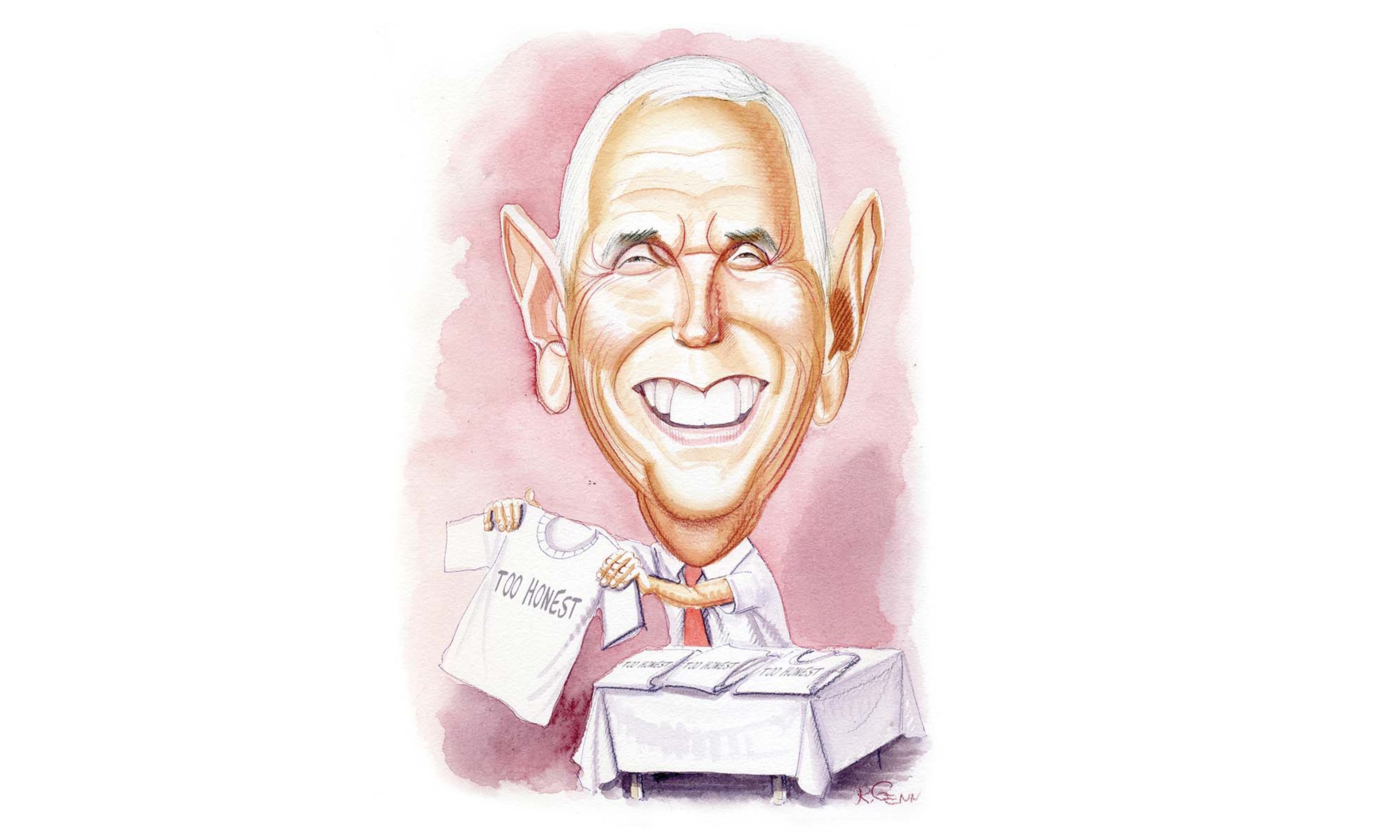
• At this rate, future oaths of office will be administered by special prosecutors.
• Hunter Biden’s longtime friend and business partner Devon Archer told a congressional committee that their business consisted of selling the “Biden brand,” which meant selling the allure of access to and association with Joe Biden, starting when he was vice president — the period when, as committee investigators have shown, foreign actors connected to various corrupt or anti-American regimes transferred more than $20 million to nine (!) Biden family members in labyrinthine transactions that used 20 limited-liability companies Hunter had begun setting up early in the Obama era. Archer recalled about 20 occasions on which Hunter put his vice-president father on the phone with the business’s foreign “partners.” These included Mykola Zlochevsky, the Ukrainian oligarch who owned Burisma, who installed Hunter on the company’s board to court Biden’s influence and — if Zlochevsky’s so far uncorroborated claims to an FBI informant are to be believed — paid millions in bribes to Joe and Hunter. Archer’s testimony elucidates the obvious: It’s not just that Joe Biden was lying when he claimed not to have discussed the family influence-peddling business with Hunter; Joe Biden was the business.
• One often hears references to the Department of Justice’s “Hunter Biden investigation,” but there is no such thing — not in the sense of a real and appropriately thorough inquiry. A number of the crimes apparently committed by Biden fils have been well known for years — including some more serious than those to which he was poised to plead guilty until his sweetheart arrangement with prosecutors unraveled when a judge asked a few basic questions about it. These are straightforward crimes — e.g., tax evasion on millions of dollars in undeclared income from foreign sources and felony acquisition of a gun by a cocaine-user (the kind of offense that fires up Democrats when the offender isn’t named “Biden”). Yet there is no indictment, almost as though this administration wants the probe to disappear and the relevant statutes of limitation to be triggered.
• Listen to the witches once, Macbeth found, and you will be hearing from them again. It works in the direction of virtue too. After years of walking in Donald Trump’s footsteps, Mike Pence refused his orders — Trump’s lawyers are now repackaging them as requests — to disrupt the counting of electoral votes on January 6, 2021. Two and a half years later, crossing his ex-boss has become an almost daily occurrence, as Trump denigrates him and Pence pushes back. “Liddle Mike Pence,” wrote Trump online. “I never told [him] to put me above the Constitution, or that Mike was ‘too honest.’ He’s delusional, and now he wants to show he’s a tough guy.” When Trump minions heckled Pence in a New Hampshire parking lot, calling him “traitor” and “sellout,” he told them, “I upheld the Constitution. Read it.” More important, he has said that he would testify if called in any trial of Trump’s alleged efforts to undermine the election, and that he took notes “particularly at important moments” of that episode. Pence is being sincere, and Trump sincerely fails to comprehend it.
• President Biden, who has long said that he speaks to his six grandchildren regularly, has finally acknowledged his seventh, Navy Joan Roberts. The four-year-old is the issue of an affair between Biden’s reprobate son Hunter and Lunden Roberts, then an exotic dancer. The younger Biden admitted paternity only after a yearslong child-support suit. Children born out of wedlock often show parents and family in a bad light. John Trumbull, whose paintings of revolutionary virtue adorn the Capitol Rotunda and the two-dollar bill, sired a son on a servant girl; he introduced him only as his nephew until the lad was a young man. Joe Biden is past learning to dial down his self-regarding tales. Of Hunter the less said the better. May their young relative grow up to be a happy, honest, and responsible woman.
• Dianne Feinstein, age 90, has been a senator from California since 1992. Her acuity has been declining for years. A case of shingles, which put her in the hospital this spring, has diminished it further. Most recently she gave power of attorney to her 66-year-old daughter. Mitch McConnell, age 81, has been a senator from Kentucky since 1985. This spring he fell and was treated for a concussion. He recently froze during a press conference, aides escorting him from the mic after 20 seconds (he later said he was “fine”). Upper age limits on officeholders would be, like term limits, a rigid remedy to problems — incapacity, personal and institutional stasis — that should be handled case by case. Some politicians (Daniel Webster, Henry Clay, Henry Cabot Lodge) did their most valuable work in their golden years, after many terms. Men and women in power should know when their time has come, or have one or more trusted friends to tell them. Failing that, the voters will do the job.
• Political novice Vivek Ramaswamy has already learned two bad political habits, demagogy and evasiveness, which he combined in answering a question from Blaze TV about 9/11. Was the attack an “inside job,” or did it unfold “exactly like the government tells us?” “I don’t believe the government has told us the truth,” Ramaswamy replied. “What I’ve seen in the last several years is we have to be skeptical of what the government does tell us. . . . Do I believe everything the government told us about it? Absolutely not.” When the clip went viral, Ramaswamy hastened to explain that he believed al-Qaeda had done the deed and only wanted to know who in the Saudi government knew about it ahead of time. So why did he not lead with that, if that is what he wanted to know? Because what he wanted even more was for the nuts in his audience to think that he was in the cocktail snack bowl right along with them (inside job–adjacent!). Ramaswamy is too smart to be an America-hating dolt, but not too honorable to pander to such.
• Ruby Freeman and Shaye Moss were election workers in Fulton County, Ga. They are mother and daughter. They are suing Rudy Giuliani for defamation. He and others in Donald Trump’s orbit — including Trump himself — alleged that the women committed fraud in the 2020 presidential election. For instance, Giuliani said that they were “passing around USB ports like they were vials of heroin or cocaine.” In reality, mother passed daughter a ginger mint. When Trump & Co. made Freeman and Moss a target, the lives of the women turned hellish. Both women received death threats. On the advice of the FBI, Freeman fled her home. In a court filing, Giuliani has now admitted to false statements about the women. The case will proceed. Freeman and Moss say they want people to know that they are real flesh-and-blood people and that they paid an awful price for what others may have thought was simply a political game.
• In August, the fight over Florida’s slavery curriculum moved from mêlée to farce. One might have expected the contretemps to come to a swift end once it had been revealed that Florida’s new course contained near-identical language to the AP program that it was replacing. But this is political season, and America’s politicians are on the lookout for footballs. Before long, Governor DeSantis’s primary rival, Tim Scott, had admonished Florida. Soon afterward, he was joined by Byron Donalds and John James, two African-American endorsers of Donald Trump. Because he was factually correct, DeSantis refused to back down, which, in turn, prompted Kamala Harris to reiterate her initial claims. Jonathan Swift understood that “falsehood flies, and truth comes limping after it,” but even he could not have predicted how much worse this dynamic can become when partisan politics intrude. This has been a shameful affair, with lies replacing truth, race-baiting replacing debate, and expediency replacing consideration. In other words: mission accomplished, Kamala.
• Michigan governor Gretchen Whitmer has signed two bills into law banning so-called conversion therapy, defined as “any practice or treatment by a mental health professional that seeks to change an individual’s sexual orientation or gender identity.” At best, the law is a solution in search of a problem. The historic clinical abuses against those attracted to the same sex — including estrogen treatment, electroshock, and apomorphine-aversion techniques — were rejected by the medical profession decades ago. The dangerous practices now in vogue are puberty blockers, cross-sex hormones, and surgeries for those suffering from gender confusion. The law outlaws the only safe alternative to these practices. This is a perverse result, but perhaps to be expected given the inability of the bills’ sponsors even to see that conversion is exactly what they are after.
• When the Supreme Court banned racial discrimination in college admissions this June, in Students for Fair Admissions v. Harvard, it was an achievement worth savoring. But few believed that university administrations long devoted to racially balancing their student bodies according to arbitrary criteria would suddenly abjure that practice. Now Harvard has announced that next year’s admissions essays will include a primary prompt asking applicants to explain how their “life experiences” will contribute to a “diverse student body.” We somehow doubt Harvard is looking for Evangelical Christians.
• Gibson’s Bakery, as its motto puts it, has been “serving Oberlin and America since 1885.” Generations of Oberlin students have visited the front counter for fresh baked goods and bought necessities from the convenience-store shelves within. The store was also contracted to supply baked goods to Oberlin’s dining halls. This long and happy town–gown relationship was upended in 2016, when three Oberlin students attempted to steal bottles of wine but were stopped by the store owner’s son, who ran after them. The shoplifters were arrested. Since they were black, protests erupted. Students distributed flyers accusing the Gibsons of racial profiling and tried to drive the store out of business. College officials, including the dean of students, joined in, also handing out flyers. The baked-goods contract was suspended. After a yearslong legal battle, Gibson’s Bakery won a libel suit against the college and was awarded $36 million in damages, which the college finally paid last year. Oberlin turned to its insurers, who refused to reimburse on the claim. The college is now suing them. Oberlin has managed to enlist one’s sympathy for insurance companies.
• Teen takeovers are a thing in Chicago. Latest was a swarm of several hundred in the South Loop. The miscreants bounced on cars and trashed a convenience store. Several guns were found at the scene; 40 of the vandals were arrested. As if to put the Second City in its place, New York saw a mob of 2,000 attracted by influencer Kai Cenat’s offer to give away PlayStation consoles in Union Square. Cenat didn’t have a permit or a plan, so his disappointed fans attacked one another, cops, and food vendors just trying to make a living. Chicago’s left-wing mayor, Brandon Johnson, shushed a reporter who described his city’s ruckus with the M-word. “We’re not talking about mob actions,” Johnson said. “It’s important that we speak of these dynamics in an appropriate way.” Gotham was less mealymouthed: Cenat was charged with inciting a riot. Right actions begin with right thoughts, which require right words.
• For a long time now, the goal of antitrust enforcement has been to protect consumer welfare, a standard that has sharply curtailed the ability of ambitious regulators to use antitrust to reshape the economy on lines they think best. That frustrates Lina Khan, the progressive chairwoman of the Federal Trade Commission, whose departure from that standard has left the courts largely unimpressed. So now the FTC and the Department of Justice are proposing changing the merger guidelines that, although not legally binding, signal to companies the likelihood that a merger will be approved. If they come into force, the revised rules would greatly increase the number of transactions that could be caught within the FTC’s net as well as adding time, uncertainty, complication, and thus expense and risk to the approval procedure. Unwilling to go through this, or the ordeal of challenging an adverse ruling, many companies will decide that, however beneficial it might be, a possible merger is not worth the bother. Which is, of course, Khan’s purpose, whatever it implies for consumers.
• In the last few years, heavily taxed New York and California have been hit by two structural changes. The first was the cap put on the state-and-local-tax deduction, bad news for the wealthier taxpayers who pay so many blue-state bills. The second was that working from home led workers and employers to realize that a New York City or Los Angeles location was not so indispensable as once believed, a view that will likely outlast working-from-home’s slow fade. And then there has been the wave of tax-cutting that has swept across many red states, a wave that has not, shall we say, been matched in Democratic redoubts. Many of the people who live in the latter have noticed. Between January 2020 and July 2022, 700,000 more people moved out of California than moved in, many of them high earners taking billions in tax revenues with them, and it’s a similar story in New York. Meanwhile, states such as Florida and Texas are seeing net population gains in the hundreds of thousands. Politicians have made their decisions, and taxpayers are making theirs.
• Rating agency Fitch downgraded U.S. sovereign debt from AAA to AA+. That’s only the second time any of the big three rating agencies has downgraded U.S. debt. (S&P did so in 2011.) Why Fitch chose this particular moment is unclear, but most of the reasons it lists for its decision are sensible. If anything, they are a little too nice. “The repeated debt-limit political standoffs and last-minute resolutions have eroded confidence in fiscal management.” What confidence? The federal government has run a deficit, in boom and bust, in war and peace, every year since 2001. Even before that, Congress rarely passed spending bills on time in accordance with the law. Both parties have agreed not to reform the bulk of mandatory spending: entitlements. CBO projections show that discretionary spending and mandatory spending outside health-care programs are basically flat as a share of GDP over the next 30 years. Medicare, Medicaid, interest payments, and Social Security are driving nearly the entire increase. Fitch mentions tax cuts as well, but the federal government set a revenue record of $4.9 trillion — nearly 20 percent of GDP — in 2022 and still spent $1.4 trillion more than it took in. Revenue averaged only 16.5 percent of GDP between 2002 and 2021, so 2022 was a great haul for the Treasury and yet still nowhere near enough. Interest rates aren’t zero anymore, and the actuarial tables are what they are. The best time to sober up was yesterday; the second-best time is now.
• A new nuclear reactor went online for electricity production in Georgia. Vogtle Unit 3 is the first reactor to enter service in the U.S. since 2016, and it’s the first to have been approved for construction since 1979. The Nuclear Regulatory Commission, founded in 1975, makes it nearly impossible to build new nuclear reactors in the U.S., and the few that are built are extremely expensive and time-consuming. The 2016 reactor, at Watts Bar in Tennessee, took 43 years to build. A Vogtle Unit 4 is expected to be completed by early next year, but the cost for the two new units is expected to be $30 billion, more than double the initial estimate, and the project is seven years behind schedule. The first nuclear power plant in the U.S., completed in 1957, was built in only three years. In the 1970s and 1980s, 106 new reactors came online. Since 1990, only five have done so, while 22 have closed. U.S. nuclear capability has regressed by choice of the federal government, which should turn things around so that more reactors can be built, more quickly. Environmentalists keep having it both ways — opposing fossil fuels because of carbon emissions while also opposing emission-free nuclear power.
• In a shocking case, prosecutors brought charges against two Navy servicemen who are separately alleged to have worked with Chinese spies to deliver sensitive information about U.S. vessels, military exercises, and facilities in the Indo-Pacific. The indictments seem to suggest that the Chinese spies succeeded in collecting this information for months before federal law enforcement discovered and foiled them. The suspects, both of whom are naturalized U.S. citizens from China stationed at bases in California, were paid thousands of dollars for their cooperation. Court documents omit answers (likely to protect sources and investigative methods) to important questions such as which Chinese espionage agency was involved, how the suspects were approached, and for how long law enforcement tracked their activities. The answers would reveal much about the extent of the breach and its severity. That Beijing is spying on our military is no surprise, but the case is a grim reminder of the threat’s persistence. If the allegations hold, the two service members have engaged in a knowing betrayal of their new country and must face severe punishment.
• “A Global Web of Chinese Propaganda Leads to a U.S. Tech Mogul,” read a headline. Said the subheading, “The Times unraveled a financial network that stretches from Chicago to Shanghai and uses American nonprofits to push Chinese talking points worldwide.” The “U.S. tech mogul” is Neville Roy Singham, long a benefactor of left-wing causes. The “Times” is the New York Times, whose team of investigative reporters tells an eye-popping, highly detailed story about the mogul, the Chinese Communist Party, and an assortment of groups, including Code Pink and No Cold War. “Under the rule of Xi Jinping,” says the article, “China has expanded state media operations, teamed up with overseas outlets and cultivated foreign influencers. The goal is to disguise propaganda as independent content.” All of it has been laid bare by the reporters: Mara Hvistendahl, David A. Fahrenthold, Lynsey Chutel, and Ishaan Jhaveri. Well done, and a public service.
• A high-ranking Chinese official has disappeared. Foreign Minister Qin Gang had been absent for well over a month from his public duties before Wang Yi, the Chinese Communist Party’s foreign-policy chief (a separate position), stepped in to take Qin’s role, too. Not long before his disappearance, Qin was viewed internationally as a Xi confidant and rapidly rising CCP star. His recent stint as ambassador to the U.S. apparently played well in Beijing, and he was plucked from that post after the unusually short period of a year and a half and tapped to run the foreign ministry late last year. There are a number of theories about his disappearance, ranging from health issues to an extramarital affair with a Chinese-state-media reporter (Qin’s wife is a friend of Xi’s) to an unknown betrayal of the party to some sort of broader purge. What’s clear is that in today’s China, even the apparent hard-liners aren’t safe.
• The evident goal of Ukraine’s counteroffensive is to cut Russia’s land bridge to Crimea, but its army, so adroit on the defensive, has a hard slog against the invader’s dug-in positions and numerous conscript troops. Ukraine has debuted a new weapon: drones, which have not only struck a government office building in Moscow, but also the Olenegorskiy Gornyak, a 3,600-tonne amphibious-landing ship, and the Sig, an oil tanker supplying Russian troops. Russia responded, as per custom, with missiles on civilian targets. Meanwhile, on the political front, Chris Christie visited Ukraine. His comments were characteristically blunt. “The acts being committed against the Ukrainian people by Russia are atrocities. Plain and simple. I saw firsthand the grave site of civilians who were tortured and killed.” At a rally in Pennsylvania, Christie’s old friend Donald Trump was characteristically self-centered. He urged Congress not to send “a single additional shipment” of weapons until the FBI, DOJ, and IRS release everything they have on the “Biden crime family.” Then, of course, he will solve the war in a day.









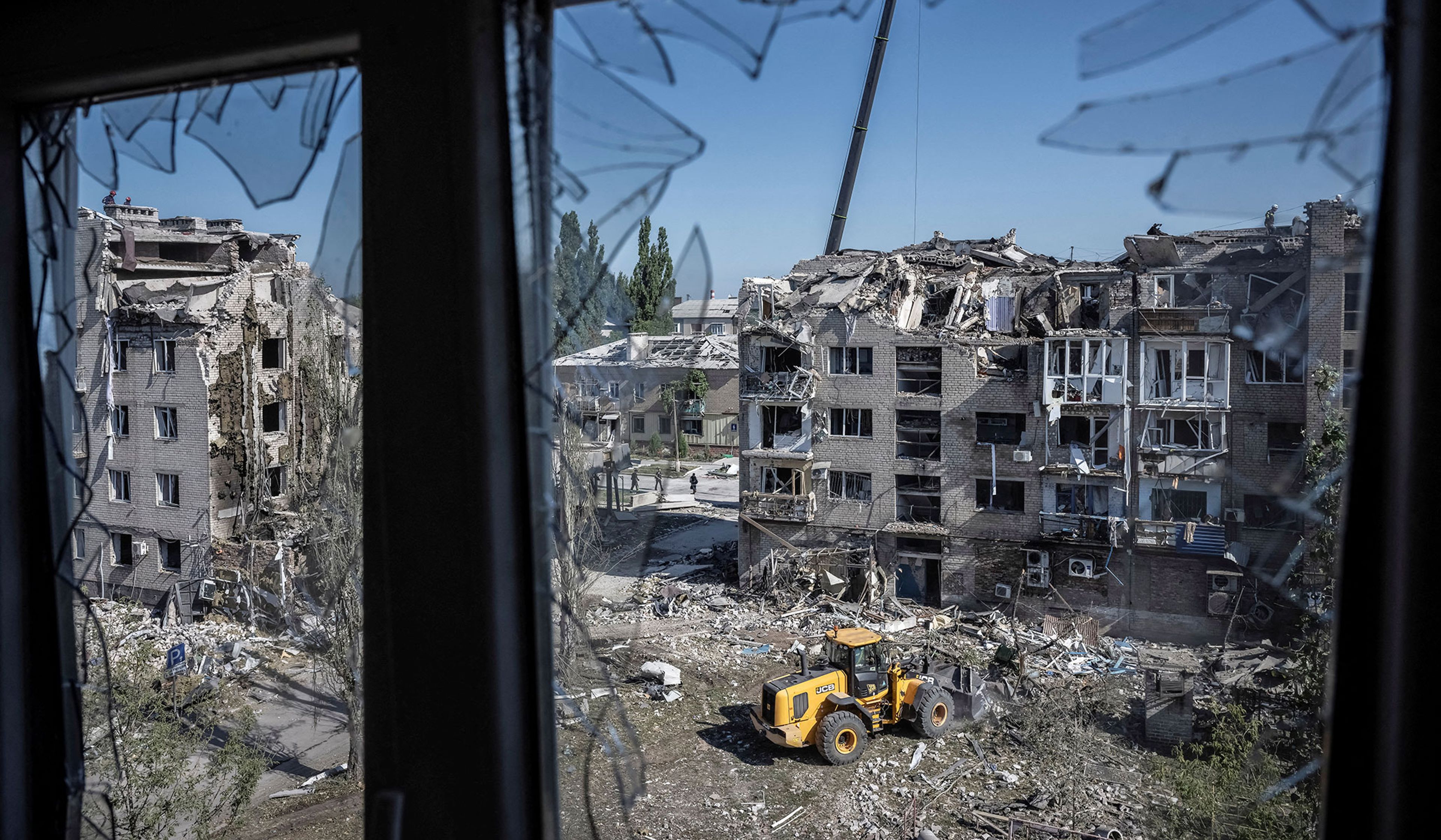





Ukrainian service members of the 35th Separate Marines Brigade at a military drill near a frontline in Donetsk Region, Ukraine, July 31, 2023.
Viacheslav Ratynskyi/Reuters
• Alexei Navalny and Vladimir Kara-Murza, though different in some respects, have much in common: They are Russian political leaders and prisoners. They are unfathomably brave. Each was almost poisoned to death, by the state. Each spent time abroad. Each returned to Russia, knowing that he would be arrested, imprisoned, and possibly killed. Navalny has now been sentenced to 19 years in prison, Kara-Murza to 25. The real sentence, as experts have noted, is: “as long as Putin remains in power.” May Navalny, Kara-Murza, and the other political prisoners outlive Vladimir Putin’s reign of blood.
• A general by the name of Abdourahmane Tchiani has mounted a successful coup in Niger, and large parts of the population are dancing in the streets of Niamey, the country’s capital. They do not, or dare not, stand up for the democratically elected president, Mohamed Bazoum, now deposed and under house arrest. And more than that, they are delighted to be waving Russian flags, because a different general in the new military junta has reportedly been in touch with the Wagner Group, Vladimir Putin’s globe-trotting mercenaries. The United States and France have spent millions of dollars in military aid to combat Islamists in the wider region, evidently to little or no effect. There are some 1,100 American servicemen in the country, but the junta has closed the airspace, and neighboring countries — for instance, Mali and Burkina Faso, already indebted to the Wagner mercenaries — have said that any intervention in Niger from outside would be considered a declaration of war. Putin is giving yet another lesson in the rewards that follow from pushing destabilization as far as it will go.
• Since Pakistan’s independence in the mid 20th century, about a third of its former prime ministers have been arrested. One has been hanged. Not a single prime minister has yet completed a full five-year term. Imran Khan, the former cricket star who rose to the premiership in 2018, came close but was ousted in 2022 after a vote of no confidence (which he tried to prevent by dissolving the parliament and later blamed on an international conspiracy led by Washington). More than 150 legal cases against him followed, including charges of corruption, terrorism, and incitement of violent protest. He has now been found guilty of selling gifts that he had received from foreign leaders in his official capacity and of concealing wealth in his tax returns. An attack on corruption, or a form of corruption? Probably both.
• In July 2021, there were mass protests across Cuba. Since then, there have been 21 extrajudicial killings, as documented by Cuba Archive, the invaluable project and website presided over by María Werlau. Cuba Archive provides names, facts, and photos — so that the dead are remembered. The first three names are those of Roldy Polo Pérez, Zinedine Batista Álvarez, and Damixi Rodríguez Domínguez. Some were teenagers, some were middle-aged. Some were beaten to death, some were shot. Americans should be reminded now and then that there is a murderous, totalitarian state just 90 miles from their shore.
• Prime Minister Rishi Sunak is showing that indeed a conservative government determined to do so can begin controlling immigration. Sunak has vowed to reduce net migration to the United Kingdom to below the level he inherited — nearly half a million people per year. In July, Sunak’s government passed an immigration bill that commits the U.K. to removing all people who enter illegally and sending them either to their home country or to a safe third country where asylum claims can be considered. No longer will the government allow illegal immigrants or bogus asylum-seekers to establish themselves in the U.K. under spurious legal challenges. Those who break the rules will permanently lose the right to reentry, settlement, or citizenship. One of the reasons Sunak’s government is succeeding is that it has highlighted how progressives’ neglect of immigration laws is harmful to immigrants themselves as it encourages an illegal trade in smuggling humans. This neglect also allows economic migrants to pose falsely as asylum-seekers, effectively taking resources and places from those who have a right to them. Sunak has, in addition, promised to “stop the boats.” Last year over 45,000 illegal immigrants arrived in small boats, often having made perilous journeys that put their lives at risk. Importantly, Sunak wants his enforcement efforts to be visible, not just to voters but to potential lawbreakers. He recently announced a partnership with social-media companies to “tackle the business model of vile people-smugglers at the source.” The government has created a unit in the National Crime Agency charged specifically with disrupting the organized criminal outfits that advertise their smuggling and false-documents services on social media. Republicans in Congress could learn something from their Tory counterparts.
• Archaeologists hit pay dirt while digging in the garden of a 15th-century Roman palace owned by a Catholic order of knights who will lease the space to the Four Seasons hotel chain to raise money for Christian charities in the Holy Land. African-marble columns and stucco walls decorated with gold leaf stood among scattered coins, potsherds, colored glass goblets, and religious medals and amulets that may have been left by ancient pilgrims to the tomb of the Apostle Peter, which lies a few hundred yards to the west, under the main altar of the world’s largest church, the Baroque basilica named in his honor. Bricks dated to the first century a.d. suggest that the excavated columns and walls belonged to an imperial complex such as the one built by Nero in the neighborhood but lost to the modern world — until now? From Pliny the Elder, we know that Nero’s spread included a private theater, whose contours the archaeologists think they’ve identified. Legend has it that Nero ordered the execution of Peter and of Christians en masse. The emperor and the apostle were not friends, but they remain neighbors, the City of God in the City of Man.
• Imagine you are out with your family and the temperature starts dropping. Perhaps you complain, and perhaps your mother tells you that you should have brought a sweater. Next thing you know, you’re lying in a lab, soaked in water, as scientists excitedly explain that they’ve thawed you from a dormant state after approximately 46,000 years. This is something like the experience of ancient worms from the Serbian permafrost that were revived by scientists — except, of course, that worms don’t wear sweaters. The discovery, published in the peer-reviewed journal PLOS Genetics, details how the millennia-old nematodes were able to survive their extreme environment by entering a state known as cryptobiosis. Teymuras Kurzchalia at the Max Planck Institute of Molecular Cell Biology and Genetics in Germany, who was involved in the study, said: “The major take-home message or summary of this discovery is that it is, in principle, possible to stop life for more or less an indefinite time and then restart it.” After reproducing, the recently thawed worms died at the end of their days-long life cycle. Perhaps they had been offered refreezing but declined, fearing a Trump–Biden rematch in 48023.
• In Bray, Ireland, thousands of fans greeted the hearse of Sinead O’Connor, the Irish musician who died on July 26 at age 56. O’Connor, who made music for three decades, was perhaps best known for her hit single “Nothing Compares 2 U,” written by Prince, which launched her career in 1990. O’Connor will also be remembered for her political activism. In her memoir, she recalls her decision to shave her head to avoid being “sold” as a sex object. In a 2013 open letter to Miley Cyrus, after the young singer cited O’Connor as inspiration for her “Wrecking Ball” video, O’Connor warned: “You will obscure your talent by allowing yourself to be pimped, whether its [sic] the music business or yourself doing the pimping.” In 1992, O’Connor stoked controversy in a Saturday Night Live appearance when she tore up a picture of Pope John Paul II that had belonged to her abusive mother. This has since been celebrated as the beginning of her staunch anti-Catholicism. Really, her relationship with religion was, like the rest of her life, deeply complicated. In 1999, she was invalidly ordained a priest by a breakaway Catholic sect. In 2018, she converted to Islam, naming it “the natural conclusion of any intelligent theologian’s journey,” and appeared at her performances in a hijab. O’Connor’s personal life was similarly fraught. She was married and divorced three times and is survived by three of her children. Her song “My Special Child” was about her abortion. Her teenage son Shane hanged himself in 2022 after escaping from a hospital while on suicide watch: “May he rest in peace and may no one follow his example,” she wrote. To follow O’Connor’s own example, one would first have to understand her. But as Miley Cyrus demonstrated, few do.
A Dangerous Indictment
The indictment of former president Donald Trump by Department of Justice special counsel Jack Smith on four felony charges arising out of his efforts to undo President Biden’s victory in the 2020 election is momentous — not just in its potential impact on our politics but in the menace it poses to the rule of law.
We have on many occasions condemned Trump’s appalling actions in the aftermath of the 2020 election. They were impeachable. He came close to being convicted in a Senate impeachment trial, with 57 senators finding him guilty.
Now, through a special counsel it appointed for this precise purpose, the Department of Justice is attempting to use the criminal process as a do-over for a failed impeachment. In effect, Smith seeks to criminalize protected political speech and flimsy legal theories — even though the Supreme Court has repeatedly admonished prosecutors to refrain from creative theories to stretch penal laws to reach misconduct that Congress has not made illegal.
Our Constitution entrusts Congress with the duty to check egregious executive misconduct. Its failure to convict Trump understandably galls many of his opponents — left, right, and center. This feeling is accentuated by their understanding both that Trump is unfit for the presidency and that there is a very real possibility that he will be elected president again.
Hence the pressure on the department to hold Trump accountable in a way the political system did not. But criminal prosecution is an inapt substitute for impeachment.
Public office is a privilege, not a right. That is why a president may be ousted, without all the protections of criminal due process, for violating the public trust. In contrast, criminal prosecution is designed to address private wrongs, not derelictions of public duty. It endows the accused with enhanced protections because at stake are rights — liberty, property — and not the privilege of political power.
Whether misconduct rises to the level of an impeachable offense is indefinite, left to the people’s representatives to assess, based on what the facts and circumstances say about a public official’s fitness for duty. Criminal offenses are the antithesis of that. They must be defined by statute with sufficient clarity that the average person knows what is forbidden, and a defendant is presumed innocent. A guilty verdict must be supported by proof beyond a reasonable doubt — proof that the person not only performed the statutorily prohibited acts but did so with criminal intent to defraud the government.
“Before a man can be punished as a criminal under the federal law,” the Supreme Court wrote in 1917 about the statute being used to charge Trump with conspiring to defraud the United States, “his case must be plainly and unmistakably within the provisions of some statute.” The Court in that case unanimously ruled that this statute does not cover bribing voters to rig elections. The Court has since stressed that conspiracies require fraud, not just “open defiance” of the law. Fraud in federal criminal law traditionally covers only schemes to swindle victims out of money or tangible property — a rule the Court has reasserted in several recent cases under other fraud statutes. Even if conspiracies to defraud the government can extend to obstructions such as concealing income from the IRS, Smith is pushing the envelope much further than that.
Here, it is not even clear that Smith has alleged anything that the law forbids. The indictment relates in detail Trump’s lies, but that doesn’t mean they constitute criminal fraud rather than merely mendacious rhetoric aimed at political persuasion. Even assuming a prosecutor could prove beyond a reasonable doubt that Trump knew he had truly lost the election (good luck with that), hyperbole and even worse are protected political speech.
As for obstruction of an official proceeding, Americans, presidents included, have a right to attempt to influence Congress, even based on dubious or imagined evidence. To establish obstruction, Smith must prove that Trump’s efforts at persuasion were corrupt — again, in the sense that he knew his badgering and lobbying had no factual or legal merit. The concept of corruption is meant to reach clearly criminal conduct, such as evidence manipulation or witness tampering. It has never been understood to reach wrongheaded legal theories.
Finally, Smith is charging Trump with a civil-rights violation on the theory that he sought to counteract the votes of Americans in contested states and based on a post–Civil War statute designed to punish violent intimidation and forcible attacks against black Americans attempting to exercise their right to vote. What Trump did, though reprehensible, bears no relation to what a reasonable reading of the statute covers.
In his press conference announcing the charges, Smith — for good reason — did not dwell on his questionable charges. He instead emphasized the Capitol riot. Anyone witnessing his remarks would have believed that Trump had incited a forcible attack on the Capitol. Of course, Smith has not charged him with any such thing, because he doesn’t have the evidence to tie him criminally to the riot. Instead the indictment tries in effect to charge Trump for the riot by making it part of a conspiracy — but without Trump’s having conspired with the rioters, Smith is trying an end run around the Supreme Court’s strict rules for charging incitement to commit a crime while respecting the First Amendment.
The prosecutor was making a political statement. Bringing this case, however, drives the courts ever deeper into refereeing political statements, as in fact happened when Smith immediately asked for a protective order that will ensnare the court in determining what Trump may say about the prosecution, the judge, or potential trial witness Mike Pence — and could also end up placing restrictions on Pence, whose courage in standing up to Trump’s pressure is an important theme of his own campaign.
There is a reason Smith does not have a solid statutory crime to rely on. To criminalize the conduct for which he seeks to convict Trump, Congress would have to write sweeping laws that could easily be wielded by one party against another to punish objectionable political conduct. That would undermine both electoral politics and the rule of law. If Smith’s theories are upheld, this will not be the last time they are used.
This indictment shouldn’t stand.












Comments