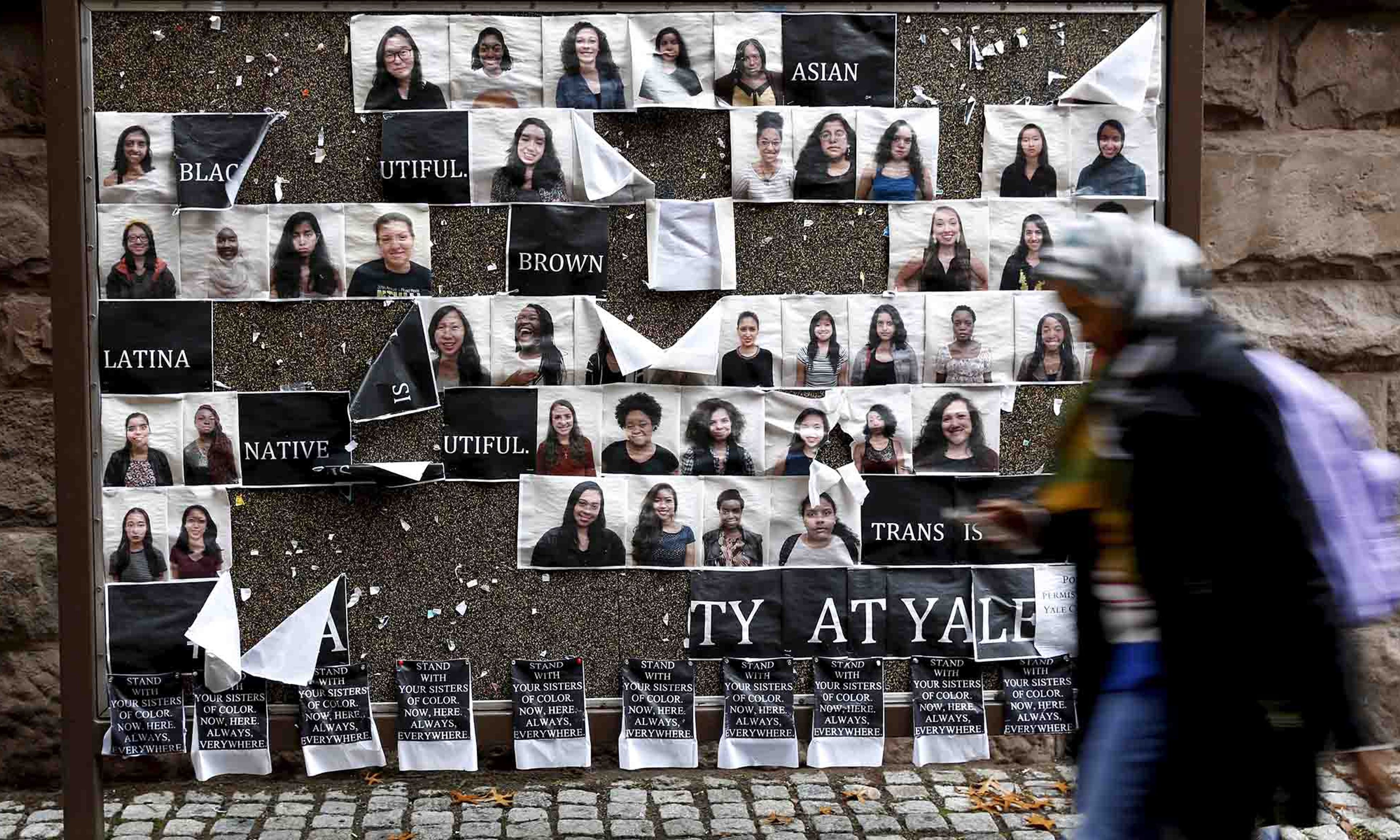
Prominent voices have suggested that we’re past peak campus wokeness — that the tide has turned and is starting to recede. If true, that’s all to the good. It does seem that the pace of assaults on conservative speakers has slackened, along with a reduced flurry of over-the-top institutional declarations of ideological fealty.
But that’s not much of a victory. Indeed, “peak woke” could simply give way to “plateau woke,” to campuses filled with intimidated students and quiescent faculty. Students say they’re hesitant to voice their views in class. Faculty quietly lament the new reign of diversity, equity, and inclusion (DEI) enforcers but fear to speak up. And academic journals and learned societies have become increasingly politicized.
Given all that, sighing with relief because the worst may be over isn’t enough.
There are lessons here from the 1970s. When the campus craziness of the 1960s receded, it left behind a host of identity-based departments and other concessions to the radical fringe. These had profound consequences for the academy, with universities becoming redoubts for those who viewed them as platforms for political activism.
Starting with a student revolt at the University of California, Berkeley, in 1964, hundreds of universities suffered building takeovers, sit-ins, strikes, and riots. Just as today, a coterie of agenda-driven ideologues managed to intimidate the broader academic community. Famed constitutional scholar Walter Berns, who’d seen all this up close as a professor at Cornell in the 1960s, said that what made these attacks so notable was that they were launched not by outsiders but from “within the university itself” and encountered “little resistance from professors and administrators.” Ultimately, as John Coyne Jr., an Arizona State faculty member and a contributor to National Review, observed in 1975, “we lost on all fronts. The New Left won in the universities.”
Over the intervening decades, the campus Left extended its victory. In his 1990 book Tenured Radicals, Roger Kimball noted that the ideologues came to occupy the tenured slots and administrative hierarchies on the same campuses where they’d once occupied buildings. They seized the reins of scholarly societies, became gatekeepers at scholarly journals, allocated scholarly awards, and directed graduate admissions and campus hiring, thereby becoming the “new academic establishment.”
Things have changed since the 1970s. Conservatives now are organized, with resources and a demonstrated willingness to fight. The challenge will be to use that new strength to roll back some of the troubling developments of the past several years.
One such development is universities’ requirement of DEI statements from those seeking jobs or promotions. Typically, applicants are asked to write personal statements explaining how they would advance diversity, equity, and inclusion goals if hired. For instance, at UC Berkeley, a sample “Rubric for Assessing Candidate Contributions to Diversity, Equity, Inclusion, and Belonging” tells search committees to grade applicants on a 1–5 scale regarding their knowledge of DEI, track record of DEI, and plans for advancing DEI. One in five academic jobs now require a DEI statement for hiring. Nearly a quarter of universities mandate DEI criteria in tenure evaluations.
While it might on the surface seem innocuous to ask aspiring professors to support “diversity,” in reality these pledges amount to an ideological litmus test. Indeed, National Association of Scholars fellow John Sailer has noted that the rubrics for scoring these DEI statements explicitly reward applicants who endorse race-conscious policies while penalizing those who believe institutions should “treat everyone the same.”
Higher education’s embrace of radical racial and social doctrines may be most visible at elite universities. Most Ivy League institutions have denounced the U.S. as systemically racist or pledged their commitment to an “anti-racist” agenda. Even the U.S. Naval Academy, as part of its DEI push, has committed to “prioritizing the inclusion of marginalized scholarship and hidden histories within midshipmen education.” Across all manner of institutions, faculty are shamed and shunned for heterodox takes.
These new norms are enforced by a sprawling and growing DEI bureaucracy. Across the 65 universities in the Power Five athletic conferences, the typical institution has 45 diversity staff on payroll. They’re tasked with promoting rigid cultural norms and delivering mandatory trainings, which can lead to the harassment of students and faculty who fail to kowtow to campus orthodoxy.
Professional associations have embraced the same prevailing right-think — especially those engaged in preparing tomorrow’s doctors, teachers, and lawyers. The Association of American Medical Colleges now requires fluency in “the various systems of oppression” such as “colonization” and “white privilege.” The American Educational Research Association instructs educators to “stand against” those who imagine “that systemic racism does not exist,” while the American Association of Colleges for Teacher Education promotes the view that American education is rife with “implicit, institutional, and systemic” racial bias. The Association of American Law Schools’ “Law Deans Antiracist Clearinghouse Project” demands that law schools “demonstrate a commitment to delivering on an antiracist program of legal education.”
Campuses have become places where speech and thought are restricted. A 2022 survey of nearly 45,000 students by the Foundation for Individual Rights and Expression (FIRE) found that 63 percent deemed it acceptable to shout down a campus speaker. In a survey of 481 colleges, FIRE found that one in five have “at least one severely restrictive policy” that “clearly and substantially restricts freedom of speech,” and another two-thirds maintain policies that restrict speech or, because they are vaguely worded, “could easily be applied to restrict protected expression.” Four out of five college students report censoring themselves on campus, including nearly half of Democratic students.
While we may be past the woke mob assaulting Charles Murray during a 2017 appearance at Middlebury College, the culture of intimidation has seeped into the academic atmosphere. The new policies and norms will leave lasting damage unless countered, rolled back, or defanged. So here’s a first crack at a remedy: an eight-point agenda, with a role for public officials, donors, litigators, and other actors. The first four measures offer an immediate response to the challenge at hand; the latter four are focused on changing the landscape over the long term.
Defund the ideologues. Colleges and universities receive hundreds of billions of dollars a year in public resources, largely because they promise to provide a particular public good: a home for free inquiry. When they abandon that mission, they lose their claim to support. Institutions that apply ideological litmus tests — such as mandatory DEI statements for admission, hiring, or academic promotion — should be stripped of state subsidies and rendered ineligible for taxpayer-funded financial aid or student loans. Lawmakers should also prohibit public dollars from being used to pay dues or fees to “scholarly” associations that have abandoned their scholarly purpose and from funding travel related to their convenings.
Enforce the law. College leaders have increasingly asserted that their institutions are systemically racist. If this is true, their colleges should be ineligible for federal aid. If it’s not true, such assertions are irresponsible and destructive. Either way, leaders who say their institutions are racist should be taken at their word by federal officials and investigated accordingly. In 2020, for instance, Princeton University president Christopher Eisgruber made such a declaration about his institution. Given that Princeton had signed nondiscrimination assurances as it collected hundreds of millions of dollars a year in federal funds, Secretary of Education Betsy DeVos said she’d have to investigate. Eisgruber then started backpedaling at a remarkable rate. Legal jeopardy can exert a powerful check on campus leaders tempted to cater to the mob.
Take oversight seriously. Legislators and trustees should insist on transparency regarding the campus intellectual environment. This means requiring an annual high-quality survey probing the state of free inquiry on campus (like the one deployed by the 16-campus University of North Carolina system, a terrific instrument developed by UNC political scientist Tim Ryan and some colleagues). There’s also a need for what National Association of Scholars president Peter Wood has described as an independent institutional audit, in which leadership pronouncements, mission statements, action plans, and such are assessed to determine where woke dogmas have warped the institutional DNA. For public institutions, state legislators should insist that all course syllabi be publicly shared; federal lawmakers should require that syllabi be made public by any institution that receives federal funds or participates in the federal student-loan program.
Dismantle DEI. As the Academic Freedom Alliance has urged, institutions of higher education must stop “demanding ‘diversity statements’ as conditions of employment or promotion,” since they tend to erase “the distinction between academic expertise and ideological conformity.” Legislatures should bar public institutions from requiring such pledges. Donors should refuse to cut checks to them. Litigation should be filed on free-speech and equal-protection grounds. The DEI bureaucracies that support these policies should also be eliminated: Legislatures should use their authority to restructure the bureaucracies of state agencies, which include public universities, to dismantle the DEI apparatus and abolish mandatory DEI trainings.
Bust the cartel. Because college degrees serve as a default hiring credential, higher education has gained outsized influence. An inconsistent (and indefensible) legal double standard allows employers to routinely use college degrees as a hiring test, regardless of relevance to the skills required, even as other hiring tests (such as skills-based assessments) are regarded by the courts with suspicion, leaving employers fearful of exposure to lawsuits charging that the tests are unfair or discriminatory (on the grounds that the tests are not directly job-related or are an inaccurate predictor of job performance). The result has been to insulate higher ed from market pressures. Litigation is needed to ensure that college degrees are subjected to the same scrutiny as every other hiring test, with enforcement by the Equal Employment Opportunity Commission. Federal and state officials should emulate directives issued by the Trump administration and by Maryland governor Larry Hogan stipulating that public hiring should be driven by skills and experience, not degrees. Degrees can, in certain instances, be useful. Engineering or nursing degrees, for example, would likely pass muster when subjected to strict scrutiny, as they’re directly relevant to the work. Using a more generic diploma as a hiring screen would likely not. New college accreditors need to be created, clearing the way for nontraditional providers of education (such as those that don’t use traditional facilities or faculties or don’t follow the typical academic calendar, or that expedite degree completion), while rules governing federal aid should be altered to support apprenticeships and other practical alternatives to college.
Build new educational institutions. Though it may seem outlandish to modern sensibilities, it shouldn’t: We need to launch new colleges. For much of American history, such creation was routine. Between 1820 and 1899, 672 new institutions were established. Today, though, the immense wealth generated by the American economy gets funneled to bloated, stagnant institutions. The funds that conservatives give to higher education — about $20 billion a year — should create and support institutions that are less tainted by the ideological currents running through higher education today. One need look no further than the start-up University of Austin, and the panic it’s engendered among the higher-ed establishment, to appreciate how significant this could be. Sure, new institutions may get captured over time. But if reformers in the 2060s have to launch a new wave of institution-building, as today’s successes fall victim to O’Sullivan’s law (“All organizations that are not explicitly right-wing will over time become left-wing”), so be it.
Cultivate a new academic ecosystem. Professional networks and outlets are the connective tissue of higher education. When academic journals, associations, conferences, fellowships, review boards, and honors are controlled by ideologues, it permits those ideologues to choke off nonconforming ideas and those who hold them. To allow heterodox thinking and thinkers to flourish again requires academics with the courage to lead as well as private investors willing to support new forums, platforms, and scholarly organizations committed to free inquiry rather than dogma; awards for courageous work in contested fields; and fellowships that offer a lifeline to graduate students and young scholars whose work challenges the prevailing orthodoxy.
Ensure that research dollars fund free inquiry. The federal government gives more than $40 billion in research funding a year to higher-education institutions, which routinely pocket a quarter or more of every dollar in federal grants for “indirect” costs such as administrative salaries. This administrative overhead is why the nation’s influential research universities covet such funding and, to secure it, already offer a long slate of assurances (related to sexual harassment, safety compliance, and so on) to the agency providing the funds. To that slate, federal officials should add the requirement that eligible institutions not impede free inquiry, making clear that speech codes, DEI mandates, and pledges of ideological fealty are disqualifying. (It’s also past time to revisit those exorbitant overhead rates, but that’s another story.) Individual donors should make their support for research and research positions contingent on similar commitments. Such measures would appeal to the self-interest of both empire-building administrators and serious scientists to stop appeasing the censors and ideologues.
The steps outlined here would advance two overlapping sets of goals: They’d help address the immediate threats to higher education. And, over time, they’d reduce the primacy of college credentials, diversify the education sector, encourage the competition of ideas, and temper the power of legacy institutions.
Whether or not the worst of woke is truly behind us, such efforts would help higher ed reclaim its historic mission. In 2005, more than two dozen mainstream higher-education organizations jointly issued a “Statement on Academic Rights and Responsibilities.” They insisted that “intellectual pluralism and academic freedom are central principles of American higher education” and that “neither students nor faculty should be disadvantaged or evaluated on the basis of their political opinions.” It may not be 2005, but it’s not 1975, either. Today, the Right has the means to help higher education find its way.








Comments