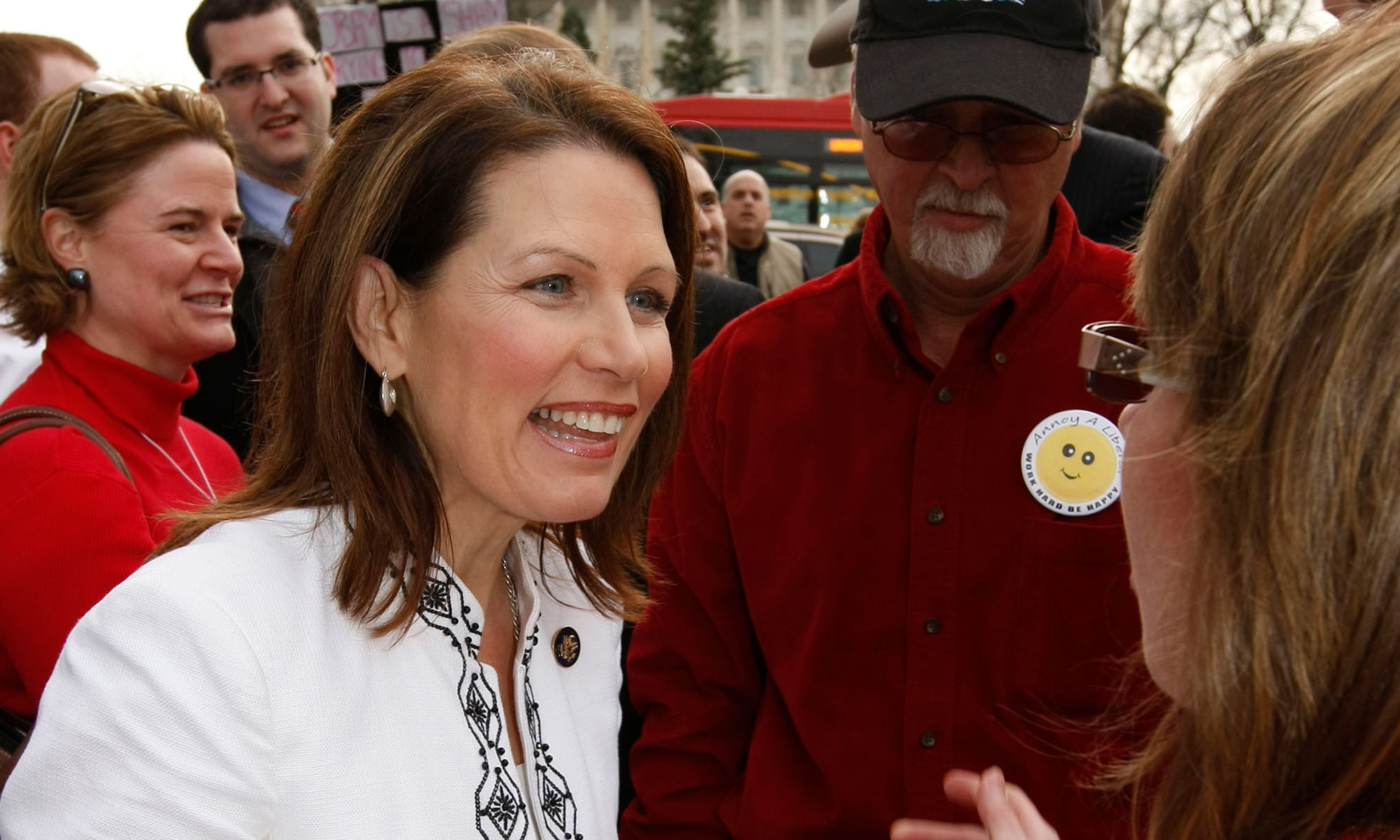
Republican congressmen don’t know what to make of them. Journalists are alarmed. Paul Krugman says the tea partiers are driven by “cultural and racial anxiety” about President Obama. David Brooks says they are “against the concentrated power of the educated class.” And Rep. Maxine Waters (D., Calif.) wants to expose them. Deeply suspicious of demonstrators’ references to “Obamacare” on the Mall last fall, she stated, “I want those people talked to; I want them interviewed.”
The National Review Institute has obliged Representative Waters, commissioning McLaughlin & Associates to take a detailed look at tea partiers: both the 6 percent of the 1,000 likely voters polled in mid-January who told McLaughlin that they had participated in tea-party rallies and the additional 47 percent who said they “have not participated in a tea party protest but . . . generally agree with the reasons for those protests.” The results dispel a number of myths.
The first is that the tea partiers are driven by racial animus against the president. Actually, a third of the people who participated in tea-party rallies say that they approve of Obama’s performance in office and a fifth say that they voted for him in 2008. Five percent of them are black, 11 percent Hispanic. Of those who agree with the protests, 29 percent approve of Obama’s performance. Waters and Krugman can rest easy.
The second myth is that the tea partiers are unpopular. Krugman wrote last April that the tea parties “have been the subject of considerable mockery, and rightly so,” and Brooks speculated that “the tea-party tendency” might “be the ruin of the Republican party, pulling it in an angry direction that suburban voters will not tolerate.” Some Republican officials worry that media criticism and Democrats’ attacks on the activists have made it politically risky to associate themselves with the tea-party movement.
The polls do not bear out this fear. Most voters don’t consider themselves well-informed about the tea parties, but have a favorable view. As noted already, 53 percent of the electorate look sympathetically on the tea parties. McLaughlin also asked likely voters which characterization of the tea parties they leaned toward: an “anti-government, fringe organization that is driven by anger” or a group of “citizens concerned about the country’s economic future.” A majority of 57 percent chose the benign characterization while only 19 percent disagreed. Even a plurality of self-identified liberals went with “concern” rather than “anger.”
Republican strategists think of the tea partiers as this era’s analogue of Ross Perot’s followers in the early 1990s. But the Perot voters were secular, socially liberal, and concerned above all with the single issue of the deficit. It was largely in order to court them that Republicans kept social issues out of the Contract with America.
Most tea-party sympathizers, on the other hand, are pro-life. They are more pro-life than the electorate as a whole, although less so than Republicans. Their religious practices are roughly in line with those of the electorate. Tea-party participants, meanwhile, are both more pro-life and more frequent churchgoers than the electorate. Social issues may not be what binds the tea partiers together or what matters most to them, but social issues are not going to drive a wedge between them and Republicans.
Tea-party supporters are concerned about the deficit, but not to the exclusion of other issues. They don’t want to cut the defense budget. A small, 52 percent majority of them believes we “should cut taxes to stimulate growth” while only 37 percent say that the deficit makes tax cuts unaffordable (and a tiny 7 percent want tax increases to reduce the deficit).
The tea partiers are often said to be populists hostile to Wall Street and big business. But while they clearly oppose bailouts of financial firms, their antipathy may not go much farther than that. McLaughlin asked likely voters whether they think that “we should impose a new tax on banks because they have benefited so much from bailouts and need to be reined in,” or that “bank customers would end up paying the tax and the economy would suffer.” The anti-taxers were a majority in the poll (52-38 percent), and both tea-party participants and tea-party sympathizers were even more strongly on the anti-tax side. In McLaughlin’s poll, a majority of likely voters want to cut taxes on corporations. Tea partiers were especially likely to agree.
In some polls, the tea-party movement has been more popular than either the Republican or Democratic parties. Some Republicans have worried that the tea partiers could contest elections as a third party. McLaughlin’s results suggest that only a minority of tea-party participants and sympathizers would vote for a tea-party candidate if given the option, while a plurality would back the Republicans. But Republicans would suffer enough losses that the Democrats would win. Republicans lead Democrats by 5 percentage points on the question of which party voters favor in House elections. Add a tea-party candidate to the choices, though, and the Democrats win by 5 (the Tea party takes 8).
So if tea-party activists put up their own candidates, the effect is likely to be to divide their supporters and elect the politicians they like least. Republicans have to hope that the activists want to avoid this outcome.
But Republicans can do more than hope. They can appeal to the tea partiers and ally with them. While the tea partiers often express disgust with the Republican record on spending and bailouts, their views on most issues are within the mainstream of the Republican party. As we have seen, they are concerned about deficits but enthusiastic about tax cuts; they are pro-life; they are pro-defense. McLaughlin also finds that they favor increased reliance on nuclear power. They listen to the same talk-radio shows that conservative Republicans do. Their demographic profile looks very similar to that of Republicans.
Which is not surprising, since they’re generally the same people. The tea partiers are, for the most part, Republicans. Specifically, they are a highly engaged, but not highly partisan, segment of the party. A majority self-identify as Republicans and as conservatives. A full 68 percent of tea-party sympathizers voted for John McCain in 2008 — which was, it need hardly be noted, low tide for the GOP. Some of the tea-party activists take pride in their movement’s independence from the Republican party, and Republicans reaching out to them need to be mindful of that fact. But it’s also true that they’re not going to have to reach very far.
The tea partiers seem unlikely to pull the party too far to the right. Participants in the tea parties are out of step with the public on some issues — they favor cutting Medicare and Social Security, for example, and eliminating the withholding of federal taxes from paychecks, steps that most voters are (sadly) unwilling to take. But the broader tea-party movement does not share these views.
The challenge for Republicans who want to work with the tea partiers can usefully be compared to the challenge presented to an earlier generation of Republicans by the rise of religious conservatism. Many Republicans worried about religious conservatives in the late 1970s and early 1980s: Who were these people? Were they extremists who would hijack the party and make it unelectable?
But that challenge was harder. A lot of the religious conservatives were former Democrats who disagreed with Republicans about the New Deal. They wanted the party to address a range of issues that had not been part of the party’s mission previously, and on which many Republicans had taken contrary views. (The Republican party was the historical home of Planned Parenthood.)
The tea partiers are already part of the Republican party, and all they want is its recommitment to its own cause of reducing the size and scope of the federal government. They are not unpopular and their views are not extreme.
The bad news for Republicans is that appealing to the tea partiers and reuniting the party’s traditional supporters is not enough in the long run. If tea-party sympathizers end up forming a majority of the electorate this year, it will only be because of reduced enthusiasm in the Democrats’ base. Here, too, the parallel to the Republicans’ response to the rise of religious conservatives is instructive. The party did not adopt their issues to the exclusion of all others. Republicans agreed with them on school prayer and abortion. But they also took positions on crime, national security, and taxes that had appeal to other groups (in addition to having appeal to most religious conservatives).
The National Review Institute poll suggests that Republicans have the potential to stitch a majority coalition together today. Tea-party sympathizers strongly favor an alternative to Obamacare that allows interstate purchases of insurance, curbs malpractice suits, and creates risk pools to help people with preexisting conditions. But so do half of the people who said they disagree with the tea parties. Most tea partiers favor expanding the tax credit for children. But an even larger proportion of people who disagree with the tea parties favor it.
A few Republicans have reacted to the rise of the tea parties with worry. But it is generally good news for a party when a group of people who share its views become active in politics. Some tea-party activists may be rough around the edges, as some religious conservatives were. Some will drop out of politics after their first electoral wins do not translate into an immediate turnaround in government, as some religious conservatives did. But others will get experience in forming majority coalitions and become valuable parts of the party infrastructure — if Republicans form a productive partnership with them. If Republicans can’t do that, they deserve to go out of business.












Comments