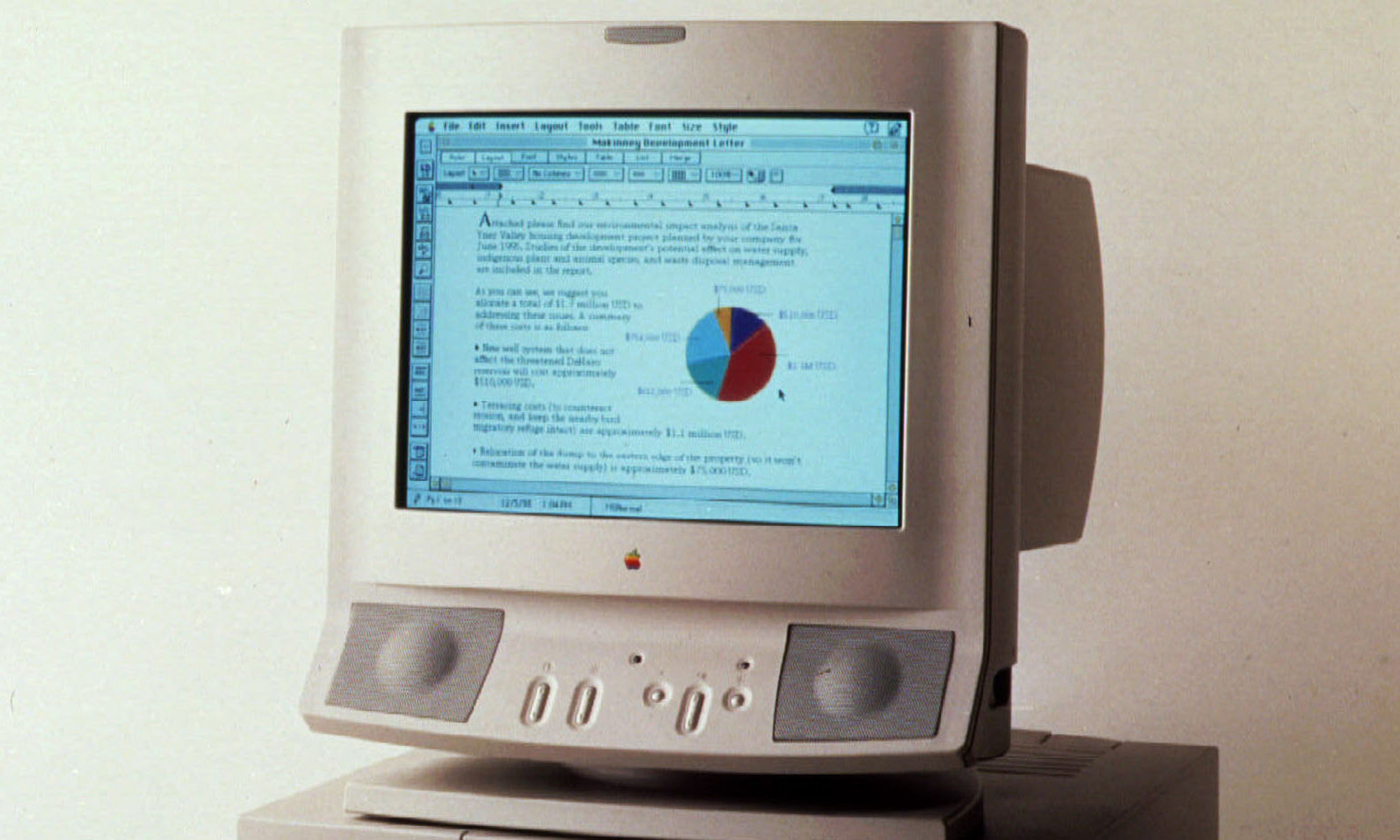
I am an Old One. Not a dead one: This piece was written on a PC, and flown by e-mail to its journalistic nest. But that is the labor of my hands, which takes place at my desk. When I go outside my room, to sniff the air, to buy paper towels, to have a caipirinha, I go alone. No one can reach me; I can reach no one. My only human contacts are the people before me, that I can see and hear with my unaided senses, address with my natural voice.
Back at my desk, I am part of the web. When I have a question, or an idea, or a bit of gossip, I tap out a pixel message. Or, more rarely, I pick up a telephone, more commonly known as a land line. You remember those: They were connected to each other with wires, miles of them; in the suburbs and the country, the wires were strung along artificial trees called telephone poles (you can see pictures of them in the middle distance of old R. Crumb comics). For the convenience of the public, coin-operated telephones were installed in frames on the sides of buildings, or in full-length free-standing booths. Although the system was barbaric, reception was surprisingly good, audible even; land lines never dropped calls. But those days have passed.
I have passed through the two stages of techno-grief, alarm and anger. Now I am in a third, transcendental stage: wonder. I look at people, some of them my friends, and their portable communication devices, and I ask what has become of us.
These little instruments are ubiquitous. Airplanes are still exempt, and trains have specially labeled and carefully patrolled “Quiet Cars,” which plunge one back to the dark ages of 1990. No place else is immune. I chaired a panel at the American Historical Association that was interrupted by the ring of someone’s cellphone. I have heard them toodle in concerts. Rudy Giuliani answered a cellphone call from his third wife during a presidential debate. Paris Hilton interrupted her sex tape to take a cellphone call (or so I’ve heard; I would only watch such a thing for the articles).
You can write on them, talk to them, or take pictures with them. The last use is most interesting to an Old One. Thanks to cell-pix, we have gotten journalistic images — of demonstrators cracked down on, celebs having ego-hernia celeb moments — that we would not otherwise have gotten. The burning of Atlanta in Gone with the Wind would still look pretty cheesy on a 2” x 3” screen, but higher quality is only a matter of time. Talking on cellphones and the like is like talking on a telephone — almost. The face-to-face link has been ruptured since Alexander Graham Bell, but now privacy has gone too. You’re still not really with your interlocutor, but anyone within earshot is now with your half of the chat. Modern cellphone conversations occur on sidewalks, in restaurants, ten inches from your face in an elevator. Writing on the little screen has suffered the strangest mutilation. Even the carpal thumbed will not tap out an entire Psalm, much less a Federalist Paper. So u snd grbg :(
The screens of these devices glow. That may be their most seductive feature. The glow suggests warmth, although the screens are in fact cold. Yet they are certainly bright. In certain light, the shine reflects off the owner’s eyes and cheeks, like the Sun off the surface of the Moon. The glow draws you in. In where? Towards the little people on the other end of the invisible filament. Sometimes you see their little faces, sometimes you hear their little voices; sometimes little letters appear on the screen, typed by their little hands. Isn’t it small for them in there, in that little box? That’s okay, because you can hold them and have them close. It’s easier than dealing with big people, and it’s better, because they are always with you — and they can always be clicked away.
When psychology began to grow beyond the insights of Father Sigmund, one of the directions it took was toward the study of relationships. Freud sometimes wrote as if people were autonomous time bombs, preset to go off in bursts of libido and aggression. The new wave wanted to look more carefully at how we deal, or don’t deal, with other people. One concept that appeared was the self object — the important Other who becomes a feature of our inner life. The individuals who become self objects may do all sorts of things: love, lead, command; in perverse relationships, they destroy. But at a primitive level, their presence is essential to us, and keeps us going.
My wife has told me that whenever I talk about George Washington’s performing some characteristic act, I tear up. One of her self objects is Glenn Gould, whose intense, weird art she discovered in her sad adolescence: The Art of Fugue, her rampart and her only one. Socrates said he had a daimon that gave him direction at crucial moments. The Tony Perkins character in Psycho talks to his mom.
All that takes a lot of tedious time and interaction. Now, with cellphones, iPhones, and Blackberries, we have pocket-sized self objects. Children have had such things forever — the favorite toy, the bunny with the missing eye and the face shiny with grease. We’re all children now, and the nice geeks on the west coast are happy to supply us with companions. So who is that a-hole in the coffee house, bellowing about his next appointment, or the adenoid girl breezing through the lobby saying where she is and where she will be in two minutes, or the colleague in the meeting tappety-tapping away on the tiny keys (once he would have doodled)? They are all the Star Child at the end of 2001: A Space Odyssey. They are the future.











Comments