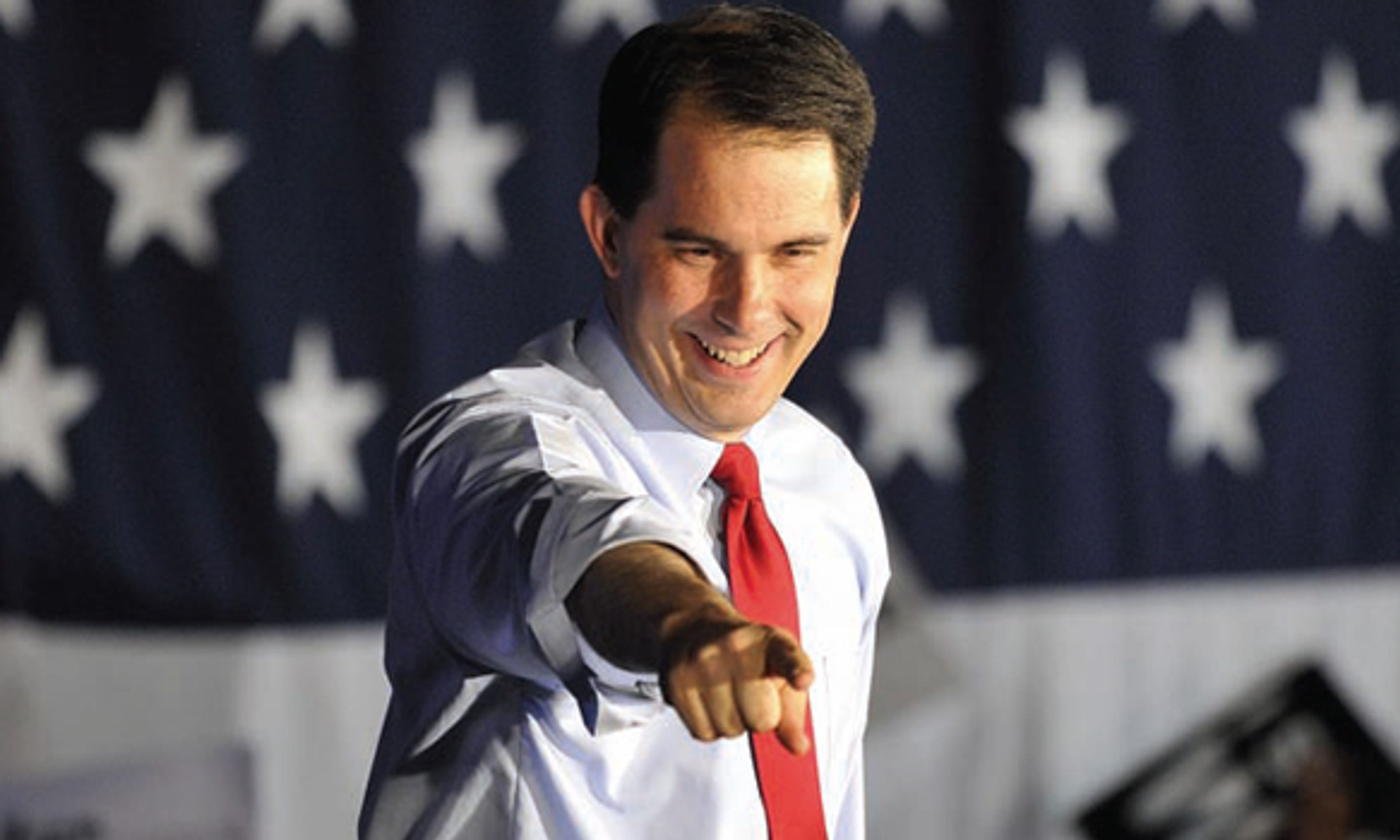
In 2012, Wisconsin’s Republican governor, Scott Walker, was forced into a recall election after less than two years in office. The reason: his plan to restrict collective-bargaining rights for public-sector workers and to make such workers contribute more to their health-care and pension plans. He also ended the automatic dues-paying requirement for these unions, making it more difficult for them to raise money from their members. (Showing shrewd political instincts, Walker exempted police and fire unions from the new law.) Massive protests erupted in the state capitol, but Walker retained his seat, winning even more votes in a recall election than he had in his first electoral victory.
Since the Great Recession, the role of public-sector unions has gained more attention from Republicans such as Walker, and even from some reform-minded Democrats. This has occurred at the exact moment when the number of unionized public-sector employees has surpassed that of private-sector union workers. Our traditional vision of the American union member has been the blue-collar tradesman or steelworker, but today the typical union member is more likely to be a teacher, a firefighter, or a health-care worker. Roughly one-third of government workers are unionized, while less than 10 percent of private-sector workers belong to a union.











Comments