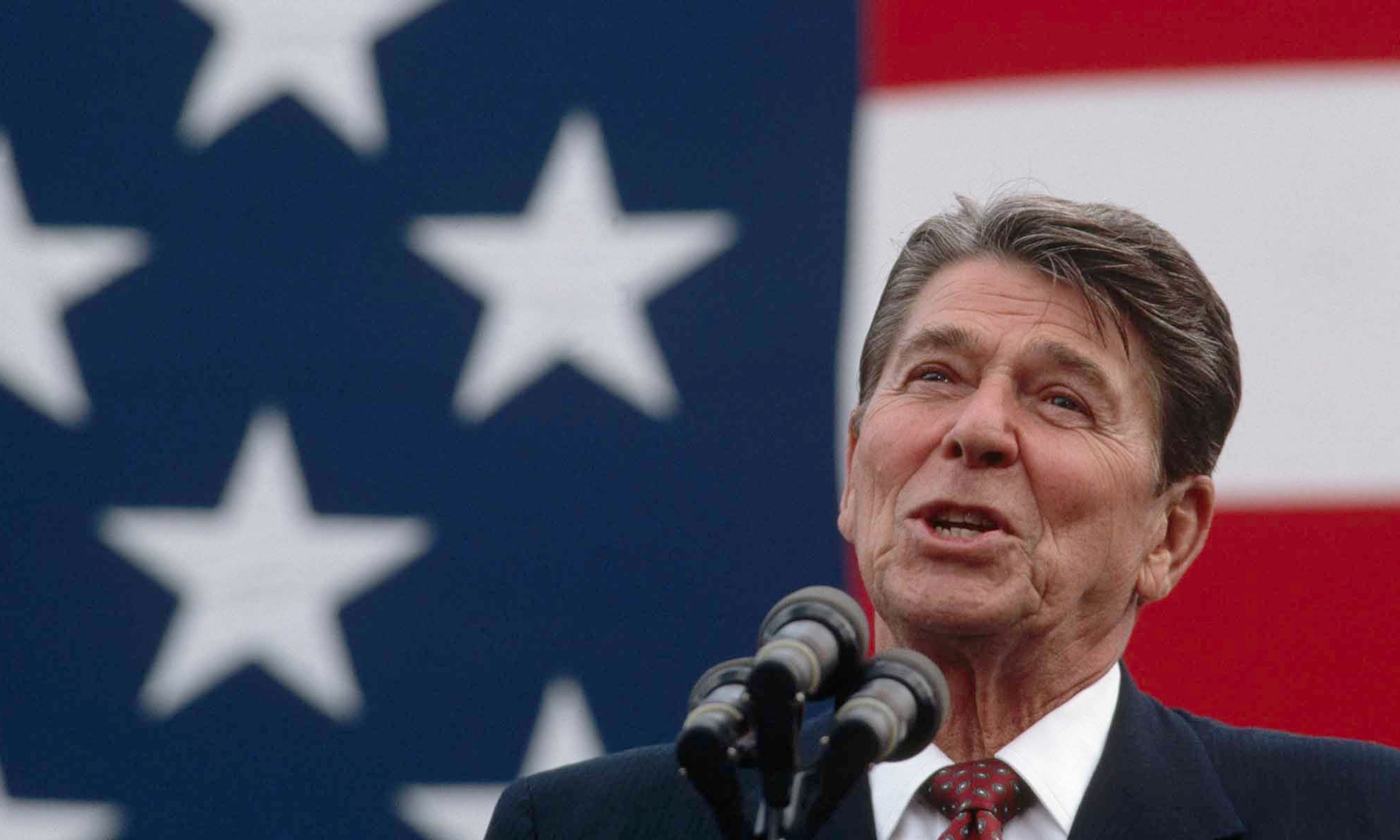
The economy will be a major factor in the 2024 election. It’s an issue on which Republicans and conservatives have the advantage. Pity they won’t talk about it.
Let’s begin with the polls. Voters are unhappy with President Biden’s economic stewardship. They name the economy their top priority. Supermajorities rate economic conditions as fair or poor. Most people say things are growing worse. They believe that Republicans will be better than Democrats at keeping the country prosperous.
Biden’s economic rating drags down his overall job approval. The source of this weakness is no mystery. Since Biden took office, consumer prices have risen by 15.5 percent, but wages have not kept pace with inflation. On the contrary: Real wages are down by 3.2 percent. If you were to ask the American voter Ronald Reagan’s age-old question — “Are you better off now than you were four years ago?” — the response would be no.
Yet the president discusses the economy more than his opponents do. He brags about job growth and manufacturing at every opportunity and has a clear idea of where he’d like to take the country in a second term. Republican candidates, by contrast, mention inflation only in passing. For them, a declining standard of living is one item in a long list of complaints.
The leading GOP contender, former president Donald Trump, contrasts his job performance with Biden’s and pledges to “rebuild the greatest economy in history.” Voters continue to favor the Trump economy, but Trump’s vision is inherently backward-looking. Furthermore, while the economy should point to Trump’s strengths, his lines of argument are obscured by a haze of drama and controversy.
Trump’s main rival, Florida governor Ron DeSantis, stresses above all else the culture war against the woke progressive Left. The long shots — former vice president Mike Pence, former U.N. ambassador Nikki Haley, South Carolina senator Tim Scott, former New Jersey governor Chris Christie — are more interested in echoing or critiquing Trump’s message, manner, and personality than in composing an agenda of their own.
Why the restraint? One explanation is that the bad economy did not benefit Republicans as much as they expected in 2022. Inflation was worse last year than it is now, but the GOP still failed to capitalize on voter angst. Other factors — geography, abortion, and widespread dislike of Trump-endorsed candidates — contributed to a disappointing election night for conservatives. The coming race is taking shape in the same way. Qualms over personal attributes such as Biden’s age and Trump’s character have the potential to outweigh material interest.
Trump’s record is another reason that GOP hopefuls are shy. Except for Christie, who makes the case that Trump is unfit to be a national leader and party standard-bearer, the Republican candidates have decided to alternate between ignoring the former president and defending him against Democratic attacks. This self-imposed constraint on zinging Trump allows him to dominate the debate, including the economic conversation. It limits the ability of the GOP field to diverge from Trump’s positions on immigration and trade. The exception, for Pence and Haley, is entitlement reform. But that decision merely swaps out Trump’s position for a less popular (though necessary) one.
The GOP candidates have little to say. They know inflation is a problem, but they don’t have much of a solution for it. Their commitment to economic nationalism and immigration restriction leaves them with few options to lower prices by increasing the supply of goods and labor. They sound the right notes on fiscal consolidation and energy exploration, but without ingenuity or enthusiasm. Targeting Joe Biden’s Justice Department, the catastrophe along the southern border, violent crime, and men competing in women’s sports is more exciting, and thus more appealing.
The GOP presidential candidates have been slow to roll out an economic agenda, but the responsibility is not theirs alone. Congressional Republicans also have a role to play. Indeed, Congress can prepare the ground for an incoming president through legislative proposals and committee work. That’s what happened in 2016 when House Speaker Paul Ryan organized a “Better Way” agenda for the next Republican chief executive. Not having anticipated winning the general election, Trump ended up adopting much of Ryan’s program. Among the results was the Tax Cuts and Jobs Act of 2017.
Something similar is happening today, but the process has neither structure nor a guiding intelligence. Republican lawmakers in the House and Senate are putting forward a bunch of initiatives that combine into an economic agenda for 2025.
For example, the first bill passed in the House under Republican control this year would roll back many of Biden’s environmental regulations and incentivize domestic carbon-energy production. The REINS Act, passed recently in the House, would subject major regulations to congressional approval. In June the House Ways and Means Committee approved the Working Families Tax Cut Act, guaranteeing a $4,000 deduction “bonus” for taxpayers over the next two years.
The Democrats control the Senate, but GOP senators remain busy. Senators Tim Scott and Bill Cassidy have a bill that would insulate workers from forced unionization and preserve the secret ballot in union elections. Cassidy also has a bill to reduce excessive paperwork for online businesses. Senators Shelley Moore Capito and John Barrasso have a bill that would modernize the antediluvian National Environmental Policy Act (NEPA), making it easier to build infrastructure projects. And Senator Todd Young has a bill, co-authored with Maggie Hassan, a Democrat, that would boost research and development.
When you examine these measures, the outline of a Republican economic agenda comes into view. It starts with keeping tax rates low by extending the Tax Cuts and Jobs Act and boosting the guaranteed deduction to help families deal with high prices. Then it deregulates the energy and construction sectors. It promotes the right to work. It cuts spending to reduce inflation and restrain the federal bureaucracy. It applauds Supreme Court decisions that chip away at the administrative state by forcing Congress to tell federal agencies exactly what they should do.
What’s missing from this inchoate agenda is an overarching story about the place of government in economic development. Luckily, Republicans can adapt an earlier narrative. A generation ago, conservatives and Republicans adopted a supply-side approach that integrated monetary, fiscal, and trade policy to further economic growth through increased work, savings, and investment.
Supply-siders such as President Reagan believed that the heavy hand of government was behind the economic stagnation and high inflation of the late 1970s. His job was to remove government-imposed obstacles to entrepreneurial activity and innovation. “We’re breaking through the material conditions of existence to a world where man creates his own destiny,” Reagan said at Moscow State University in 1988.
Republicans and conservatives need to revise and update the supply-side gospel for the second quarter of the 21st century. They need to start with Reagan’s words in Moscow: “The key is freedom — freedom of thought, freedom of information, freedom of communication.” Then they need to secure the foundations of ordered liberty through a commitment to constitutional government, individual rights, the peaceful transfer of power, and the rule of law.
In this story, government’s job is to establish and maintain a framework in which individuals, families, and communities can flourish in peace. That requires a central bank devoted to price stability and monetary sanity and a federal budget that is fiscally sober.
The tax code should reward savings and investment and even the playing field for parents shouldering the burden of child-rearing. As National Review editor Ramesh Ponnuru has noted, every supply-side policy has been enacted alongside an expansion of benefits to parents. The child tax credit should be restored to (at least) its 2018 value and indexed for inflation.
Republicans and conservatives can point out that public safety is a precondition of economic activity. Removing criminals from the streets and putting them in prison improves the quality of life and commerce, especially for residents of blighted neighborhoods. And because education is the ladder to social mobility, parents should have the right to choose among public, private, charter, and religious schools that teach the basics of reading, writing, and mathematics.
In this Republican and conservative story, cheap and plentiful energy benefits every American by lowering the cost of living and putting goods and services within reach. A sensible energy policy would maximize America’s oil-and-gas supply and deploy advanced nuclear power to benefit the electric grid as well as the environment. An economic plan that doesn’t include nuclear resources is not serious.
The supply-side achievement of an earlier era was the abolition of punitive marginal tax rates and the indexing of tax brackets for inflation. The next supply-side frontier is deregulation. Onerous rules and mandates suppress the potential of individuals and of businesses to build. In the new supply-side story, government at every level will deregulate energy and infrastructure permitting. Government will favor hardware over software, materials and engineering over social work and literary deconstruction.
“Our society is inventive because we’re free, and prosperous because each individual is secure to gather and keep the fruits of his labor,” Reagan told the students and faculty of Thomas Jefferson High School in Alexandria, Va., in 1986. “If we’re ever mindful of our enduring principles — the natural rights to life, liberty, and property, spoken of in your Virginia Bill of Rights — then America will always be the shining star among nations, leading the world on to a better tomorrow.”
The next supply-side story will recover Reagan’s ability to ground economic progress in the traditions of faith and family. It will splash cold water on monetary and fiscal inebriation. It will secure the streets and grow the economy, allowing Americans to make a future for themselves.
Voters want an economy with both rising employment and rising real wages. Joe Biden and the progressive Left have failed to provide it. The public is willing to trust Republicans and conservatives with American prosperity — but first Republicans and conservatives must prove they are ready for the task.











Comments