Oslo — The Norwegian legislature is called the “Storting,” and its president is Masud Gharahkhani. (What other kind of name did you expect?) His family fled Iran in 1987, when he was a child. “Every single day, I’m grateful to live in a country built on democracy and human rights,” he says. When he leaves the Storting after work, he regularly hears the sound of a rally or protest outside. It is sweet music to his ears — a democratic sound.
“A free person has many dreams,” Gharahkhani says. “An unfree person has only one dream.”
I am listening to him at the Oslo Freedom Forum, which is marking its 15th anniversary this year. The forum is the brainchild of Thor Halvorssen, a Venezuelan. (Sometimes Norwegians are named “Gharahkhani”; sometimes Venezuelans are named “Halvorssen.” The world is ever in flux.) The Oslo Freedom Forum is organized by the Human Rights Foundation, in New York, which Halvorssen founded in 2005.
The forum was supposed to be a one-time thing, back in 2009. Halvorssen gathered some veteran champions of freedom to tell their personal stories and to comment on new struggles for freedom — the struggles of the first decade of the new century. Among these pioneering participants were Elie Wiesel, Václav Havel, Harry Wu, Vladimir Bukovsky, and Armando Valladares.
Instead of being a one-time thing, the Oslo Freedom Forum kept happening year after year. There have now been 355 speakers, from 108 countries. Seventy-seven of the speakers have been former prisoners of conscience. They have spent a combined 263 years in prison.
The forum is highly unusual in at least two respects. First, the participants come from all those places — places ranging “from North Korea to Nicaragua, from Belarus to Zimbabwe,” as Garry Kasparov says. Second, the forum doesn’t care what flavor a dictatorship is: left-wing or right-wing, monarchical or military — what have you. The forum is anti-dictatorship, period.
Kasparov is the chairman of the Human Rights Foundation. He is as much a freedom champion as a chess champion — and he was No. 1 in the world at the chessboard for 255 months (which is 21 years, and change). He could have spent the rest of his life as the chess hero, resting on his laurels, collecting accolades. Instead, he has been in the thick of fight after fight.
“I never wanted to be a statue,” he told me once. “That would be boring. Plus, you know what pigeons do to statues.”
At the annual forum, dissidents compare notes. Their struggles and trials can be very lonely. The forum makes them feel less alone. They are among people who understand, and who cheer them on.
This year, I see Masih Alinejad and Zineb El Rhazoui talking and laughing together. Masih is an Iranian journalist and dissident, in exile; Zineb is a Moroccan-French journalist, who worked for Charlie Hebdo, in Paris. In 2015, you will recall, Islamist terrorists murdered twelve people at the magazine. Zineb was on vacation at the time. Islamists vowed to finish her off, too. Masih and Zineb have had to dodge assassination for years. They take precautions. But they are determined to live, defiantly.
At the close of an interview in 2015, I said to Zineb, “I want you to live to be a very old lady.” She answered, “For that, I have to stop smoking.”
It was at the Oslo Freedom Forum that I first met a North Korean — that was in 2010. He was Kang Chol-hwan. Honestly, I felt I was meeting someone from outer space, or from the depths of hell. Since then, I have met many North Koreans at the forum. It was also at that 2010 gathering that I first met a Uyghur. She was Rebiya Kadeer. And, thanks to the forum, I have met many Uyghurs since.
I’m not entirely sure that I knew what Equatorial Guinea was. Guinea, yes. Guinea-Bissau, maybe. But “EG,” as it’s known? It is the only Spanish-speaking country in Africa. And since 1979 it has been ruled by the same dictator, a brute named “Obiang.” I know about EG through Tutu Alicante, a regular at the forum.
This year, he laments to me that some wonderful people — including human-rights activists — die young, while dictators such as Obiang live on and on. (Robert Mugabe kicked off at 95; Fidel Castro at 90. Castro’s brother Raúl is still kicking, and dictating, at 92.)
Continuing with memories . . . It was a thrill to meet, and interview, Lech Wałęsa, the Solidarity hero, a man who truly rocked the world. I also remember some Afghans — one of them a girl, age 16.
She was Fatemah Qaderyan, the captain of her robotics team. Her father had been killed when terrorists bombed a mosque. “He taught me to be brave,” said Fatemah, “and that’s what I should be.” She liked French fries (which she ate, as we talked). Her hero was Einstein. And she also liked Harry Potter.
In 2016, I sat with Denis Mukwege, a doctor who treats rape victims in Congo. I had the feeling of being in the presence of a saint — a saint made of granite. In 2018, he was a co-laureate of the Nobel Peace Prize.
Leopoldo López, the Venezuelan democrat, was a speaker at the forum. Then he was in prison, for three years. Then he was out, and back at the forum. The slogan associated with him is “El que se cansa, pierde” — “He who tires, loses.” I frequently have occasion to think of that.
I have talked with many relatives of prisoners — two Chinese daughters, for example: Grace Gao, whose father is Gao Zhisheng, and Ti-Anna Wang, whose father is Wang Bingzhang. What those young women have endured; what their fathers have endured. Last year, I sat with a sister, Areej al-Sadhan, whose brother, Abdulrahman, is a prisoner in Saudi Arabia. He had jotted some tweets critical of the government.
Speaking of Saudi Arabia: Jamal Khashoggi was a speaker at the forum in 2018. Several months later, he was sliced up with a bone saw by agents of the Saudi dictatorship.
In 2014, I met Tanele Maseko, from Swaziland. She was here on behalf of her husband, Thulani, a political prisoner. In 2016, I had the pleasure of seeing Thulani Maseko himself, along with Tanele. They were full of joy, which was catching. In January this year, Thulani was murdered in his home by agents of the state, in front of Tanele and their children.
Tanele is in Oslo again this week, with a fighting spirit, still. I can hardly fathom it. I admire it.
Evgenia Kara-Murza is here. Her husband, Vladimir, has long been a feature at the Oslo Freedom Forum. He is now a prisoner of the Kremlin, having been sentenced to 25 years for “high treason.” What Vladimir had done was criticize, forthrightly, the war on Ukraine.
During a session of the forum, we see a video of Vladimir, speaking here in a previous year. He implores his audience not to equate Putin and his dictatorship with Russia itself. That’s what they want you to do, he says. But there is another, infinitely better, Russia.
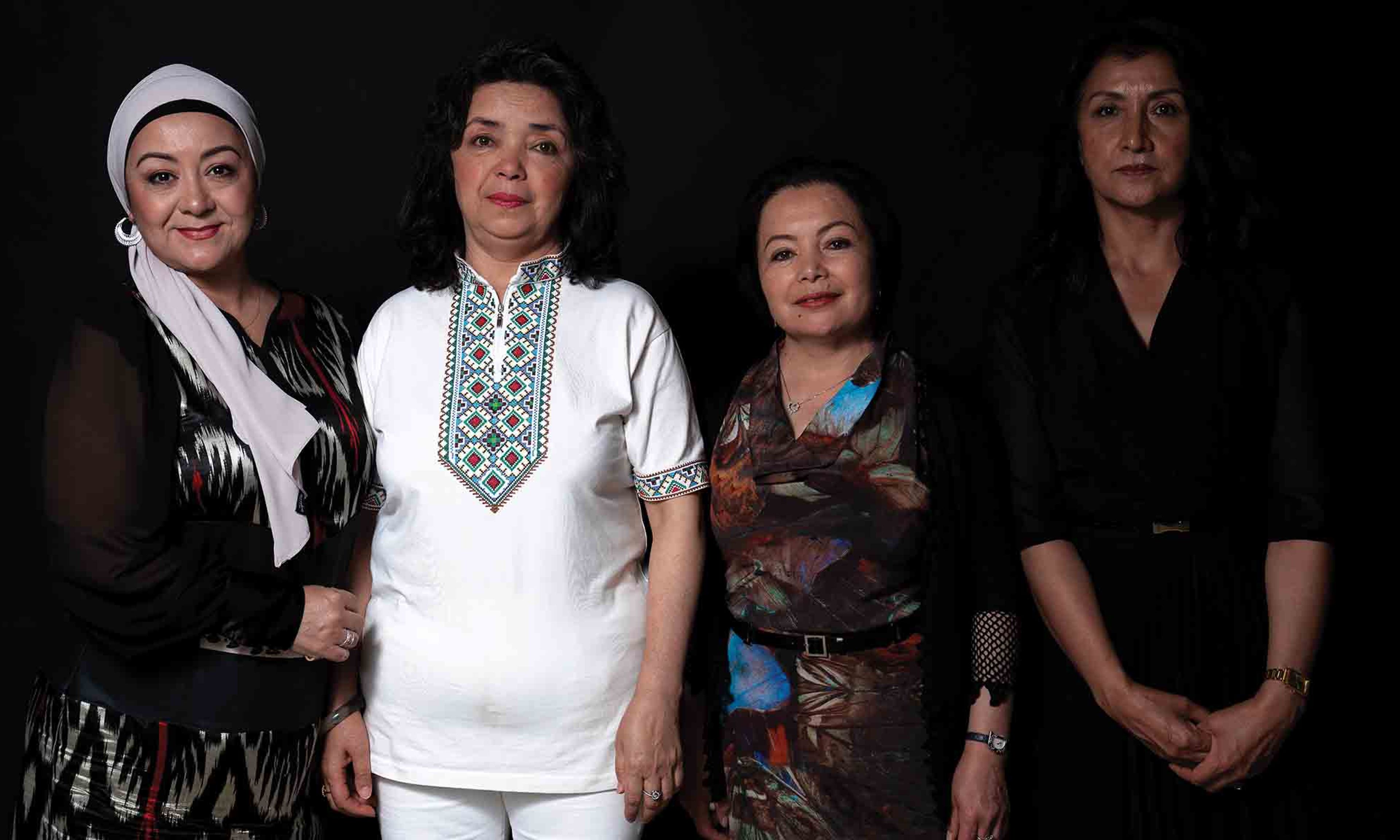
I don’t meet other North Koreans this year. But I meet Pastor Seungeun Kim, from South Korea, who helps North Koreans to escape. He presides over a kind of underground railroad, really. Talk about a living saint. There are Uyghurs — survivors of the camps: two women, Gulbahar Haitiwaji and Kalbinur Sidik. They have experienced unspeakable things, but they speak them anyway.
Víctor Navarro survived another kind of camp, a torture center in Venezuela: El Helicoide. The ways in which torture “dehumanizes” a person, he says, are “almost impossible to express.”
In Egypt, there are 60,000 political prisoners, who are routinely tortured. I sit with a young woman, Sanaa Seif, who has been in prison three times. She once went on hunger strike for 72 days. Sanaa is very soft-spoken, very gentle — but obviously steely. Her brother, Alaa Abd El Fattah, has been a prisoner for years, with no end in sight. Sanaa campaigns for him ceaselessly.
Abraham Jiménez Enoa is an interesting Cuban — born into a revolutionary family. His grandfather was a bodyguard to both Fidel Castro and Che Guevara. His father was a colonel in the interior ministry. Over the years, Abraham became disillusioned by the dictatorship and began to write. To write what he saw, felt, and knew. When the authorities gave him the choice of prison or exile, he left for Spain.
By the Oslo Freedom Forum, several Ukrainians are honored with an award named for Václav Havel. One of them must be honored posthumously: Yuriy Kerpatenko, an orchestra conductor in Kherson. He refused to conduct a propaganda concert for Russian occupiers. So they came to his home and murdered him.
Presenting the Havel award to the Ukrainians is a member of the Taiwanese legislature, Freddy Lim (who is also the lead vocalist in a heavy-metal band). He emphasizes the kinship that Taiwanese feel with the Ukrainians. Will they be next, targeted for annihilation by a behemoth neighbor?
Talking about the Oslo Freedom Forum, Thor Halvorssen is a little jocular. He says the group is like the Star Wars bar, in which strange beings walk around, from places far and wide, dressed in their various ways. They tend to be intense. Some are deeply traumatized; some have been healed of trauma, and want to help others achieve the same. All of these people come together in solidarity, to cry out for freedom and lift a middle finger to the tyrants of the world.
“If I have a tribe,” one participant is heard to say, as he sweeps his arm around a room, “it’s this. These are my people. This is my tribe.” Really good tribe, really good people.











Comments