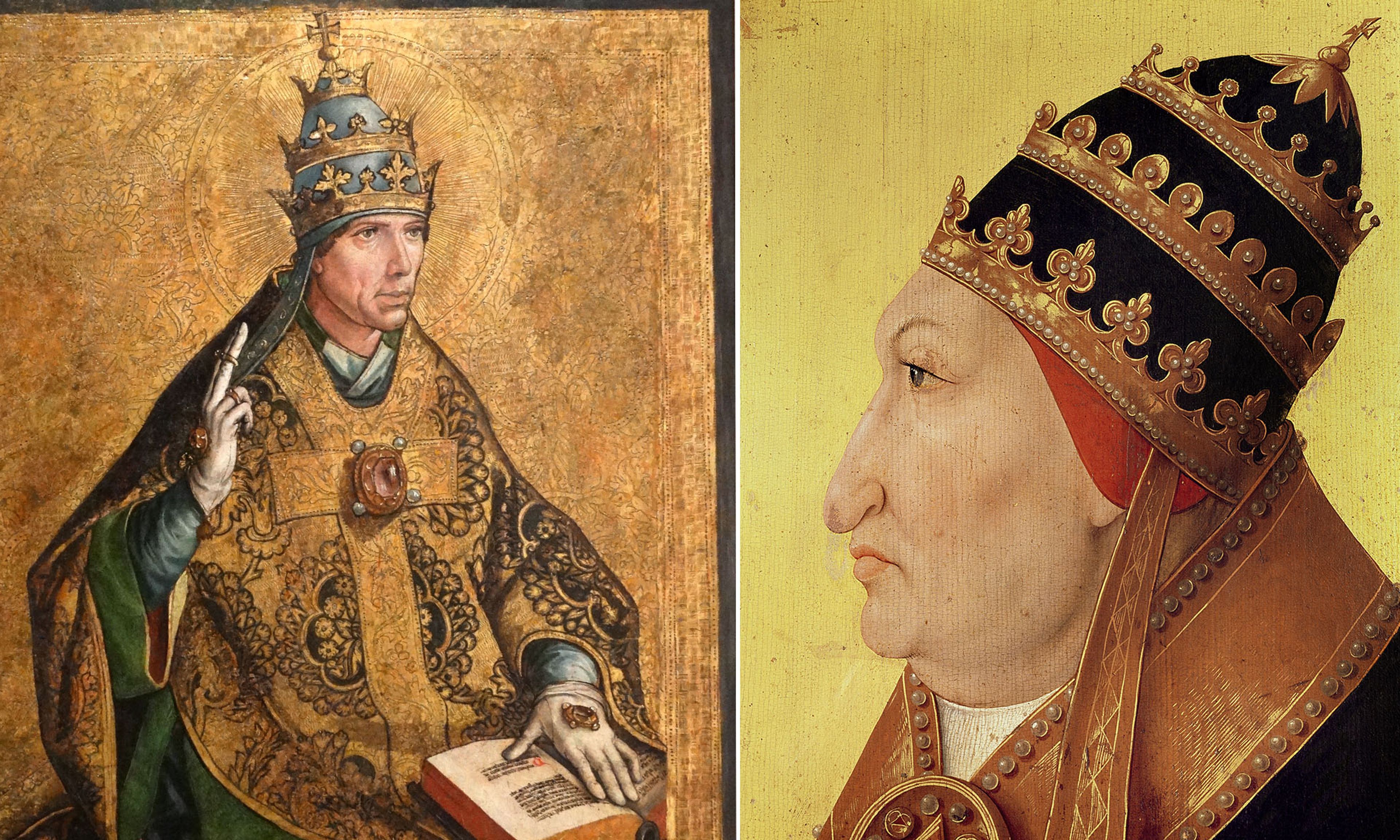
History has seen some very bad popes. There was Pope Boniface VIII (elected 1294), who paved the way for his own pontificate by persuading his predecessor to resign, then promptly having him seized and tortured to death. Pope Stephen VI (elected 896) was even grislier, forever remembered for the “Cadaver Synod,” at which he exhumed the body of his hated predecessor and put it on trial. The Borgia popes (elected 1455 and 1492) were so infamous that their name is now synonymous with political corruption, and though it’s hard to sift fact from sensationalist fiction, they surely did keep mistresses, sell church offices, and squander immense resources on lavish parties and general debauchery.
There have also been very good popes. Fully 31 of the first 34 were martyred, and though some of those have faded into historical obscurity, it’s impressive that so many were willing to accept the office, given the standard life trajectory of the early popes. Pope Gregory the Great (elected 590) stands out for his energy in caring for the poor, his contributions to the development of musical notation, and his writings urging Christians to be more respectful and protective of Jews. Leo the Great (elected 440) risked life and limb to meet with Attila the Hun, who, camped outside Rome, was preparing to sack and burn the city. In a conversation that historians would kill to have on record, Leo somehow persuaded the “scourge of God” to depart peacefully, leaving the city unmolested. That’s papal heroism.











Comments