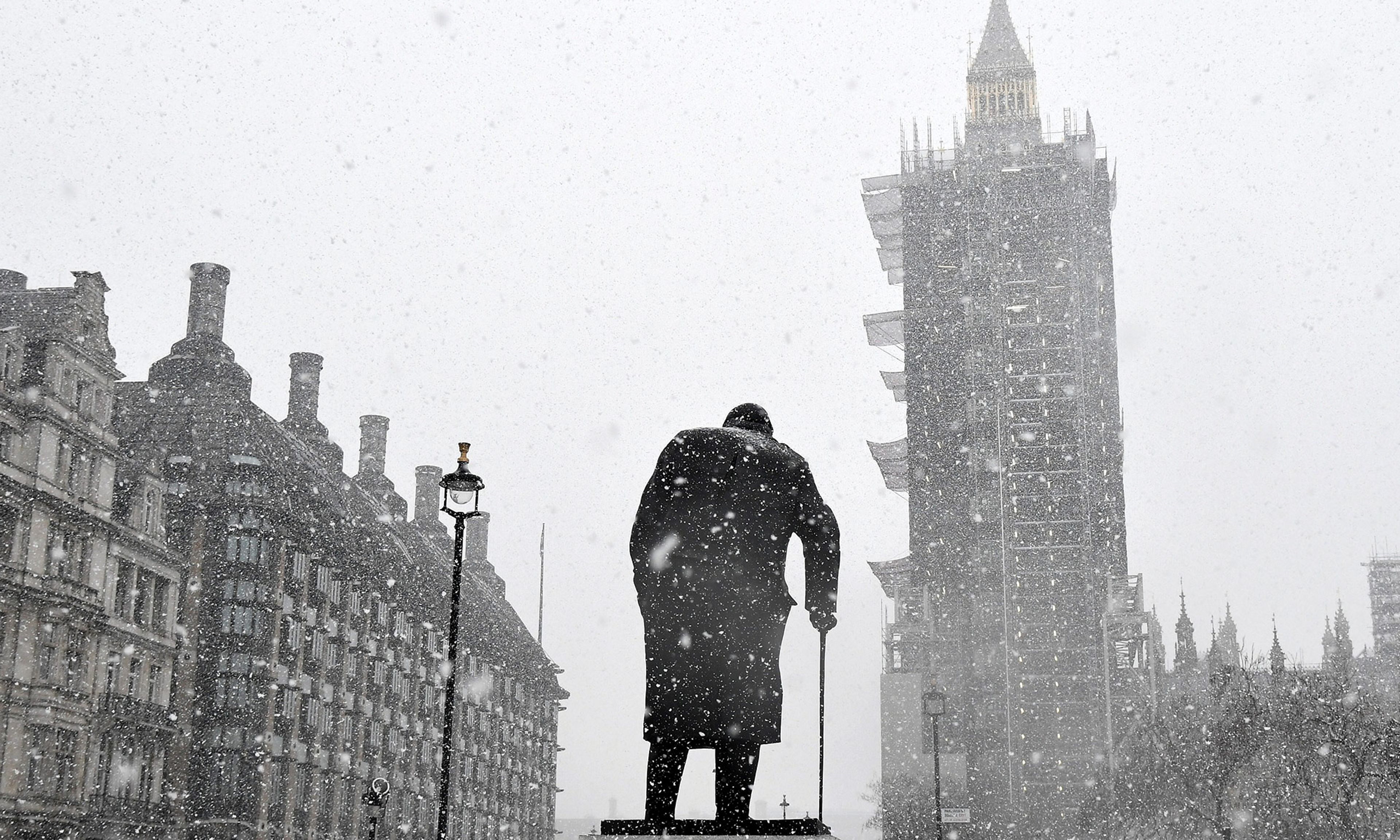
Whether the British Empire was truly, as Flashman author George MacDonald Fraser put it, “the greatest thing that ever happened to an undeserving world,” it was one of the dominant geopolitical realities of the 18th and 19th centuries, and survived well into the 20th. And for a fair portion of its existence, the career of Winston Churchill, stretching from the reign of Victoria to that of Elizabeth II, was entwined in it. He was no armchair general; Churchill fought for empire both in the cabinet and on the battlefield. Around the world he bore with gusto Kipling’s “white man’s burden.”
Churchill comes down to us in historical memory as the arch-defender of empire, determined that Britannia should ever rule the waves (and as first lord of the admiralty in both world wars, he worked to preserve that rule — for a time). But as Lawrence James recounts in this brisk, thorough, and revisionist study, the truth is more complex. James, a well-regarded historian of the British Empire, considers Churchill a reasonably enlightened and ultimately heroic statesman. But while he admires his subject, he unsentimentally recounts Churchill’s ultimate and unwitting complicity in Britain’s imperial demise.











Comments