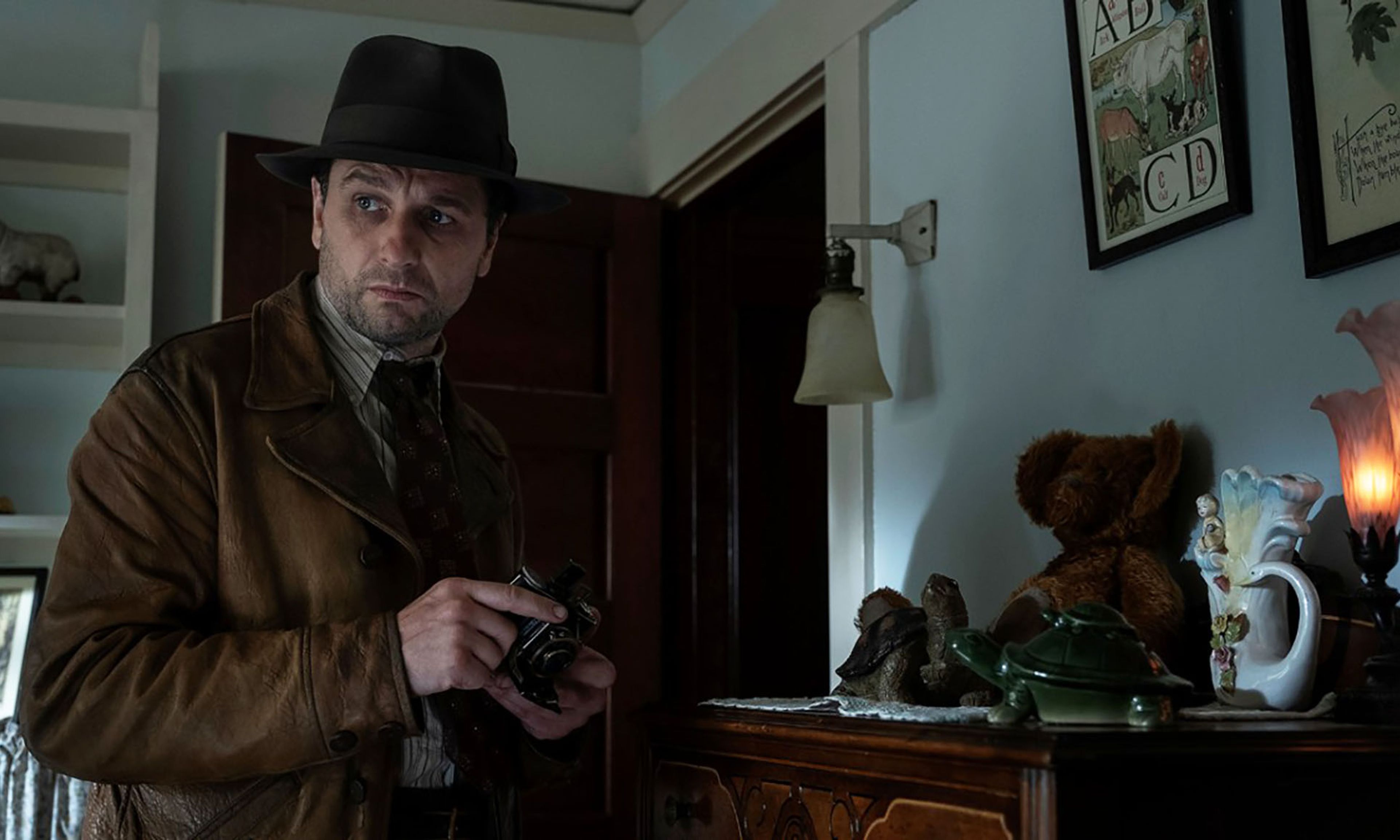
If there were a statue of Perry Mason, would it still be standing?
Possibly. He was a big broad guy, and the soy-suckled types that swarm the nation’s monuments intent on face-planting a statue might struggle to bring him down. They probably wouldn’t know who he was, but if he’s commemorated in stone he must have been bad. If they did try to dethrone America’s favorite defense attorney, I’d like to think someone would stand up and say “Objection!” But that’s asking a lot these days.
Let me back up a bit. I used to have HBO, but Bill Maher said something idiotic that demonstrated his lack of understanding about the issue he was so certain he knew, so I canceled. Not that I watched his show. In fact, I hadn’t been watching HBO since Tony Soprano died — sorry, spoiler warning — and was tired of paying for it. But Maher, yes, of course, that’s why I canceled. And I made sure they knew!
Then HBO brought back Perry Mason, so I had to re-up. After watching one episode of the new version, I imagined the pitch to the network:
“We want to do a Perry Mason reboot.”
“Courtroom dramas are a network thing. What’s different?”
“Well, Perry is a morose, small man who lives on a farm with two thin cows. He’s a drunk who doesn’t shave, and has food on his tie. When he’s sober, he works as a private detective.”
“I thought Mason was a lawyer.”
“We’re reimagining it.”
“That’s funny. The other day, my wife came home and caught me in her lingerie, trying to fit my feet into her heels, and I told her I was reimagining myself.”
“Stay with me. Okay, Paul Drake, the private investigator? Big white guy with silver hair, always smoking? Now he’s black.”
“Go on.”
“Della Street, the personal assistant? Now she’s a lesbian.”
“Okay, here’s $37 million.”
However they pitched it, someone gave it the thumbs-up, and the Dark, Gritty Reboot of Perry Mason was made. I had to watch it, because I grew up on the reruns. Raymond Burr, built like a law book, caterpillar brows, piercing stare, no personal life whatsoever. First he’d deal with Lieutenant Tragg, a leering gargoyle who held Mason in professional contempt and grudging personal admiration, and then he’d deal with Hamilton Burger, who looked like a Dick Tracy villain. Burger would leap up and object until the last five minutes, when he would fall silent, stunned and awed, and let Mason browbeat a witness until someone in the spectator gallery stood and confessed. You wondered if Burger pressed charges on shaky suspects because he knew Mason would flush out the real killer, who was a motel owner who had six lines in the second act.
It was a great show. It defined Perry Mason. Or rather, redefined him. The original Perry Mason of the novels was scrappy, and inclined to cut some ethical corners. There were movies in the Thirties; William Warren, a tall, suave, vulpine man with a manic grin, played Mason for smiles, and the first time we meet him he’s sleeping off a bender in his office. But the morals of the Fifties wanted an upright champion of the law, and that’s the Mason we know. Or knew.
You’d think a modern version of Perry Mason could just stick to what we know and love — those patented Courtroom Theatrics, complete with blustering Burger blurting his objection that the proceedings had been turned into a circus, as if Mason were wearing a flowerpot hat and squirting witnesses with a seltzer bottle. The courtroom battle has a timeless appeal. Alas, all reboots must now be dark and gritty.
What does that mean, exactly? Moody brooding heroes, deprivation, squalor, rain-soaked streets, urine-soaked bums. It worked for Batman, when the character was rebooted in the 1990 Michael Keaton movie; then, when Batman was re-rebooted in 2006, it got darker and grittier. Future reboots of Batman will be like black holes, so dense and dark no image can emerge, and people will just stare at a blank screen while rubbing sandpaper on their eyeballs.
But, you ask, is the darkengritty Perry Mason any good? It depends on your tolerance for a buck-naked Fatty Arbuckle–type comedian running down the street smeared with frosting, among other things. After two episodes, I can say it’s not the most joyous thing you’ll ever see, but it’s a serious, adult story intent on capturing the world of 1931. It’s just not the Perry Mason most of us know, the one who embodies a particular era and sensibility.
That’s fine. Every era has its Bond, every generation its own lousy Star Wars movies, its own Star Trek iteration, its own Batman. Just one problem. All these darkengritty projects were made when things were actually pretty good. It’s almost as if they were training us to romanticize nihilistic despair.
You’d think the statue-haters would love the old Perry Mason show. There wasn’t any greater indictment of the prosecutorial side of American justice than the Perry Mason show. There were 271 episodes, and if you discount the three episodes where Perry lost the case, that means the district attorney filed 268 capital murder charges against innocent people over nine years. That’s almost 30 a year — and that’s only the ones Mason represented.
I wish Perry Mason would defend a kid arrested for statue desecration, because he’d zero in on the witness so hard a college professor in the spectator gallery would stand up and confess:
“It’s me! I filled his head with this! And I’d do it again!”











Comments