Popular Riots
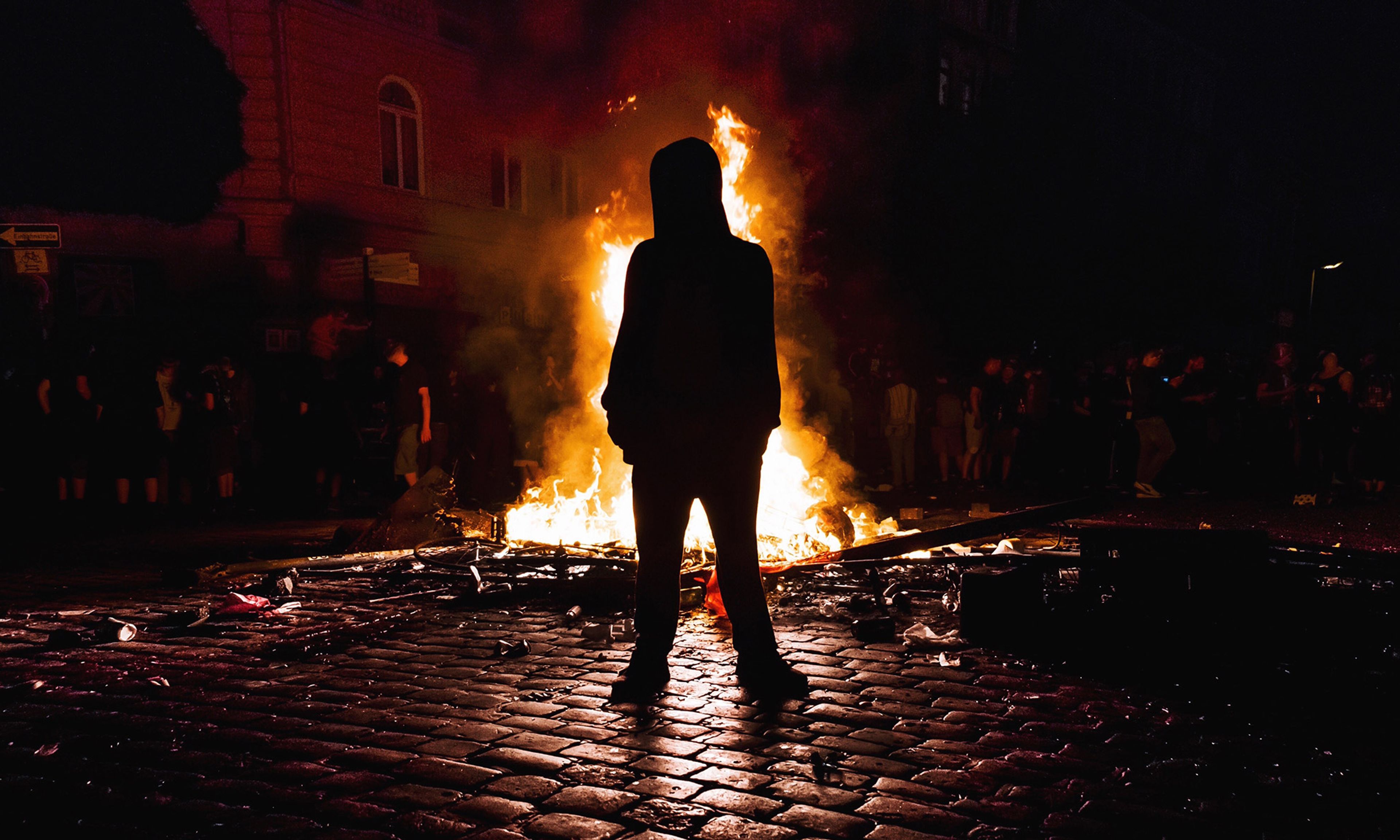
Michael Brendan Dougherty’s article “The Love Affair with Riots” (July 6) was noticeable for its avoidance of some of the biggest and most violent riots in our country. The early 1910s and 1920s saw race riots that involved white members of those communities raping and murdering black members of those communities and burning to the ground entire parts of cities that belonged to those black members. These places included Chicago and my own city of Knoxville, Tenn. We are coming up on the 100th anniversary of the most brutal of all — over 30 square blocks of the Greenwood community of Tulsa, Okla., with hundreds of black Americans killed and thousands left homeless by white Americans. These were cases of racial cleansing in which, indeed, “the strong and depraved dominate[d] and terrorize[d] the weak, the kind, and the conscientious.” It was curious Dougherty did not see fit to raise them in discussion.
Todd M. Freeberg Knoxville, Tenn.
Michael Brendan Dougherty responds: Curious? Pfft. My article was focused on the Left’s love affair with riots, so I began in mid century and treated only the riots that the Left romanticizes. The awful white riots against blacks from a century ago are not defended today by influential members of academia, the press, or elected politicians. They are not treated nostalgically, as the L.A. riots of 1992 are treated in documentaries such as Burn Motherf***er, Burn! My choice is no more “curious” or a “noticeable avoidance” than the above letter writer’s decision not to mention the Ludlow Massacre of 1914, or Cincinnati’s anti-Catholic riots in April 1855.
The choice of subject matter is not mere historical interest either. The Left’s built tradition of rationalizing and romanticizing riots led the mayor of Seattle to excuse and enable the quasi-secessionist movement in her city’s downtown. She painted the activism in CHAZ/CHOP as a potential “summer of love.” Six people were subsequently shot in the space vacated by lawful authorities, including a black child who was murdered by anarchist “security.” Perhaps Mr. Freeberg can monitor the discussions at Antonio Mays Jr.’s graveside for telling historical omissions.
The ‘Pop’ in Pop
I enjoyed Joseph Epstein’s piece “Dining Out” (June 22), particularly his use of the word “pop,” which is a very midwestern thing to say. Growing up in Ohio, we always called it “pop.” I now live in California, where it’s called “soda.” In the interim, I lived in Boston, where they also called it “soda,” and in Milwaukee, where they called all soft drinks “coke” regardless of the type or flavor. But unlike my father, a Californian who happened to be from Ohio, I am an Ohioan who happens to live in California. When you open a can, does it go “soda”? No, we all know the sound it makes. To me, it will always be “pop.” Thank you, Mr. Epstein, for reminding me of this.
Derek Marsee Sacramento, Calif.
Correction
Daniel Blumenthal and Nicholas Eberstadt’s piece (“China Unquarantined,” June 22) stated that the accidental American bombing of a Chinese embassy in 1999 happened in Kosovo. The bombing took place in Belgrade.











Comments