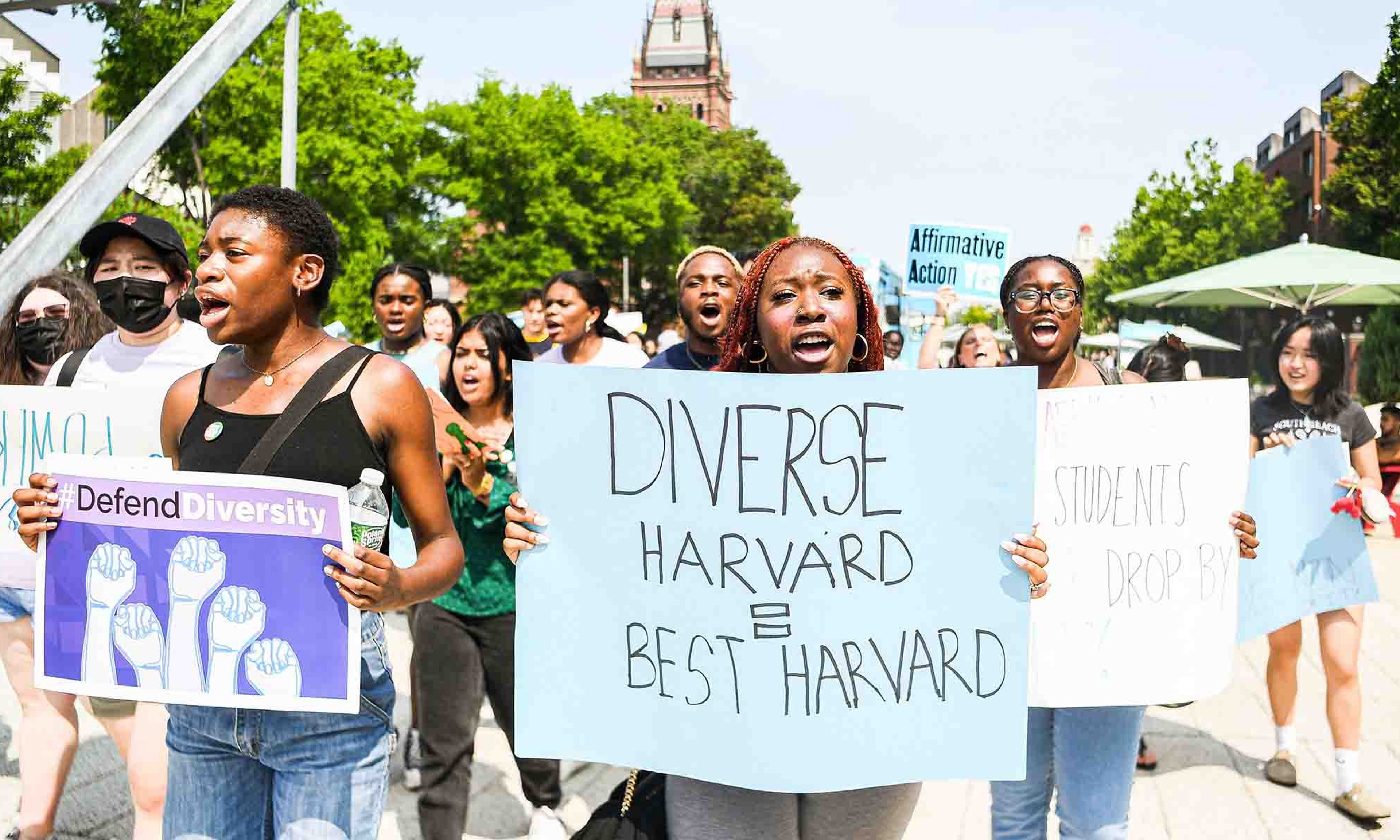
The decision came down and, as if on cue, universities began lodging their protests. Within hours of the release of the majority opinion in Students for Fair Admissions v. Harvard, Princeton’s president had already bemoaned the Court’s “unwelcome and disappointing” opinion. The University of Hawaii found the ruling “beyond disappointing.” Michael Drake, the president of the University of California, solemnly mourned “a valuable practice that has helped higher education institutions increase diversity and address historical wrongs.” Meanwhile, with all eyes turned toward Cambridge, the Promethean defender of the hopeless cause stepped bravely forward “to reaffirm the fundamental principle that deep and transformative teaching, learning, and research depend upon a community comprising people of many backgrounds, perspectives, and lived experiences.” Harvard promises that its doors will remain open to the historically disadvantaged. No doubt the community is much relieved.
Some schools will try to circumvent the ruling or pursue the same goals in slightly different ways. In his majority opinion, Chief Justice John Roberts himself opened one possible door when he specified that even though racial quotas violate the 14th Amendment, it would be appropriate to take note of an applicant’s written account of “how race affected his or her life, be it through discrimination, inspiration, or otherwise.” Admissions offices are presumably bracing for a flood of near-identical essays.
Some schools could get more creative, for instance by hosting programs for high-school students that would boost participants’ admission status when they later apply to college. High-school programs could thus function as preemptive screening devices for schools that still want to use racial criteria. Prioritizing applicants from regions with disproportionate black, Hispanic, or indigenous populations would be another way to skirt the law. Many universities are now “test optional,” meaning that applicants are no longer required to submit scores from the SAT or ACT. Without that objective benchmark, the admissions process inevitably becomes more subjective and opaque, and universities could use that freedom in any number of ways. As we learned in the Jim Crow era, the truly determined will always find ways to discriminate on the basis of race.
Are universities truly determined, though? It’s difficult to say. Right now, they have every reason to join the pro-diversity chorus. The entire conversation, after all, is predicated on the assumption that a college education is so precious that people of every race, sex, or creed should want it. Every university president will say “Amen” to that. Behind closed doors, though, opinions may be more nuanced, and conservatives may not be the only ones rejoicing at the 6–3 decision. Diversity agendas have grown increasingly costly, contributing to staggering administrative overhead and placing universities at the center of a polarizing culture-war issue. The luxury is becoming less sustainable as the university system contracts. In many ways, the Supreme Court has given higher education a gift. Some institutions may even be savvy enough to recognize it. The new law could provide cover for those that actually want to shift their direction and focus and could allow them to make a different argument for why they are worthy of public support.
The need for such an argument becomes more pressing with each passing year. More than 800 colleges and universities have closed in the past two decades, and that pace is likely to accelerate in coming years. There are simply too few students today to fill all the dormitories and lecture halls. Enrollment had been falling for some years even before the Covid pandemic, which precipitated a sharper dip. When campuses reopened post-Covid, the recovery was sluggish. Younger generations seem ambivalent about undergraduate education. But even if admissions edge back up for a few years, it remains a fact that U.S. birth rates have been falling steadily since the recession of 2008. Universities know that they are speeding toward a steeper “enrollment cliff.” Not all of them will survive the fall.
In such a climate, it is at first glance quite baffling that universities remain so committed to affirmative action. Public opinion is largely unfavorable. A recent Pew survey showed that Americans who “strongly disapprove” of race-based admissions outnumbered those who “strongly approve” by almost three to one. Overall, about half of American adults disapprove of the relevant practices, while only a third are supportive. Meanwhile, even as universities alienate the public whose support they desperately need, their diversity agendas also entail hiring ever more administrators, whose salaries are gobbling up their budgets. Schools now spend about as much on administration and student services as they do on actual teaching, thanks in large part to “diversity, equity, and inclusion.” Along with the armies of diversity officers come armies of grossly underpaid adjuncts, as money for student aid decreases. Spending more on DEI programs is the last thing a university needs as it braces for a likely budget crisis.
Institutions typically justify these costs by claiming that racial diversity is critically necessary for high-quality teaching and research. But this is frankly quite implausible: How ethnically diverse was Plato’s Academy? How did European men achieve so much at the medieval University of Paris? Few research projects have been more transformative in world-historical terms than the Manhattan Project, which seems to have managed without much diversity. Of course, including people with diverse experiences can help a community to broaden its understanding of the human condition, but an intense fixation on racial diversity may not achieve that in any case. Strong majorities of black and indigenous Harvard students were raised by college-educated parents, in households with incomes above the national median. Are their life experiences so very different from those of white or Asian students? If Harvard really wants a better-rounded perspective on the human condition, it should give preferential admissions to international students, religious conservatives, and students from low-income homes. But platitudes about diversity seem to have achieved the status of unreflective dogma within the university system, and administrators solemnly proclaim that diversity is essential without bothering to furnish even a pretense of an argument for why this would be so.
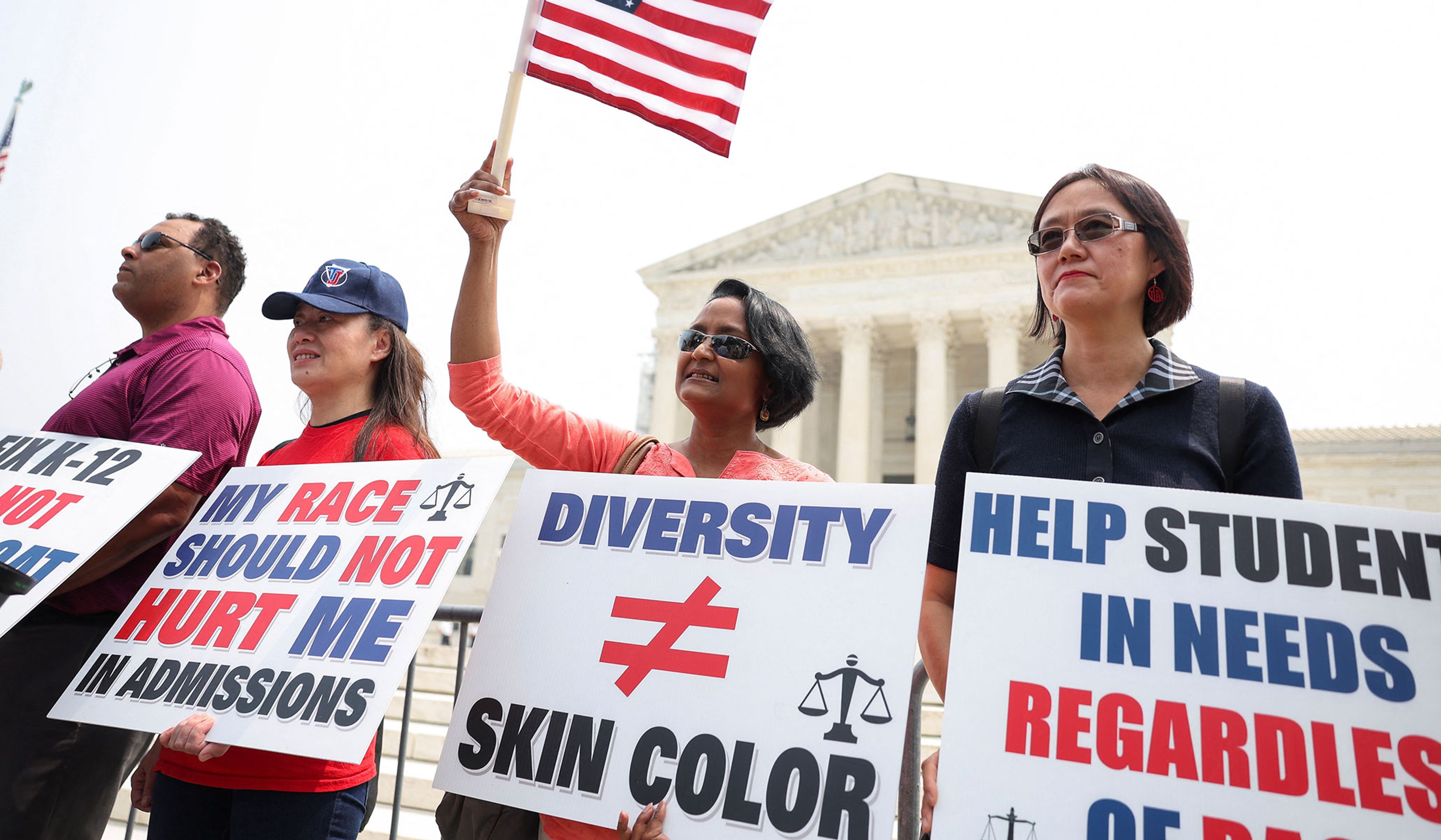
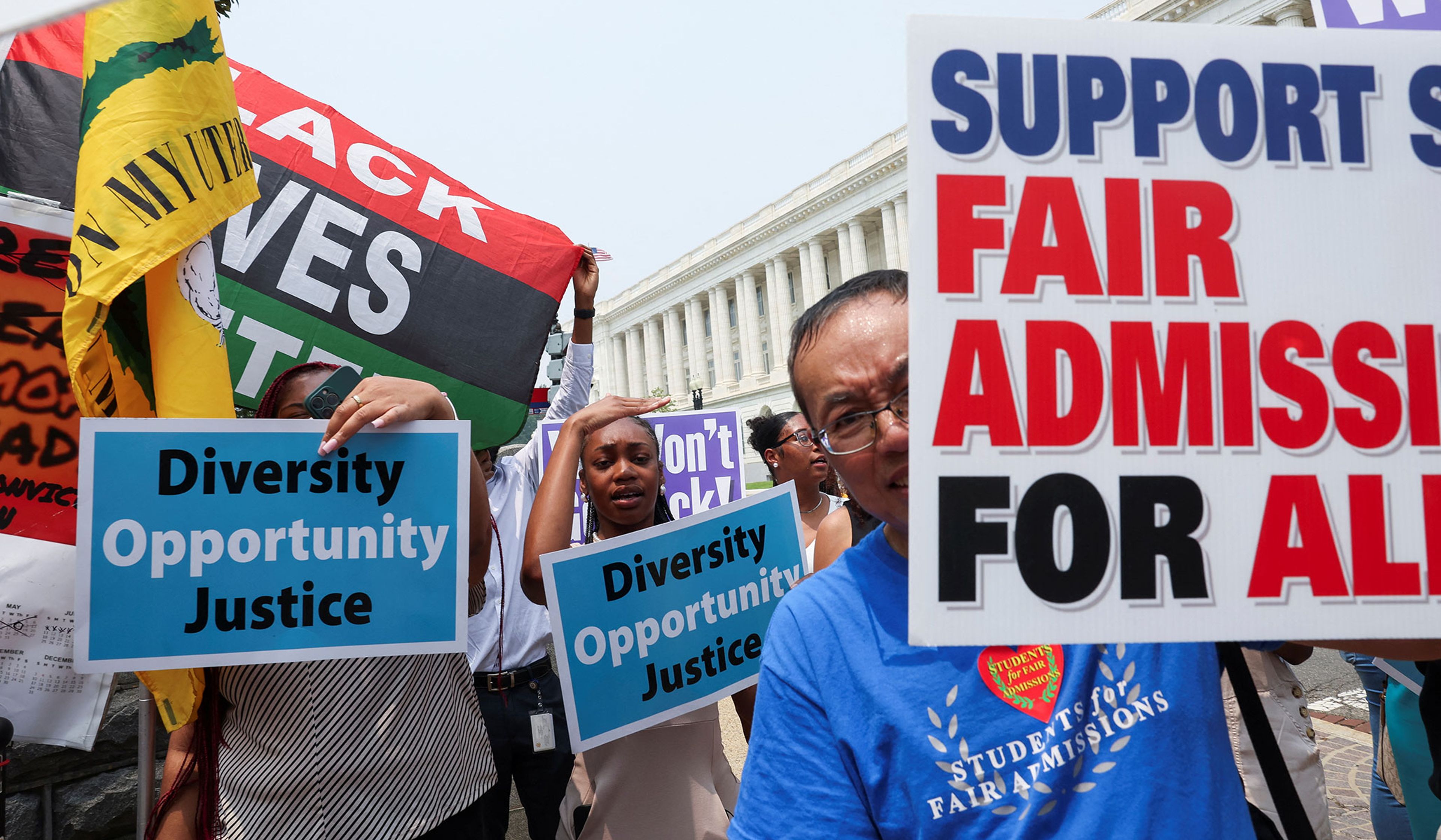
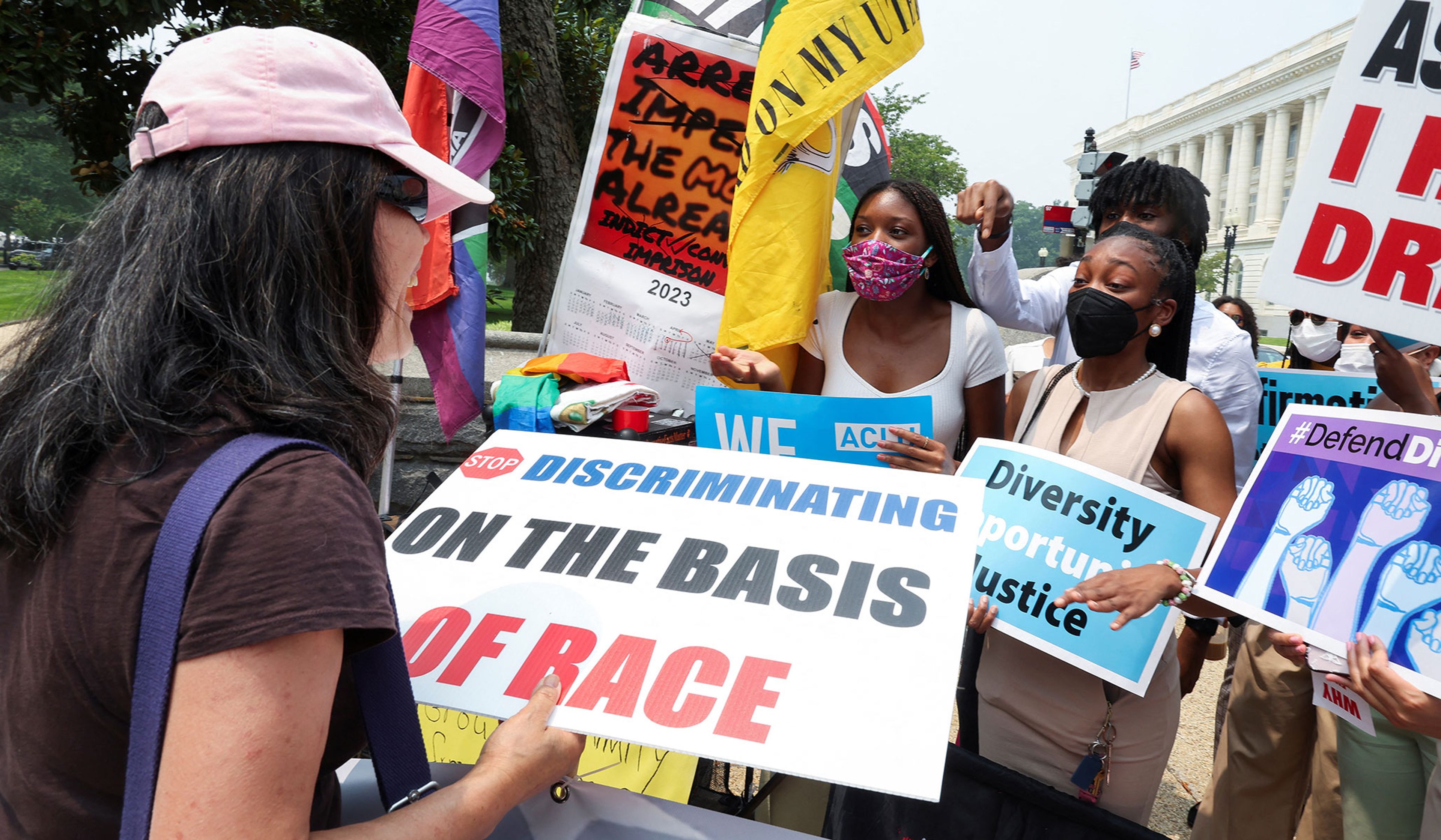
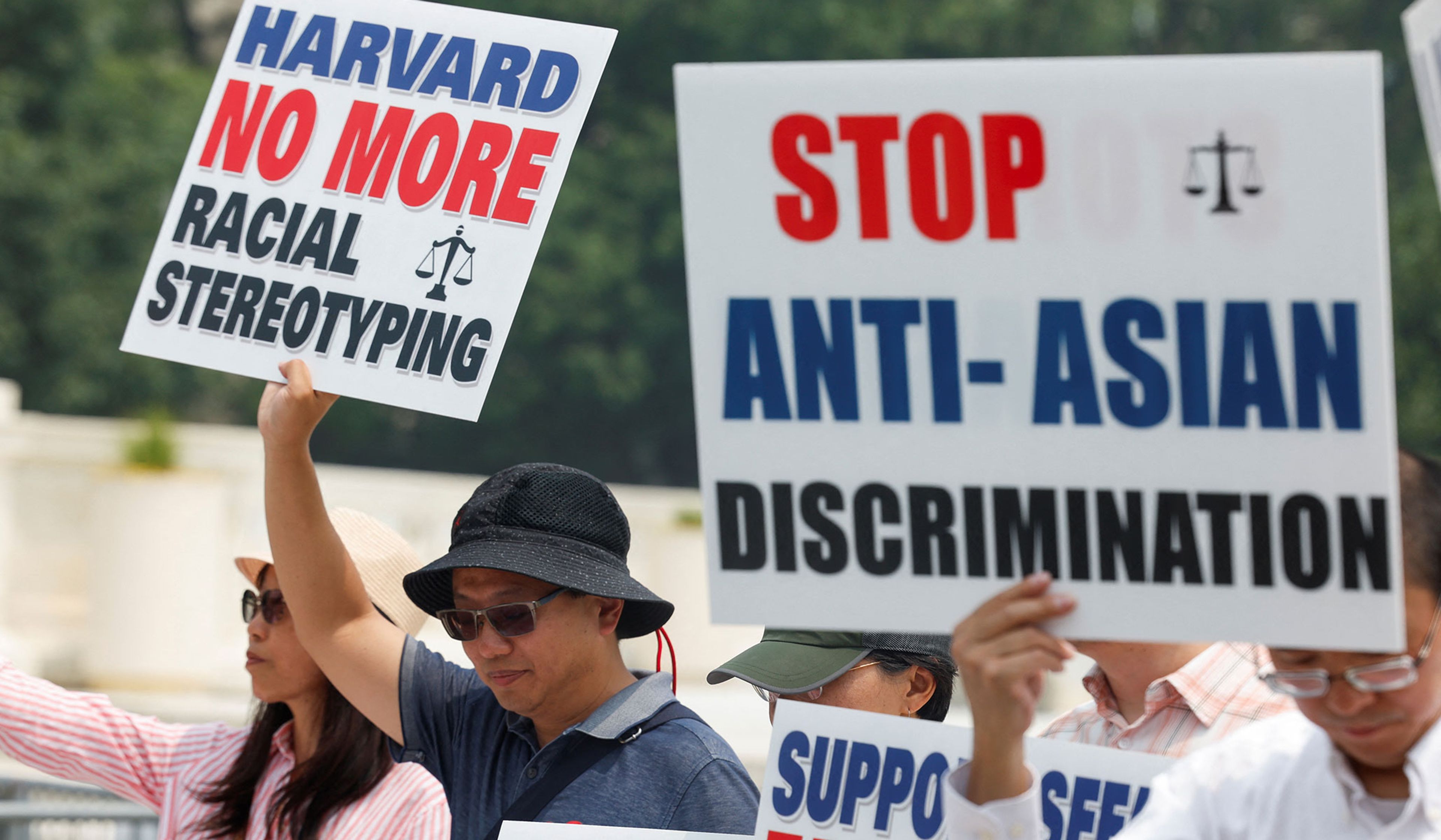
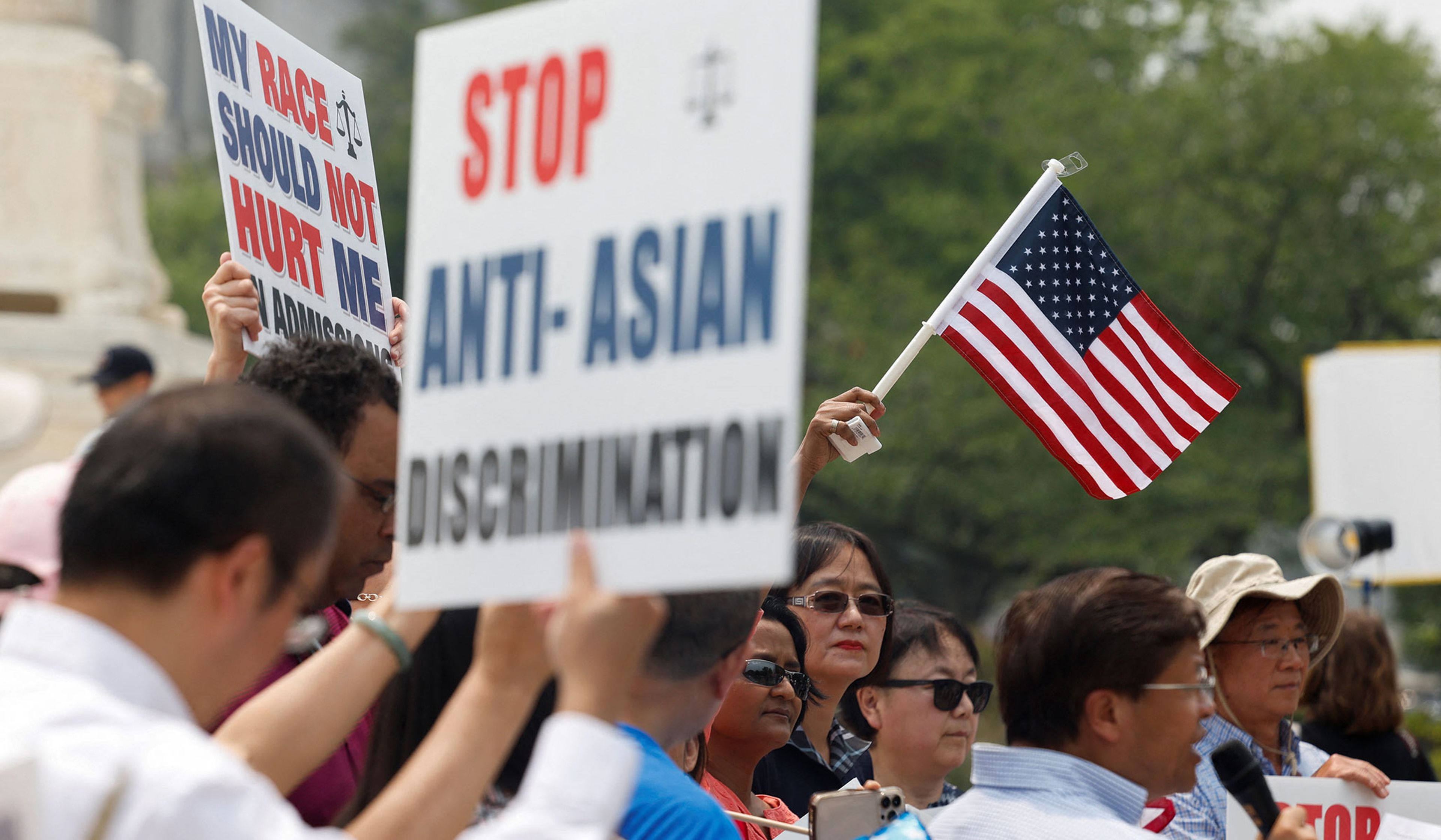
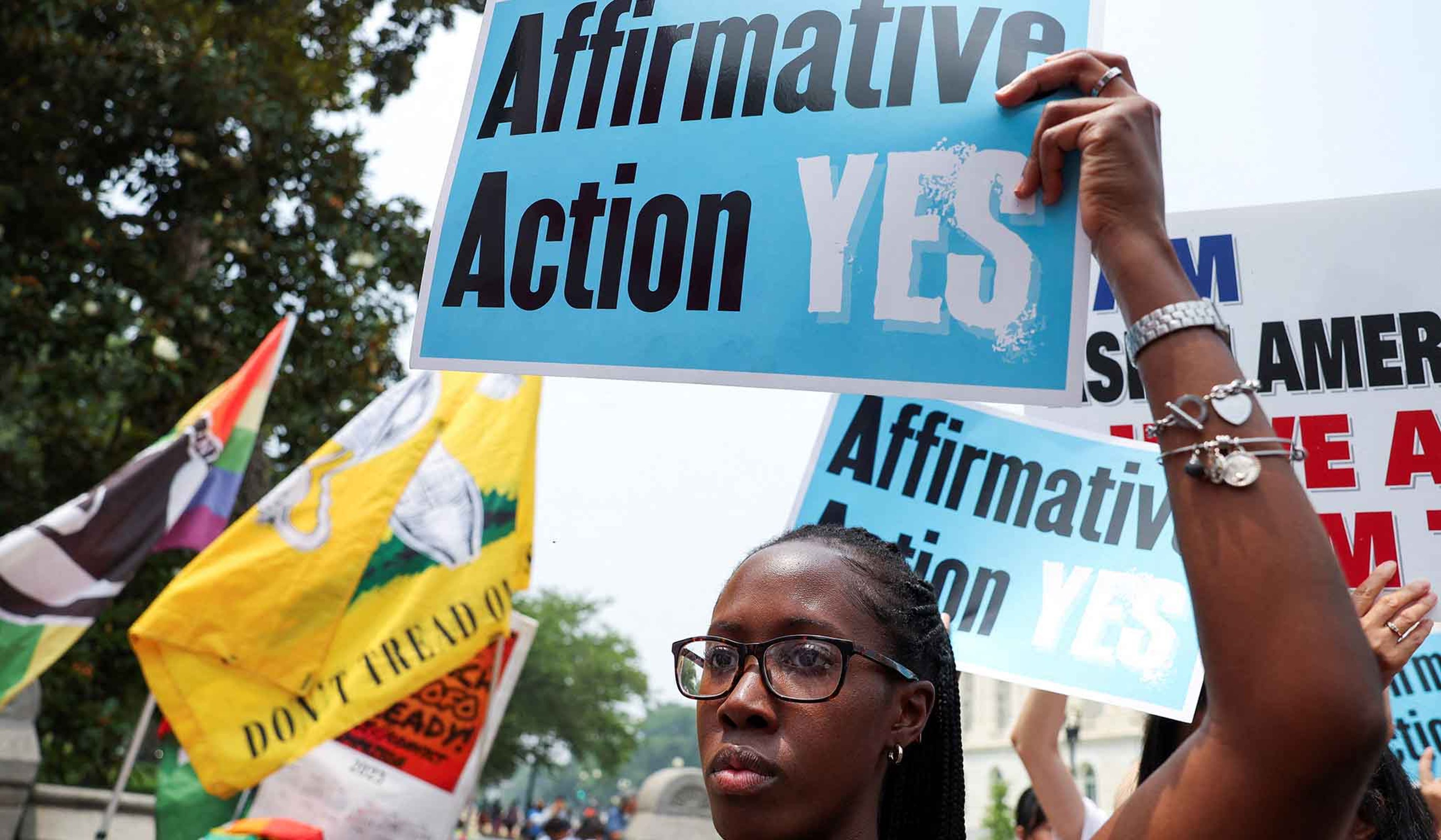
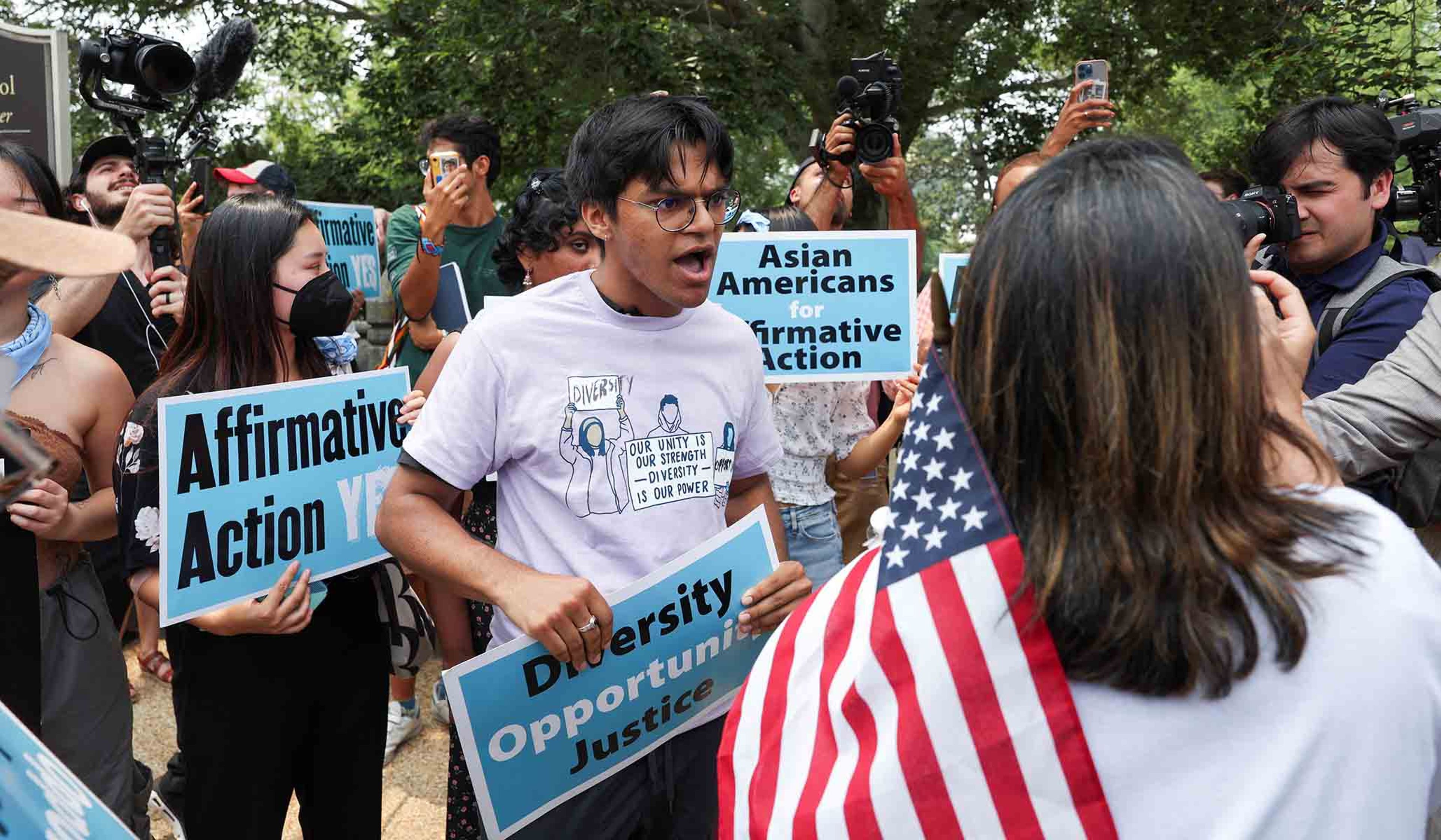
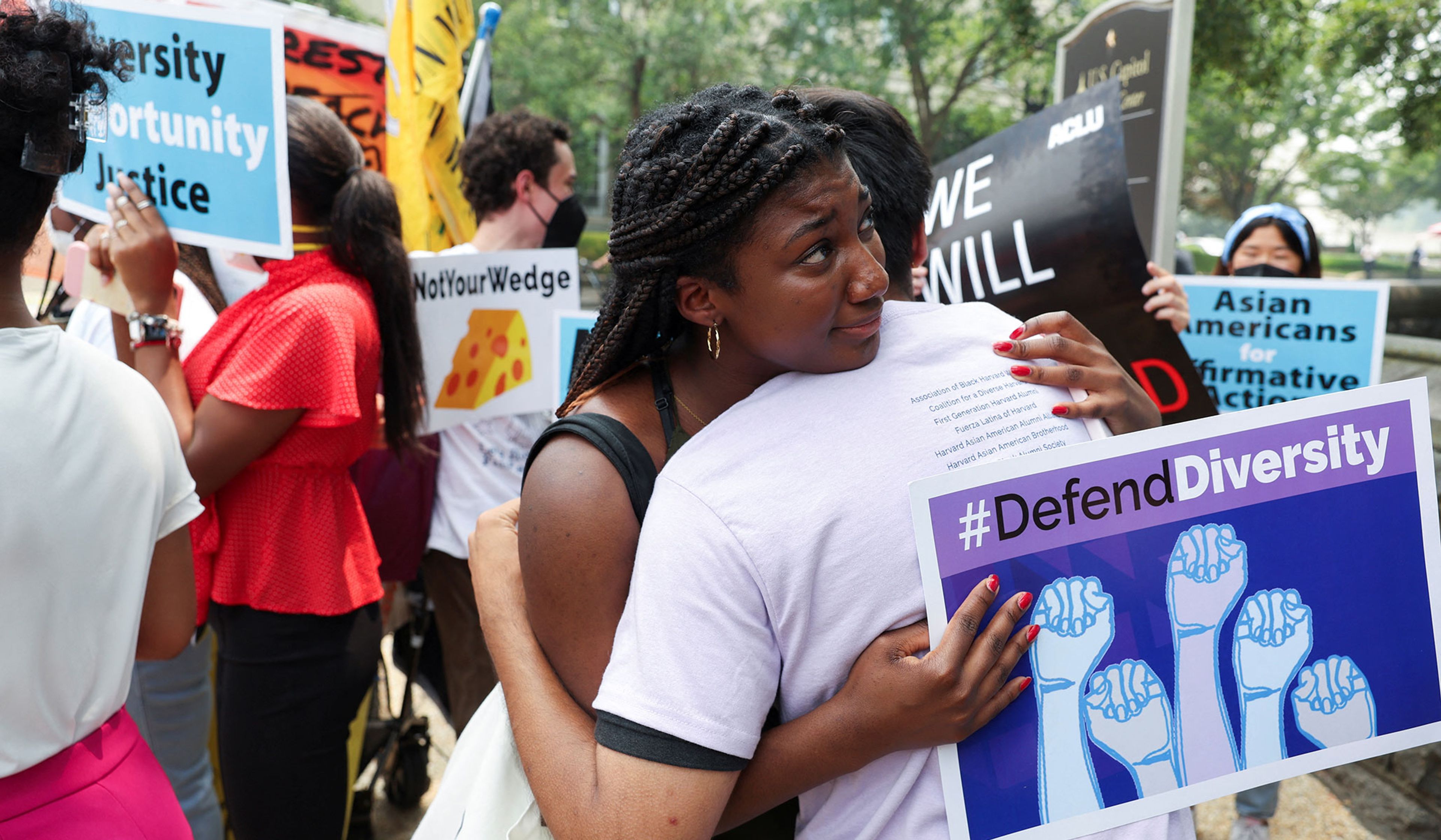
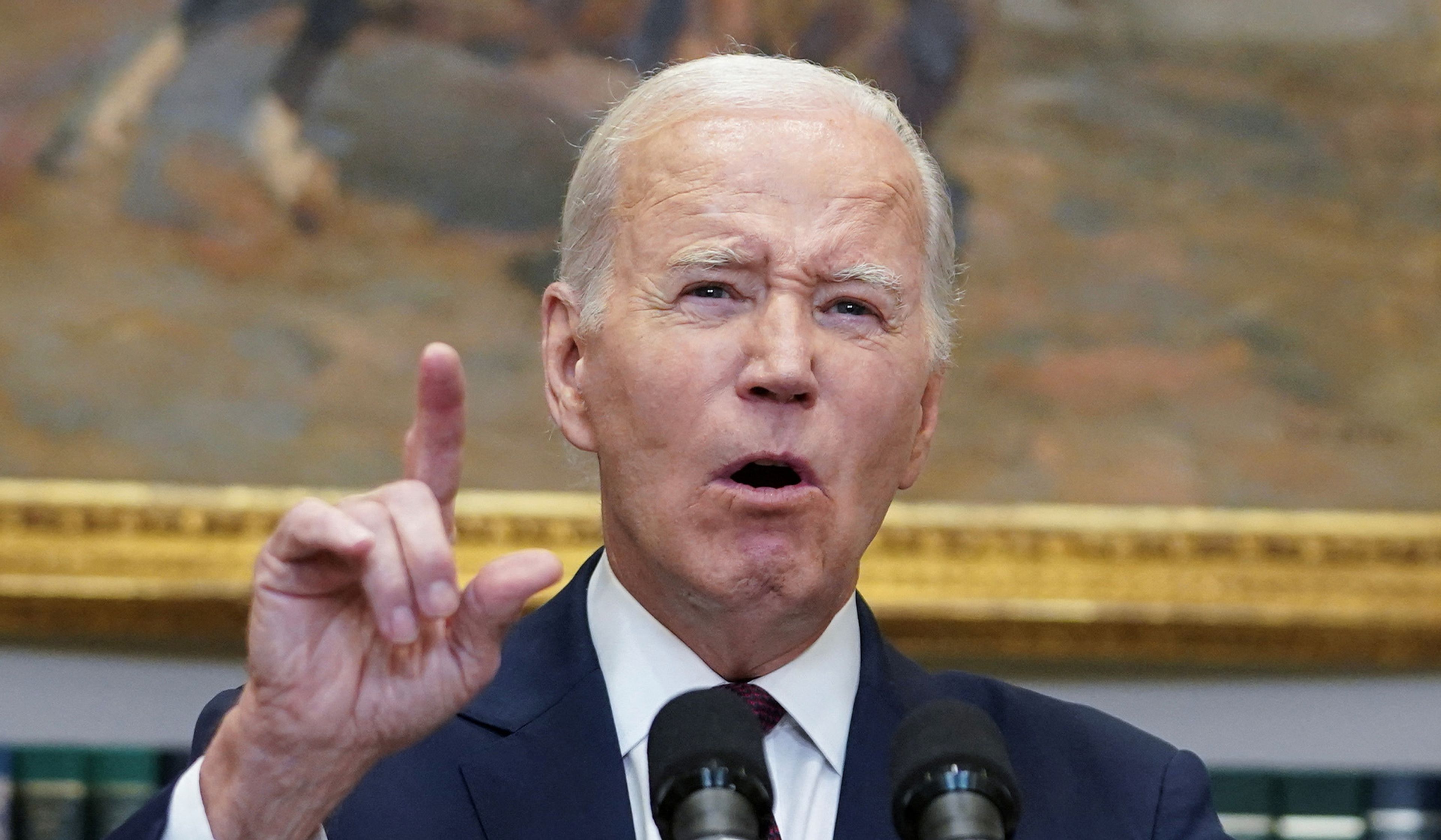
Protesters hold signs outside the Supreme Court after the decision to strike down race-conscious student admissions programs at Harvard University and the University of North Carolina, in Washington, D.C., June 29, 2023.
Evelyn Hockstein/Reuters
To some extent, this strange situation can be explained by public-choice theory: It’s a textbook case of institutional capture. The present system may be bad for students, instructors, and the nation as a whole, but things are going splendidly for the handful of people drawing hefty salaries — as much as $430,000 annually — as “chief diversity officers.” And those people unfortunately make many of the critical decisions about university policy. This is a familiar problem, but it is only part of the story. Why were the diversity officers able to capture the system in the first place? There are cultural and historical factors in play, and institutions will need to reckon with these if they want to survive.
Americans have long held their institutions of higher learning in high esteem. Such schools occupy a vaunted space in our cultural landscape, entrusted with the task of upholding the American commitment to excellence, but also with translating their lofty mission into a coming-of-age collegiate experience that can propel young men and women into thriving adult lives. The pairing of scholarly excellence and youthful ambition is intoxicating to the American mind. It harmonizes our thirst for greatness with our hatred of elitism and class privilege. This is why, from the early 20th century onward, we have romanticized undergraduate life, obsessing over collegiate sports and consuming endless novels, movies, and television programs set on the college campus. Universities were central to many of the 20th century’s defining social projects, serving as conduits to desired social change. After World War II, the GI Bill helped servicemen attend college and reintegrate into civilian life, facilitating an era of prosperity and peace. The introduction of the SAT, as a deliberately meritocratic measure meant to recalibrate social priorities, helped usher the old WASP elite into irrelevance. Arguments about racial equality and women’s rights have often centered on access to university education. For many Americans, it feels natural to view the university campus as the place where privilege and merit are harmoniously reconciled and historical disadvantage erased.
Not all social problems can be resolved around the seminar table, though. Diversity initiatives may be a descendant of once-reasonable efforts to ameliorate the effects of historical injustice, but they are no longer helping us to achieve that goal. Talented students of all backgrounds should certainly have access to advanced education. They do. The reality is that Students for Fair Admissions v. Harvard probably will not affect the admissions policies of most colleges all that much, for the simple reason that most are already admitting every plausibly qualified applicant, regardless of race, sex, or creed.
Meanwhile, as universities compete aggressively for a shrinking pool of students, the descendants of enslaved and indigenous people continue to struggle in measurable ways, with markedly below-average odds of achieving financial stability or professional success. It is entirely reasonable to be concerned about this, but we must think carefully about the real needs of these groups. How many of them are waiting on pins and needles for a reply from Harvard? Why have decades’ worth of preferential admissions not done more to mitigate their most pressing problems? It should be obvious at this point that elite universities are not equipped to address the lingering effects of historical injustice. But, because they are desperate to maintain their cultural relevance, they continue to justify themselves in those terms.
Despite their many problems, we do in fact still need universities. An information-age economy requires advanced education, along with high-level scholarly inquiry and research. Even the coming-of-age collegiate experience may still have some value. With a little help from their friends in the Supreme Court, universities have an opportunity now to pause, take stock of their situation, and consider new and more fruitful ways of understanding their mission. Two promising pathways present themselves. Schools could build their mission around a color-blind, sex-blind, and otherwise impartial commitment to meritocracy. On this model, the university would simply disavow any claim to be a mechanism for social engineering, placing all its emphasis on the importance of education and the pursuit of excellence. In an age when many people are simply exhausted by the relentless quest for “diversity,” this strategy has an obvious appeal.
There could also be a place, though, for schools that build their identity and mission around a connection to a particular community. Often, these missions are defined by geography, but sometimes religion or other factors also play a role. Seminaries train priests and pastors, while schools of agriculture must be attuned to the needs of farmers. Sometimes it is good for an institution to cater deliberately to the needs of a specified group. The key to success in such cases is a real and meaningful connection between the institution and the people it aims to serve. Their loyalty and support should be the institution’s mainstay. University diversity initiatives have never worked that way; their mission has always been intensely paternalistic. Nationwide, fully three-quarters of diversity officers are white, mirroring the general population.
Higher education is coming to a critical juncture, which means that institutions are weighing their options. Different schools may make different choices, and that in itself may be grounds for optimism. For far too long, the university system has been depressingly uniform, controlled by federal incentives and a homogeneous class of bureaucrats. New realities, both legal and financial, may force institutions to change. Some will stay true to the old diversity dogma. Others may take more chances, defining themselves in new ways to attract different kinds of students. The future is uncertain, but young Americans should take heart. It’s just possible that the college landscape is about to become much more diverse.












Comments