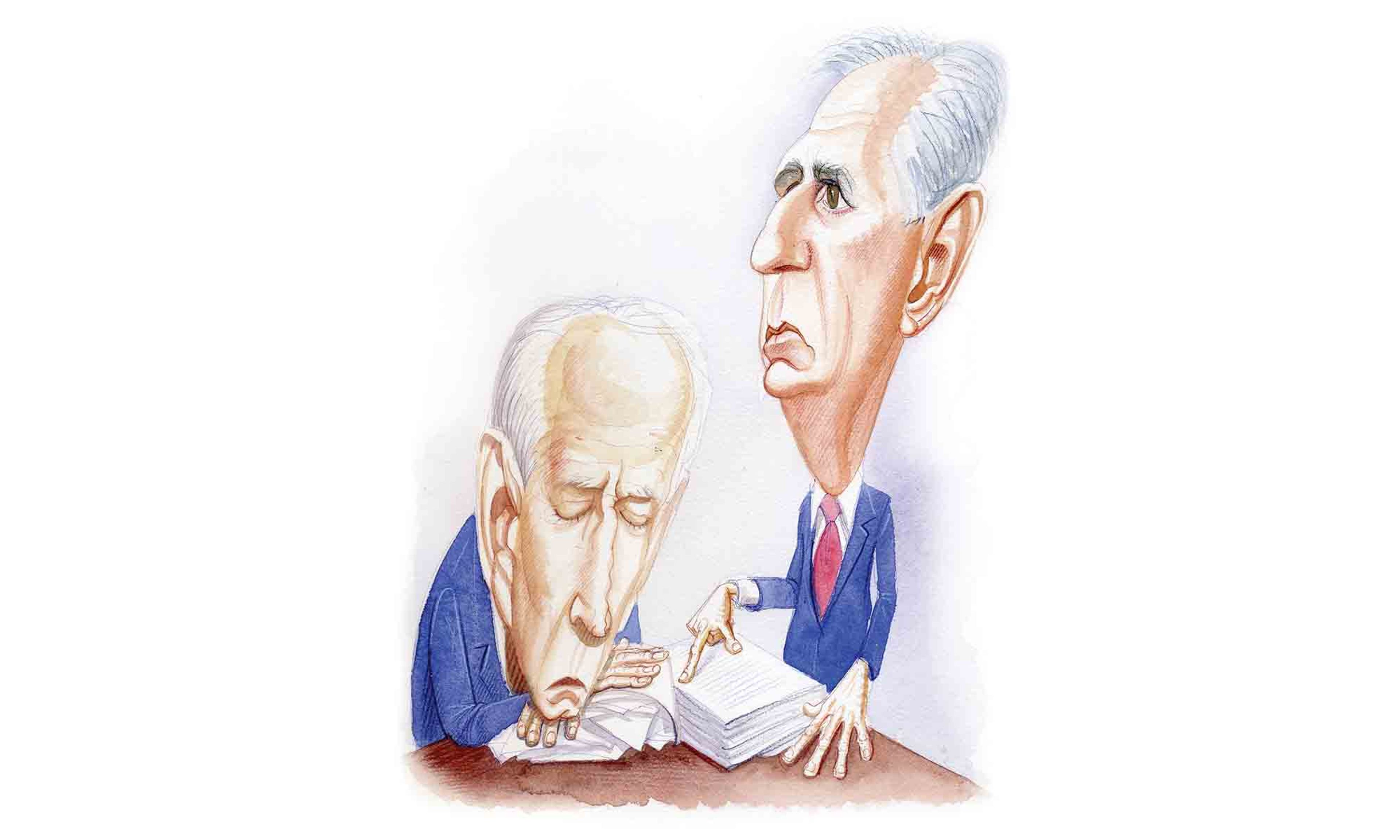
• Maybe Santos can just pretend he resigned.
• Eleven progressive senators have urged President Biden to declare the debt limit unconstitutional and called on him to “use the 14th Amendment” to keep the government spending. In doing so, they have embraced a constitutional theory as absurd as reading the Twelfth Amendment to give the vice president power to “send the election back to the states.” Section 4 of the 14th Amendment, designed to block any repudiation of the Civil War debt by Confederate sympathizers, says that the “validity of the public debt of the United States . . . shall not be questioned.” But Article I of the Constitution gives Congress alone the power to borrow money. The debt limit is a statutory creation that follows from Congress’s Article I powers. The prospect of the president’s issuing bonds unilaterally also makes no financial sense: Investors would be highly unlikely to purchase bonds of uncertain legal standing, so the gambit wouldn’t effectively raise money. The Senate has been entirely left out of the debt-ceiling negotiations in consequence of Democrats’ weekslong refusal to acknowledge the existence of a House-approved bill that raises the debt ceiling in exchange for spending controls. Instead of debating the merits of that bill, these senators are groveling before the president who has shut them out of the process and asking him to take away some of their enumerated powers. James Madison weeps.
• Title 42, the pandemic measure used to expel migrants quickly at the border, expired. A massive spike in crossings right before its expiration quickly settled back down — from 10,000 a day to 4,000. The Biden administration heralded the numbers, but even 4,000 a day would have been a debacle not too long ago. Migrants are probably waiting to see if the administration follows through on its tougher rhetoric of late. According to the Washington Post, despite the warnings, the administration has been releasing more migrants than it’s been removing. Also, a new parole program meant to diminish the illegal numbers by funneling migrants through a legal pathway — essentially an accounting gimmick — has been overwhelmed by applications. Even if the end of Title 42 does not lead to the predicted surge, nothing at the border is normal or under control.

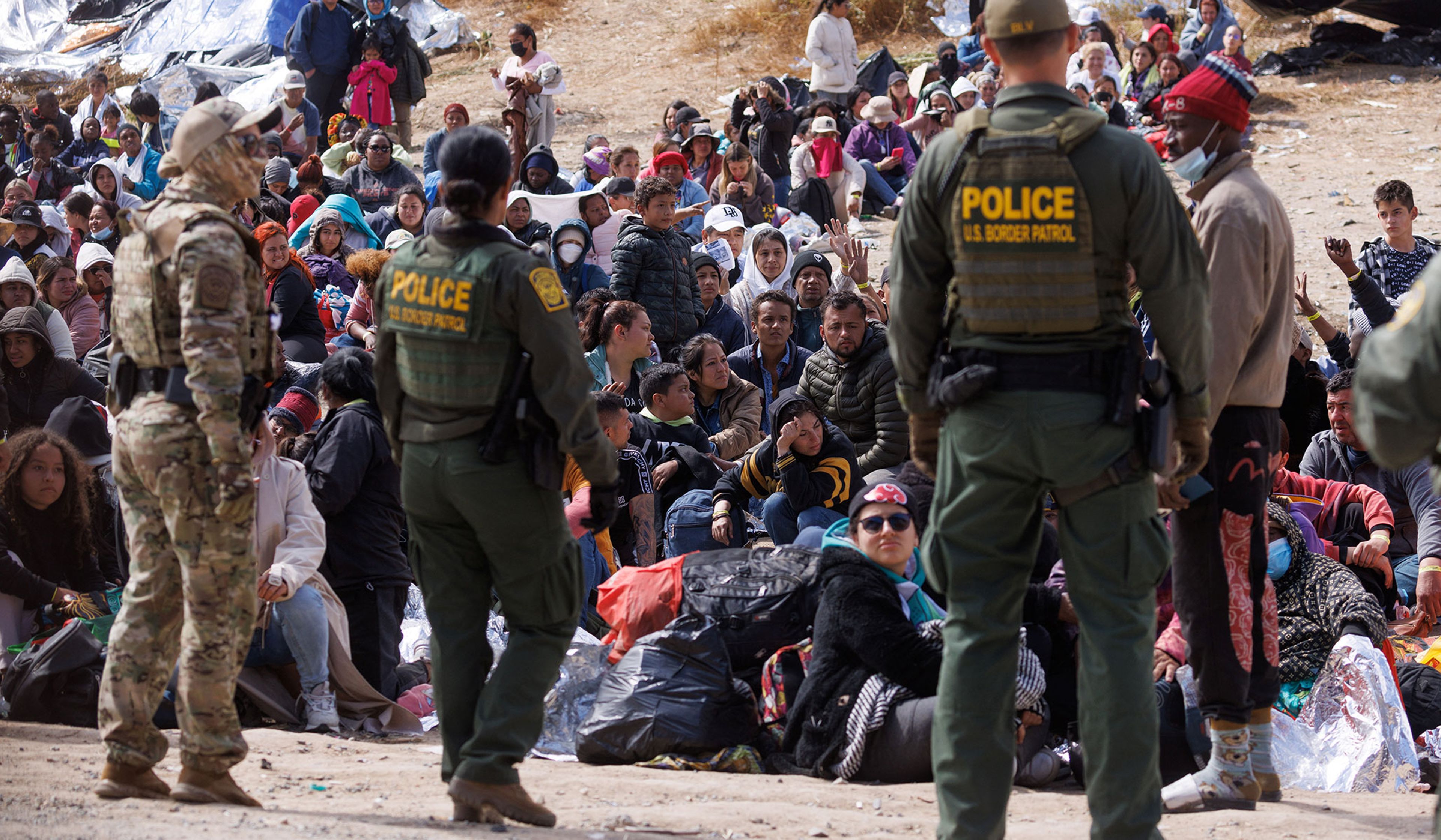


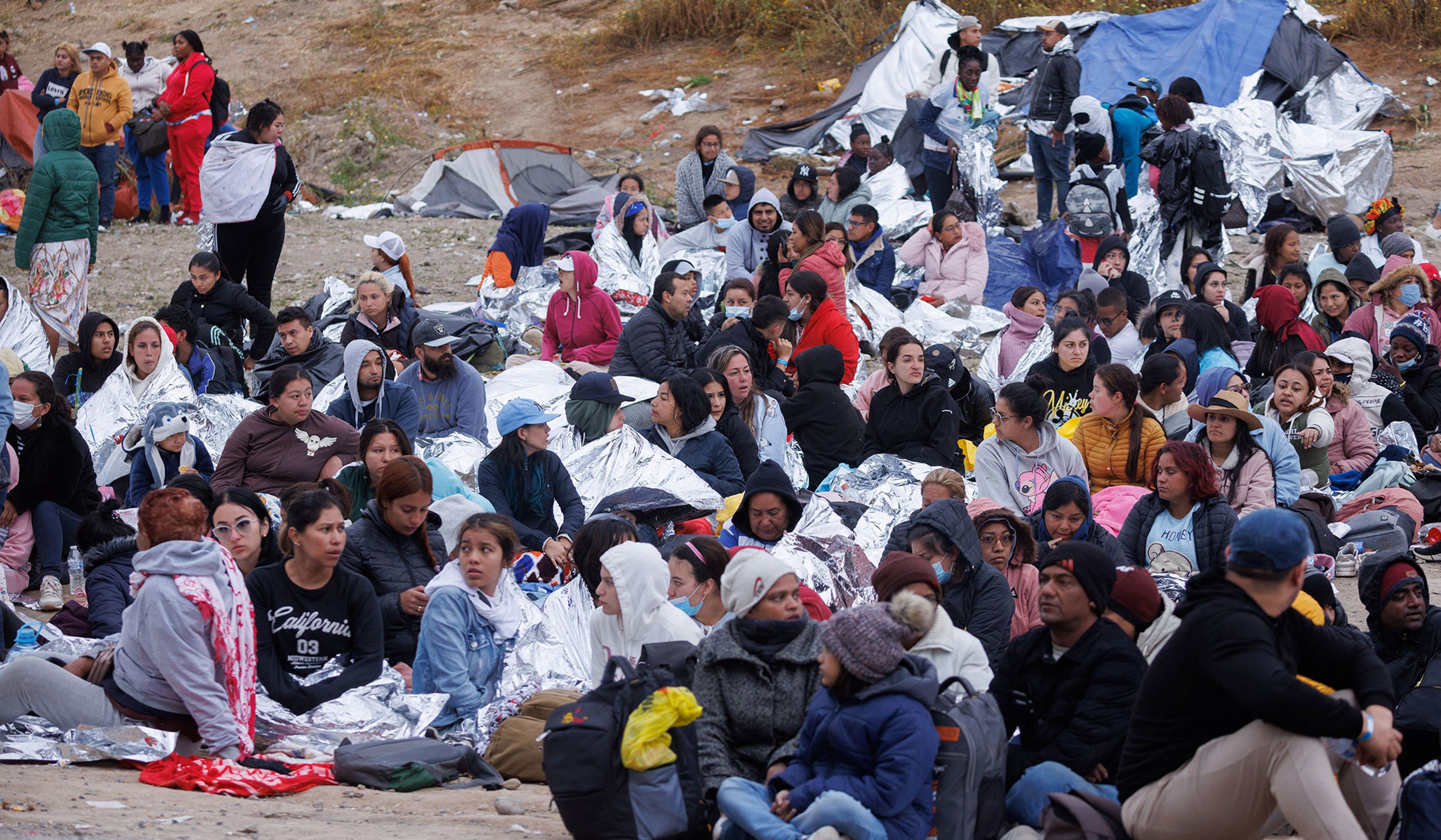



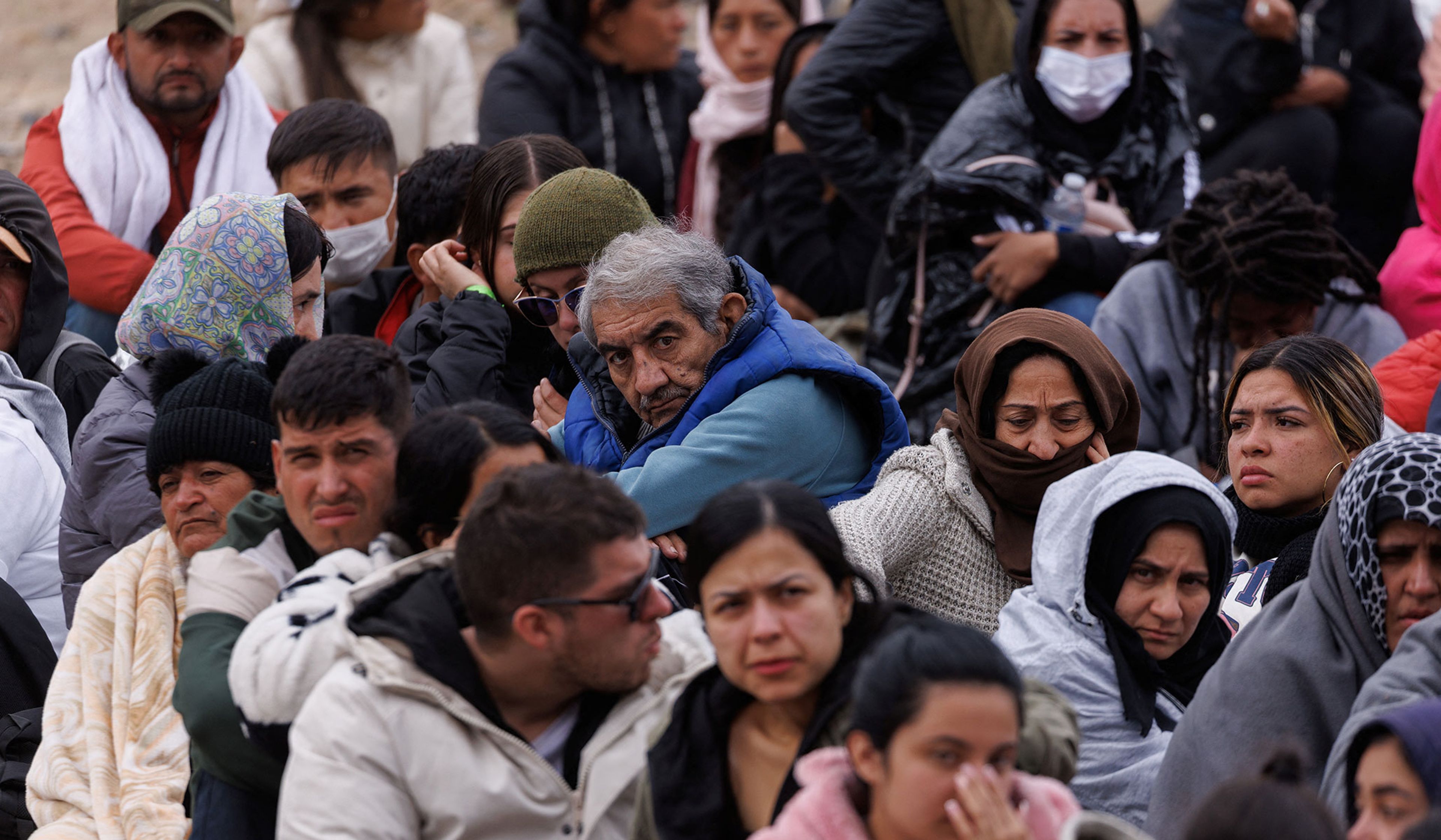



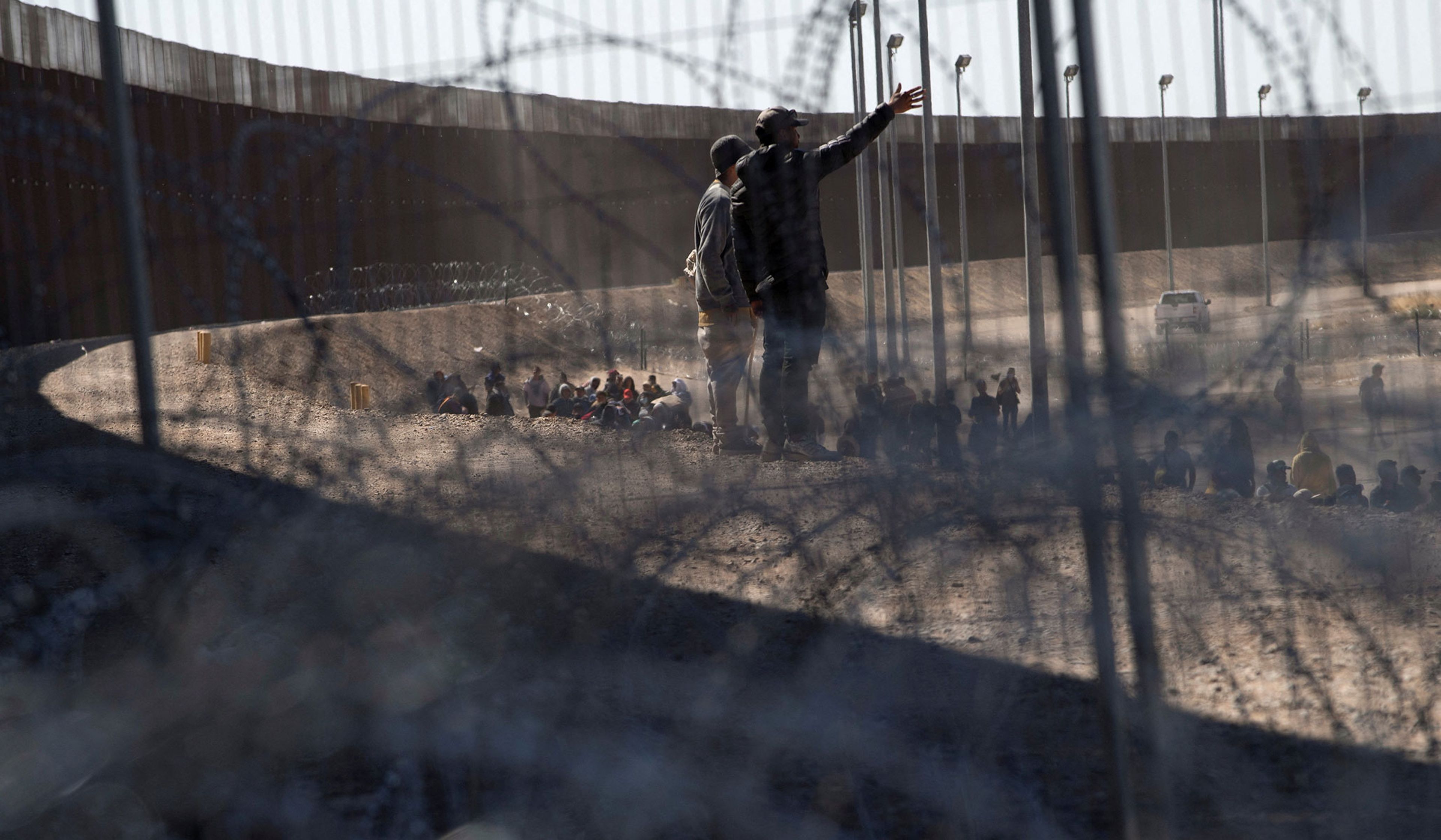
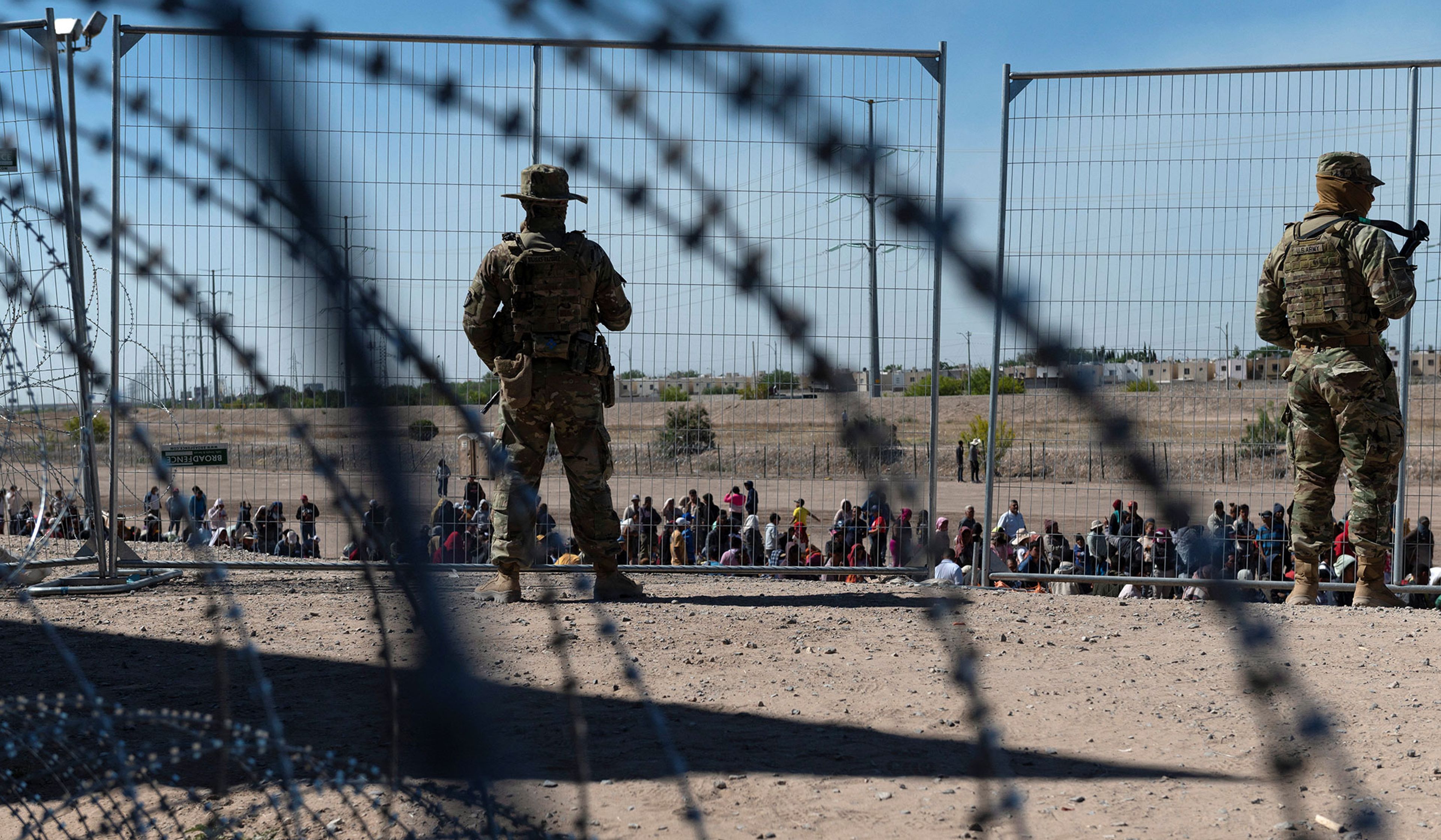
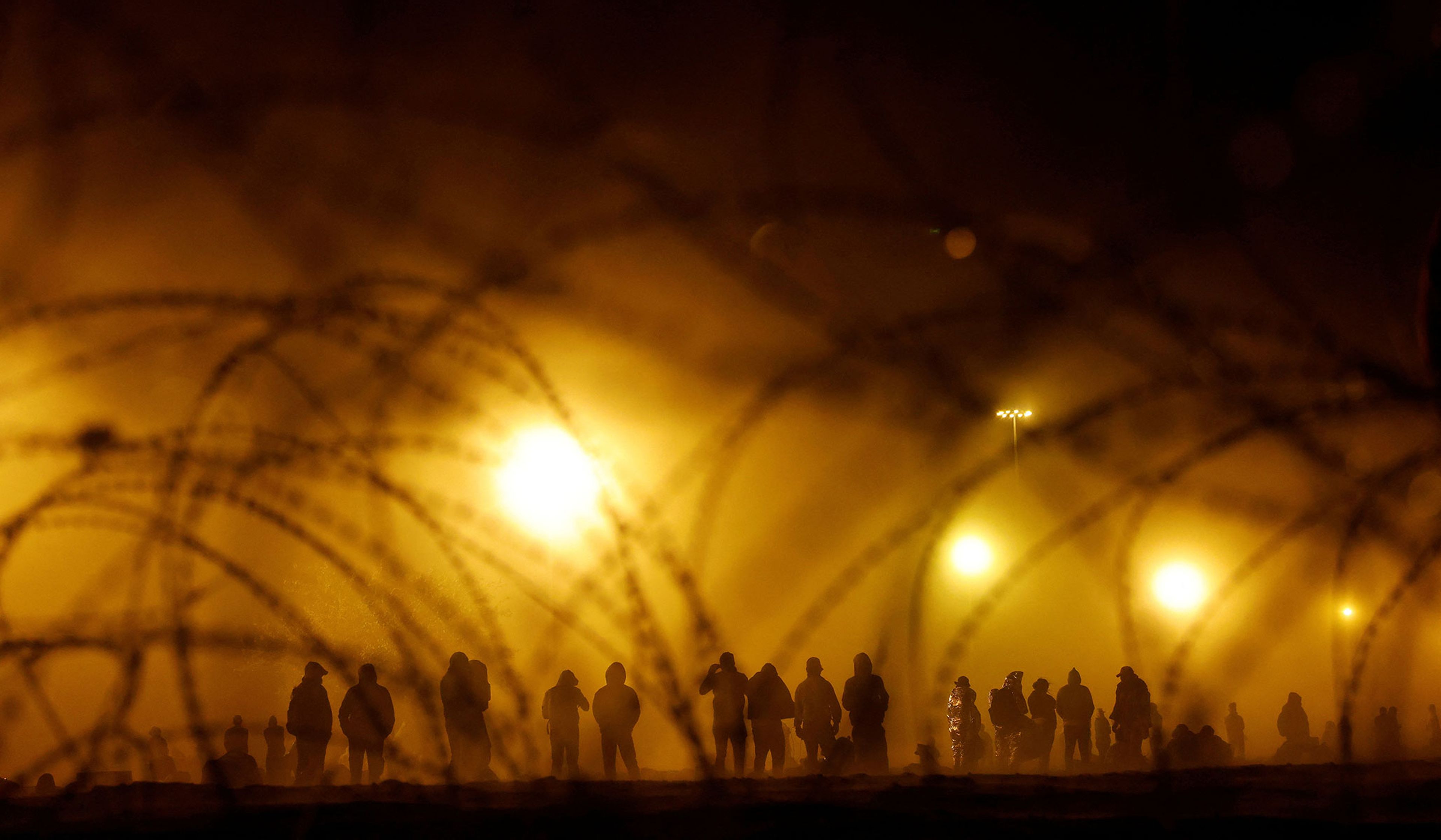
Police officers stand while immigrants wait to be processed by U.S. Customs and Border Protection near the U.S.-Mexico border as the United States prepares to lift Covid era Title 42 restrictions that have blocked migrants from seeking asylum since 2020, near El Paso, Texas, May 9, 2023.
Roberto Schmidt/Reuters
• Special counsel John Durham released his long-awaited report. He concluded that the Department of Justice and the FBI did not have “any actual evidence of collusion” between Russian officials and Donald Trump’s 2016 campaign and began their probe of the campaign based on “raw, unanalyzed, and uncorroborated intelligence.” The FBI issued a brief and implausible statement contending that it has already fixed what was wrong. For a lot of progressive elites, the belief that sinister powers — Russia, or maybe Cambridge Analytica — manipulated the 2016 election was the most soothing explanation of its results. They were all too eager to believe that Trump had been a participant in a malevolent foreign plot. Durham appears to have produced a methodical, evidence-driven report that provides a long-overdue public accounting of an abuse of government power that too many in the media aided.
• Wherever in the world you find corrupt governments, you will find family members of the leader getting suspiciously rich off people looking to buy official favor. In an interim report, House Oversight Committee Chairman James Comer (R., Ky.) has laid bare that pattern in Joe Biden’s family — or, at least, as bare as possible given the Biden administration’s refusal to cooperate with the probe. Since Biden became vice president in 2009, more than $10 million from foreign nationals and businesses has found its way to his son, his brother, and seven other members of his family. Those payments were frequently routed through a web of shell companies. Much of the money came from China, a police state in which little happens without the approval of the ruling Communist Party. Hunter Biden, when not cashing checks from Ukraine, was paid $1 million to represent a man he privately described as the “f***ing spy chief of China,” who was convicted of foreign corruption in federal court. The committee also found “clear indication of a scheme to peddle influence” in payments from Romania linked to a businessman convicted of bribery in that country. There are many hard questions to be asked here — and Comer will have to ask them, since the press won’t.
• On May 10, Republican congressman George Santos of New York, representing part of the North Shore of Long Island, surrendered to authorities in New York City on 13 federal felony charges related to alleged campaign-finance misdeeds. This is a man who, after his election, was found to have fabricated nearly every detail of his public biography, including his educational, professional, and ethnic backgrounds. (He memorably claimed to be Jewish during the campaign, later clarifying that he meant “Jew-ish”; he claimed to have attended a university that he did not in fact attend; and so on.) Santos fascinates as a man whose plan to promote himself via campaigning in a hopeless district backfired on him when a state court unexpectedly put him in a winnable one. Whether he is merely a compulsive liar or also a dedicated con man is a question for the courts of law and public opinion to decide, but it is remarkable that had he not been handed his victory, none of his deceptions might ever have come to light.
• After Iowa Democrats took three days to finish counting the votes from their caucus in 2020, many party members argued that the Hawkeye State no longer deserved to go first. That objection overlapped with a prior argument from some Democrats that Iowa and the traditional site of the first primary, New Hampshire, were too white to represent the party and enjoy such influence. President Biden, who finished fourth in Iowa and fifth in New Hampshire in 2020, apparently agreed. In February, the Democratic National Committee voted overwhelmingly in favor of adopting a schedule, suggested by Biden, that makes South Carolina the first contest and moves New Hampshire to second, sharing a primary date with Nevada. But New Hampshire’s primary ran smoothly in 2020, and now New Hampshire Democrats are in a quiet conflict with Biden and the DNC. They’re threatening to hold a rogue primary in the third week of January, before South Carolina; the committee can punish New Hampshire by taking away some of its delegates, but it can’t stop the Granite State from holding its early primary. It’s not clear whether Biden can, or would want to, appear on the ballot in a rogue primary, a scenario that could lead to an improbable victory by anti-vaccine activist Robert F. Kennedy Jr. or spiritual author Marianne Williamson. New Hampshire Republicans can only sit and laugh as their Democratic counterparts get stuck in a messy fight.
• Ron DeSantis and Disney have chosen to fight a public war that both may live to regret. Disney is standing up for corporate free speech, often in the service of woke politics. DeSantis says he is defending the rights of Florida parents against having corporate muscle used to block legislation to improve Florida schools, but he is pushing the envelope of political retaliation against business. Both sides appear to feel the need to score public points to show that they are winning. Much was thus read into Disney CEO Bob Iger’s decision to forgo half a billion dollars of Florida tax credits and abandon a planned $1 billion Lake Nona Town Center office complex that was once projected to employ 2,000 people. But the move may not be as politically driven as it appears. Lake Nona was unpopular with Disney employees who resented being relocated from California, and Iger had long opposed the project, a brainchild of his predecessor, for business reasons. Disney also has a financial need to cut its costs. Even so, the company made clear that it would proceed with $17 billion in planned investments in Florida. In spite of Disney’s politics, its relationship with the State of Florida has been massively beneficial to both parties. A resolution could benefit both.
• On the issue of protecting life, Republican state legislators appear to be learning not to let the perfect be the enemy of the good. In May, North Carolina and Nebraska each enacted laws limiting elective abortion to the first twelve weeks of pregnancy. In North Carolina, the legislature needed at least 60 percent of the votes in each chamber to override the Democratic governor’s veto — and that’s precisely what it got. With no margin for error, the Republican legislators went as far as they could. Representative Tricia Cotham recently switched from Democrat to Republican but was unwilling to vote for an abortion limit earlier than twelve weeks of pregnancy. A similar story played out in Nebraska’s unicameral legislature after a Republican withdrew his support for the Nebraska Heartbeat Act, leaving the bill establishing a six-week limit on elective abortion one vote short of the two-thirds support necessary to end a filibuster. But the senator who defected on a six-week limit was willing to support a twelve-week one, and the bill establishing it advanced and was signed into law. In each instance, pro-life legislators realized that saving some lives was better than saving none.
• Manhattan District Attorney Alvin Bragg charged Daniel Penny with manslaughter in the subway death of Jordan Neely. Activists who support the progressive prosecutor have said that the death of Neely (a 30-year-old black, mentally disturbed vagrant with 42 prior arrests who was undeniably menacing train passengers) after Penny (24, a white college student and Marine veteran) put him in a choke hold was a racially motivated “murder.” There is scant support for such claims, Al Sharpton’s inevitable funeral demagogy notwithstanding: Penny appears to have taken action in lawful self-defense, aided by a black fellow passenger, and the other threatened passengers were a racially diverse group. Whether Penny used culpably excessive force is unclear. Still, it is unlikely that a jury of twelve Manhattanites — who will mostly be progressives, but not politicians — will unanimously vote to convict. That Bragg understands this may be why he had Penny arrested without a prior grand-jury indictment. Bragg has achieved his goal: signaling solidarity with his progressive base. Penny was quickly released on bail. Now the grand jury will decide whether formal charges should be filed.
• In mid May, the internet thundered with anger over video from New York City that purported to show the racist tantrum of yet another “Karen”: the slang term for an officious white woman asserting her “privilege.” Sarah Comrie, a physician’s assistant working at Bellevue Hospital, was seen on camera surrounded by five young black men who mocked her and her unborn child (she is visibly pregnant) and accused her of trying to steal “their” rental bike. It meant little that the video belied this narrative, which was itself facially preposterous: As a rule, unarmed pregnant women do not aggress gangs of angry young men. In a matter of hours, Comrie was being denounced all across social media as a racist who was “weaponizing white woman’s tears.” Appallingly, Comrie’s employer (NYC Health + Hospitals) suspended her immediately, “pending review” — a reaction to the social-media mob rather than to actual evidence. It is Comrie who has the evidence: She has retained both her receipt for the bike rental and the services of an attorney, who justifiably promises repercussions.
• Retail theft, which has devastated Los Angeles and San Francisco, has spiked on the East Coast too. Drugstores in New York City lock small items behind plastic shields; even the Reverend Al Sharpton has complained of the crime-driven inconvenience. Business owners looked for relief from a package of plans unveiled by Mayor Eric Adams. Best of the lot is a proposal to create a registry of repeat offenders; last year, 327 crooks committed over 6,000 thefts, almost a third of the total, Adams noted. Knowing who the likeliest suspects are is the first step toward catching them. More wishful than useful was a proposal to put in stores kiosks that would allow would-be first-time thieves to contact social services instead of pinching something. Little real improvement can be expected, however, until the state legislature allows judges to set bail on repeat offenders. When the law ties its own hands, the lawless will pick at the shelves.
• According to preliminary federal data, the United States recorded nearly 110,000 deaths by drug overdose in 2022. The number is a new record but represents a marginal increase over 2021. Overdose deaths had climbed by 17 percent in each of the preceding two years. The CDC estimates that synthetic opioids, mainly fentanyl, contributed to 75,000 deaths last year. These numbers mean that America’s drug crisis touches countless lives across the nation. For comparison, 58,220 American soldiers died in the entirety of the Vietnam War. The culture is adjusting in distressing ways. Teachers and parents are increasingly encouraged to acquire and know how to administer overdose-reversal drugs. Students in Los Angeles are now authorized to carry one of them, Narcan, in schools, in the hope that they may use it to save friends from imminent death. California alone has dedicated more than $1 billion to fighting the fentanyl scourge — mostly in providing test strips and treatment for addicts. For decades America has been moving toward toleration of less controlled drug use. The sheer toll of the fentanyl crisis should cause a rethinking.
• In February, President Biden said he had ruled out permitting F-16s to be sent to Ukraine “for now.” Now the United States has agreed to support NATO allies in sending F-16s to the embattled nation and training its pilots. The move will be too late to stop the Russians from taking the city of Bakhmut, a strategically unimportant and now-destroyed point in the Donbas the battle for which nonetheless depleted Russian arsenals and claimed large numbers of its fighters. Meanwhile, rebellious Russians (or perhaps Ukrainians pretending to be) infiltrated the city of Belgorod, northeast of Kharkiv and just across the Ukrainian border. A stunt, seemingly, though good for morale — or bad, for the Russian side. Morale in Russia’s scientific community took a hit when three physicists who had worked on the hypersonic Kinzhal missile were arrested for treason. Their crime? Evidently, building a weapon that Patriot missiles have shot down during a recent barrage on Kyiv. Russia is treating its own warriors as the Soviets did theirs. It has the consistency of behaving no better to its own than to its neighbors.
• Tom Stoppard, the playwright, has lent his pen to an important cause: the survival of Vladimir Kara-Murza, who is one of the Kremlin’s political prisoners. For the Telegraph, Stoppard wrote a column headed “Britain can’t let the man Putin hates most die in prison.” He concluded by saying, “We need to make a fuss and to keep on making a fuss.” The EU was set to impose sanctions on Russian officials who have persecuted Kara-Murza. But that action was blocked by Hungary’s government. Prime Minister Viktor Orbán has often wielded his veto this way. But it is Russians such as Kara-Murza, not Putin and his machine, who need and deserve the help.
• At the G-7 summit in Hiroshima, President Biden said out loud what many in Washington have already taken as conventional wisdom: that a “thaw” in the U.S.–Chinese relationship is imminent. But by seeking a reset, Biden is poised to give up a lot more than he should. According to Reuters, the State Department has blocked new sanctions on Chinese officials involved in the Uyghur genocide and has opposed tightening existing restrictions on Huawei. The logic, reportedly, is that State wants to send Secretary Antony Blinken to Beijing, thus carrying out the trip that was canceled in the wake of the spy-balloon incident. Other visits, by Secretary of the Treasury Janet Yellen and Secretary of Commerce Gina Raimondo, are also in the cards. Biden himself stated during the press conference that removing sanctions placed on China’s defense minister in 2018 is a possibility being considered as a way of securing a meeting between the countries’ defense chiefs. He also said that the “silly balloon” is responsible for the downturn in relations and that it disrupted the dialogue that had begun with his summit with Xi in Bali last November. Bizarrely, the flight of the Chinese-military spy balloon over the U.S. may result in concessions to rather than from Beijing.
• Xi is waging a charm offensive in his own neighborhood. He huddled recently with the heads of several Central Asian countries at a splashy summit in Xi’an, a Chinese city on the ancient Silk Road. The goal was to present a development-and-trade plan to the leaders assembled and to forge a new framework for defense cooperation. No doubt, Russia anxiously kept tabs on the gathering. China is making inroads in a region that for most of the 20th century Moscow dominated. Xi and Putin announced a “no limits” partnership ahead of Russia’s invasion of Ukraine, but this summit is a reminder that there are in fact limits to the countries’ cooperation, and even distrust and competition between them (a topic that Thérèse Shaheen explores elsewhere in this issue of NR). China has already leveraged its relationships in Central Asia for its Belt and Road Initiative, and its ongoing outreach suggests that it has bigger plans.
• Michael Chong of Canada’s Conservative Party has led efforts in Parliament to hold China accountable for the human-rights abuses of Muslim Uyghurs. China imposed sanctions on him in 2021 but didn’t stop there. The Globe and Mail and other Canadian news organizations recently reported on a Chinese influence campaign that included efforts to hamstring the Conservative Party and, according to leaked intelligence, “make an example” of Chong in particular. His relatives in Hong Kong were to be targeted. Canada’s foreign minister soon expelled a Chinese diplomat suspected of engineering the plans to intimidate Chong. Predictably, China retaliated by expelling a Canadian diplomat. Chong learned of the Chinese scheme from the newspapers. They cited reports from the Canadian Security Service, which failed to inform him directly. He has criticized the government of Prime Minister Justin Trudeau for the lapse. The squabble has backfired insofar as Beijing’s intention was to embarrass the Conservatives, not the Liberals, but Canadian politicians of both parties should pause their elbowing for partisan advantage long enough to remember that their greater adversary is the Chinese Communist Party.
• Ambassador to Japan Rahm Emanuel breached the norms of diplomacy by intervening in the country’s cultural politics. While Japanese lawmakers debated a bill that would outlaw discrimination against gay people and those identifying as transgender, Emanuel released a four-minute video that featured a group of 15 other foreign ambassadors and urged Japan to pass the bill. The video also implied that Japan should institute legal same-sex marriage. “Together, let’s be true to Japan’s constitution and to the Japanese people,” Emanuel said, impertinently offering to interpret a foreign nation’s fundamental laws for it. In his defense, Emanuel clarified: “All I’ve done is advocate U.S. policy.” That is part of the problem. For years, America’s State Department has deemed itself competent to educate other nations on cultural matters decided in the United States less than a decade ago. The Biden administration has claimed a “bully pulpit” to promote “transgender rights” using the department. Pride flags regularly fly from U.S. embassies in Poland and even Vatican City, though notably not from those in Saudi Arabia or Turkey. The administration has a dangerously frivolous view of U.S. interests.
• The Bud Light marketing department’s decision to build an ad campaign around transgender social-media influencer Dylan Mulvaney may rank as one of the year’s most unexpectedly consequential corporate acts. As of this writing, Bud Light sales have declined for six consecutive weeks, and U.S. retail sales of the beer are down 28 percent compared with the same period in 2022. The Wall Street Journal called it “a rare case of a politically inspired product boycott working.” Whatever happy talk Budweiser executives give as the justification for the Mulvaney promotion, a lot of beer-drinkers interpreted it as the brand taking a side in heated culture wars. The company’s reputation took a further hit when it transpired that Bud Light’s vice president of marketing, Alissa Heinerscheid, had lamented in an interview that “Bud Light had been kind of a brand of fratty, kind of out-of-touch humor, and it was really important that we had another approach.” The comment suggested that she found it unsavory to market to the people who already drank Bud Light. Heinerscheid and her boss, Daniel Blake, have since been placed on leave. Maybe Anheuser-Busch can still call Spuds MacKenzie.
• A news account began, “Writer Salman Rushdie has made a public speech, nine months after being stabbed and seriously injured onstage, warning that freedom of expression in the West is under its most severe threat in his lifetime.” Rushdie criticized, among other things, neo-bowdlerization: the practice of revising books to suit modern sensibilities. Publishers have done this to Roald Dahl, Ian Fleming, et al. Rushdie said that publishers should allow books “to come to us from their time and be of their time.” And if a particular book is “difficult to take, don’t read it. Read another book.”
• WNBA player Brittney Griner is standing for the national anthem now. Like some other athletes, in 2020 she stopped standing for the anthem before games as a form of protest. After being imprisoned for ten months in Russia on trumped-up charges of drug smuggling, she’s back on the court. “One thing that’s good about this country is our right to protest,” Griner said. “What I went through and everything, it just means a little bit more to me now. So I want to be able to stand. I was literally in a cage and could not stand the way I wanted to. . . . Just being able to hear my national anthem, see my flag, I definitely want to stand.” Good for her, and welcome back to the land of the free and the home of the brave.
• Two items for the annals of cheating. A headline reads, “College baseball coach resigns after illegal communication devices found in players’ helmets.” That was at the community-college level. Will it reach down to tee-ball? Another headline reads, “2 fishermen caught cheating at Ohio tournament sentenced to 10-day jail terms and forfeit of $100k boat.” What’d they do? They stuffed their walleye with lead weights and fish fillets. Cheaters, we will always have with us. But it’s good when they’re busted, and it’s good when society instills moral values — before tee-ball begins, preferably.
• If he had been born “Martin Yobbo,” would his rise in the world of Brit lit have been so meteoric? Martin Amis, son of the great Kingsley, wrote a very young man’s novel, The Rachel Papers, as a very young man, and it won a prestigious award. As he aged, Martin Amis filled out into a sharp multi-threat talent as novelist, essayist, and critic. He loved low life, reminding American readers that the class system is very much alive in Britain; he adored Vladimir Nabokov. Of special note was his 2002 book-length nonfiction essay, Koba the Dread, about the crimes of Stalin and of communism (no, Lenin was not a nicer guy). Artists of his cool do not typically go out of their way to tell such truths. (Kingsley had: all the more reason for a son aiming at midlife independence not to follow.) To the hip mind, communism always flashes the laissez-passer of good intentions. Mass murder, Amis insisted, merits no exemptions. Good for him for saying so. Dead at 73, R.I.P.
• Rote application of Keynesianism left the developed economies of the world in shambles in the 1970s. Economists needed something new; Robert Lucas rose to the challenge. The University of Chicago professor was a leader in what is now called “new classical economics,” which emphasizes the expectations of economic actors and the importance of microeconomics in macroeconomic modeling. Lucas was also a leading scholar of economic growth, famously saying that once one starts to think about the impact of growth on poverty, “it is hard to think about anything else.” Lucas won the Nobel Prize in Economics in 1995, and his contributions were described by many as “revolutionary,” but he disliked that label. “To me, it connotes lying, theft, and murder, so I would prefer not to be known as a revolutionary,” he said in a 1997 interview. He preferred to be considered a storyteller, as he recounted in his 1988 lecture “What Economists Do”: “We do not find that the realm of imagination and ideas is an alternative to, or a retreat from, practical reality. On the contrary, it is the only way we have found to think seriously about reality.” Few people thought more seriously, or with greater effect, about economic reality than Robert Lucas. Dead at 85, R.I.P.
• Faith comes by hearing (Romans 10:17), which explains the effect that Tim Keller had on congregations, audiences, and interlocutors in his more than three decades of Christian ministry, primarily from the pulpit of Redeemer Presbyterian Church in Manhattan. Voluble but low-key, learned but intellectually curious and humble, he preached as he conversed, with plenty of quiet passion but no affectation or arm-waving. He distinguished the gospel from morals, which he upheld but deemed insufficient. Without cant or cliché, he examined sin and celebrated grace, acknowledging both what the church indulged of the former and what of the latter could be found in the world. “Christianity is not religion or irreligion,” he wrote in The Reason for God (2008), among the most famous of his more than 30 books. “It is something else altogether.” He had a conversion experience in college at Bucknell and studied at Protestant seminaries, immersing himself in Calvinist theology. In 1989, he moved with his family to Gotham’s rocky soil. Behold! The orthodox Christian outpost he planted there grew. He died of cancer at 72. His legacy endures in the many churches he seeded and pastors he trained around the world. R.I.P.
The Show Begins
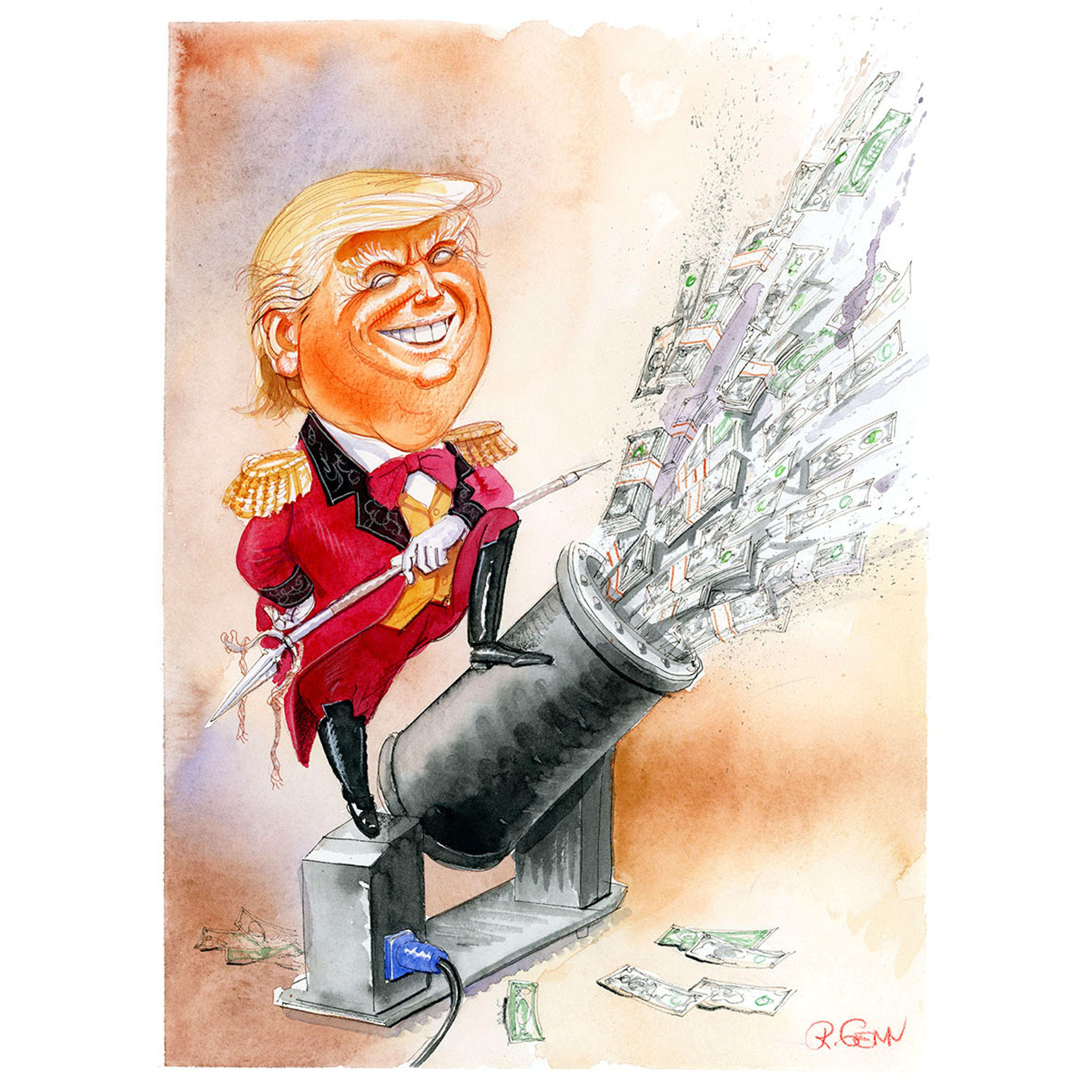
If you have lost sight of what a third Trump nomination and a second Trump White House would be like, he is here to remind us. His New Hampshire “town hall” on CNN was like Elvis reprising himself in Las Vegas. There were the endless lies about his victory in 2020; the mockery of columnist E. Jean Carroll, who had just persuaded a jury that he was liable for defamation and sexual assault and whom he called “a whack job”; the blasé both-sides-ism about the Ukraine war, which, to hear him tell it, would never have happened had he been in office, and which he would end in 24 hours. There was also his skill as a performer: his ability to plow over moderators; his talent at working a crowd, especially one of sympathizers.
Trump has continued to throw out bait to his hardest core, telling former national-security adviser Michael Flynn via phone hookup to a rally, “We’re gonna bring you back.” But Flynn, who has spent his post-Trump years selling QAnon merch, should not move to the Beltway just yet. Trump, famously disloyal, could dub him “Mad Mike” on a dime. But nodding to Flynn confirms to the faithful that Trump is a leader, untrammeled by ordinary standards and rules.
Trump rocks and rolls because his nearest competitor, Ron DeSantis, has been undeclared as a candidate. DeSantis has been busy fighting the culture war against Disney, and more productively by reforming New College in Florida and by proposing laws to rein in multi-sex public bathrooms and sex-change mutilation of minors. Sensible talk about these policies to a national audience could cut through Trump’s theatrics. But DeSantis has to cut through. He must be knowledgeable, clear, and lethal in response to Trump’s inevitable provocations. Bullies crumple when hit, but they have to be hit.
Joining the field is South Carolina senator Tim Scott. He has served two years in the House and nine in the Senate, where he has been a dependable conservative vote. His political voice recalls the conservatism of the late 20th century — a joyous and optimistic paean to America. Fellow South Carolinian Nikki Haley is already in the field, and Scott, a young-looking 57, has no obvious path to victory. But we welcome his presence.
Speaking of no obvious path, could Senator Joe Manchin run as an independent? Homeless political centrists talk up a “No Label” alliance, appealing to all between “D” and “R.” Such an effort would be conceivable only if voters saw the alternative as a race between senility and insanity. In that field, Manchin, who would be 77 in November 2024, would be the youngster. Still, Manchin lacks the flair of Ross Perot (who, even so, got zero electoral votes). A Manchin run looks to be a misty taste of moonshine.










Comments