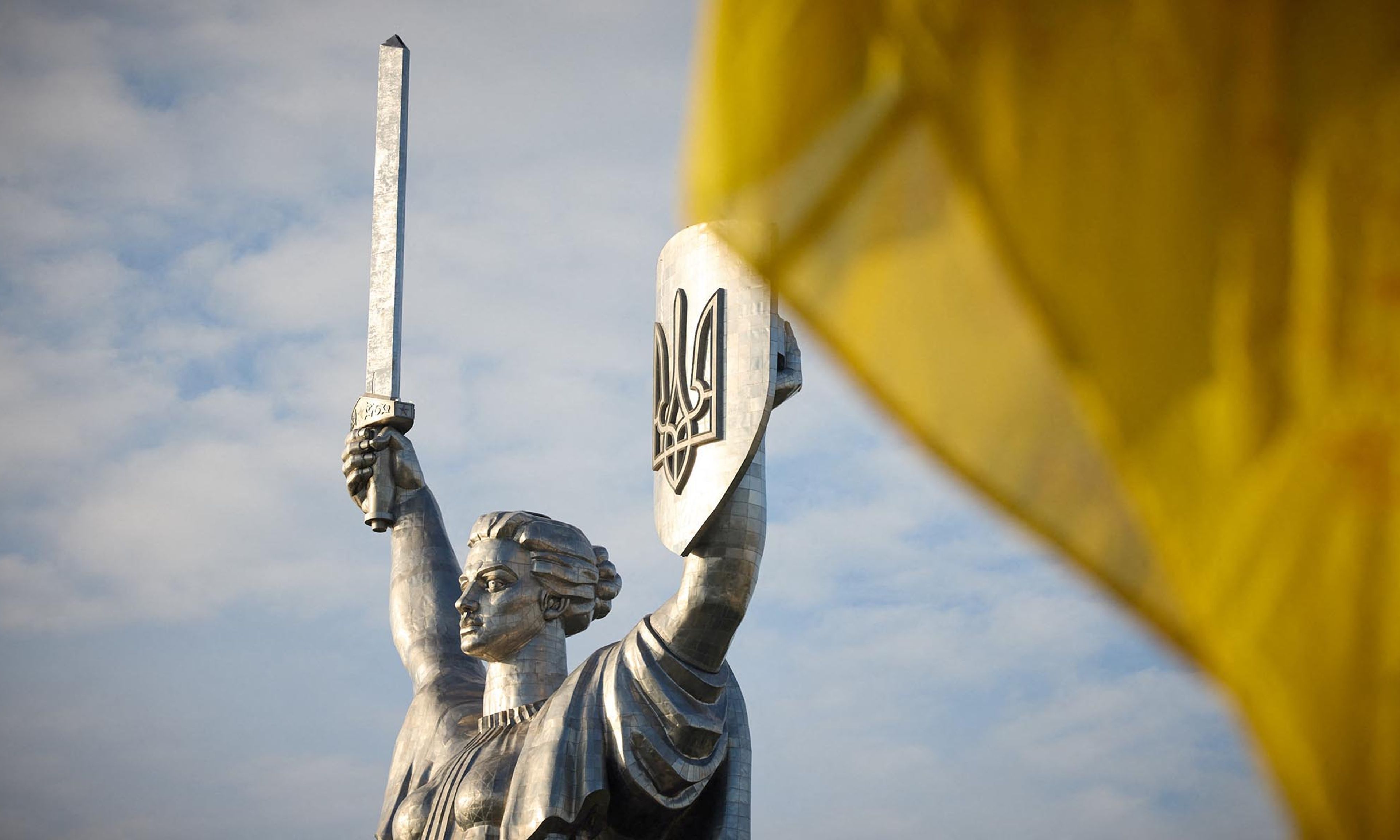
Kyiv — When my friends ask how my second trip to Ukraine was, I tell them it was 99 percent safe. It’s just that last 1 percent that’ll get ya.
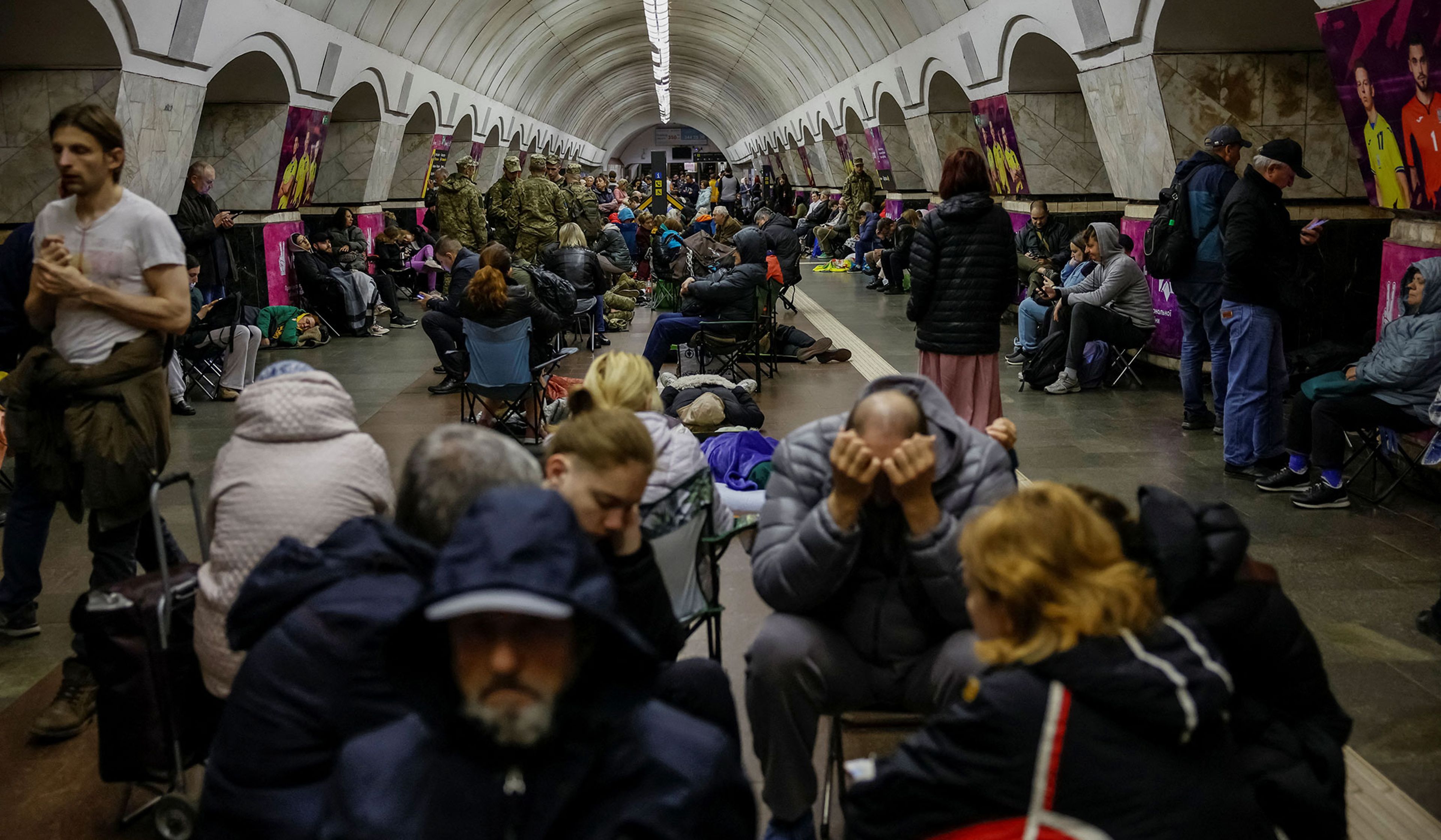
On the final night that I spent here, at around 3 a.m., my hotel’s public-address system announced, first in Ukrainian and then in English, that the city was under air-raid alert. The warning urged guests to evacuate to the shelter in the adjacent underground parking garage. When you check in, the hotel makes you sign a waiver clearing it of responsibility if you choose not to go to the shelter during an air raid.
Particularly during daytime, Ukrainians treat the air-raid sirens the way jaded New Yorkers treat a car alarm going off down the street. On any given day in this country, as has been the case since the invasion, residents can experience six or seven air-raid alerts. Some days, they have none. It’s just a part of daily life, almost like the weather — cloudy with a chance of Shahed drones. Halyna Melnyk, an information-technology professional who lives in Lviv, told me of her unusual driving test, with a Russian drone flying above her car.
Less out of any courage or bravado than out of laziness, I rolled over in my bed and went back to sleep.
Around 5 a.m., I awoke to a BOOM that sounded like thunder but that I knew was not thunder, and an orange flash through the curtains of my hotel-room window. But afterward, I heard no sirens, no shouting, no screams, no visible or audible sign of any commotion on the streets outside. I began to wonder if I had dreamed it.
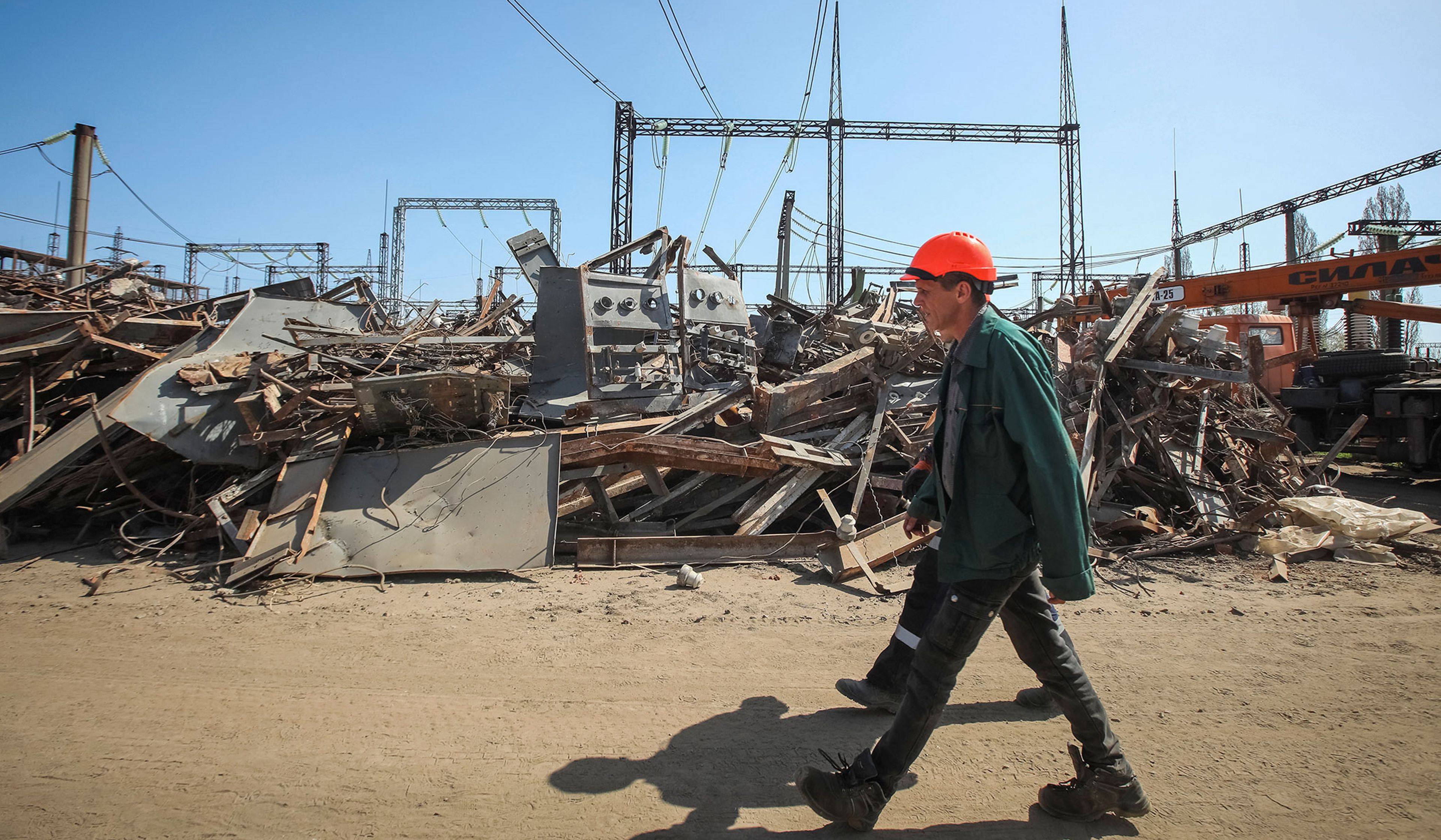
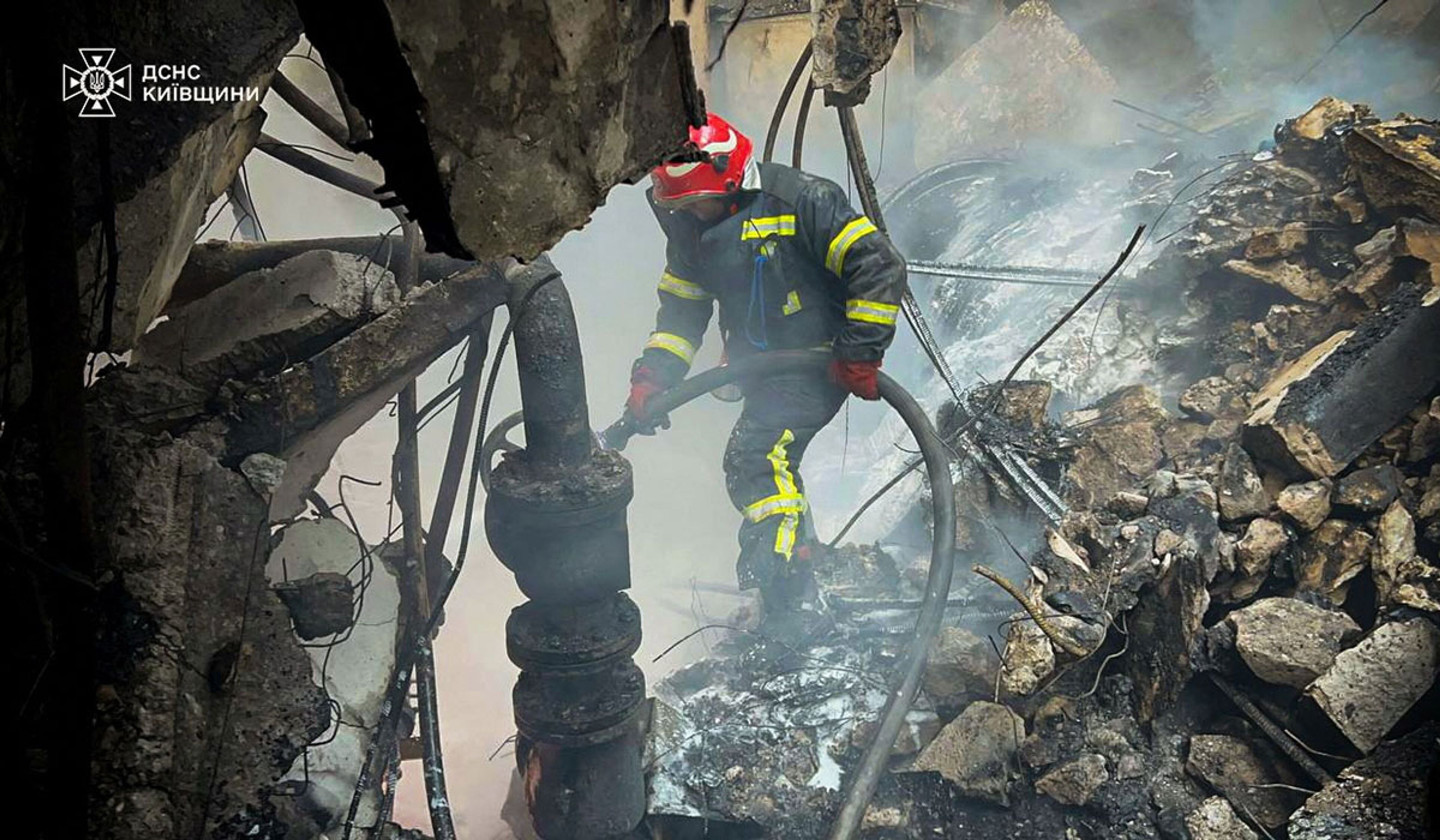
About an hour later, the all-clear signal came through the public-address system. I checked my phone and learned that the Russians had launched the largest air attack on Kyiv in six weeks, directing 29 cruise missiles and two ballistic missiles at the city. The ballistic-missile attacks are every bit as dangerous as they sound; a few days earlier, such a missile had struck the city of Odesa and killed at least 20 people and wounded more than 70. What I had heard about an hour earlier was one of the U.S.-provided Patriot missile batteries shooting down one of the incoming missiles; reportedly some of the debris fell down in Podil, the neighborhood around my hotel.
So, yeah, I think we should keep sending Patriot missiles and other air-defense systems to Ukraine.
Since my first trip to the country in August, the outlook for Ukraine’s fight against the Russian invasion has grown darker. Before arriving in Kyiv, I met up in London with David Knowles, who hosts and produces the Daily Telegraph’s podcast Ukraine: The Latest. He painted a grim picture: “One source put it to me, ‘Even if the U.S., Europe, gave all the shells, all the tanks we need, what you cannot give and what nobody else can give is men. Manpower.’ And that’s a huge problem, because they’ve got a situation where the infantry is suffering really catastrophic losses.”
Indeed, shortly after I returned, the Ukrainian government lowered its draft-eligible age for men from 27 to 25. Those ages probably seem surprisingly old to those who can remember the U.S. military drafting men at age 18. But the Ukrainian philosophy has been to draft “the older brothers” so that “the younger brothers” would be around to help with the rebuilding of the country after the war. It also reflects an assumption that, by age 27, a Ukrainian man will have gotten married and started having children, the later draft age ensuring that there’s another generation of Ukrainians to come. Also note that conscription of Ukrainian men goes up to age 60, and the average age of a Ukrainian soldier on the front line is 43. The Ukrainians welcome donations of everything, but ibuprofen and other pain-killers are always high on the list. There are a lot of middle-aged Ukrainian soldiers with sore backs.
“I think [what] we’re looking at over the next couple months is just gradual, gradual, gradual retreat, still inflicting huge losses, but also taking quite a bit,” Knowles said.
Once I arrived in Kyiv, Maryan Zablotskiy, a member of Ukraine’s parliament, put it to me bluntly: “Without U.S. weapons, we have obviously started to lose. And this is not currently reflected in the areas lost, but it’s obvious that losses are accumulating. Even if you just look at publicly available data, sometimes we lose several tanks a day. Probably dozens killed every day.”
I asked Zablotskiy about the morale of the Ukrainian forces in the field. “It’s relatively simple,” he replied. “Of course, many people are tired, but when you get to shoot back, the morale is higher.”

In an apartment building somewhere in Ukraine, behind heavy locked doors, and after I had passed by cordial but still intimidating security guards, I met with Akhmed Halidovich Zakayev, the prime minister of the Chechen Republic of Ichkeria, the Chechen government-in-exile. These are the Chechens who won the First Chechen War, fought from 1994 to 1996; Zakayev, once an actor who specialized in performances of Shakespeare, led a tank column in the battle to retake Grozny. The Russians won the Second Chechen War, fought in 1999–2000, and installed Ramzan Kadyrov, a pro-Putin brute, as leader.
“The history of the Chechen people over the past 30 years has been a great tragedy, and basically no one has wanted to listen to this,” Zakayev tells me through a translator, before switching to English. “During First Chechen War, we had a lot of journalists from the Western world and other different places reporting on the situation. In Second War, it was very different than the first time.”
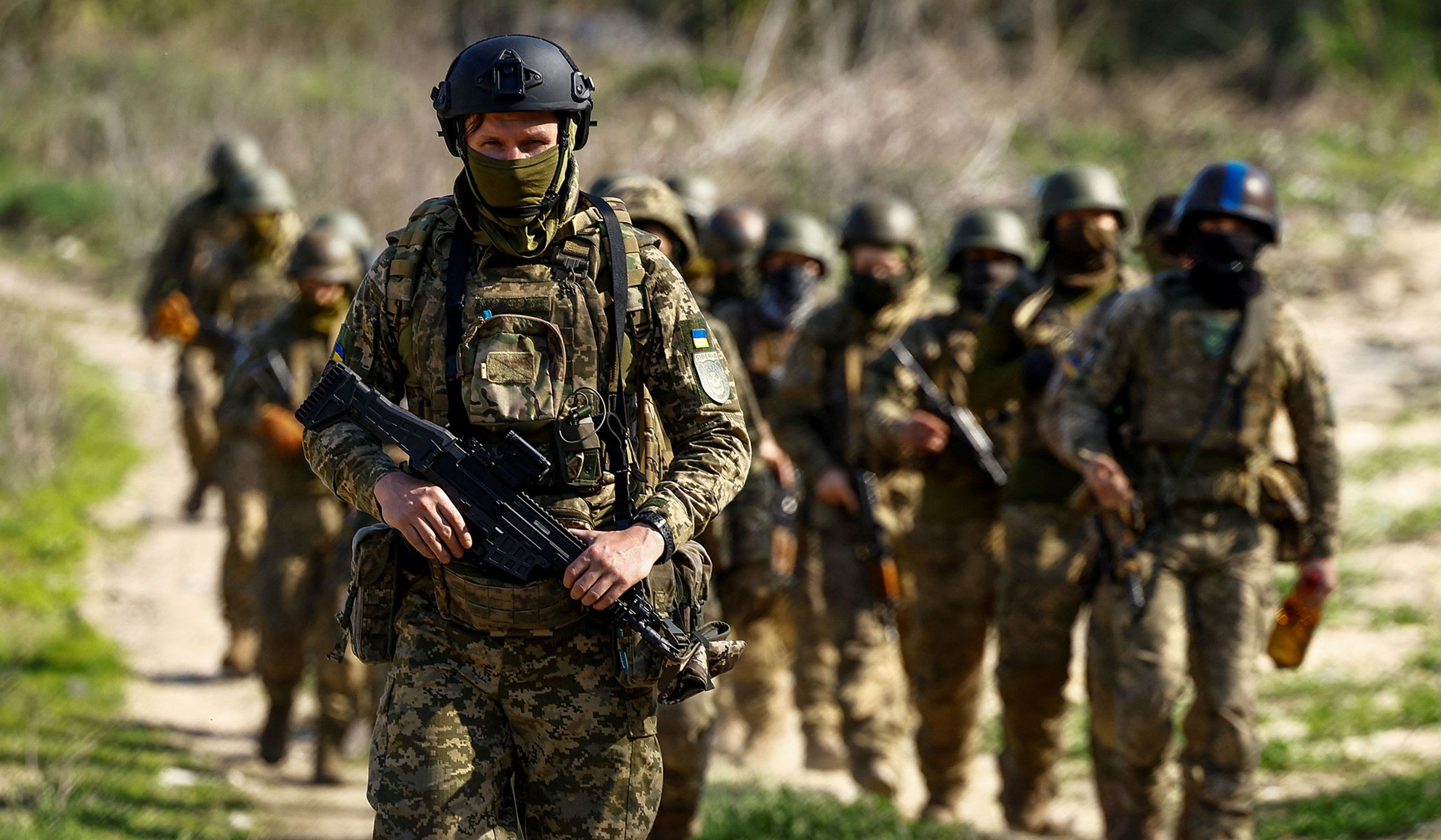
When the Russians invaded Ukraine, Zakayev announced the formation of a Chechen volunteer battalion to fight alongside Ukraine’s armed forces. These Chechen units specialize in raids across the border, into the Russian oblasts of Belgorod and Kursk.
“It’s the only way they’ll get the war over,” Zakayev tells me, switching between Russian and English. “Russians absolutely have to understand that it’s going to involve attacks on their own soil. They have to feel this war, in order to stop this war. The Russians love to fight wars on other people’s soil.”
Zakayev says the Chechen volunteer battalion aims to recruit, train, and outfit 10,000 fighters, but he says they’re below that number and won’t specify how many they have under arms. He explained that in addition to recruiting from within Chechnya, they recruit from Chechen-expat communities throughout Europe. They screen potential recruits to the Chechen volunteer battalion with polygraphs, but he adds, “Chechens know each other. We don’t have a problem finding out who is who.”
When Zakayev and his allies were fighting the Russians in Chechnya, “the whole world was against us,” he says. “No one would help us. Now the whole world is helping Ukraine. We’re not complaining about that!”
Zakayev, who has spent much of his life fighting the Russians, offers one of the more optimistic assessments of the war for the Ukrainians, at least in the long term. “I understand the minds of the Ukrainians. They have no choice. They have to resist this aggression. They will win, because they have to win.”
My trip took me to many meetings in which I sat across the table from men Vladimir Putin would love to assassinate.
In addition to the Chechen fighters, the Ukrainians are aided by the Freedom of Russia Legion, a group of Russians fighting alongside the Ukrainians against the Russian army — or, as Ilya Ponomarev, the legion’s political head, calls it, “the Putinist army.”
Ponomarev is a former member of the Russian legislature and was the only lawmaker to vote against the annexation of Crimea in 2014. The following year, he was charged with embezzlement — an accusation he says was motivated by politics and his defiance of Vladimir Putin. He now lives in exile in Ukraine.
When I ask Ponomarev how the war is going, he answers, “The bad thing is that it’s still going. . . . We wanted it to be over a long time ago, and I actually thought that it should have been a long time ago over. The whole thing with supplying weapons in such small portions allows the Putinist army to adapt.”
Ponomarev tells me that the war with Russia will “never end just by liberation of Ukrainian territory”; it will “end only in Moscow.” He says that “the origin of the problem is with Putin, and so until you remove Putin and destroy Putinism, the war would still continue. That’s what we need to focus on, and that’s why I’m doing this stuff with Russian legions, because obviously nobody else is going to do this. The United States, in particular, is doing everything possible to prevent us from doing this,” he laments. “We continue to hear the messages coming from Washington, so that Ukraine should not do anything on the Russian territory, and definitely should not use any Western equipment on the Russian territory, should not finance the Russian resistance movement, et cetera.”
Indeed, while I am in Ukraine the Financial Times reports that the U.S. government “urged Ukraine to halt attacks on Russia’s energy infrastructure, warning that the drone strikes risk driving up global oil prices and provoking retaliation.”
Weeks later, Defense Secretary Lloyd Austin told the Senate Armed Services Committee: “Certainly, those attacks could have a knock-on effect, in terms of the global energy situation. But quite frankly, I think Ukraine is better served [by] going after tactical and operational targets that can directly influence the current fight.” Just what does the Biden administration think fuels Russia’s tanks, armored vehicles, helicopters, and jets?
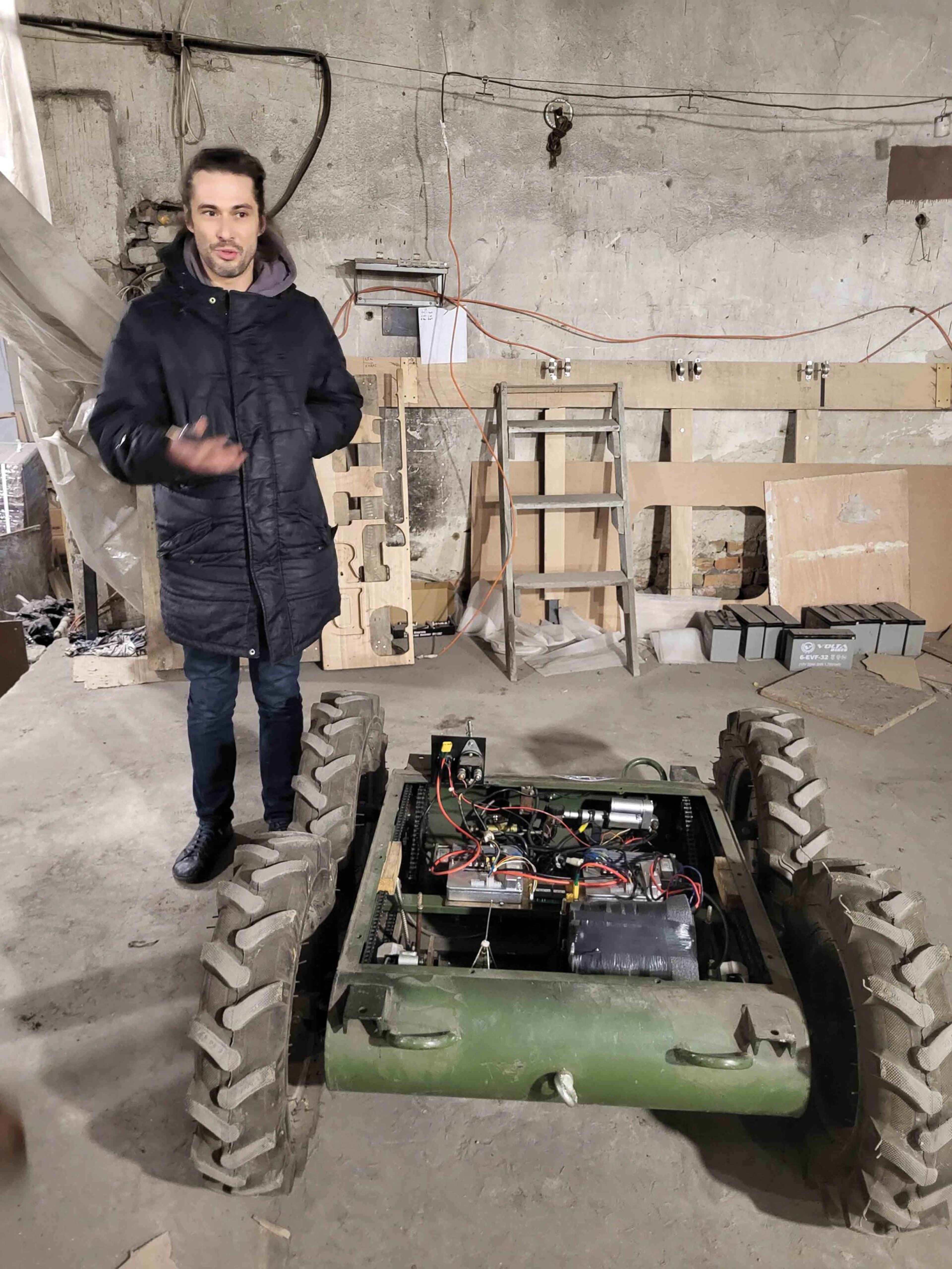
My last full day in Ukraine included a visit to a drone-production facility so secret that I can’t tell you where it is.
I can tell you that it looks like just another old factory, indistinguishable from any other across the country. The Russians may have some idea that something important is being produced here, because they’ve fired a powerful missile at the site. Thankfully, Greg Pavlov tells me, “it was intercepted 300 meters before the factory. . . . All the people who are working here, they understand this could be their last day.”
Pavlov, a whirling dervish of energy, is the unmanned-ground-vehicle project manager here. He shows me around a high-tech workshop with the distinct, pungent scent of soldering hanging in the air. The facility specializes in two products: high-tech portable power stations and unmanned ground drones.
The ground drones can carry loads and deploy mines; one model can carry a wounded individual. Pavlov explains that the Russians consider a group of four Ukrainian soldiers carrying a fifth injured soldier on a stretcher to be a worthwhile target for a drone attack but usually won’t bother with one or two soldiers.
The facility is part of Brave1, the Ukrainian government’s new system that has everyone in the defense-technology industry, from all sorts of companies, working on the same team, freely trading information, data, and innovations.
The mission is clear: build better, more durable, more effective drones faster and cheaper. Lives depend on what comes out of this facility.
Pavlov describes a European-made ground drone that is, at first glance, perfect for the Ukrainians’ needs in terms of range, power, and durability. “But it costs $300,000. It can carry 800 kilograms — perfect! Super good! It can carry guns. Super good, but $300,000, come on! That’s a huge amount of money. We don’t have such a budget. So, we have to build the same platform, but it should cost $10,000, maximum, and it should be very reliable. It is the challenge we face every day when we have to invent something.”
For many of the aerial drones, he says, the Ukrainians are just buying the basic airframes from China, upgrading the batteries, cameras, and other components, and then often adding the ability to drop grenades or small bombs on Russian targets. But the Russians have their own methods for cutting off the supply of components used for the Ukrainian drones.
“In some cases, when I write one factory, ‘Hey, you’ve got very good cameras, can we purchase 2,000 cameras from you guys this year?’ the answer is, ‘I’m sorry, the Russians have prepaid all contracts for the upcoming two years.’ And even if we have a contract,” Pavlov continues, “with $1,000 per device, the Russians come along and say, ‘We will pay you $3,000 [per device] to just cut this contract.’ And they are doing it every day. So there is no restriction on importing from China to Ukraine, but when all factories in China are filled with Russian money, and fixed with contracts, it becomes hard for us to get our details on time.”
Pavlov says that the current high priority is jamming devices, because both the Russians and the Ukrainians are deploying as many FPV — first-person-view — drones as they can, as fast as possible. “The frequencies are changing all the time, and jamming devices that were effective three months ago are rubbish today,” he says. “It’s like the evolution of devices. There are dozens of videos where the soldier is standing with a jamming device” — he mimics waving the jamming device — “and he got hit by the drone.” He gives a description of how the antennae of early jamming devices offered a large but not all-encompassing range of disrupted signals; Russian drone operators eventually figured out how to approach their targets without entering the range of disruption.
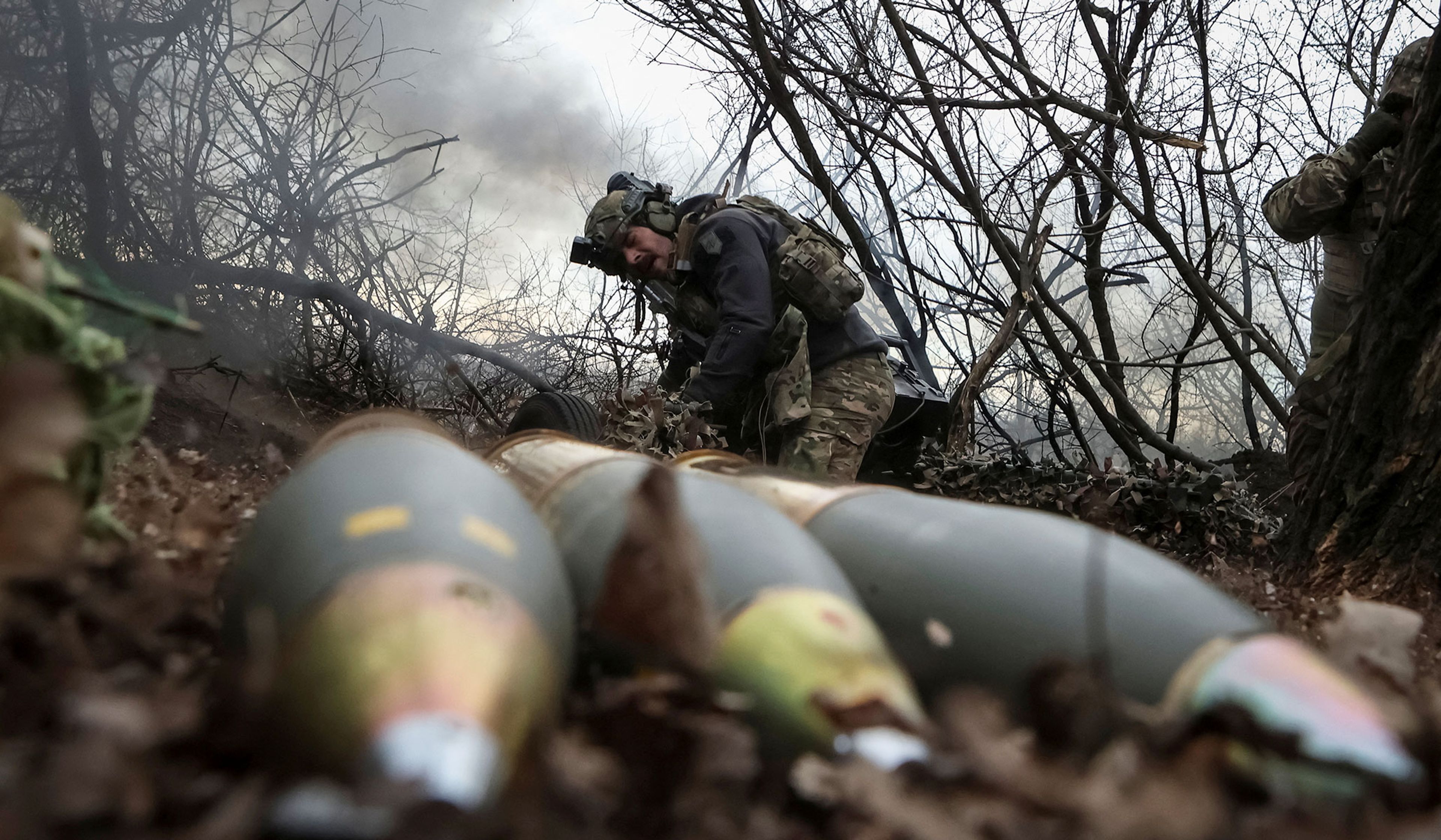
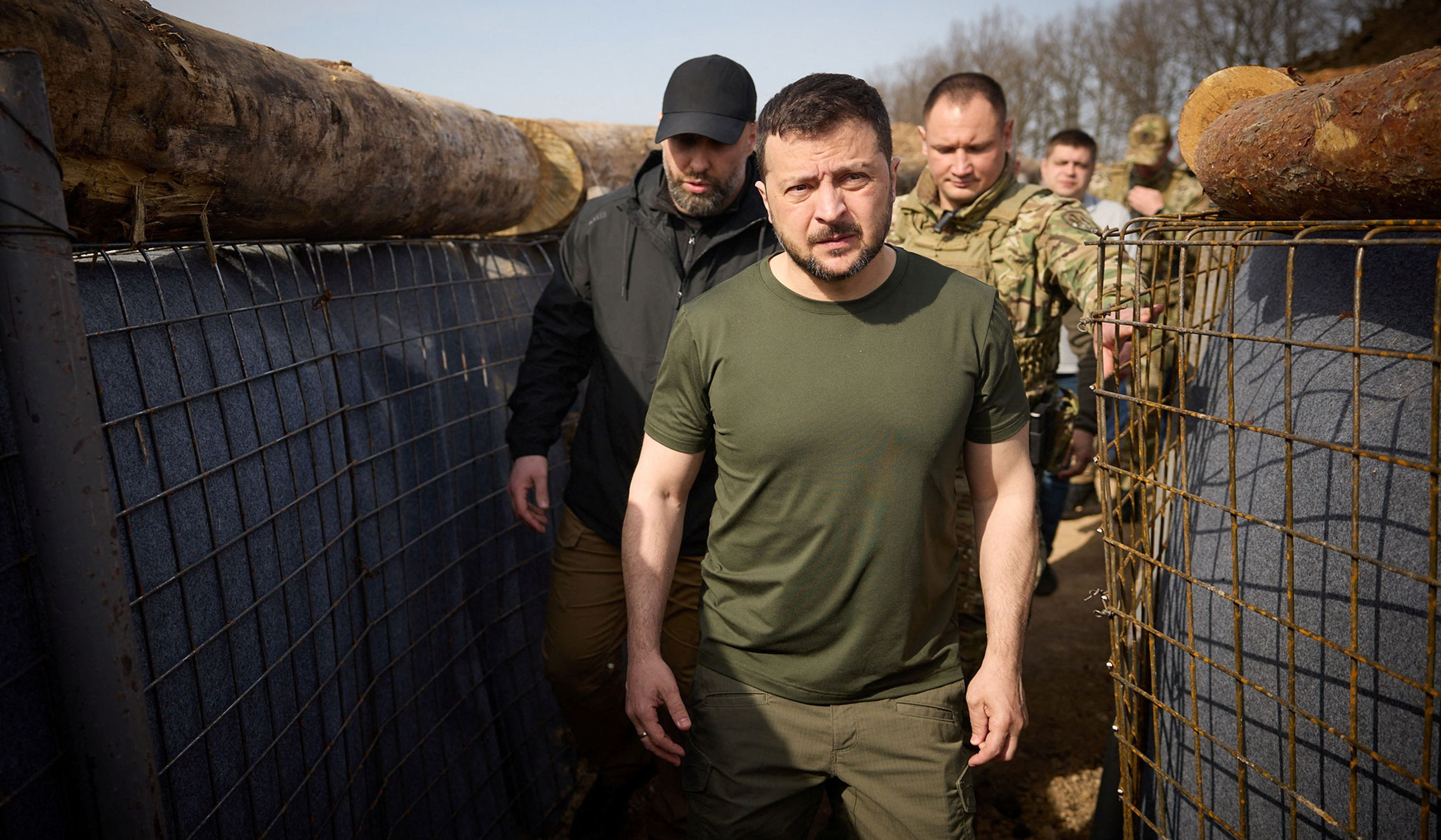
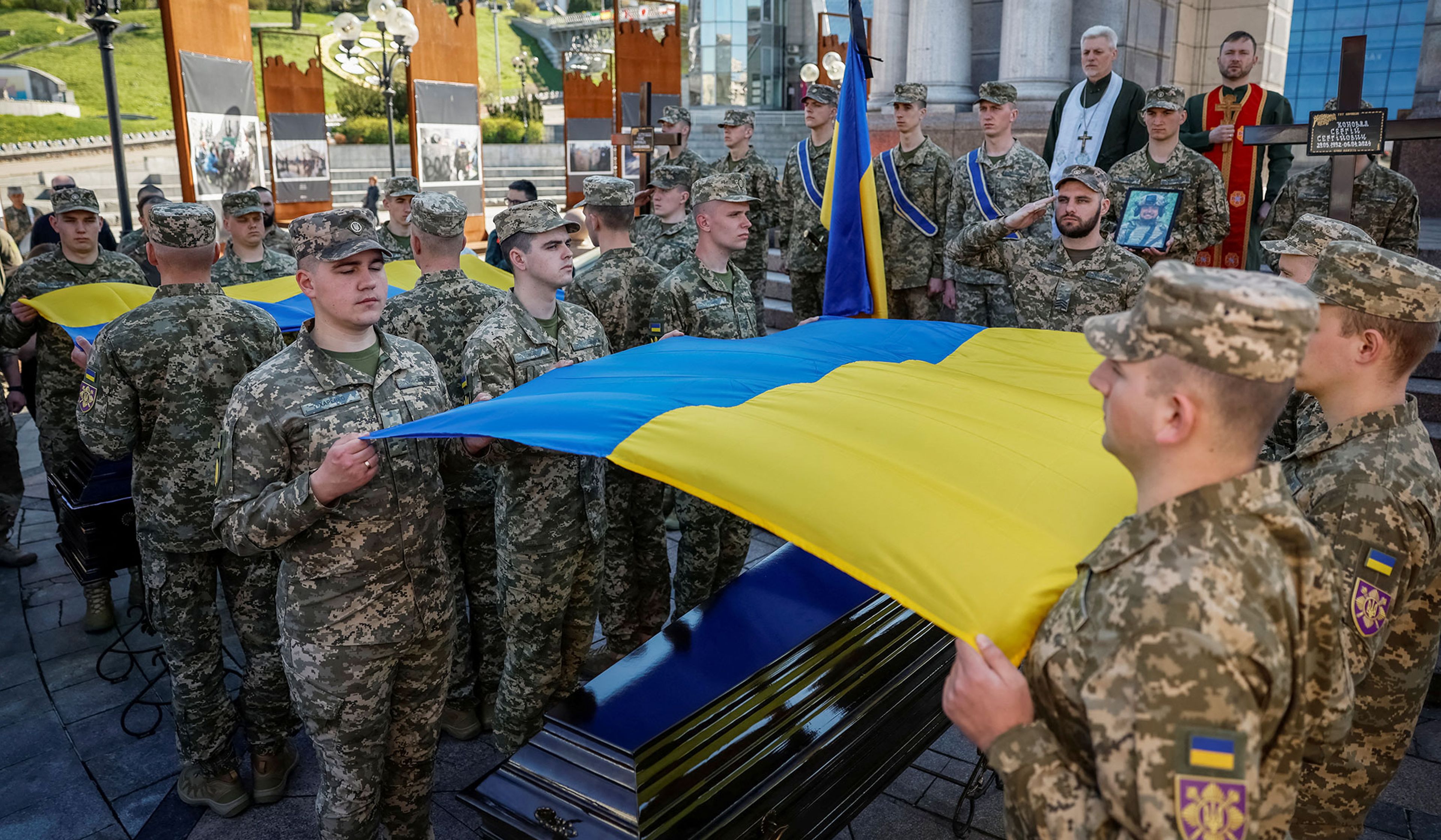
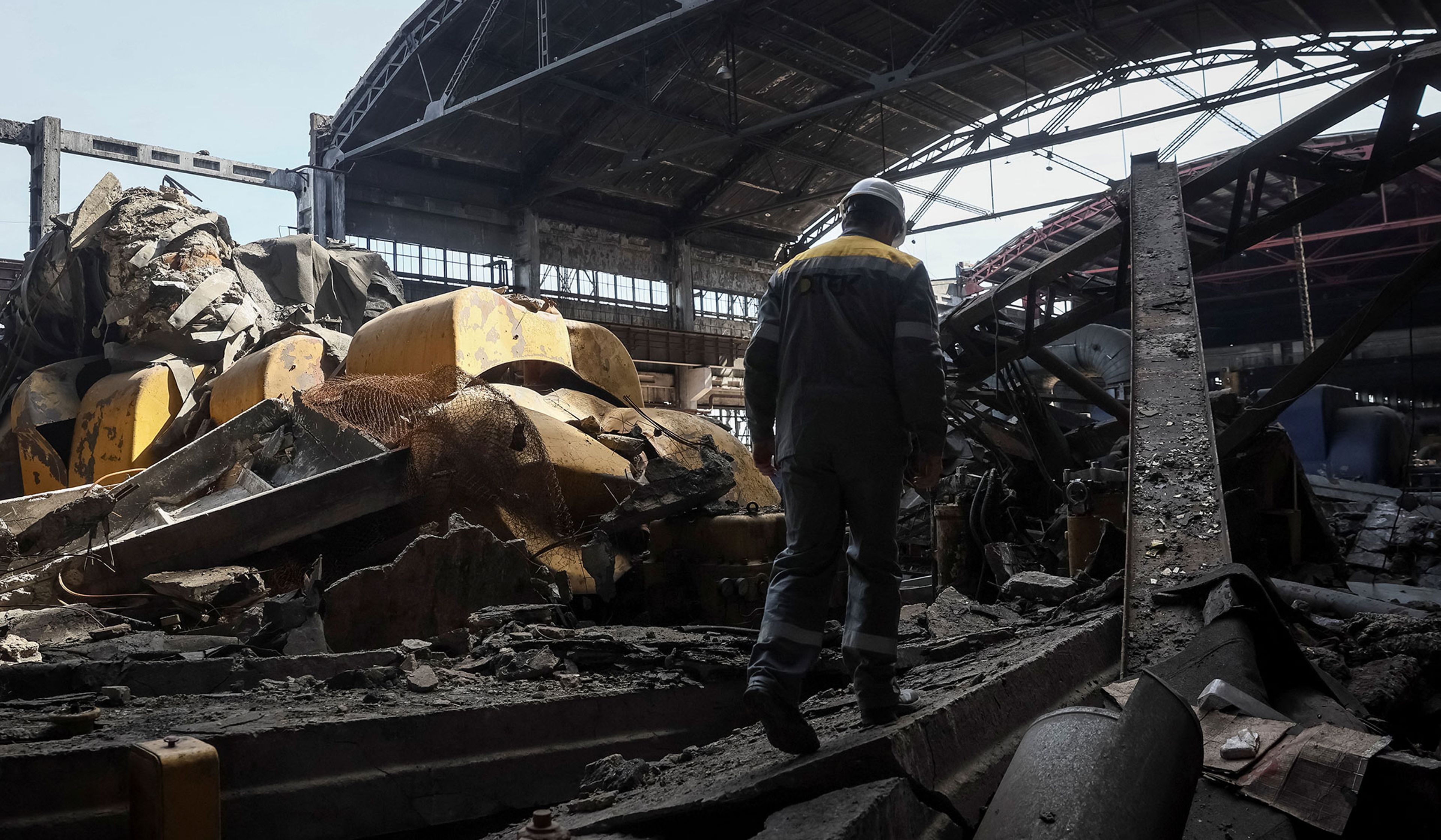
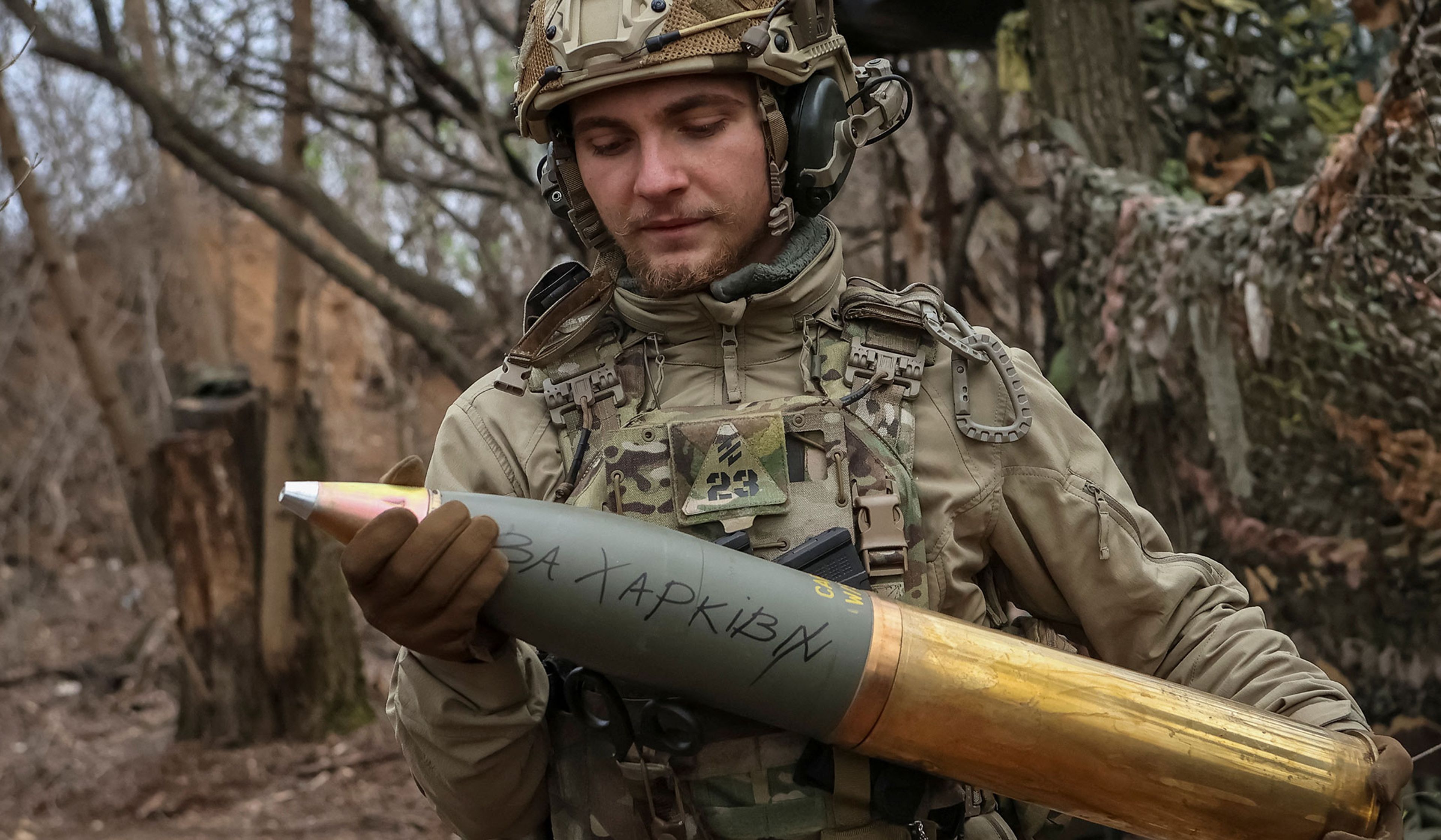
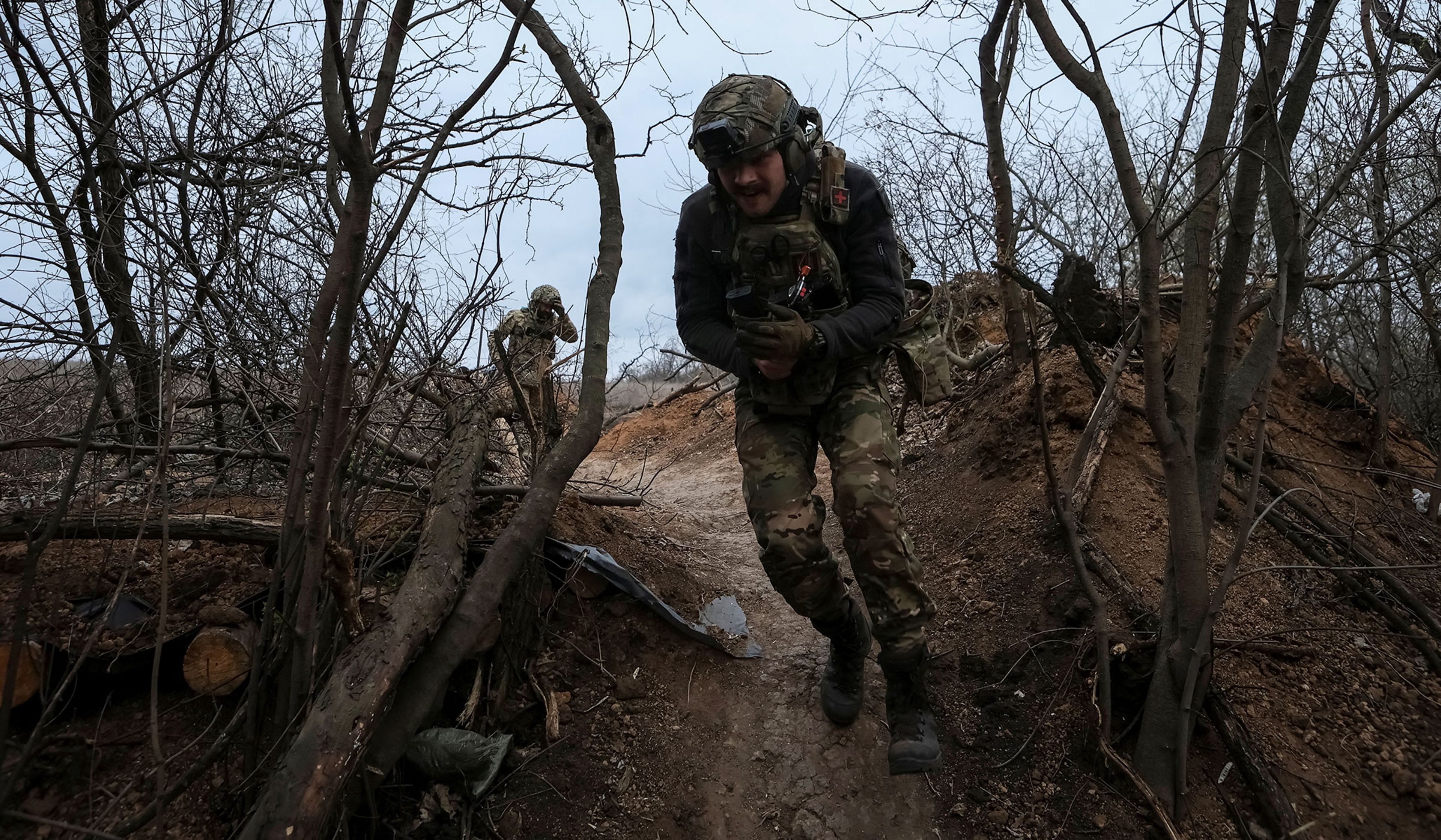
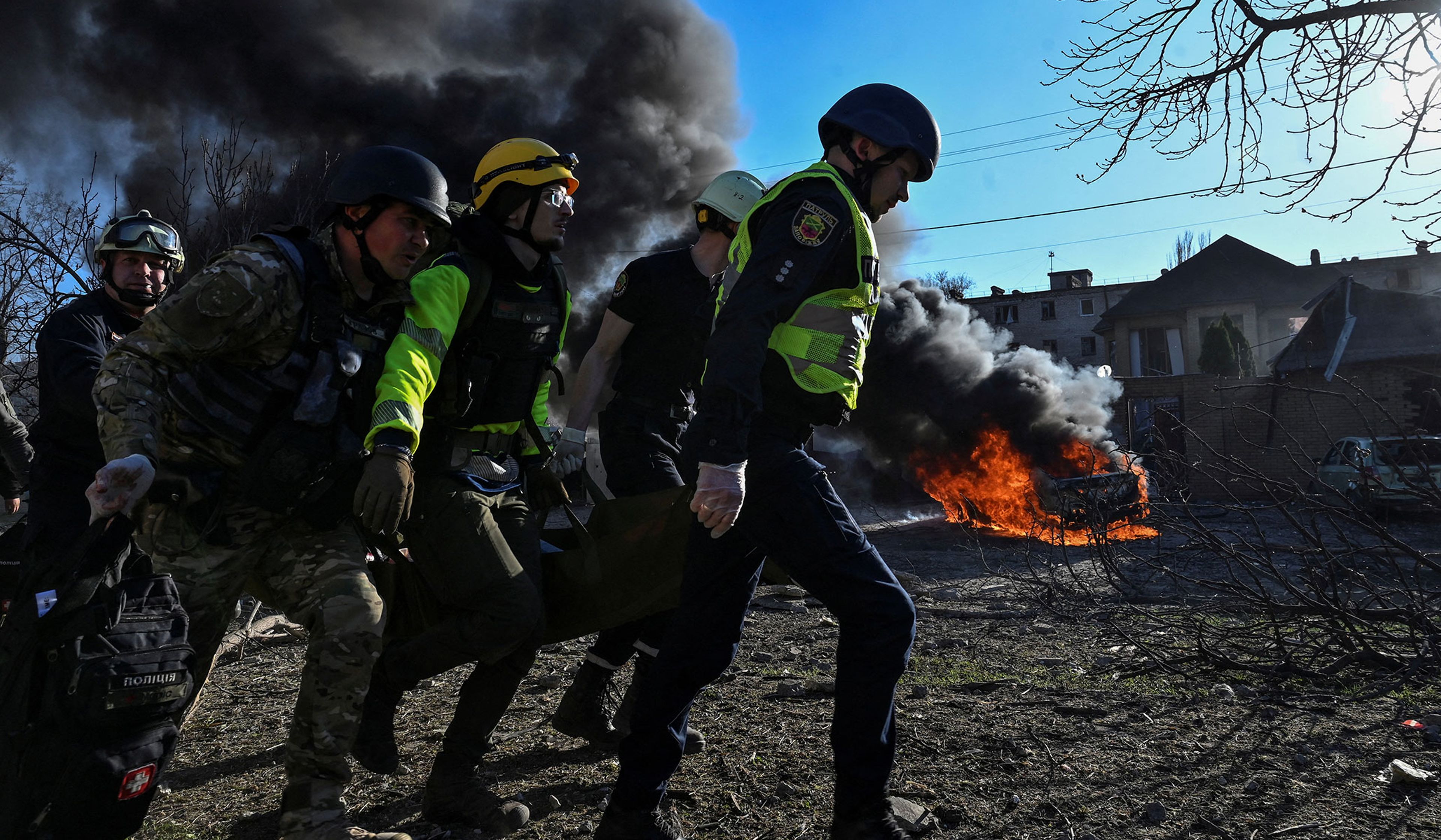
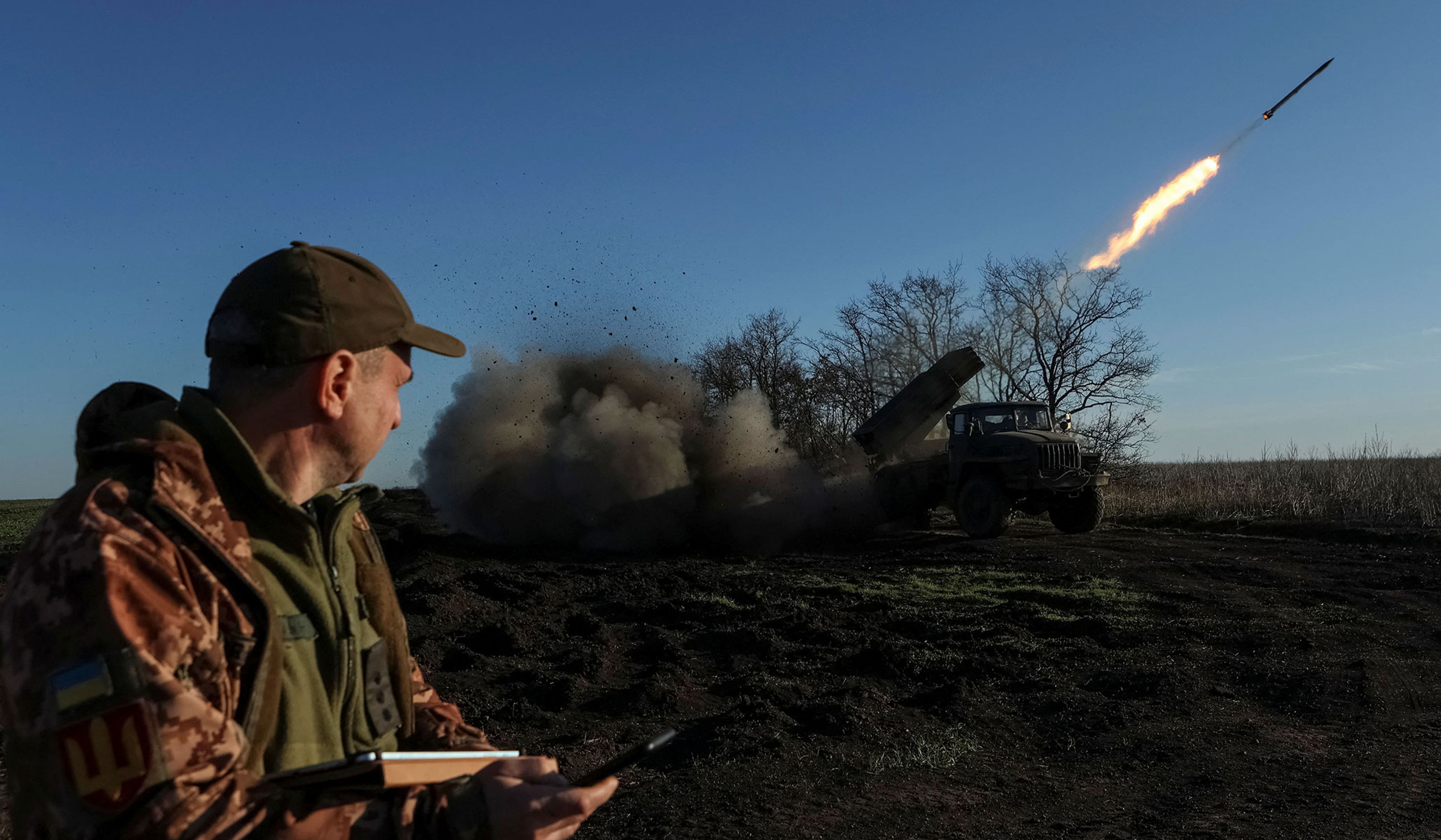
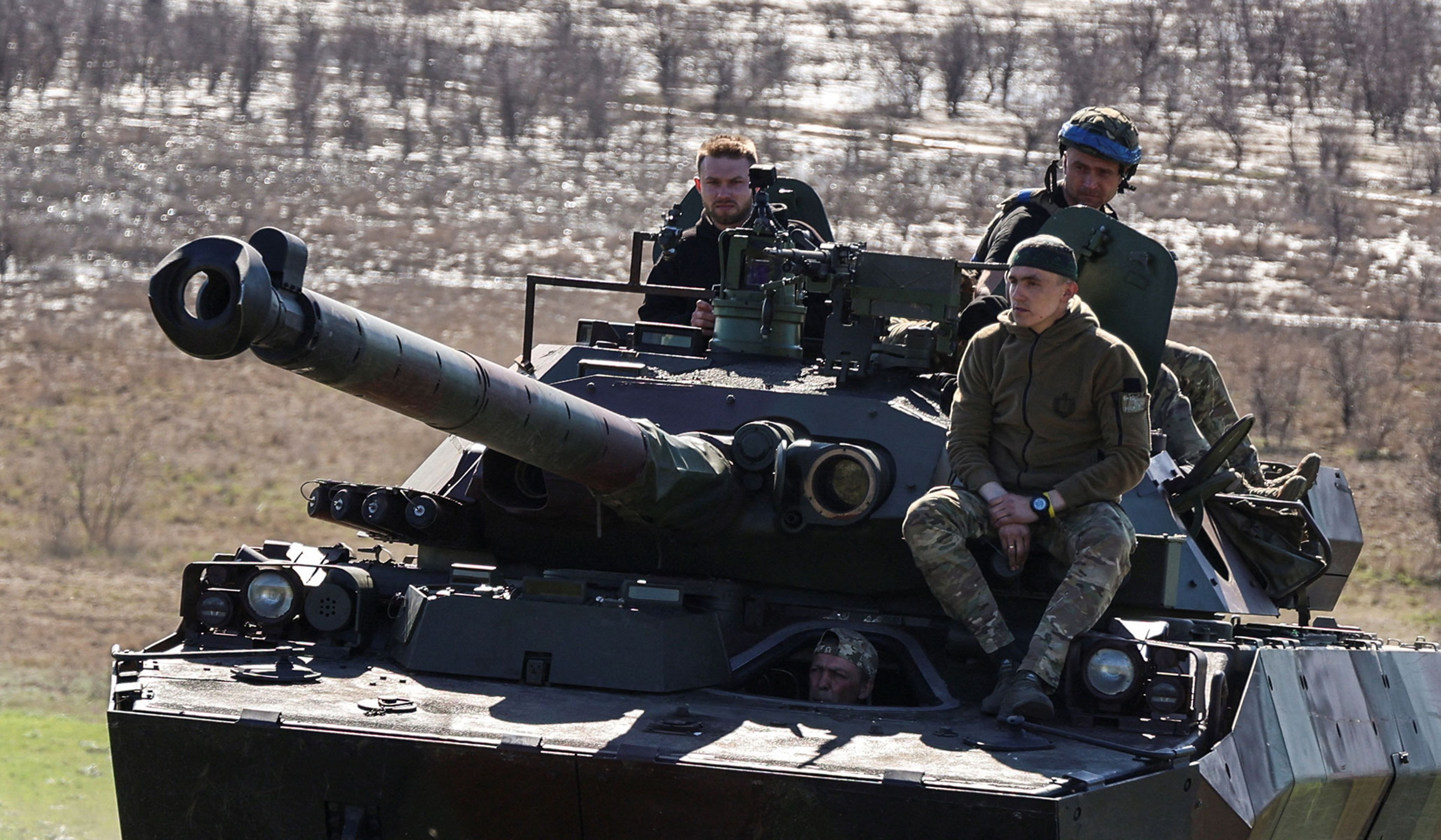
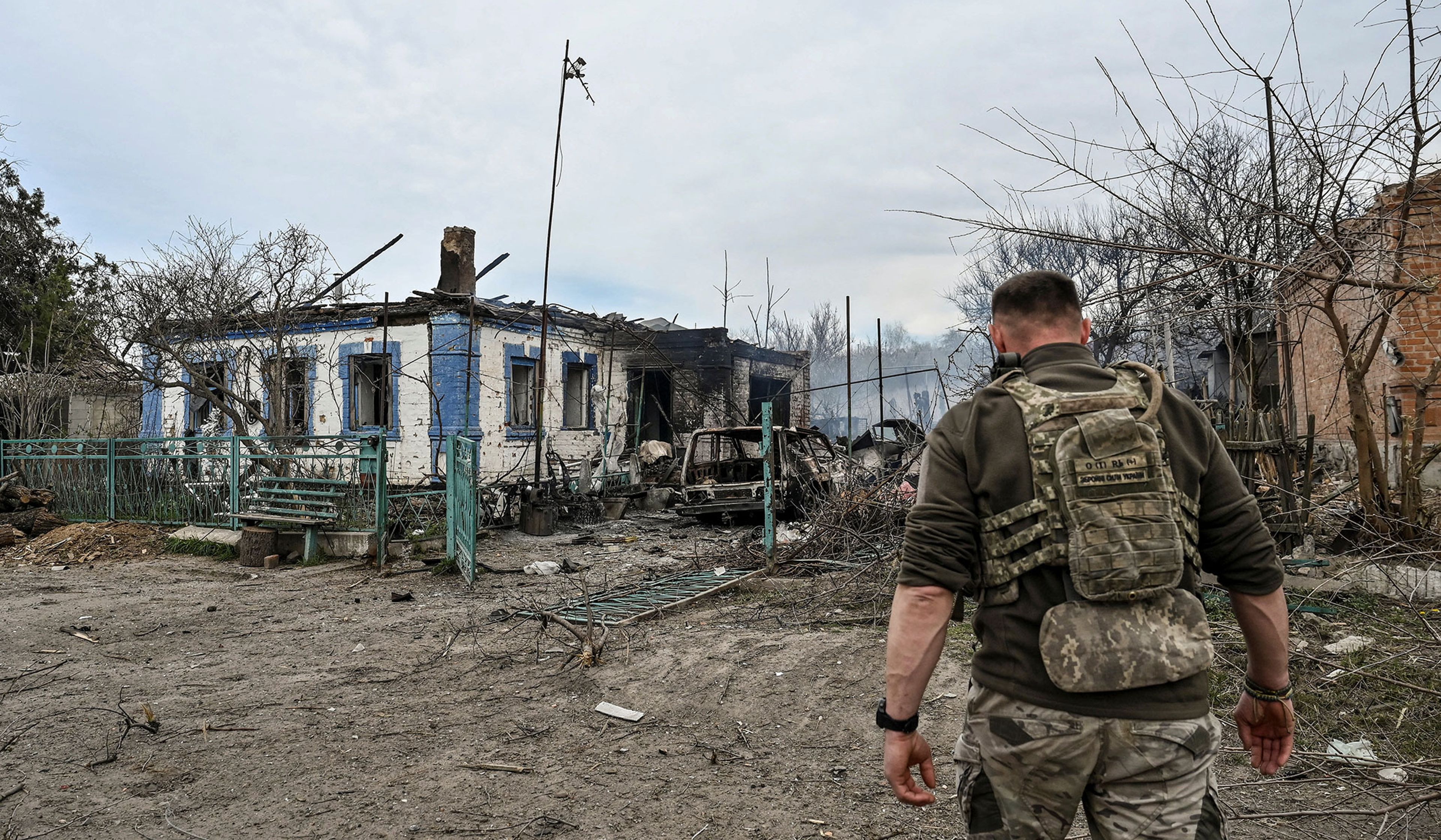
A serviceman of the 12th Special Forces Brigade Azov of the National Guard of Ukraine fires a howitzer towards Russian troops in Donetsk Region, Ukraine, April 5, 2024.
Sofiia Gatilova/Reuters
More than two years into the war, the grim outlook for Ukraine is so because a sufficient number of Americans — among both policy-makers and the public — want it that way.
Start with Speaker of the House Mike Johnson, who in October told Fox News’ Sean Hannity, “We can’t allow Vladimir Putin to prevail in Ukraine.” And yet, six months later, as of this writing, Johnson has yet to find some way to bring a Ukraine aid bill to the floor of the chamber.
When I asked translator and independent political consultant Myroslava Luzina what she would tell the American people, she offered a blunt message to Johnson, whom she called “the biggest obstacle”: “His actions, or his political stance, is actually costing lives. So he is the cause of more people getting dead at the front line, and behind the front lines, and in the occupied territories.”
Then there’s once and perhaps future president Donald Trump. To hear Hungary’s prime minister, Viktor Orbán, tell it, Trump’s secret plan to end the war in Ukraine is to simply cut off all support to the Ukrainians and let Russia win.
Then there’s President Biden, who regularly goes weeks without even mentioning the war in Ukraine. Biden keeps saying he’ll stand with Ukraine for as long as it takes, but he’s dithered for long stretches about sending the Ukrainians weapons systems they request, including fighter jets, Patriot missile batteries, Abrams tanks, and ATACMS long-range-missile systems. And as mentioned above, the administration wants Ukraine to somehow repel a massive invading army without using any U.S. weapons to hit targets — specifically oil refineries — on Russian soil.
It is an absurd “win the war, but not that way” attitude.
In Afghanistan, the U.S. trained the Afghan army to win battles with air support, then cut off that air support and wished them good luck. For a year and a half, the U.S. and NATO outfitted the Ukrainians, and the Ukrainians inflicted massive casualties on the Russians. And then we just stopped helping them.
Without U.S. support, the Ukrainians have lost a lot of ground. Pavlov and his team of engineers can improvise MacGyver-esque solutions for only so long. The perspective of Zakayev and Ponomarev, that winning the war will require strikes against Russian targets on Russian soil, including Moscow, may not sit well with Western consciences, but what other choice do the Ukrainians have? They’re fighting for their lives, and we stopped giving them the tools they need to continue the fight.
After the night of the missile attack on Kyiv, my traveling companions and I had a long drive to the Moldovan border. I intend to go back to Ukraine a third time someday. The question is, by then, what will be left?










Comments