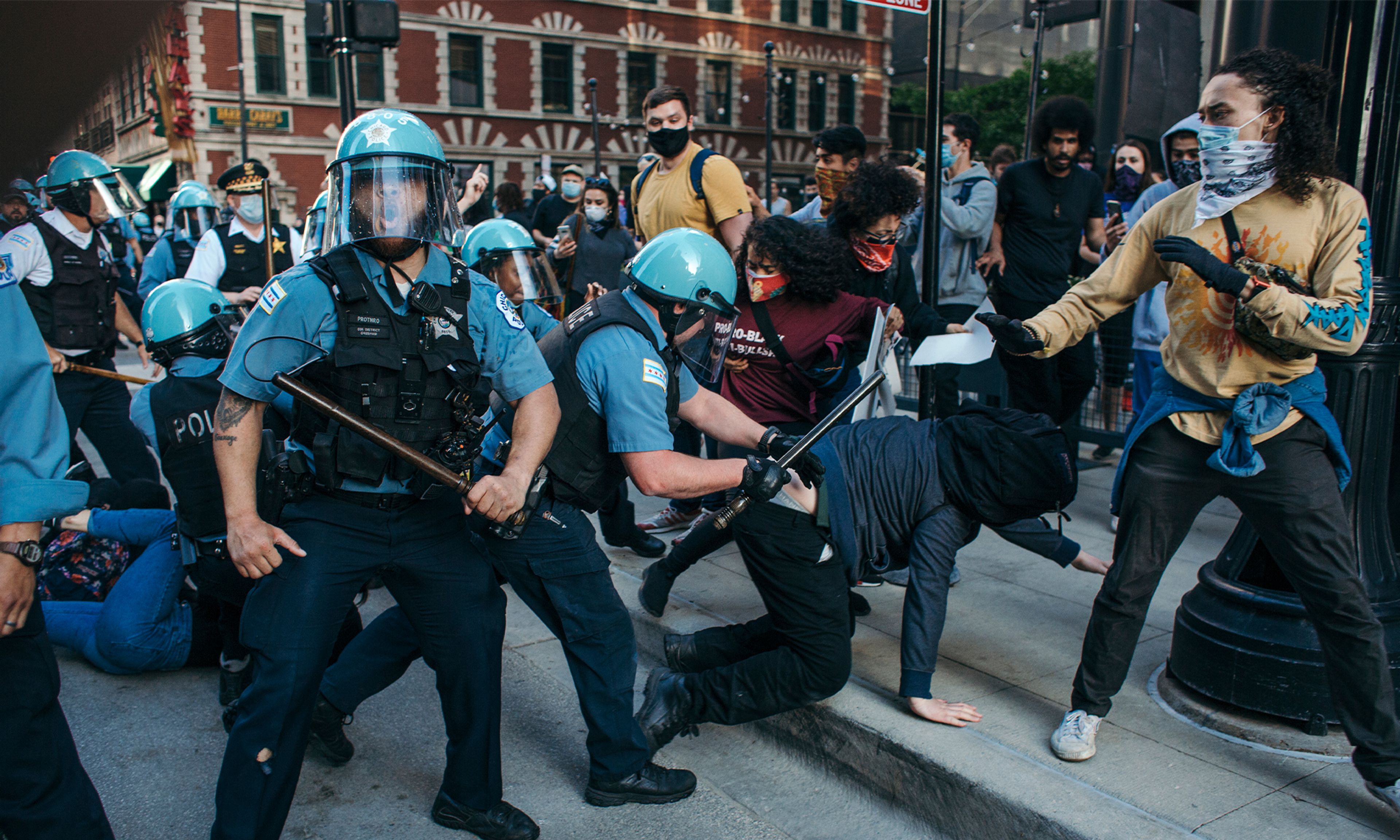
I want to tell you a story about how my city lost faith in itself. The end of May marks the five-year anniversary of the George Floyd riots. It is a dark memory to summon, nearly as dark as the five-year anniversary of nationwide Covid lockdowns in March, which are the riots’ immediate predicate and context. Many of the nation’s cities burned or experienced looting. Our national politics changed forever, for the worse. And half a decade on, Chicago still reels from the consequences in a way that few other metropolises do; we have arguably never recovered from the loss of confidence and shift in city politics the Floyd riots triggered. Your experience of them may be different — every state in the union witnessed at least some sort of civil unrest, after all — but this is mine.
The story begins elsewhere, of course. On May 25, Minneapolis man George Floyd died after being restrained during arrest by police officer Derek Chauvin. By May 26, viral videos of the arrest taken by onlookers were rocketing around social media, raising public outrage at the tactics used by Chauvin to restrain Floyd. On May 27, the powder keg exploded in Minneapolis: Protests swiftly turned into vandalism once night fell, then riots and fires, and finally unrestrained larceny. And the riots did not end. They continued for days, each time beginning as night fell, their purpose seemingly different from that of the initial spasm of civic rage: with method, intent, and mass looting.










Comments