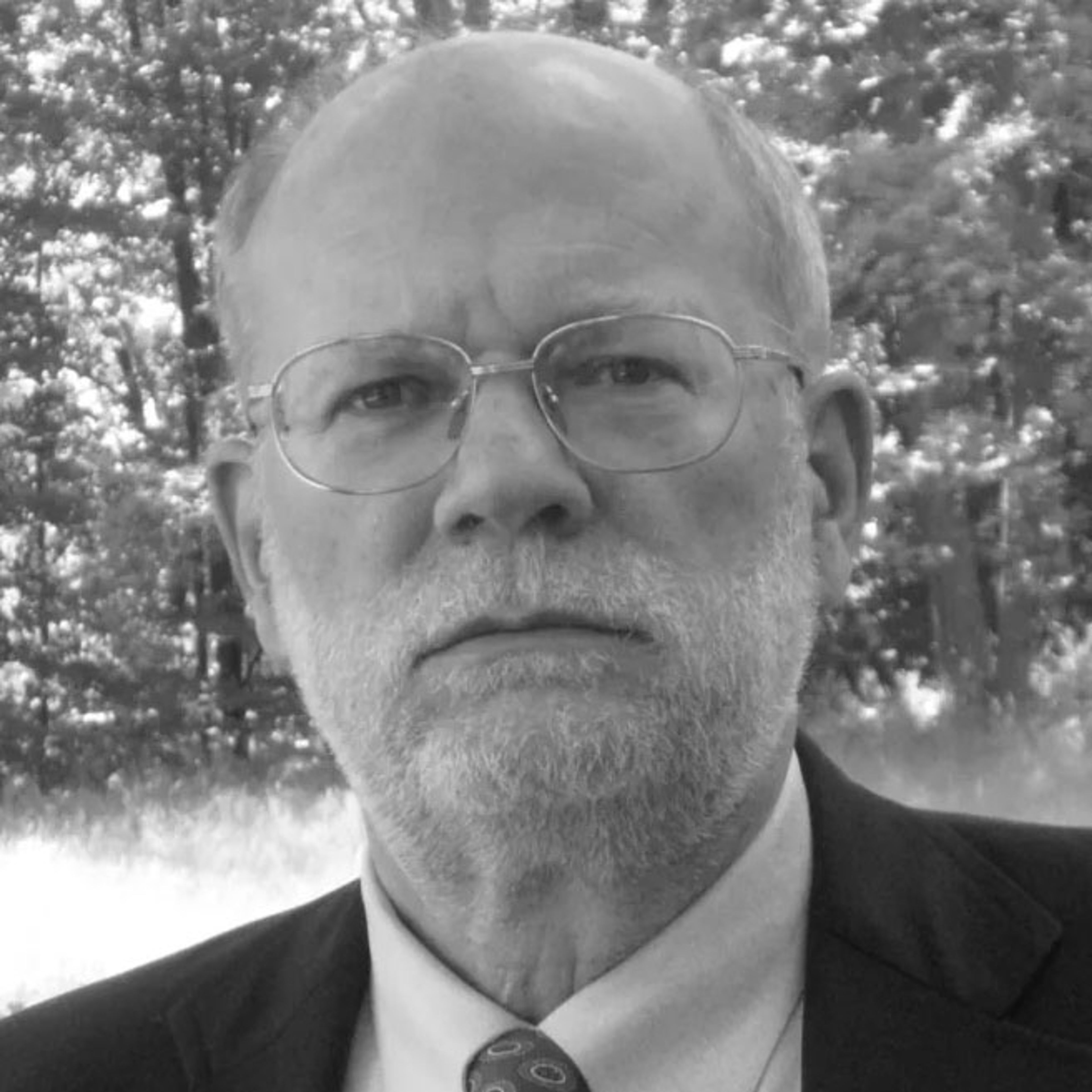
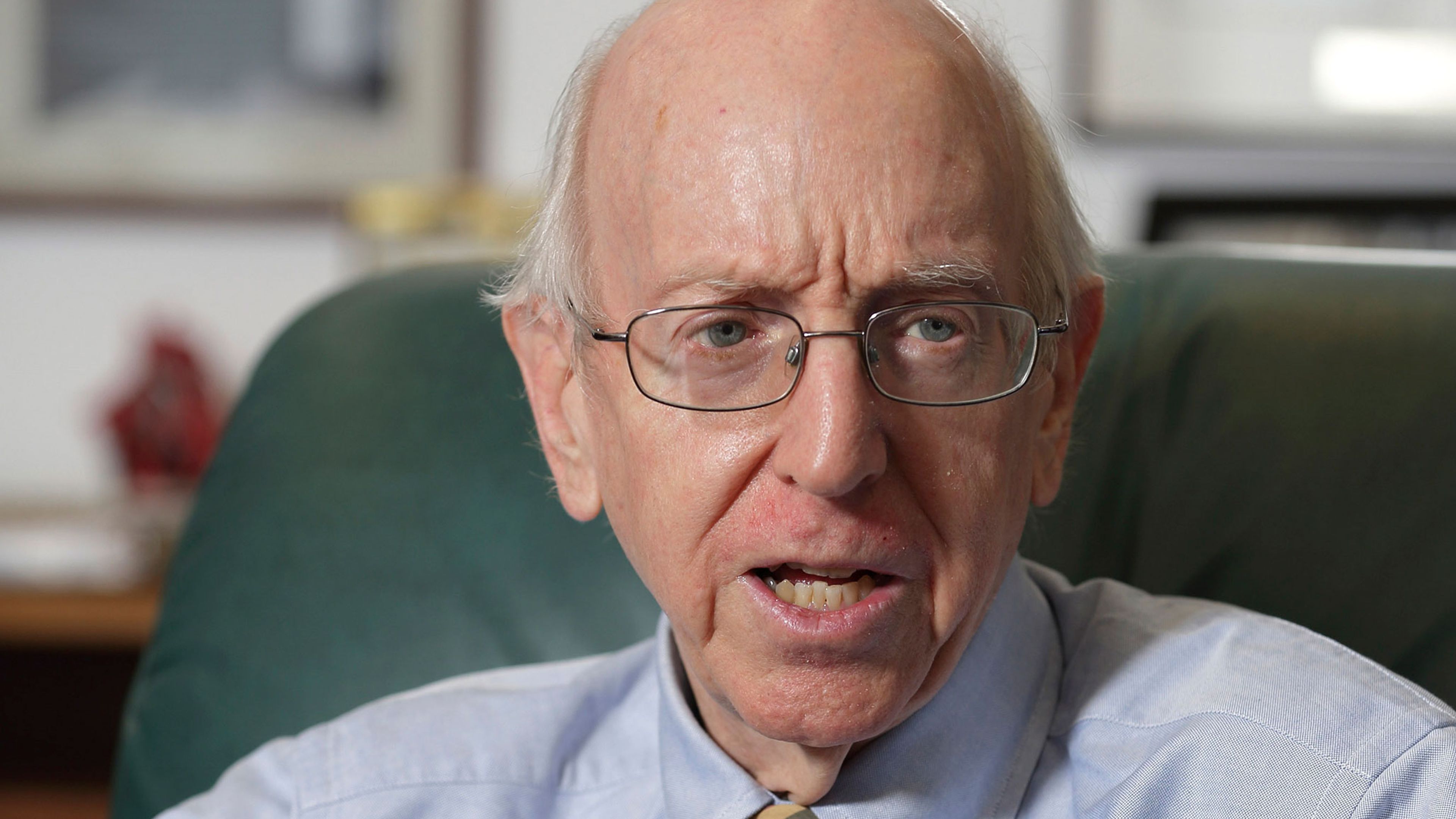
Richard Posner is an American phenomenon, like the Grand Canyon or Silicon Valley. Now 71, he graduated summa cum laude from Yale at age 20 and magna cum laude three years later from Harvard Law School, where he was first in his class and editor of the Harvard Law Review. He has written almost 40 books as well as innumerable law-review articles and articles in other periodicals. The Journal of Legal Studies (of which he was the founding editor) has called Posner the most cited legal scholar of all time. Since 2004, he has co-authored (with the Nobel economist Gary Becker) a blog, where he posts frequently on a wide variety of subjects.
This prodigious output would be quite an astonishing career all by itself. But, in addition, Posner not only has a day job, he has two of them. He has been a professor at the University of Chicago Law School since 1969 and now holds the title of senior lecturer there. And, since 1981, he has sat on the federal Seventh Circuit Court of Appeals, where he served as chief judge from 1993 to 2000. Unlike many judges, he writes his own opinions rather than leaving most of the work to his clerks.
Just listing Judge Posner’s varied accomplishments makes me want to lie down and take a nap. Indeed, the only person I can think of to compare him to is Theodore Roosevelt, who wrote 38 books in the odd moments when he was not engaged as a cowboy, police commissioner, assistant secretary of the Navy, military hero, governor, vice president, president, or explorer.
Posner’s work has been extraordinarily wide-ranging, covering such diverse topics as — to quote a few of his book titles — “Cardozo: A Study in Reputation,” “Law and Literature,” “How Judges Think,” “Breaking the Deadlock: The 2000 Election, the Constitution, and the Courts,” and “Preventing Surprise Attacks: Intelligence Reform in the Wake of 9/11.” He is perhaps best known for his work in the law-and-economics movement, which looks at the economic consequences of law and uses economic theory to predict the law’s effects.
His latest book, The Crisis of Capitalist Democracy, is not a work of legal theory, however, but rather one of economic history and analysis. My advice is: Read it. While his book is not exactly beach reading, Posner is a fine writer with a real talent for making complex economic and financial matters clear to the average reader. If you’re a little vague on exactly what a credit-default swap is or why deflation can be a bigger problem than inflation, The Crisis of Capitalist Democracy is just the ticket.
The last three years have been a remarkable period of economic turmoil. For a few weeks in 2008, it looked as if the entire, deeply interconnected global financial system would collapse. Fannie Mae and Freddie Mac, which between them held about half of this country’s $12 trillion mortgage debt, had to be placed in receivership and bailed out by the federal government; General Motors and Chrysler went bankrupt and are currently controlled by the government as well. Over 200 American commercial banks were seized by the FDIC. Of the five great investment banks that bestrode Wall Street in recent years, not a single one survives unchanged. Bear Stearns and Merrill Lynch were taken over by JPMorgan Chase and Bank of America respectively. Lehman Brothers went bankrupt, and Goldman Sachs and Morgan Stanley took commercial-bank charters, which subjected them to much stricter regulation. There was a deep recession, with unemployment reaching heights not seen in 30 years. The world economy is now climbing back up out of the hole, but it will quite likely be years before the effects of the greatest financial crisis since the early 1930s are entirely worked through.
Posner spends over the half the book telling the story of this remarkable period in world financial history, giving any number of cogent mini-lessons in economics along the way. For instance, he explains why one-shot tax rebates don’t work to stimulate the economy but permanent tax cuts do:
Windfalls are to a large extent saved rather than spent. . . . Windfalls are what economists call “transitory” income, as distinct from “permanent” income. If taxes are cut in circumstances that lead people to believe the cut will be permanent, they infer that their permanent income has risen and that they can adjust their standard of living upward — which means spending more. But if the increase in income is transitory, they will have to retrench when the money runs out — a painful adjustment.
He makes no bones about who he thinks is to blame for the crisis. Indeed, the very first sentence of the book is: “Low interest rates in the early 2000s set the stage for the economic collapse from which we are now gradually recovering.” Interest rates, of course, are largely set by the Federal Reserve.
Further, the gradual deregulation of banking that began in 1980 made banks unsafe. The repeal of Glass-Steagall in 1999 “was succeeded by a brief, disastrous era of lax regulation, regulatory complacency, regulatory inattention, and regulatory ineptitude. The combination of low interest rates and inadequate banking regulation proved lethal.”
He lays the primary blame for the housing bubble at the doorstep of Fannie and Freddie: “I have no truck with the GSE’s [government-sponsored enterprises]. Harbingers of the crony capitalism that one finds in countries like Russia and China, they illustrate the dangers of trying to hybridize business and government.”
He also has no truck whatever with the idea — very popular in Washington — that the heart of the problem lay in Wall Street: “Calling bankers greedy for taking advantage of profit opportunities created by unsound government policies is like calling rich people greedy for allowing Medicare to reimburse their medical bills.”
By no means the least of this book’s many virtues is the willingness of Judge Posner to take clear stands: no on-the-one-hand-but-on-the-other-hand wishy-washiness for him. Altogether, The Crisis of Capitalist Democracy is the best thing I’ve read on the origins and development of the “Great Recession.”
The second part of the book deals with the lessons to be learned. Posner points out that all sides have, not surprisingly, rounded up the usual suspects. The Left blames greedy and overpaid bankers, the Right blames government for pushing homeownership on people who could not afford it, investors blame the credit-rating agencies for not understanding the instruments they were evaluating, and the Federal Reserve blames fragmented banking regulation and limits on its power to control events.
They all have a point, but they are all self-interested as well. Posner holds out little hope that the current Financial Crisis Inquiry Commission will produce much that is useful. As he notes, the commission is bipartisan, not nonpartisan: It has six Democrats and four Republicans, each of whom has his or her own agenda to pursue.
The main problem, as Posner sees it, is “that banking . . . is both risky and critical to economic stability.” Banking is not like other major segments of the economy, for it functions analogously to the circulatory system of the body. If a man breaks his arm, it is a debilitating and uncomfortable situation for as long as that arm is nonfunctional; but after a little competent doctoring and a few months of healing, he’s as good as new. If, however, his heart becomes nonfunctional for even a few minutes, he is dead. So is an economy if the banking system collapses. It came very close to doing so in 1932–33, and Judge Posner would like to see the restoration of some of the banking regulation put in place in that decade that kept the system stable for 50 years.
Perhaps the most surprising aspect of this part is Posner’s high praise for John Maynard Keynes. Keynes was, of course, the most influential economist of the 20th century, and his 1936 masterpiece, The General Theory of Employment, Interest, and Money, caused a revolution in economic thinking. By 1971, even Richard Nixon was declaring himself a Keynesian.
But Keynes fell out of favor in the 1970s, when high inflation and a sluggish economy — an impossible combination in Keynesian economic theory, but a reality that came to be called stagflation — plagued the country. Posner regards Keynesian economics as still very relevant, if hardly the panacea it was thought to be in the mid-20th century.
The final part of the book is devoted to ten recommendations for reform, including restoring the separation of commercial and investment banking that had been mandated by the Glass-Steagall Act of 1933. Other recommendations include reorganizing and consolidating the more than 100 financial regulatory agencies in this country, and rotating personnel among the remaining agencies so that the bureaucrats get a broader picture and exchange information more willingly.
Posner writes that he himself is not entirely happy with these recommendations, which leads to his most important one: “These doubts underscore the need for a serious, neutral, patient, well-funded inquiry into the causes of the crisis and the optimal directions for reform, conducted by an elite presidential commission.” He wonders if we, as a country, are up to the task. Does the United States have “an institutional structure and political culture equal to the economic challenges facing it”? The country deals well enough with emergencies, such as that of September 2008, he thinks, but when there are major challenges but no immediate crisis, “our political system tends to be ineffectual.”
It’s a pessimistic note on which to end a very enlightening book. But in an age when politicians rarely look beyond the next election and hugely funded interest groups influence a complex, decentralized government structure that naturally tends to stay with the status quo, it is easier to push major reforms into the future. As Judge Posner makes clear, if we don’t move forcefully, and soon, to enact serious financial reform, the consequences could be disastrous indeed.








Comments