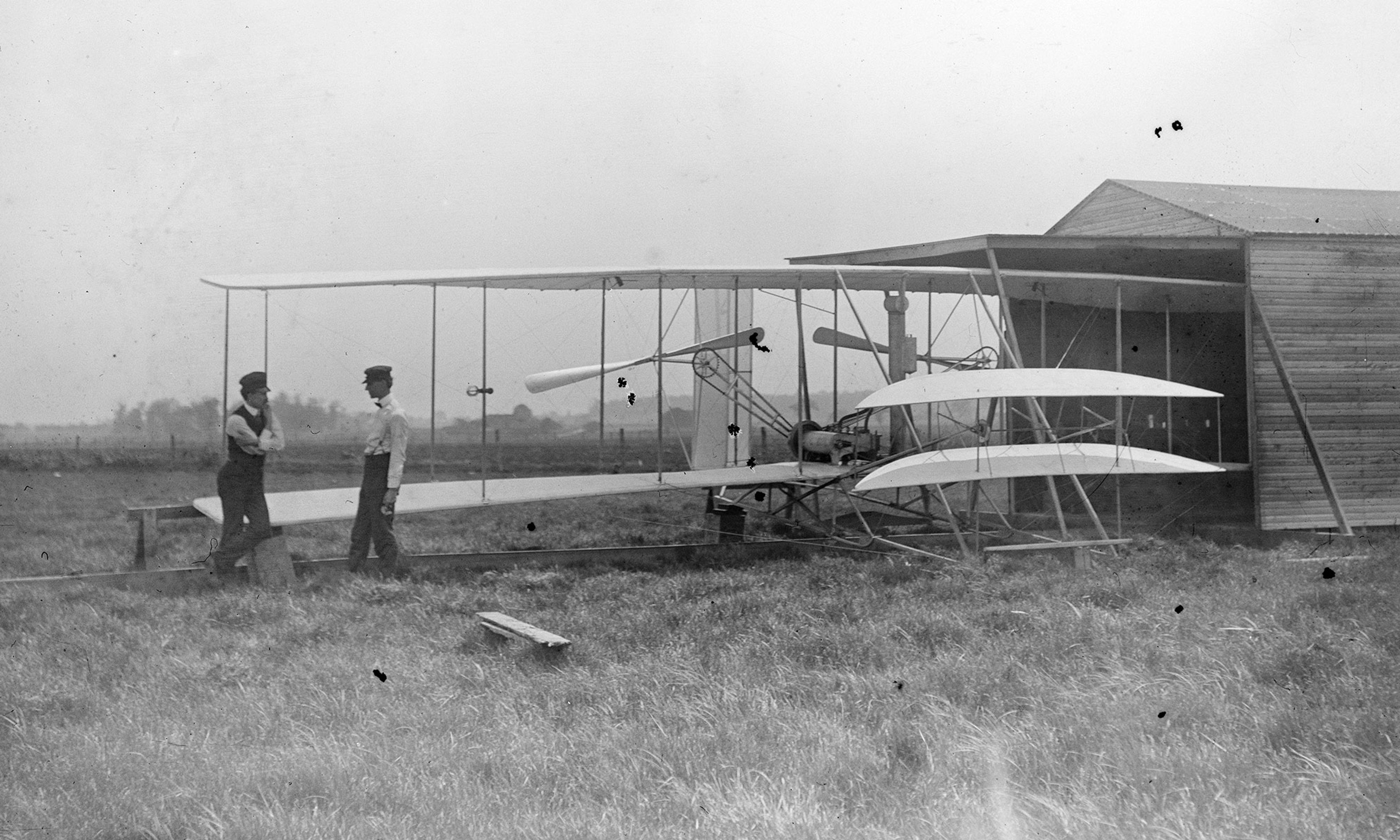
My first impression of this book was unfavorable. Emerson said that writing ought to be an effort “to drop every dead word,” and thought surprise the first principle of style. Pulitzer Prize–winning historian David McCullough would perhaps beg to differ; he would seem to think that a writer should never seek for originality where the predictable and conventional, indeed the formulaic, will do. The virtue of McCullough’s writing is its ease and readability; its vice is superficiality. Only once in his new book about the Wright brothers did I come across a penetrating image, a flash of insight, that illuminated the depths of his subject; but as fate would have it, the insight in question was sufficiently arresting to overcome my skepticism and make me think the book after all worthwhile.
What gives The Wright Brothers its interest is the character of its central figure, Wilbur Wright. Four years older than the duller Orville, Wilbur had a good deal in common with such democratic monks and Yankee mystics as John Woolman, Johnny Appleseed, and Henry David Thoreau. Like Thoreau, Wilbur Wright was by nature ascetic, a Spartan in all his habits, and to all appearances celibate; he gave the impression, one of his schoolmates in Dayton, Ohio, said, “of a man who lives largely in a world of his own.” The French aviation journalist François Peyrey, studying Wright as he gazed upon a French sunset, was reminded “of those monks in Asia Minor lost in monasteries perched on inaccessible mountain peaks.”










Comments