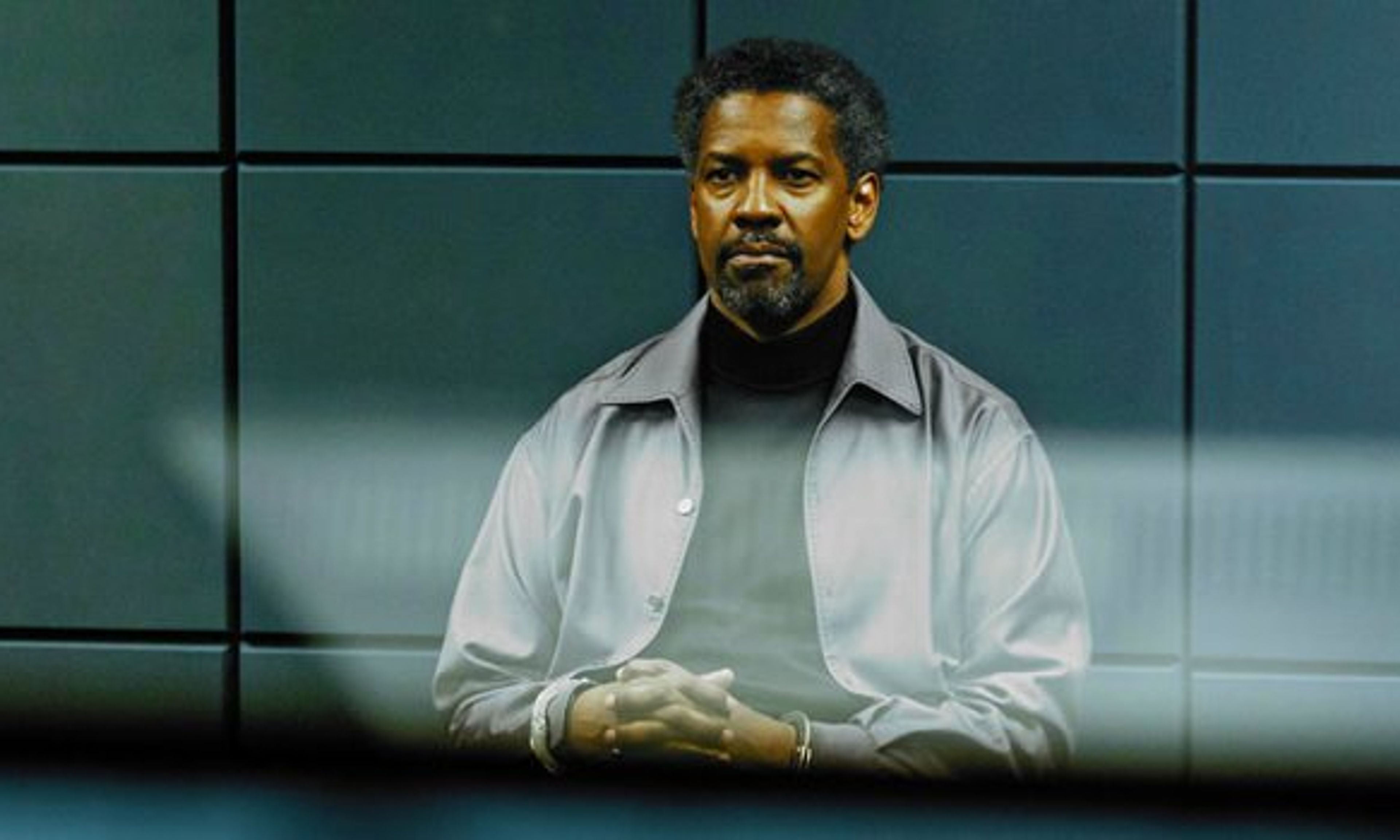
The most remarkable thing about Safe House, the new hit thriller starring Denzel Washington as a rogue CIA operative on the loose in South Africa, is that it wasn’t made during the Bush presidency. Essentially an updating of 1975’s Three Days of the Condor, with a naïve junior spook (Ryan Reynolds in the Robert Redford role) caught up in intra-Langley maneuverings and mayhem, Safe House has all the hallmarks of Hollywood’s Bush-era revival of the paranoid style. In the spirit of such movies as Syriana and the Bourne franchise, it depicts the American intelligence bureaucracy as the sum of all conspiracy theories: ruthless, murderous, and entirely self-interested, with any hint of patriotism buried under decades’ worth of crimes.
The movie even manages to work in a quick dose of waterboarding, as the first (and only, as it turns out) interrogation technique employed by the agents assigned to debrief Denzel Washington’s Tobin Frost, a former Agency heavyweight whose betrayals have made him the intelligence community’s most wanted man. Ten years after selling out his country in some unspecified way, Frost shows up in Cape Town to purchase the movie’s MacGuffin, a data file whose contents apparently make the Church Committee’s reports look like pro-CIA propaganda. Naturally, various powerful people would like the file for themselves, and so Washington’s character spends the first 20 minutes of the movie dodging assassins in Cape Town’s crowded streets, ultimately eluding his pursuers only by slipping into the American consulate and turning himself in.
His subsequent waterboarding takes place in the safe house supervised by Reynolds’s character, a Yalie named Matt Weston who chafes at his dullsville duties as an Agency “housekeeper” and whines to his superior (Brendan Gleeson) about how much he covets a plum job opening in Paris. (His French fixation isn’t just professional: His girlfriend, a lovely medical student played by Ana Moreau, is about to jet off for a hospital assignment in her native country’s capital.)
Once Frost enters his life, though, Weston’s whining days are over. The safe house turns out to be the least safe place in Cape Town, and the housekeeper barely escapes with his prisoner and his life. Hunted by a team of assassins and uncertain which of his higher-ups to trust, he goes on the lam, trying to hang on to his voluble, volatile captive while figuring out just what kind of mess he’s landed himself in.
The answers are almost comically predictable. (If you can’t anticipate which of Weston’s bosses — played by Gleeson, Vera Farmiga, and Sam Shepard — will ultimately betray him, you should have your moviegoer’s license revoked.) But the road to getting them is reasonably fun, because we’re riding with Denzel Washington in full-on swagger mode. Washington is 57, with salt-and-pepper in his hair and enough years on him to make his third-act flashes of vulnerability convincing. But he still has the mix of charisma and physicality necessary to sell a superspy character, and enough “seduce and destroy” charm to make us believe that Frost could have outwitted, outplayed, and outlasted a world full of enemies and ex-friends.
Reynolds, his straight-shooting foil, is essentially a comic actor (his best movie remains the slapstick 2005 romantic comedy Just Friends) who has been consistently miscast as an action hero. But he’s game and obviously grateful to still have a career after last year’s disastrous Green Lantern, and if he can’t compete with Washington, he isn’t completely cast into the shade. The movie drags, inevitably, whenever Frost drops offstage, but the action set pieces strike the right balance between chaos and comprehensibility, and the screenplay even gets off a few good lines.
They’re in the service, of course, of a worldview that’s rotten with cynicism about American institutions and the men and women who populate them. But in a way it’s encouraging to see that the paranoid style has endured into the age of Obama: It suggests that somebody in the movie industry has noticed that many of the Bush-era national-security policies that inspired the paranoid style’s revival in the first place have endured under the current administration. (You wouldn’t normally give people points for noticing something so obvious, but where Hollywood’s connection to political reality is concerned, you have to take what you can get.)
The truth about our intelligence agencies that never makes it into motion pictures, of course, is also a truth about government in general: Nothing should be explained by malice and conspiracy when it can be better explained by incompetence. Maybe someday some intrepid filmmaker will dare to make a movie on that theme. But I can pretty much guarantee that it won’t star Denzel Washington.












Comments