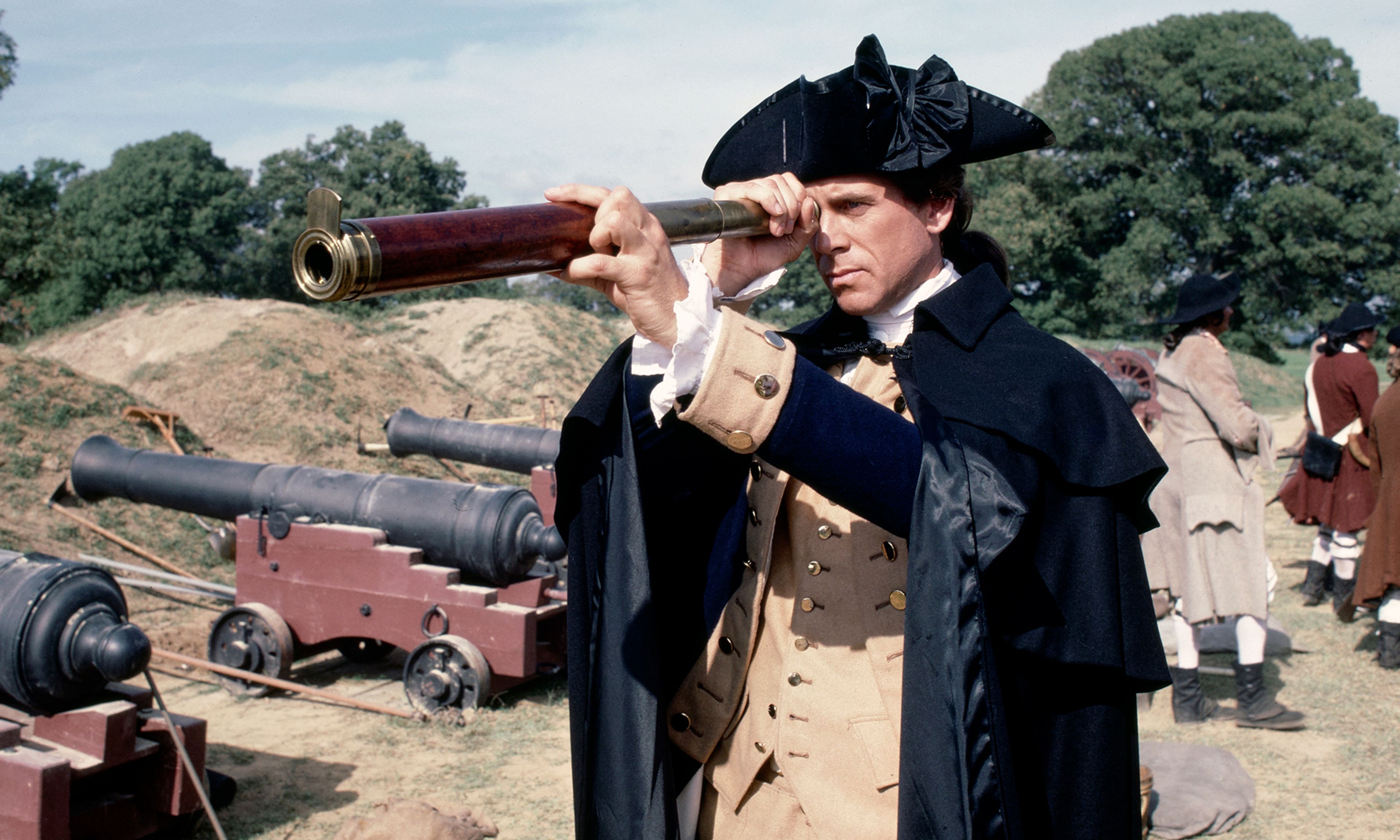
You don’t have to be woke to find the first 30 minutes of the 1984 TV series George Washington excessively sanitized. First, we see bucolic scenes of elegantly dressed colonial Virginians taking pride in their fine horses and hounds while their human chattel wait silently in the background. Then we see a fox hunt. Young George (Barry Bostwick) gallops ahead of the pack with his friend Will (David Dukes), a self-described “freeborn Englishman” whose father, Lord Fairfax, is a British peer and owner of a vast estate worked by hundreds of slaves. George and Will then venture forth to survey a tract of land in the Shenandoah Valley deeded to Lord Fairfax by King George II, who purchased the valley from the Iroquois in 1744. In a wayside tavern, they roar with laughter as their hard-drinking Irish guide manhandles a serving woman, who, being a saucy wench, only pretends to resist.
But hold on: there are five and a half more hours in this series, and in 1986, CBS aired a four-hour sequel called George Washington II: The Forging of a Nation. Both parts are available on YouTube and well worth watching. As a whole, the series is a powerful reminder that the War of Independence was won less by the celebrated eloquence of Thomas Jefferson than by the grit and grace of a man whose best-known image, the grim-faced portrait on the dollar bill, does not do him justice.











Comments