Joseph Ritter, the Catholic archbishop of St. Louis, did not fear being stern and heavy-handed with his flock. When he desegregated the diocesan schools in 1947, hundreds of white parents organized to oppose him. There was talk of going to court to enforce Missouri’s race laws. Unfazed, Ritter instructed that every Mass in the area would include a reading of his letter noting that anyone who joined a lawsuit would be excommunicated.
Desegregation divided Catholics in New Orleans as well, with lay activists demanding that integrated Catholic schools face sanctions from the Louisiana legislature or have their water turned off. Archbishop Joseph Rummel of New Orleans responded by reminding Catholics that support for racial segregation constituted a rejection of their church’s doctrine on the inherent and equal dignity of all members of the human family. Rummel said that “racial segregation is morally wrong and sinful because it is a denial of the unity and solidarity of the human race as conceived by God in the creation of Adam and Eve.” He warned public officials who claimed to be Catholic that they were placing their eternal salvation in jeopardy if they supported segregation and other racist practices. When the powerful Louisiana Democratic Party boss Leander Perez nevertheless persisted in promoting legislation to impede integration, Rummel formally excommunicated him and two other arch-segregationists. One of them, Jackson Ricau, wrote an indignant letter in response: He had been exercising his constitutional rights and would keep doing so. Rummel refused to budge.
Many Catholics believe that bishops and priests today should once again take action against coreligionists who are fighting to deny basic civil rights to some people. Where liberals applauded Ritter and Rummel, though, this time they are more apt to take Ricau’s side of the argument: Church leaders should stand down and let their parishioners reach their own political judgments. The bishops are not of one mind on how to proceed.
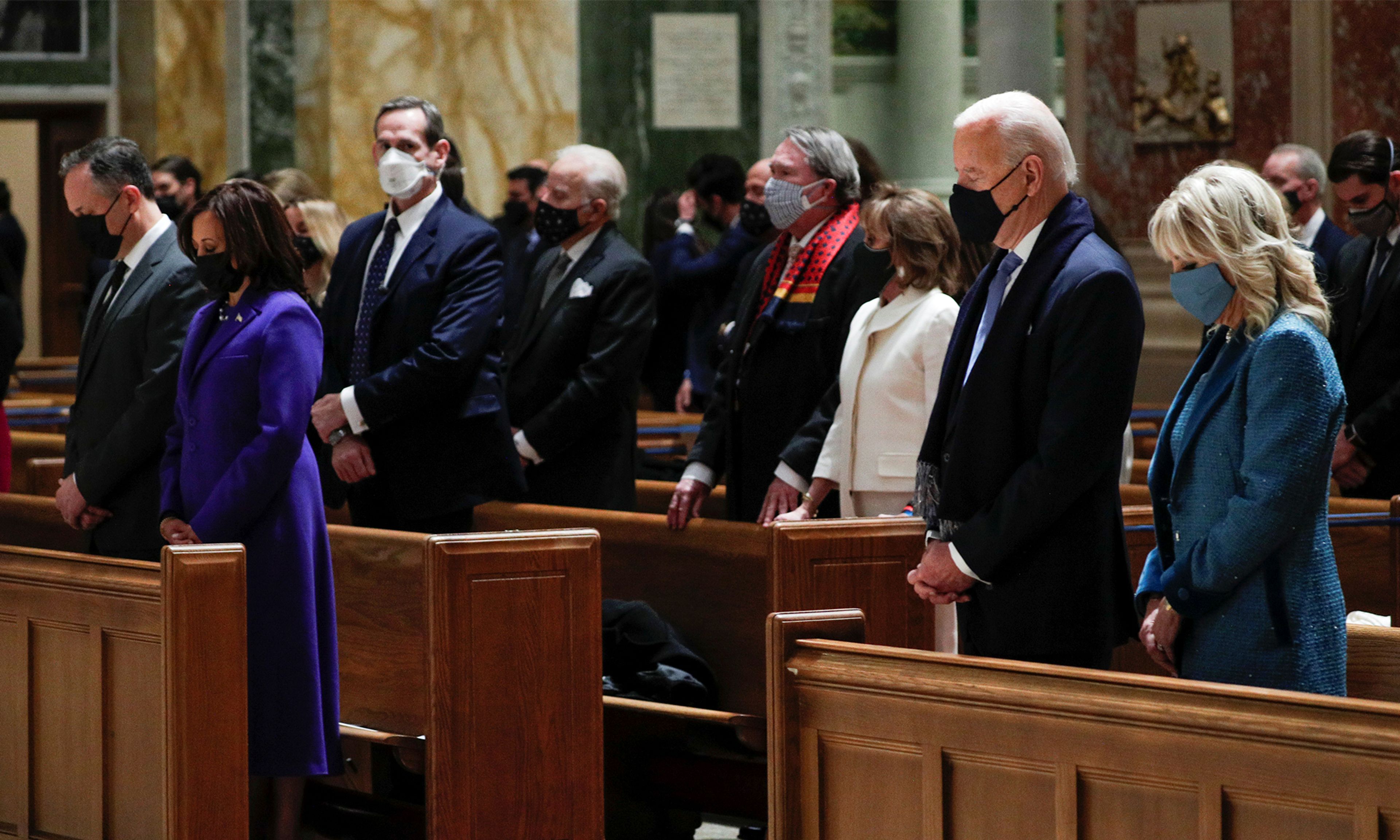
The debate concerns abortion, and it has been renewed now that we have, in Joe Biden, the first president since Roe v. Wade to be a lifelong Catholic communicant. Throughout his career, Biden has opposed the legal protection of unborn children. In recent years, he has also advocated that the federal government pay for abortions for low-income women. He says that in his “personal life,” he accepts the Church’s teaching that life begins at conception. “I just refuse to impose that on others.”
The formulation is almost certainly disingenuous; it is at best confused. The Church recognizes (rather than teaches) that conception marks the beginning of a new and distinct member of the species Homo sapiens. What it teaches is what Ritter and Rummel taught: that we have duties of justice to all human beings, duties that cannot be abridged or discarded on the basis of age, size, location, disability, or dependency, any more than they can be on the basis of race or sex. Like Perez and Ricau, Biden rejects and denies this teaching. Whether or not he wills that anyone procure or perform an abortion, he wills that the law exclude unborn children from the protection that he takes for granted for himself and for others: the protection, that is, against unjust homicide.
Canon law holds that those people “obstinately persisting in manifest grave sin are not to be admitted to holy Communion.” Voting to expose unborn children to the violence of abortion, declaring an intention to do so, or advocating that exposure is certainly a grave sin. It would seem to follow that the Catholic who continues to engage in that behavior after being informed of the gravity of the issue is putting his soul at risk and may not receive Communion. Its reception is supposed to be a sign of the unity of the Church, which crucially includes unity of belief in the truths the Church has articulated. Priests who allow well-known supporters of abortion (or people who are well known for other grave sins they have not repented) to receive Communion risk misleading people about what the Church teaches, and how seriously it teaches it.
Denying Communion in such cases should not be viewed, primarily, as a means of effecting a change in the sinner’s behavior, as much as that may be desired. Still less is it a means of affecting voters’ opinions about officeholders. It is rather a way of protecting the integrity of the Eucharist. It would be necessary for bishops to withhold Communion from a politician pledged to support abortion even if they knew in advance, and for certain, that it would provoke a political backlash that set back the pro-life cause.
Catholic opponents of abortion are generally not, as a matter of fact, going so far as to demand that Biden, or others similarly situated, be excommunicated, which would involve such sanctions as ineligibility for burial on Church grounds as well as the denial of Communion. Such nuances are, perhaps predictably, being lost in much of the public discussion of this controversy.
Emma Green, who covers the religion beat for The Atlantic, has a reputation for thoughtfulness. Her story on the subject was, however, one-sided, failing even to mention canon law. “Everyone who seeks the Eucharist is a sinner in need of God’s grace,” she concludes, which is true enough. But Catholicism does not teach that Communion moves a sinner into a state of grace. We are supposed to confess our sins and be absolved of them. (“Confession” is another word that does not appear in the article.) We are not supposed to deny that our sins are sins, or to tell the world that our sins are just a sophisticated way of following Church teaching.
Green also suggests that it is mere partisanship, or political ideology, that has moved Biden’s critics to object to his reception of Communion. No bishops have called for denying Communion to supporters of the death penalty or the deportation of illegal immigrants, even though these policies, like abortion, “conflict with Catholic teachings.”
But not all conflict is the same. While Catholics are obliged to be faithful to all Church teachings, they are not obliged to ignore distinctions. The Church does not regard the execution of people judged guilty of murder in court as morally equivalent to killing an innocent child. The catechism says that “prosperous nations” should, “to the extent they are able,” welcome foreigners in search of security and livelihoods. It also says they may put “various juridical conditions” on the right to immigrate and that immigrants are obliged to obey their new country’s laws. It has never said that faithful Catholics may not participate in lawful executions or enforce laws against illegal immigration. It has, on the other hand, forbidden them to procure or perform abortions, treating these as acts of self-excommunication. To treat abortion differently from other political issues, even issues with important moral dimensions, is not to pick and choose among Catholic teachings. It is to listen to those teachings with care.
Many millions of Americans agree with President Biden in affirming a right to abortion. Many of them — including Speaker of the House Nancy Pelosi, Senate Judiciary Committee chairman Dick Durbin, and other officials — regularly receive Communion from Catholic churches. But their belief is profoundly at odds with Catholic teaching on “the unity and solidarity of the human race,” to again quote Archbishop Rummel. Priests and bishops who wish to keep accepting them as communicants are implicitly saying one of three things. Either abortion is not what they say it is, or the Eucharist isn’t. Or the Church should stay out of politics, with that injunction understood to mean that Jackson Ricau and his fellows deserve a posthumous apology.








Comments