It is not surprising that the War on Terror, and especially its Iraq War theater, remains a subject of heated discussion and even fierce debate. Early in this century the Iraq War became a defining moment for the United States, for the Republican Party, and for the conservative movement, which at first largely backed the effort, only to become riven over it later. It still looms large in the political imagination.
The War on Terror affected the way conservatives talk to one another. How it did so reveals much about conservatism in the 21st century. Consider two works of domestic conservative polemic that exist in the long shadow of the War on Terror: “Unpatriotic Conservatives,” by David Frum in National Review, and “The Flight 93 Election,” by Michael Anton (then pseudonymous as “Publius Decius Mus”) in the Claremont Review of Books. These essays, and their authors, are rarely thought of together, but they use (or abuse) similar political material, arise from comparable emotions, and are applied to parallel ends. The positions in which their authors find themselves today indicate some of the problems facing conservatism.
By 2003, David Frum, born in Canada, had bounced around the conservative-media ecosystem for more than a decade. He entered the George W. Bush administration as a speechwriter in 2001 and left it in 2002. “Unpatriotic Conservatives” appeared a year later. The Iraq War had just begun, and Frum was already gunning for its critics on the right. Aghast that some skeptics of the War on Terror were conservative, Frum described them as “relatively few in number” but motivated, keen “to reinvent conservative ideology: to junk the 50-year-old conservative commitment to defend American interests and values throughout the world — the commitment that inspired the founding of this magazine — in favor of a fearful policy of ignoring threats and appeasing enemies.”
If these “anti-war conservatives” had been “satisfied merely to question the wisdom of an Iraq war,” Frum would have welcomed their contributions. “There is more than one way to wage the war on terror, and thoughtful people will naturally disagree about how best to do it.” However, “the antiwar conservatives have gone far, far beyond the advocacy of alternative strategies,” descending into crankery, conspiracy, affinity for anti-war strains elsewhere in politics, a loathing of America, and effective support of America’s enemies.
Frum’s primary target was “paleoconservatives” — ironically, a faction that saw itself as novel in the context of the recent history of American conservatism but also as continuous with overtly traditionalist, intervention-skeptic, and border-hawkish parts of the historical Right. Frum had had his eye on them for a while. In The Right: The Hundred-Year War for American Conservatism, Matthew Continetti recounts that, as far back as 1991, Frum was attempting to banish Pat Buchanan from the conservative movement. “According to Frum, the victory of paleoconservatism would be the end of conservatism as a movement acceptable to the American mainstream and credible to the American elite,” Continetti writes. “All the work that National Review and Ronald Reagan had done to make conservatism respectable was in jeopardy. Buckley had repudiated the Birchers — after a fashion. Now he needed to repudiate Buchanan.”
Some paleos did seem to disdain America. Take Buchanan. In “Unpatriotic Conservatives,” Frum quoted an account from Buchanan of his time in New York City in 1991:
Last month, during a week at CNN in New York, I rode nightly up Eighth Avenue in a cab. It was like passing through a different world. We are two countries; and many Americans in the first country are getting weary of subsidizing and explaining away the deepening failure of the second, and want only to get clear of it.
Others cast their defense of American traditionalism in racial terms. Take Buchanan’s friend Sam Francis, the columnist. In a speech at a conference sponsored by the white-nationalist outlet American Renaissance, Francis said that “the civilization that we as whites created in Europe and America could not have developed apart from the genetic endowments of the creating people.” Such prejudice could curdle into a sense that America, in its current condition, deserved its misfortune. Frum quotes a remark Francis made five days after September 11: “Some day it might actually dawn on someone in this country that the grown-up but unwelcome answer is that the terrorists attacked us because they were paying us back for what we had started.”
The timing of Frum’s essay and its exuberance made clear that, whatever its ideological motivations, it was also an exercise in score-settling, another entry in the paleocon–neocon wars that marked post-Reagan (and some of intra-Reagan) conservatism. The paleoconservatives “began by hating the neoconservatives,” Frum argued. “They came to hate their party and this president. They have finished by hating their country.” He noted that “war is a great clarifier” because “it forces people to take sides.”
Frum himself provided clarity — through his reckless choice of targets. The perp swept into his dragnet most unjustifiably was conservative columnist Robert Novak. (Disclosure: I am a Robert Novak Fellow at the Fund for American Studies.) Novak “could not plausibly be described as unpatriotic,” Continetti, commenting on the essay, argued in The Right. Novak’s longtime friend Neal Freeman went further. “In what way had Robert Novak — US Army veteran, indefatigable Cold Warrior, true-believing supplysider, the man on whose shoulders so many NR editors stood — in what way had Robert Novak suddenly become ‘unpatriotic’?” he asked in the American Spectator. In Freeman’s telling, Novak’s reportorial skepticism was later vindicated. The attack on Novak ended up a cipher for Frum’s expansive foreign policy as Frum turned support for the Iraq War into a litmus test for conservatism. It was a foolhardy judgment not only in hindsight but even in the moment. You know what happened next: The war went south, was salvaged, persisted in some zombie form for many years, ended, began again in a new incarnation.
Yet the War on Terror, its history, and its imagery retained their hold on the conservative imagination. Even 13 years after U.S. troops entered Saddam Hussein’s Iraq, and 15 years after the events of September 11, a writer who would soon emerge as one of the most prominent critics of the dominant conservatism of that era saw fit to appropriate 9/11 for domestic political ends.
The emergence of Michael Anton as a leading spokesman, well-read and forthright, for Donald Trump may appear surprising in hindsight. After a stint in Mayor Rudy Giuliani’s comms shop, Anton in 2001 joined the Bush administration as a communications aide for the National Security Council. He was “part of the team that made the case within the administration and to the public for invading Iraq,” according to a profile in the Weekly Standard in 2017.
After leaving the Bush administration, he worked for Rupert Murdoch, for Giuliani again (in his 2008 presidential campaign), and then for Citigroup and BlackRock.
He also wrote articles for conservative outlets, including the Claremont Review of Books (he has long been associated with the Claremont Institute), the Weekly Standard, and even National Review. But by the early 2010s, he had begun to show signs of discontent. The tone of his posts on the website Styleforum, a men’s fashion- and style-discussion website, grew increasingly bitter. There he complained that he was tired of “the Social Justice Warriors who troll the Internet looking for things to get offended over.” He was tired of “the default assumption being that all of American life is ‘racist’ and we all need constantly to walk on eggshells because America is so deeply compromised that one out of place word will launch the next lynching.” Soon he started writing under his Roman pseudonym at the Journal of American Greatness, a site that early in Trump’s primary campaign began to make an intellectual defense of his candidacy.
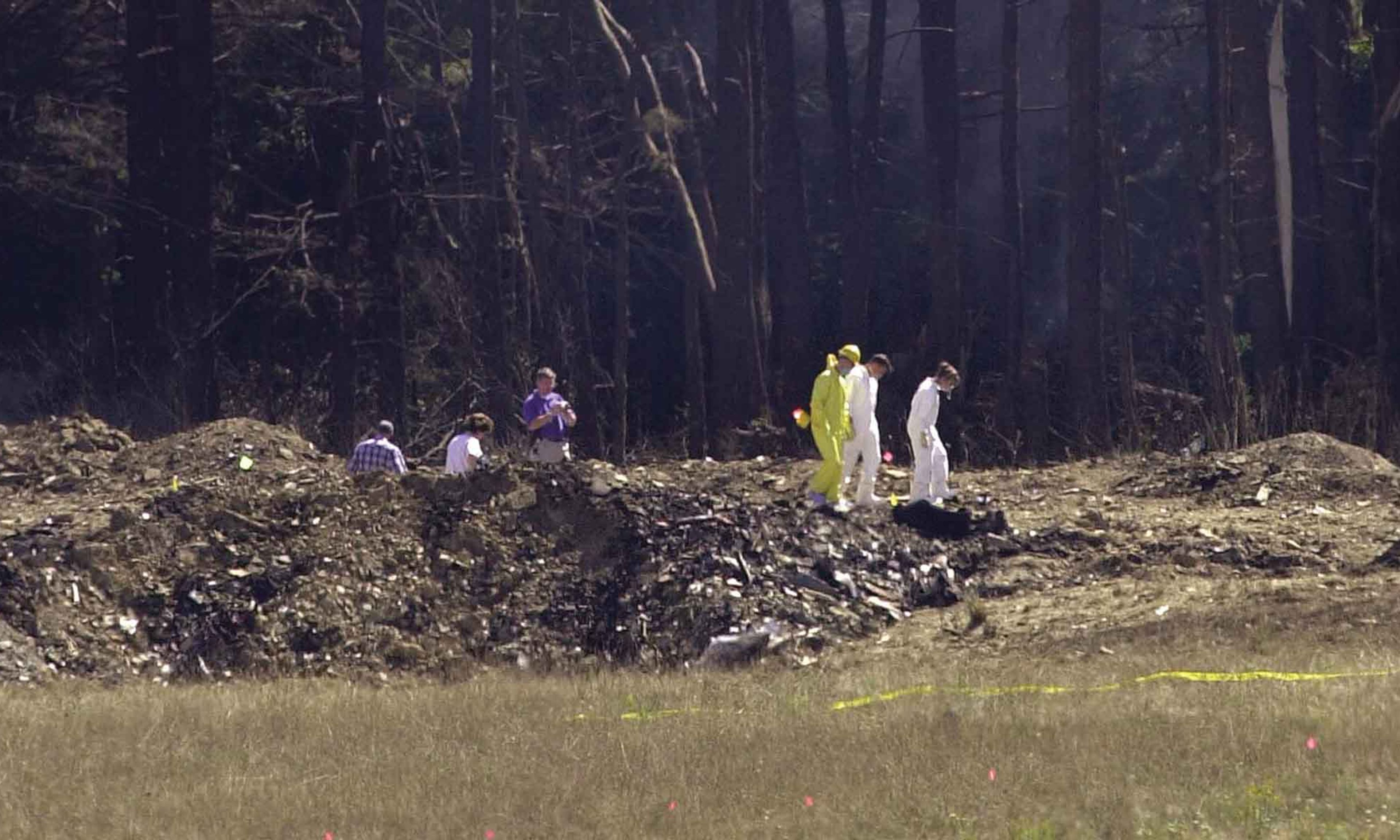
Much of that journal’s case for Trump consisted of arguments against other people and organizations — above all, against the network of media, nonprofits, and other entities on the right in which Anton had spent much time. “Conservatism Inc.,” as it is sometimes called, bore the brunt of his ire in “The Flight 93 Election,” the famous pro-Trump essay that, as Publius Decius Mus, he published in the Claremont Review of Books in September 2016. It begins by invoking the heroism of passengers who charged the cockpit of one of the planes hijacked on September 11, to prevent it from striking a government building in Washington, D.C., causing it to crash instead in a field in Pennsylvania, resulting in the deaths of all on board:
2016 is the Flight 93 election: charge the cockpit or you die. You may die anyway. You — or the leader of your party — may make it into the cockpit and not know how to fly or land the plane. There are no guarantees.
Except one: if you don’t try, death is certain. To compound the metaphor: a Hillary Clinton presidency is Russian Roulette with a semi-auto. With Trump, at least you can spin the cylinder and take your chances.
Whereas Frum took a war and made support for it the primary criterion for one’s conservative identity, Anton took an act of terrorism on U.S. soil and appropriated it for a domestic political objective. Despite the offensiveness of doing so, Anton invoked stakes that, in the moment, seemed far clearer and more defensible to a Hillary Clinton–loathing audience than Frum’s distant, post-9/11 line-drawing. As the Republican primary had already ended by the essay’s publication, only Trump (or an act of God) stood between the Oval Office and the figure whom conservatives had spent a quarter century (correctly) loathing.
For Anton, Trump skeptics on the right embodied everything that was wrong with conservatism. His complaints about the decadence of the Beltway apparatus that President Reagan’s success had created but that had now been transformed into an interest unto itself had some merit. “Conservatives spend at least several hundred million dollars a year on think-tanks, magazines, conferences, fellowships, and such, complaining about this, that, the other, and everything,” he lamented. “And yet these same conservatives are, at root, keepers of the status quo.” The main success of Conservatism Inc. was “its own self-preservation.” That many of its grandees resisted Trump so strongly was proof of Trump’s desirability — indeed, his necessity. Trump alone dared to diverge from Beltway consensus on trade, immigration, and foreign policy, meaning that, for all his personal flaws (which Anton granted), “the alleged buffoon is thus more prudent — more practically wise — than all of our wise-and-good who so bitterly oppose him.”
Anton tapped into a real and not entirely off-base conservative sentiment outside the Beltway. But his skillful and powerful rhetoric came down to little more than a Claremontified supercharging of the conventional argument that a general election in the United States is usually a binary choice. Trump-skeptical conservatives were not merely wrong; they were “in the Orwellian sense objectively pro-Hillary.” (A hyperlink on that passage leads to an essay in which George Orwell denounced pacifists during World War II, accusing them of being effectively pro-Nazi.) Or, because they disagreed with Anton, such conservatives didn’t believe what they professed. If conservatism had failed to resist the Left, and Trump was now the sole means of resistance, failing to embrace his candidacy meant that “you’ve implicitly accepted that your supposed political philosophy doesn’t matter and that civilization will carry on just fine under leftist tenets.”
For Anton, the 2016 election was not merely a high-stakes affair; it was “a test — in my view, the final test — of whether there is any virtù left in what used to be the core of the American nation.” It was a last chance for America to save itself from further leftist aggression, to arrest, among other outrages, “the ceaseless importation of Third World foreigners with no tradition of, taste for, or experience in liberty.” However righteous the anti-Hillary cause or however deserving some of his targets, Anton’s penchant for overgeneralization and apocalypticism led him astray, into his own kind of score-settling and vengeance-seeking. In his despair, he came to believe not merely that conservatives had not done enough but that they had accomplished nothing and that America was only one election away from extinction. His account lacked “empirical evidence,” “sympathy for contemporary America, and reasons it might be worth defending, and charity for ‘Blue America,’” Continetti (a target of Anton’s essay) argued in The Right. Anton even ruminated on the possibility of Caesarism or revolution in the event of a Trump loss.
It is instructive to observe what became of these two Bush White House staffers after the publication of their works. Frum began a long drift away from the Right. He had discredited his preferred kind of conservatism by so thoroughly associating it with the fortunes of the Iraq War. When Hillary Clinton lost, Anton ended his long tenure at Styleforum and entered the Trump White House as a deputy assistant to the president on the National Security Council, where he stayed for a little more than a year. On leaving his post, he received positions at the Claremont Institute and Hillsdale College.
Neither man has fully abandoned the cause to which he devoted his most heated rhetoric. Frum, though eventually admitting that he succumbed to groupthink in his support for the Iraq War, remains an enthusiast for American power. In a reflection on the 20th anniversary of the war, he defended a hypothetical of how things might have been worse without an invasion, lamenting also that the war had left “the U.S. too shell-shocked to act decisively against other aggressors elsewhere — and to inspire in potential aggressors a new confidence that America was too divided and weak to stop them.”
He also argued that Russia’s ongoing war on Ukraine provides an opportunity for the West to restore the self-confidence Iraq helped it lose. For Frum, “the invasion of Ukraine has recalled the peoples of the Western democracies to themselves.” But his linking of the two causes (Frum’s broad language notwithstanding, the essay’s focus is Iraq) is unfortunate. For Iraq skeptics of the sort Frum once vilified, his support alone — and if not his, that of the other foreign-policy and establishment elites who have rallied to Ukraine’s defense as they once did to the invasion of Iraq — nearly suffices, in their minds, to discredit this cause as well, making them see it as primarily a way to rehabilitate, or even replicate, earlier elite failures.
A different kind of groupthink backgrounds the basic question of Ukraine’s sovereignty and the U.S. interest in supporting it, foregrounding complaints about international elite corruption, global liberal hegemony, and the D.C. foreign-policy “blob.” But the important debate about American interest in Ukraine’s fate, a policy question on which both sides have strengths and weaknesses, would be ill-served by getting bogged down in distracting incidentals. This would impose a corresponding obligation on those of us who support Ukraine’s cause to strive for a foreign policy that, rejecting the folly that misled Frum and others 20 years ago, avoids any comparable fallacy today.
As for Anton: He remains committed to the person of Donald Trump. Before the 2020 election, he warned of a “coming coup” that would attempt to remove from power the man for whom voters, in his analogy, had so bravely stormed the cockpit. When Trump lost, Anton circulated and amplified the various deceptions about supposed electoral fraud that emerged from Trump’s orbit between Election Day 2020 and January 6, 2021. Neither does Trump’s conduct since then seem to have discredited him in Anton’s eyes. Writing for Compact magazine last year, Anton complained in Trump’s behalf about ongoing machinations intended to prevent the former president from being a candidate once again. Trump is attacked not because of his character but because his agenda “is well outside the present regime’s core interests,” Anton claimed. “Anti-Trump hysteria is in the final analysis not about Trump. The regime can’t allow Trump to be president not because of who he is (although that grates), but because of who his followers are.” Anton remains intrigued by the possibility of revolution, saying coyly in a speech last year that conservatives who argued against it were guilty of a “perpetual passivity” and would deny that “it is the office of prudent men to discern when things are bad enough that action is justified, or even obligatory, and to devise a plan propitious of success.”
Missing from his analysis is any attempt to distinguish Trump’s agenda or voters from the man himself (to say nothing of the prudence of contemplating revolution while there is still much good in America to defend). That omission amounts to the endorsement of a package deal in which all of Trump’s faults and grievances are inseparable from progress on the important issues he brought to or revived in the conservative mainstream. That assumption entails a failure to acknowledge that Trump is now an obstacle to the achievement of that progress. The future of conservatism — even (especially) a conservatism influenced by Trump’s presidency — now depends on rejecting Trump.
The rhetorical excesses of David Frum and Michael Anton serve as a lesson to avoid abuse of martial rhetoric for political purposes. That both men used it to achieve their political ends speaks to the post-Reagan aimlessness still afflicting conservatism. The Right continues to cast about for an animating spirit, having sought it first in Iraq and then in Trump, and often settled merely for friend–enemy distinctions and bitter back-and-forths over sinecures in the Beltway and elsewhere. Conservatives would do well to take instead America itself — its founding documents, its people, and its character — as their fundamental cause, not any transitory development or figure. Otherwise, we might expect our aimlessness to continue, along with further acrimony, even as the Iraq War continues to recede into memory.











Comments