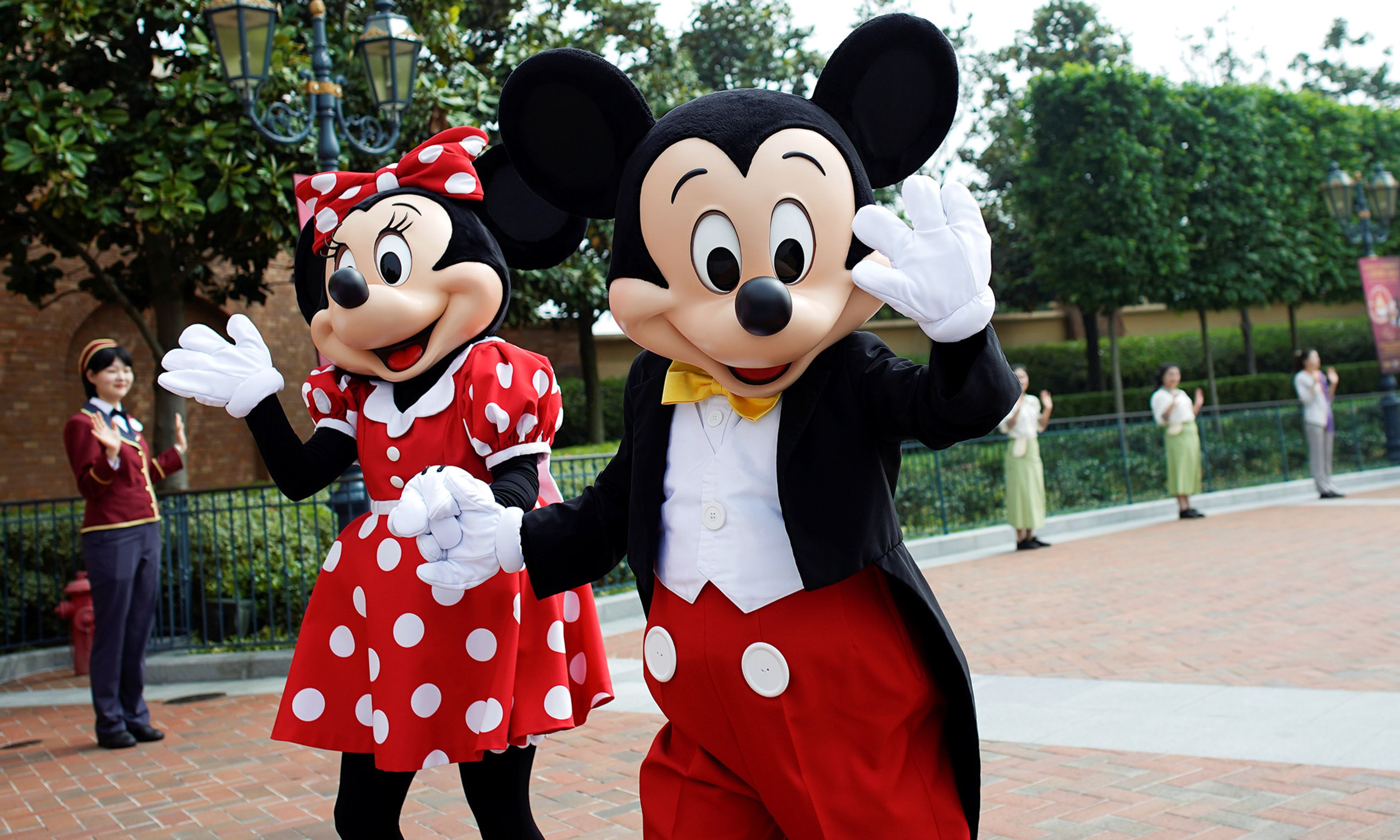
Blame Disney for identity politics. They invented it with Snow White. The dwarves had names that expressed their essential identity: If one was known for being churlish, he was named “Grumpy.” If one was seized by constant, convulsive exhalations, he was “Sneezy.” There wasn’t much intersectionality — no dwarf ever said, “As a sneezing, sleepy member of the dopey community, I am offended” — but the idea that one had a characteristic that explained one’s entire existence is right there in that cartoon.
Kidding. Sort of. But people are projecting all sorts of things onto Disney these days, and I can tell you this: It was a grave disappointment to the pornography consumers of Fargo, N.D., in the Seventies. Yes, I’ll explain.
When I was growing up in Fargo, there were three flavors of Disney. There was the Wonderful World Of, which we watched at my grandparents’ farm on our Sunday visit. Grandpa popped for a color TV before anyone else, and after the meal we would watch Tinker Bell splash color over the castle. Then we’d settle in for an earnest nature doc that praised the industrious beaver. Maybe a live-action show, like The Scarecrow, which would give you damp-sheet nightmares for a week. There was always Uncle Walt, happy and glad to see us, telling us what wonders he was about to show. He wore a suit and a tie, and we trusted him — he was like a mayor and a school principal and a banker all combined into one fine fellow.
The second flavor of Disney: those movies that weren’t cartoons. They might have had Dean Jones explaining to Kurt Russell why the Computer Cat That Wore Sneakers was heading to the moon because it ate Flubber. Or perhaps a self-aware German compact automobile that solved crimes. These never felt like true Disney, though. Disney was Donald, expectorating his displeasure. Disney was Mickey, gee-whizzing his way through a pickle.
That was the third flavor, the true meaning of Disney: animation.
The Disney movies played at the Towne in Fargo, but the theater was demolished in 1973. After that, the Broadway Theater played Disney re-releases. Here’s the problem: The Broadway was an “adult” movie house. You know: I Am Curious Puce. Confessions of a Maltese Stewardess. Once or twice a year they’d play a Disney movie, as if they were doing penance, as if showing some old animated movie scoured clean the karmic accumulation from the screen. The problem: The raincoat audience never really checked the bill. So you’d have an audience of grody winos scattered around the dark room, staring with disbelief at Disney’s vision of abstract animation set to classical music.
Things got better for the dissipated onanists during the Beethoven’s Sixth sequence. Here we had topless centaurettes who wore only a floral arrangement for a bra. And here come the lusty centaurs! This had promise! But if you know the plot of the Sixth, rain interrupts the bacchanalia and the orgy’s canceled. The next sequence contained coquettish hippos in flimsy tutus — this was decades before “body positivity,” so we were not expected to applaud the creatures for being Brave and Stunning. The movie ended with Schubert’s “Ave Maria,” a sequence of intense religiosity that culminated in a fusion of nature and the Gothic tracery of a church. In short, Danish Nurses it was not.
No, it was Disney: a brand that stood for absolutely wholesome entertainment and peerless animation. No one at the time thought, “We are amused by that daffy inventor Gyro Gearloose, but something about his placement outside the dichotomy of Scrooge’s straitlaced capitalistic convictions suggests that the character is coded bisexual.” Such things were not part of the conversation.
Well, that’s changed! And so, it seems, has the image of Disney. I should note that I had the usual period of Disney immersion when my daughter was young. All the DVDs, the plush toys, the pilgrimages to the Happiest Place on Earth. I enjoyed the trips to Disney World on several levels. One, to see how it delighted my child. Two, to study the workings of a city-state devoted to wealth extraction and maximizing innocent pleasures. Three, to marvel at the complex worlds the company created, from jungles to Tomorrowland to the marvelous re-creation of pre-war Los Angeles. Four, to see how the company leveraged its innumerable intellectual properties with deft precision. I became one of those Disney nerds who loved Epcot above all, and wondered often how pleased Walt would have been.
Now the company just seems weird.
This, of course, is an overreaction. Just because the Disney creative types get on a Zoom call and fixate on the flesh tones and genital preferences of the characters — well, it doesn’t mean everything we loved about Disney has changed. Just because the company wades into the politics of an education bill because the media say the legislation would require conversion therapy for the candelabra character in Beauty and the Beast doesn’t change all of Disney’s contributions to American culture. In the end it’s still the statue of Walt holding the hand of Mickey in front of the castle, a perfect picture of 20th-century American culture.
Isn’t it? Sure.
But it still feels as if something was spoiled for absolutely no good reason. Somewhere in the company, someone’s writing a script for Whoopi Goldberg to read to preface Fantasia, reminding us that the heteronormative pairing of the mythical half-horse people was a reflection of the times, and that Beethoven lived in an era of slavery, and that the hippo sequence was fat-shaming. All true. But you suspect people will enjoy it anyway.











Comments