
• At least Britain’s leadership is getting younger.
• Expecting a huge increase in the number of illegal migrants, the Biden administration is dispatching 1,500 troops to assist. They won’t be enforcing the law or patrolling the border so much as assisting in the administrative work of processing these illegal migrants into the country under the administration’s program of “alternatives to detention.” Democrats’ inability to enforce the plain legal distinctions between citizens and those who lack authorization to enter or reside in the United States is an inducement to illegal immigration, and consequently a boon to the human-smugglers and drug-runners who take advantage of them. Even the mayors of sanctuary cities are yelping about the costs and chaos of housing those who have no legal right to be here. Biden is now making the military and the Border Patrol into a legitimating authority that puts official-looking but often meaningless paperwork over what is fundamentally a criminal enterprise.
• Four members of the Proud Boys, including leader Enrique Tarrio, were convicted in federal court in D.C. of seditious conspiracy for their role in the January 6 riot at the Capitol. The Department of Justice took a risk in bringing this rarely used charge, but it stuck, at least with an unsympathetic D.C. jury. To secure that result, the DOJ had to adopt a theory at odds with that of the congressional January 6 committee. Where the committee painted January 6 as a conspiracy orchestrated by Donald Trump, federal prosecutors have consistently argued that the rioters acted on their own initiative — a stance intended to counter the defendants’ arguments that it cannot be sedition to act at the call of the head of state, but one that would make it harder to charge Trump himself. The truth lies somewhere in between: Trump cannot reasonably be held legally responsible for directing the riot but should be held morally and politically responsible for setting the conditions for it.
• The Hunter Biden laptop story, broken right before the 2020 election by the New York Post, has since panned out in its entirety and yet was suppressed at the time by almost all other print, television, and even social-media outlets. A key step in the campaign to censor was a letter written by former deputy CIA director Mike Morell, who denounced the story as having “all the hallmarks of Russian disinformation” and gathered 51 fellow intelligence professionals to sign alongside him. Morell was an agency lifer — twice acting director of central intelligence, never a political appointee, a career analyst since before the Reagan era — so his false claim was taken as credible. We have now learned from the Washington Examiner not only that Morell was moved to write by an indirect appeal from Antony Blinken (then a Biden campaign adviser, now secretary of state) but that he pitched his fellow signatories by claiming that he had cleared the letter’s language with the CIA (he had not) and even spoke of the need to give Biden “a talking point to use in response” to an attack that turned out to be entirely justified. It may be time to send the intelligence community to the repair shop, too.
• Journalist E. Jean Carroll filed a civil case against Donald Trump, claiming that he had raped her in the mid 1990s and then defamed her when she came forward with this allegation during his presidency. (He dismissed her case as “a complete con job” and “a Hoax and a lie” — the basis of the defamation claim — while not neglecting to insult her physical appearance.) The suit flew under the media’s radar for a long time, but ears perked up when, during Trump’s recorded testimony, he was asked whether he believed that celebrities actually could, as he once infamously claimed, grab women “by the p***y.” Trump answered: “Historically that’s true with stars. If you look over the last million years, that’s largely true, unfortunately — or fortunately.” A Manhattan jury found the former president liable for battery and defamation but did not find that Trump raped Carroll (the least corroborated of her accusations). The jury awarded Carroll $5 million in damages. No doubt you can find Trump supporters who will insist that Carroll is a liar, the judge was biased, the system is rigged: all the usual excuses. Most voters will, rightly, reach different conclusions.
• Nikki Haley, the former South Carolina governor and 2024 GOP presidential candidate, delivered a speech on abortion. “I do believe there is a federal role on abortion,” she said. “Whether we can save more lives nationally depends entirely on doing what no one has done to date: finding consensus.” While pro-life groups have been pushing for a 15-week federal limit on abortion, Haley’s speech didn’t get into specifics. Congressional Republicans almost unanimously supported a 20-week ban, as did three Senate Democrats, before Dobbs, but many have now questioned the prudence of any federal abortion limit at all. What’s clear is that so long as the Senate filibuster remains intact, the prospects for enacting a federal limit on abortion are dim, and the action will remain in the states. In May, a supermajority of the North Carolina legislature was poised to enact a twelve-week limit on abortion over the Democratic governor’s veto. In South Carolina, meanwhile, the legislature deadlocked: The senate passed a six-week limit, the house a protection for life throughout pregnancy. Whether the issue is federal or state abortion legislation, Haley is right: Finding consensus is key to saving any lives at all.
• So quickly are the flimsy left-wing attacks on the justices, and especially on Justice Clarence Thomas, coming that one barely has time to see through one before the next arrives. In the first of our cover articles, Dan McLaughlin notes what the critics have established: Thomas made a routine error on a disclosure form of the type liberal justices have also made; a billionaire friend, Harlan Crow, conspired with the justice to . . . provide an education to a grandnephew of Thomas’s. There’s nothing in the record about any wrongdoing performed by the justice or even performed by others for him with his knowledge. Charles C. W. Cooke’s essay explains why the hits keep coming nonetheless: The Left is furious about losing the federal courts as an agent of its agenda and is doing what little it can in response: namely, trying to build support for Court-packing. No formal ruling needs to be made for the justice, and the rest of us, to hold this campaign in contempt.
• In testimony before Congress, Randi Weingarten, president of the American Federation of Teachers (AFT), tried to rewrite her part in the pandemic. “We spent every day from February on trying to get schools open,” she said. “We know that remote education was not a substitute for opening schools.” To put it mildly, this is not true. In the fall of 2020, Weingarten called attempts to reopen schools “reckless, callous, cruel.” Every few days during the spring and summer of 2020, Weingarten gave new reasons why schools had to remain closed. Affiliated unions said even more bizarre things (such as the Chicago Teachers Union’s claim in December 2020 that the push to reopen schools was “rooted in sexism, racism, and misogyny”). The AFT aggressively lobbied the Centers for Disease Control and Prevention and even suggested language for the agency’s influential school-reopening guidance, language that made it easier to seriously delay or halt reopenings. At the end of the Covid-19 pandemic, America was a notable global outlier in shutting down schools and masking children, and consequently in the severity of its learning-loss statistics. Weingarten’s lobbying is a major reason why, and it should never be forgotten.
• The Federal Reserve raised the federal funds rate by 25 basis points and signaled that it would likely be the last hike for at least a little while. Don’t expect the rate to decrease anytime soon. If there’s one thing the Fed believes to the core of its being, it’s “Don’t be Arthur Burns.” Burns was the Fed chairman when inflation got out of control in the 1970s, and he haunts the minds of central bankers around the world as the example to avoid at all costs. Inflation has slowed but still remains well above its 2 percent target. The Fed is unlikely to let up until it’s back there, especially with the labor market’s continued strength — and it shouldn’t.
• After the fracking revolution, and with Russia’s war in Ukraine squeezing global energy markets, the U.S. natural-gas industry should be poised to capitalize. It has done so to the extent possible but been constrained by a lack of pipeline infrastructure. Federal pipeline approvals have cratered under the Biden administration. By this point during the Trump administration, the Federal Energy Regulatory Commission had approved 73 projects that added up to 3,384 miles of pipeline. Biden’s FERC has approved only 17 projects, totaling 368 miles. The average wait time for a permit to be approved has increased by 14 percent, to 517 days. Department of Energy statistics show that 2022 was the worst year on record for interstate pipeline construction. Permitting for such projects is vital to the American economy, and Congress must prioritize reforms. In multiple respects, there is not enough energy in this executive.
• The scores on the history and civics portions of the National Assessment of Educational Progress, a standardized test known as the “Nation’s Report Card,” brought unwelcome but unsurprising news: In 2022, history scores for eighth graders fell to the lowest point since the test was first administered in 1998, following a trend of steady decline. Civics scores, which have been consistently mediocre over the years, dropped for the first time, also falling to 1990s levels. Scores on the math and reading portions, released earlier, showed sharp declines too. Education Secretary Miguel Cardona said the history and civics results reflect “the profound impact the pandemic had on student learning.” (Saying “pandemic” is a way to avoid saying “school-closure policies.”) But Cardona went beyond that to take an unsubtle swipe at Republicans: “Now is not the time for politicians to try to extract double-digit cuts to education funding, nor is it the time to limit what students learn in U.S. history and civics classes.” He also came out against what he called “banning history books and censoring educators.” In casting unconvincing blame on his opponents for a serious national problem, Cardona is providing his own civics lesson, if not an edifying one.
• “Our Epidemic of Loneliness and Isolation,” the title of an advisory issued by Surgeon General Vivek Murthy in early May, tells half the story, establishing that a social and psychological misfortune is widespread and calls for medical attention. Besides its association with an increased risk of various diseases and premature death, loneliness is a malady in itself. Murthy in the 81-page report dispenses commonsense advice for lonely individuals and institutions seeking to help them. He stresses the value of friendships and other extrafamilial social connections. Elsewhere he has written of his struggle with the “pain and shame of loneliness” and credited family members with pulling him out of it. Those who have known mostly weak or conflictual family ties may have an adverse reaction to the medicine that cured him, so spare them any lectures about the importance of what they lack, but policy-makers should consider the long term. Just as the decline of family formation has occurred gradually, over generations, so would, in all likelihood, the reversal of that trend. Murthy offers a humane and sympathetic response to those who suffer loneliness now. A successor shouldn’t have to write the same report in 2073.
• Florida governor Ron DeSantis (R.) has just presided over the most productive legislative session in the recent history of the state. (We discuss a couple of its achievements below.) If — almost certainly when — DeSantis declares his presidential candidacy, he will have a substantial record of accomplishments on which to run. Which makes it odd that he has allowed himself to get stuck in an attritional fight with the Walt Disney Company that, by all accounts, he had already won. Not only did the bill that Disney had criticized, Florida’s Parental Rights in Education Act, pass easily over its objections, it turned out to be extremely popular among Floridians of all parties. By refusing to take the win — and, in particular, by moving to punish Disney for its dissent by repealing its special district — DeSantis has guaranteed that he will be trapped in a quagmire of legal challenges at the precise moment when he should be focusing on other things. As a presidential candidate, DeSantis’s strongest message will be that he is calm, disciplined, and always thinking three steps ahead. By overreaching against Disney, he has handed his opponents a legitimate opening to undermine that case.
• One of those legislative achievements concerned the 2018 Supreme Court decision Janus v. AFSCME, which clarified public-sector workers’ constitutional rights with respect to unionization. Many states have failed to update their laws in response, but Florida has passed a new law that ends the automatic deduction of dues from public-sector employees’ paychecks, requiring instead that employees give their consent by signing a form. This is a straightforward way to implement the Supreme Court’s ruling that public-sector workers must “affirmatively consent to pay.” The Florida law also says unions must allow workers to leave whenever they want. This seemingly simple provision is important because unions elsewhere have tried to limit workers’ ability to leave by restricting it to “window periods,” sometimes as little as ten days per year. Public-sector unions in Florida will now be required to submit audited financial statements that will be made publicly available every year so that members and taxpayers can see how unions are spending their funds. Unions and blue states have in many respects ignored the Janus decision, and several cases are now pending before courts about workers’ pay being taken without consent. Florida’s bill is based on transparency, the rule of law, and common sense. A similar bill is being considered in Oklahoma. Every state with public-sector unions that has yet to adopt these reforms should do so.
• Another new Florida law bans “sex reassignment” drugs and surgeries for gender-confused minors. In addition, the bill prevents the use of public money for such procedures for adults and makes it easier for patients who have received so-called gender-affirming treatment to sue for malpractice. Similar bills have been signed into law in more than a dozen states, including Oklahoma, Montana, and Arkansas. DeSantis rebuked a reporter for his use of euphemism in referring to the issue: “They’ll say it’s health care to cut off the private parts of a 14- or 15-year-old. That is not health care. That is mutilation, and we’re standing up against that.”
• To complete the litany: In the space of just three months, Florida’s legislature and governor have created the largest school-choice program in American history, banned abortion after six weeks of pregnancy, made Florida the 26th constitutional-carry state in the nation, cut taxes by $2 billion, barred DEI (“diversity, equity, and inclusion”) initiatives in universities, tightened requirements for employers to verify the legal status of employees, achieved a previously unthinkable collection of tort reforms, declared driver’s licenses issued to out-of-state illegal immigrants invalid in Florida, required state and local governments to consider only pecuniary factors in their contracting and investing decisions, extended last year’s Parental Rights in Education law through twelfth grade, made it illegal for financial institutions to discriminate on the basis of “religious, political, or social beliefs,” and prevented credit-card companies from tracking their customers’ gun purchases. Tired of all the winning?
• In early May, there was yet another mass shooting in the United States — this one in Allen, Texas, a suburb of Dallas. Eight innocent people were killed, including three children. The shooter used an AR-15. As is typical, the attack prompted yet another round of calls for “something” to be done, along with the usual insistence that the nature of that “something” should be obvious to all involved. Unfortunately, it is not. Crime is easiest to prevent or to limit when its location, timing, and perpetrators are all predictable. Mass shootings, by their nature, sit outside of this paradigm. There are hundreds of millions of privately owned firearms in the United States. Working out who intends to use them for ill — as well as where and when they intend to do it — is next to impossible. Gun control is equally fruitless as a response. Restrictions on concealed carriers do nothing but make it more difficult for the law-abiding to defend themselves, while limits on firearms by type — if such things are even possible in a country with this many guns — merely invite the substitution of one sort of weapon for another. As for that oft-cited panacea “universal background checks,” statistics show that almost every mass shooter in American history bought his guns legally. America has a problem in this area. Of that there can be no doubt. What to do about it, by contrast, remains a mystery.
• Jordan Neely’s life began to fall apart in 2007 when his stepfather murdered his mother. His pastime — it was scarcely a living — was performing as a Michael Jackson–costumed busker. But he could also be erratic and violent, and over time became more so, compiling a rap sheet that included punching two random sexagenarians in the face. His record was unknown to his fellow riders on New York City’s F train on May 1. What they saw was a screaming, raging man. One of them, Long Island Marine veteran Daniel Penny, put him in a minutes-long choke hold that killed him: The death was ruled a homicide. The court of racial justice has already convicted Penny of murder (he is white, Neely was black; another man who helped Penny restrain Neely is also black). Actual courts may decide whether Penny’s use of force was excessive (as of this writing he has not been charged with any crime). The bureaucracy, the political class, and the voters must give the Neelys of their city the care they need. The law should allow for the involuntary confinement and treatment of those who pose a danger to themselves or to others. The alternative is more injuries and more killings of the mad and of ordinary passersby.
• Buckling under the weight of persistent attacks from environmentalist groups, Democratic lawmakers and Governor Kathy Hochul have negotiated a budget for New York State that will prohibit the installation of natural-gas appliances in most new residential buildings. Having conspicuously de-emphasized the dubious (but “science”-sanctioned) claim that gas stoves are responsible for an astonishing number of asthma cases — which had fueled the gas-stove debate earlier this year — the governor and legislators took shelter in vague notions of planetary stewardship and climate emergency. “This is where our nation has to go eventually,” said the clairvoyant governor about the new law: She’s just helpfully forcing her state to get on with it. A similar law, passed in Berkeley, Calif., was successfully challenged in court by California’s restaurateurs. This is not the first time we have moved from “nobody wants to ban this” to “this is now banned,” but progressives may have just set a speed record.
• Since opening its doors in 1960, St. Francis Hospital in Oklahoma has kept a sanctuary candle burning by the tabernacle in its chapel, in accordance with its Catholic faith. Earlier this year, the Centers for Medicare and Medicaid Services threatened to revoke the hospital’s accreditation, effectively shuttering it, unless it extinguished the flame. The candle, encased in glass and brass and mounted high on the wall behind the altar, was supposedly an intolerable safety hazard. St. Francis refused to comply, and the Biden administration refused to yield. Enter the Becket Fund for Religious Liberty, which took up the case and reminded the feds of the First Amendment and the relevant statutes (not to mention common sense). Under threat of a lawsuit, the government stood down. One hopes that any future attempts to burden religious exercise so needlessly will likewise be snuffed out.
• Robert F. Kennedy Jr., candidate for the Democratic presidential nomination, accused Volodymyr Zelensky of provoking Russia to invade his country. Zelensky himself, Kennedy added, was encouraged to do so by “NeoCons in the Biden White House” and “fascist elements” in Ukraine. Add it to the list of Kennedy howlers. He has supported Bashar al-Assad’s Syrian regime. He believes that the CIA helped kill his uncle, and that a second gunman helped kill his father. He was a vaccine skeptic long before Covid made it fashionable. Although he is an environmentalist, opposed to fracking and natural-gas pipelines, he touts cryptocurrencies, which consume more electricity than small countries. He has no chance of toppling President Biden under his own power, and there is no way the party would allow him to be the nominee should Biden’s health take an obvious turn for the worse, yet he can be the repository of the angrily unhappy. It’s a long way from PT 109.
• Two drone attacks on the senate building within the Kremlin unleashed a flurry of verbal attacks. Russia accused Ukraine of launching the drones; Ukraine accused Russia of flying a false flag (Putin is thought to have done so in the past, using alleged terrorist attacks to cement his rule). In Ukraine, actual Russian missiles continued to target actual Ukrainian cities and towns. The defenders used a Patriot missile to take out an incoming hypersonic missile aimed at Kyiv. Away from the battlefield, Secretary of State Antony Blinken said “there’s nothing wrong” with China’s playing a peacemaker role. Can China persuade its Russian client to cut its losses? Is that worth enhancing China’s diplomatic image? Meanwhile, Speaker Kevin McCarthy, in Jerusalem to address the Knesset, told a Russian reporter, “I do not support what your country has done to Ukraine; I do not support your killing of the children either, and we will continue to support [Ukraine] because the rest of the world sees it just as it is.” The GOP’s Russian caucus must have taken McCarthy’s answer amiss. Good.
• In 2017, the Russian government banned the Jehovah’s Witnesses. And yet some of them persist in trying to practice their religion. In April, three of them were sentenced to seven years in prison each. (The formal charge, the fig-leaf charge: “organizing and financing an extremist group.”) The three prisoners are Sergei Korolyov, Rinat Kiramov, and Sergei Kosyanenko. May they survive their imprisonment. And may freedom of religion someday come to Russia, along with freedom of speech, freedom of association, and the other essentials.
• In 2016 legal suicide was introduced into Canada, and now that country has one of the most destructively persuasive euthanasia regimes in the world. Of all deaths in Canada, 3.3 percent are now caused by doctors who practice “medical assistance in dying.” The public appears all too enthusiastic. According to polls by Research Co., over a quarter of Canadians believe that their fellow citizens should have access to legal euthanasia because of poverty. Twenty-eight percent believe that an acceptable reason to request a medically assessed death is homelessness. The numbers rise to 43 percent for mental illness, 50 percent for disability, and 51 percent for inability to receive treatment. Progressive societies used to pride themselves on social services and welfare. Should it not trouble the relatively wealthy Canadian nation and its government that state services are now seen as so inadequate that a publicly accepted alternative is death itself? It deeply troubles us, their friends and neighbors.
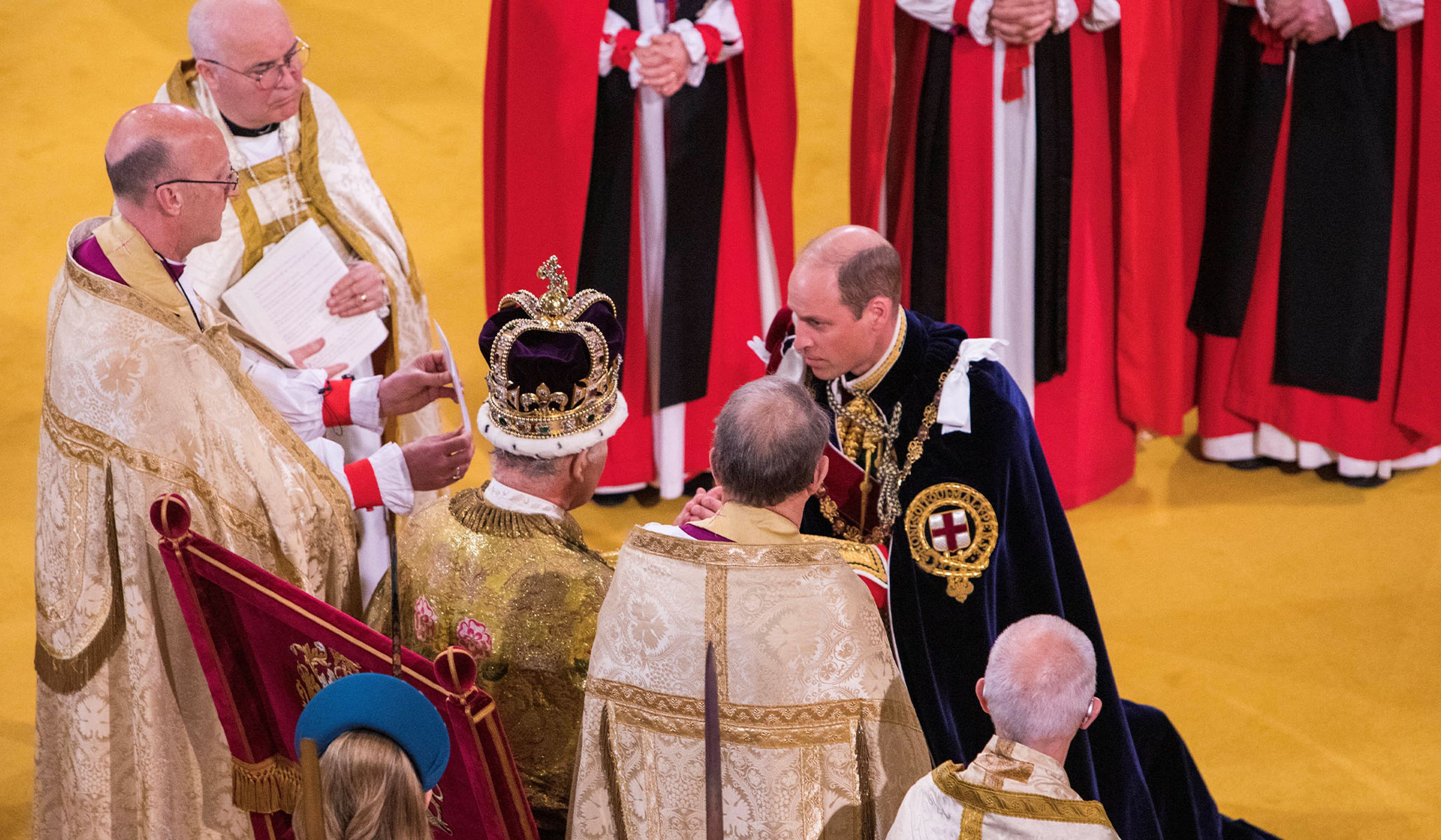
• Charles III, who succeeded his mother Elizabeth II upon her death last September, was crowned in London. He is reckoned the 62nd monarch of England and Britain, going back to the Saxon Egbert (d. 839). His predecessors include some weaklings, some monsters, and some brilliant men and women. Over the centuries they shared power with, and then ceded it to, first the nobility and then ordinary Britons. The acquiescence of most of them in this process helped ensure that Britain became an early, somewhat eccentric, model of self-rule. Today’s incumbents embody some of the kinks in this history: Charles was messily unfaithful to his first wife, Princess Diana; his youngest son, Harry, is a bumptious dolt. The moment of the coronation that was hidden from TV cameras symbolized the monarchy’s pre-modern mystery: Behind a screen, Charles was anointed with oil consecrated at the Church of the Holy Sepulchre in Jerusalem. Every nation needs a mythic anchor. Ours is our revolutionary self-founding. Britain’s is its longer, slower maturation. Floreat.













King Charles III and Queen Camilla wave from the balcony of Buckingham Palace following their Coronation in London, May 6, 2023.
Graeme Robertson/Pool via Reuters
• Austin Killips, a 27-year-old man, was awarded first place in women’s cycling at the Tour of the Gila in New Mexico. Killips first took up cycling four years ago, before taking cross-sex hormones. Michael Engleman, the race director of the Tour of the Gila, warned the cycling governing bodies that the decision to allow males into women’s cycling could “kill the sport” in that category. He told the Telegraph that the problem was a failure of leadership by the Union Cycliste Internationale (the world governing body for cycling), which had “fallen down on the job” and hoped the issue “would go away.” This is a familiar story — the NCAA exhibited the same cowardice in permitting Lia Thomas to compete in the 2022 women’s swim championships. Much of women’s sports seems bent on deconstructing itself.
• A paper titled “In Defense of Merit in Science” was rejected by several academic journals not because its argument seemed to be false or trivial but because it was, as one publication that declined to print it said, “downright hurtful.” The injurious paper, co-written by 29 scholars, including two Nobel laureates, argues that the sciences shouldn’t pursue goals such as diversity and “decolonization” at the expense of objectivity and rigor. (After all, unless, say, a crew of conquistadors has made landfall in the faculty lounge, talk of “decolonizing” academic inquiry is merely an affront to English.) Pamela Paul, who opined in the New York Times about the controversy around this uncontroversial paper (which ended up published in the recently founded Journal of Controversial Ideas), advises academia not to give an already suspicious public more reason to distrust scholarship and science. But Paul’s advice assumes that modern academics prize the integrity of the evidence-based knowledge-seeking enterprise above fads, careerism, and social acceptance, and for this there seems to be limited empirical evidence.
• Acknowledging the worth of those with Down syndrome, toy giant Mattel has introduced a Barbie doll that shows physical characteristics of the condition. Mattel worked closely with the National Down Syndrome Society to make the new doll. Every element shows consideration and thoughtfulness, from the facial features to the foot orthotics to the butterfly-covered yellow and blue dress to the pink necklace with three upward chevrons. According to Mattel’s executive VP Lisa McKnight, its goal “is to enable all children to see themselves in Barbie, while also encouraging children to play with dolls who do not look like themselves.”
• Harry Belafonte was a star of the 20th century. He was an actor, a singer — and one of the handsomest men in the country. He was also a lifelong political activist. He performed good — as when he campaigned for civil rights in America; as when he promoted educational efforts in Africa. Unfortunately, he was a friend and champion of Fidel Castro. He bought and amplified just about every lie of that revolution and dictatorship. Later, when meeting Hugo Chávez in Venezuela, he called President George W. Bush “the greatest tyrant in the world, the greatest terrorist in the world.” Some of the songs he sang were very ugly indeed. He has died at 96. R.I.P.
• Gerald Norman Springer led a varied life: Holocaust refugee, Cincinnati politico, caring father to a child born without nasal passages. But his fame and his social importance came from his long-running TV talk program, The Jerry Springer Show, a cavalcade of freaks baited by him, his studio audience, and one another. Exhibitionism, infidelity, racial animosity, weirdo perversion, he shopped it all. He debased his medium and exploited his guests, all for transparently cynical motives (his winks and nods to his viewers were part of his shtick). The Springer atmosphere infected other talk shows and then passed, when that format died, to reality TV and thence to those tracts of social media in which everyone is a reality star. Dead at 79. R.I.P.
• “You have to be — not a college professor to play baseball, but it takes a lot of thinking,” Vida Blue said to Dick Cavett the day after pitching a complete game in August of his annus mirabilis, 1971. Only four years removed from high-school ball in Louisiana, he led the American League in ERA (1.82), won 24 games for the Oakland Athletics, and won the MVP and Cy Young awards for himself. If you said that his strong left arm made him one of the hardest-throwing pitchers in baseball history, he would remind you that his brain contributed too. His effort on the mound was “40 percent mental,” he estimated. An ace of the A’s dynasty of the 1970s, he helped pitch them to three consecutive World Series titles and appeared on the roster of six All-Star teams. He sparred often with A’s owner Charlie Finley, who traded him to the San Francisco Giants in 1978. Most of Blue’s career ended up divided between the two sides of the bay. “A franchise legend and a friend,” the A’s front office calls him in a statement on the occasion of his death at 73. R.I.P.
• Fred Siegel was a professor at Cooper Union, a contributing editor of City Journal, and a New Yorker through and through. The late-century malaise that settled over the city, a compound of economic change and uncontrolled disorder, dismayed him. He resolved to help reverse it, advising Rudy Giuliani in his first successful mayoral campaign, chronicling his successes, and noting his shortfalls. (Giuliani resolved to tackle the city’s budget problems after tackling its crime problem, which, Siegel remarked, was like proposing to jump across a chasm in two leaps.) In his last book, Revolt against the Masses, he chronicled liberalism’s century-long turn against ordinary Americans and their tastes and aspirations. In person Siegel was a rare blend of encyclopedic, amusing, and sweet-natured. Lovers of New York will miss his keen observations and his delightful company. Dead at 78, R.I.P.
The Republicans Hold, for Now
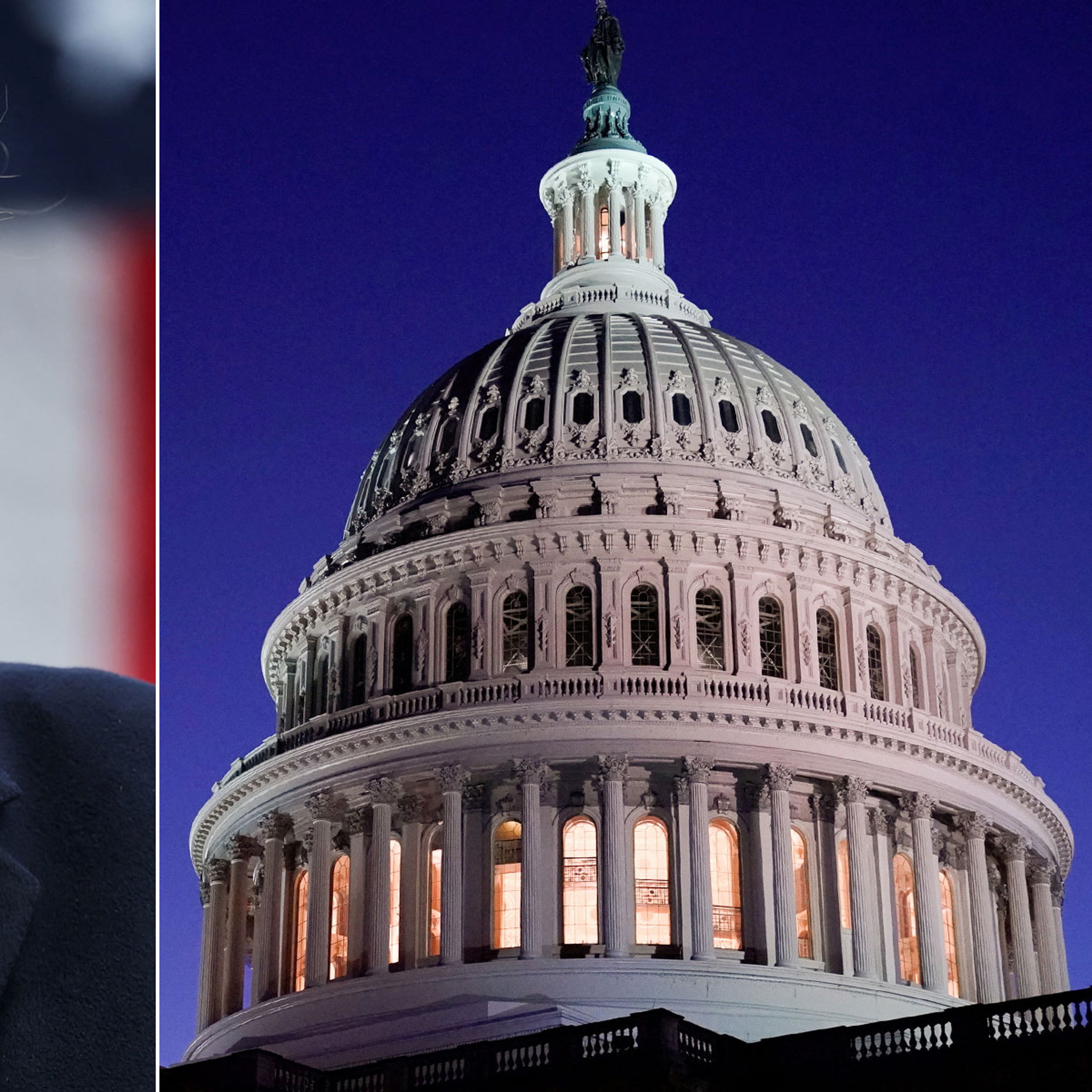
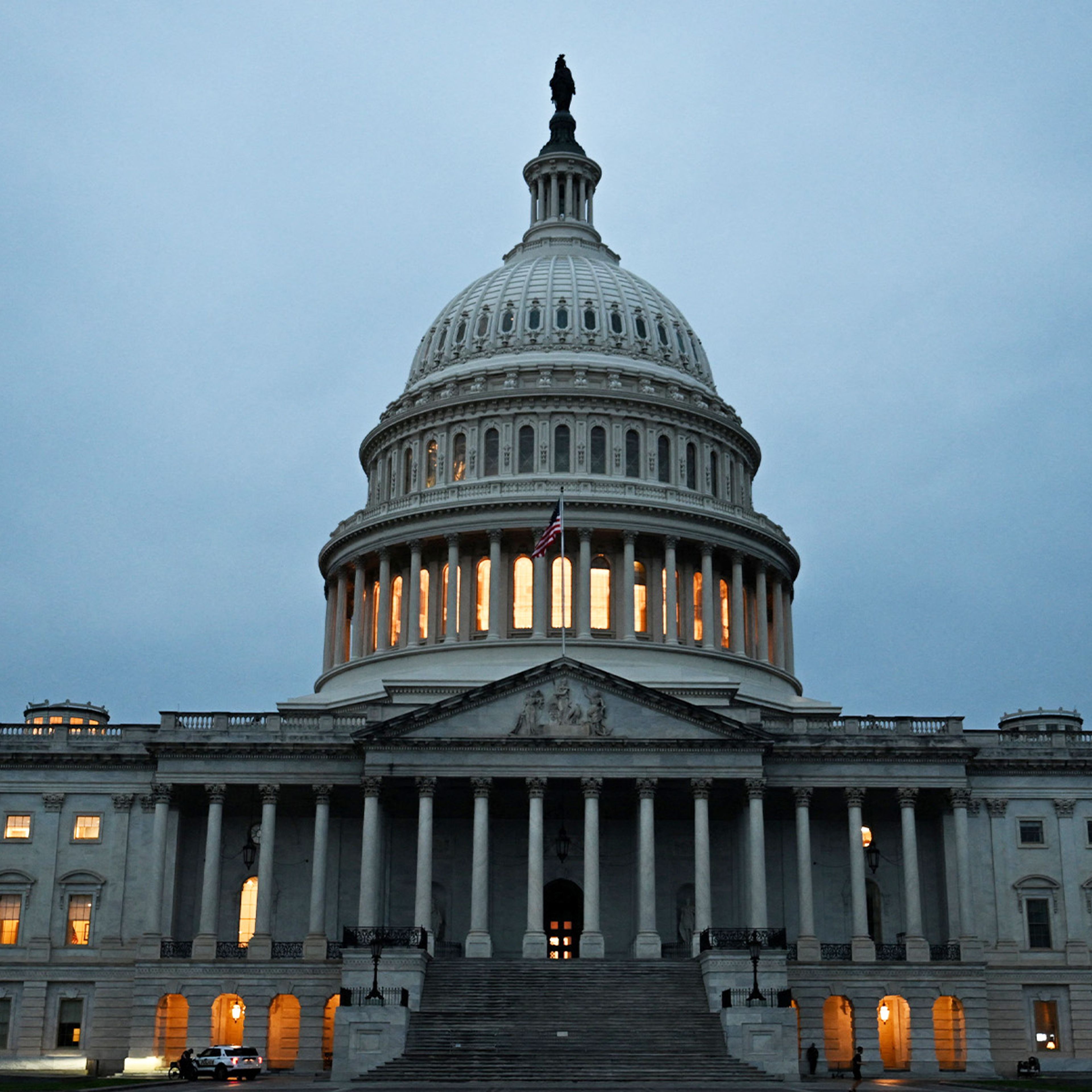
House Speaker Kevin McCarthy put the ball in President Biden’s court on the debt ceiling. After Biden sneered at Republicans to come up with a plan, McCarthy called his bluff, getting one passed through the House with zero votes to spare.
The bill Republicans passed is solid. In exchange for raising the debt ceiling, it caps spending at 2022 levels and includes a number of other reasonable budgetary provisions. It repeals most of the $80 billion windfall the IRS got in the so-called Inflation Reduction Act. It repeals some of the green-energy tax credits Democrats included in that bill to please their environmentalist wing. It also prohibits the already illegal and unconstitutional student-loan “forgiveness” plan.
In what should be a no-brainer now that the pandemic has been officially declared over by both the president and Congress, the bill claws back unspent Covid-relief money. In a more controversial but certainly not extreme provision, the bill imposes work requirements for able-bodied adult Medicaid and SNAP recipients with no dependents.
Because the bill doesn’t satisfy Washington’s wish to increase spending always and forever, it is being denounced as irresponsible. Only in Washington-speak is keeping spending the same considered a cut.
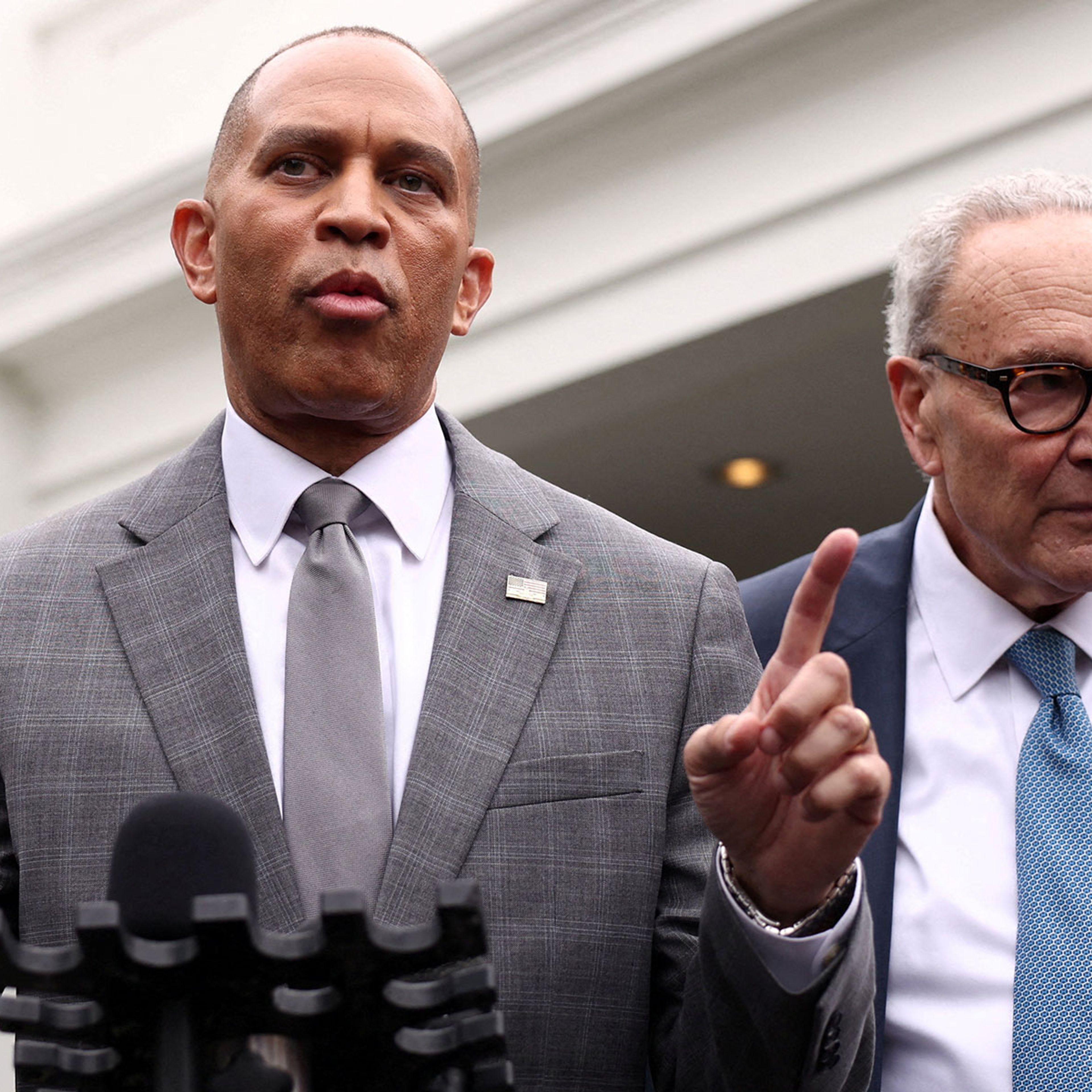
Biden continues to insist that Republicans raise the debt limit without conditions. Republicans won the House in 2022 after the voters decided to end two years of unified Democratic government at the federal level. Biden has no excuse not to work with Republicans. They have put forward a reasonable bill to raise the debt ceiling, and it is in the public interest for Biden to work with McCarthy to reach a deal before the U.S. defaults, likely in early June.
As has become routine with the Biden administration, officials are reportedly entertaining fringe legal theories from internet bloggers to get around a political problem. This time, that means pretending that the 14th Amendment, which says the public debt “shall not be questioned,” makes the debt limit unconstitutional.
The debt limit has been around since 1917 and has been respected by treasury secretaries of both parties. It’s a logical extension of the Constitution’s taxing and spending powers, which are given to Congress, not the executive. There’s no constitutional problem with it.
It has been used by both parties to secure budgetary reforms in the past. In fact, all eight of the largest deficit-reduction laws passed since 1985 have been attached to debt-limit increases. There is no historical or democratic justification for Biden’s refusal to negotiate.
Biden continues to smear Republicans as extremists. The White House has said that the Republican bill would include “draconian cuts to America’s veterans” despite the bill’s including no such thing. The administration’s argument is that the overall spending cap could cause veterans’ benefits to be cut, but Congress would almost certainly cut elsewhere first. Representative Jen Kiggans (Va.), a veteran, led dozens of House Republicans in sending to Secretary of Veterans Affairs Denis McDonough a letter that called the administration’s claim “dishonest and shameless.”
Biden and the Democrats have talked themselves into believing that Republicans are reckless and don’t care about governing. Republicans have passed a conservative bill that Democrats don’t agree with, but it’s far from extreme and was done well ahead of schedule. In divided government, you have to negotiate. McCarthy is doing his job. Will Biden?








Comments