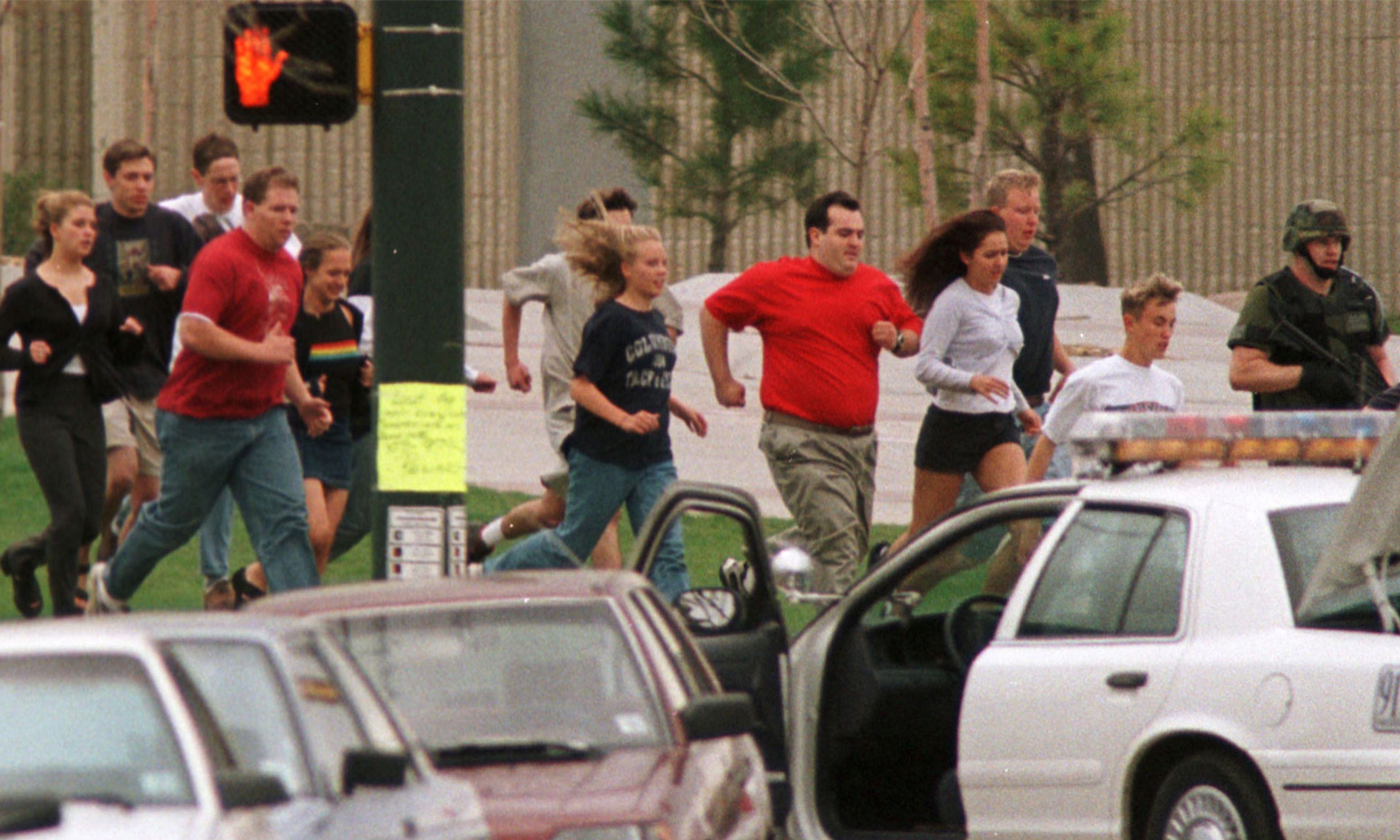
Mass shootings are rare, accounting for a small percentage of all homicide deaths in this country. But they terrorize in a way few other crimes do, attracting copious media coverage and inspiring fear far from where they occur. And they have markedly increased in recent decades.
Every time one of these incidents happens, it reignites the age-old gun debate. But in Trigger Points, Mark Follman tries a different angle. A writer for the lefty Mother Jones magazine who’s been covering and compiling data on mass shootings for years, Follman is hardly opposed to gun control. But in a country where firearms are ubiquitous and where that isn’t changing anytime soon, he sees the need for other approaches.
Those trying to prevent mass shootings, it turns out, have learned many of the same lessons as those trying to prevent other types of serious violence. These acts don’t simply spring up at random when someone inexplicably “snaps.” Quite often, there are warning signs that give officials a chance to intervene beforehand. Much the way that “focused deterrence” programs target those most likely to be involved in everyday urban violence — offering them help and services, but also just keeping an eye on them — “behavioral threat assessment” programs seek out those who show signs of considering or planning targeted assaults.
The field’s body of knowledge is decades in the making, pieced together by studying some of the most dangerous people in our society, with a focus on their behavior before they lashed out. Its roots lie in a few different places, including federal agencies’ research into assassins and others who threaten politicians, efforts to address stalking and workplace killings, and research into the minds of serial killers. (Those who’ve seen the streaming series Mindhunter, for instance, will recognize parts of what’s going on here.) After Columbine, school shootings became another major focus for those tracking potential threats, as the perpetrators in such cases had almost always told other kids what they planned to do. Today there are threat-assessment specialists working for many communities and institutions such as colleges, and the FBI has a unit able to help.
There is no foolproof checklist of warning signs, of course, but Follman writes that key factors “fall into eight broad areas: entrenched grievances, patterns of aggression or violence, stalking behavior, threatening communications, emulation of previous attackers, personal deterioration, triggering events, and attack planning and preparation.” The big questions, naturally, are how to identify the folks who really need intervention, and then how to intervene.
The first is inherently subjective. Someone stockpiling weapons and making explicit threats to attack clearly needs attention, but there isn’t enough time in the world to investigate every young man with a chip on his shoulder — and there are plenty of cases that fall somewhere in between. Trigger Points also reports some examples of how, in the not-too-distant past, law-enforcement officials cast too broad a net, such as when a post-Columbine FBI report contended that “one method for discovering potentially violent students involves having students write about their lives as a window into their thoughts,” name-checking Friedrich Nietzsche and Marilyn Manson as influences to watch out for. This is an art in addition to a science, and as such it deserves to be treated with a healthy skepticism.
Which flows into the question of how to intervene, given the (very fortunate) fact that Americans are entitled to due process before being deprived of their liberties. Often, someone likely to pose a threat in the near future has not done anything yet that legally justifies arrest, imprisonment, or involuntary commitment. Further, even in cases where some type of official action is possible, a sudden shock to a disturbed individual — such as getting fired, going briefly to jail, or having a restraining order put in place against him — can serve as a triggering event without actually constraining his behavior.
Thus the general approach, absent the need to prevent a clear and imminent attack, is to monitor and manage problematic individuals rather than aggressively control or punish them. Interview friends and family to get a sense of what’s going on and to make clear they should reach out if anything concerning happens. Build rapport. Connect the individual with help at school or the workplace. See if you can get him to voluntarily seek counseling, or mental-health treatment if applicable, and to give up any weapons. If it’s a minor, see how helpful his parents are willing to be. Check in regularly to make it clear someone is watching out.
And when the warning signs are especially strong, never be too confident that the danger has passed entirely. In one case Follman discusses, a student was monitored in high school for a host of reasons, including talking about bringing a gun to school, drawing up a hit list, and attempting suicide. Upon graduation, an adult-focused threat-assessment program took over his case and seemed to have him on the right track. But eventually he moved away and committed a mass shooting elsewhere, nearly a decade after he first came to officials’ attention. As Follman notes, the experts in this case obviously flagged the right person, and may even have prevented him from killing earlier. Yet it’s impossible to call this a success.
But on a more general level, does threat assessment work, stopping killings at least some of the time? It’s hard to answer that with scientific precision. If someone is flagged for intervention and then doesn’t end up committing an atrocity, there’s no telling if he would have done so otherwise (even if some of Follman’s sources are keen to speculate). And we’re not going to randomly assign some individuals exhibiting extremely worrisome behavior to have an intervention, ignore some others, and then check back to see which group was more likely to commit mass murder.
At minimum, though, officials have been able to help a lot of people who needed it, and also to steer bad situations in a better direction. Trigger Points is full of stories with troubled young men who, say, threatened co-workers or made comments about shooting up the school but got their behavior under control when others stepped up. The research underlying threat assessment has also highlighted other areas of concern, such as sensational media coverage that gives killers notoriety and inspires copycats, as well as bystanders who knew a killer was up to something but remained quiet.
Given the stakes of failing to stop a shooter — and the benefits of helping troubled, potentially violent people even if they wouldn’t necessarily have committed mass murder otherwise — these efforts seem worthwhile, so long as they focus on behavior that’s truly menacing, respect their subjects’ privacy and due-process rights, and do not unduly detract from other priorities that governments may spend money on.
As a book for sale, Trigger Points is something of a niche product — an overview of what specialists in one particular field do, with some profiles of major players, extended descriptions of historical shootings, and illustrative examples of preventive efforts. The work is brief, yet manages to feel padded in places. Despite the darkly violent subject matter, it’s not always page-turning material.
But its message is important: We can stop many shootings before they happen, if we recognize the warning signs and step in.












Comments