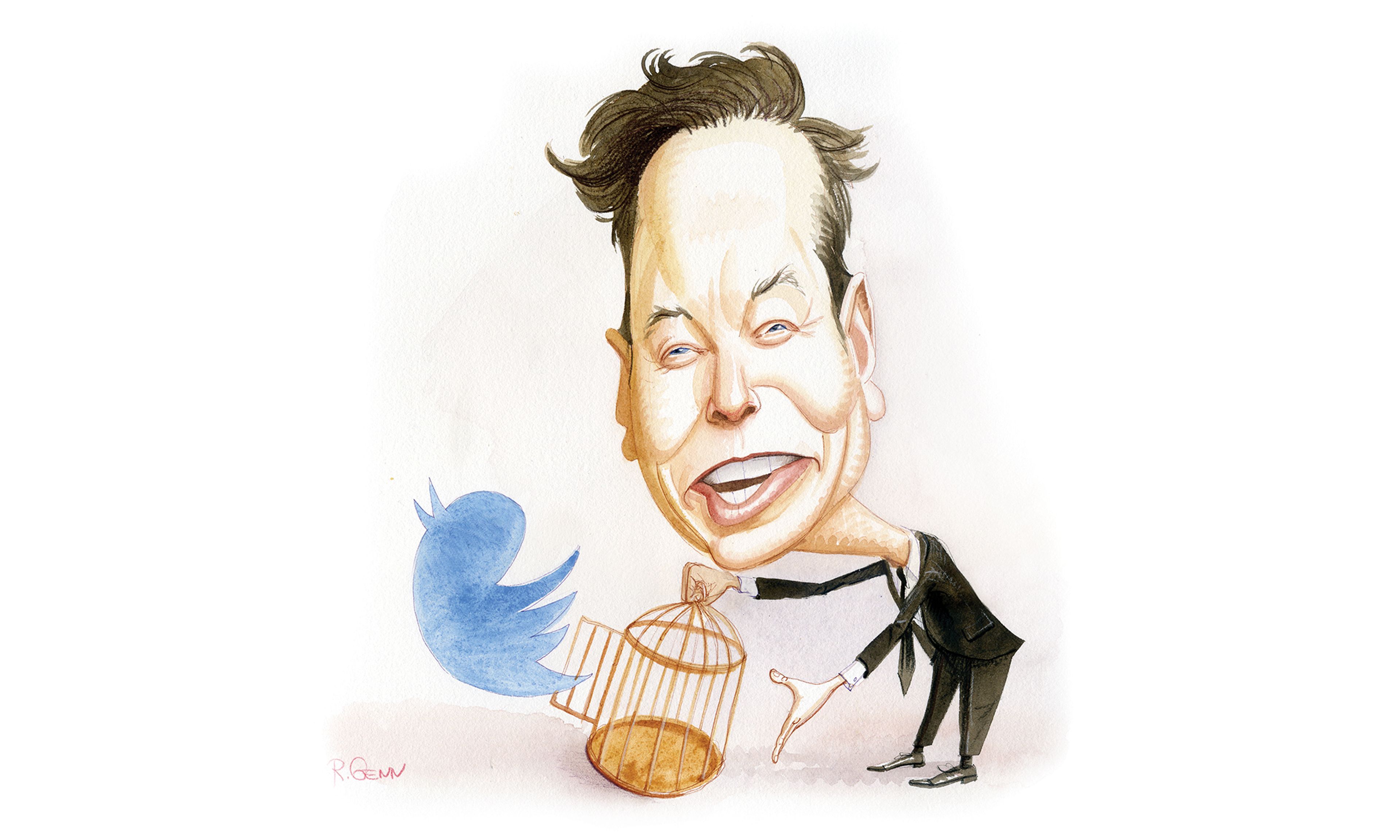
Elon Musk’s $44 billion–odd purchase of Twitter was an earthquake for the social-media behemoth. On April 25, after weeks of negotiations — and numerous internal and external efforts to thwart his bid for control — the vaguely right-wing, South African–born CEO of Tesla and SpaceX officially declared victory. “Free speech is the bedrock of a functioning democracy, and Twitter is the digital town square where matters vital to the future of humanity are debated,” he wrote in a statement about his acquisition. “Twitter has tremendous potential — I look forward to working with the company and the community of users to unlock it.”
Not everyone felt the enthusiasm. Twitter’s “legal, public-policy, trust, and safety Lead,” Vijaya Gadde — who played a key role in the platform’s most controversial content-moderation decisions, from restrictions on election-fraud claims and Covid skepticism to censorship of the New York Post’s exposé on Hunter Biden’s laptop — reportedly broke down in tears during a company meeting about the Musk acquisition. That came on top of a firestorm over leaked audio of Twitter chief marketing officer Leslie Berland telling other executives that Musk’s plan for “our moderation policies . . . puts Twitter service and trust and safety as well as anybody who cares about health on the platform in a very difficult position.”
Outside of Twitter, a similar panic was brewing. A headline from the New York Times editorial board’s Greg Bensinger proclaimed that “Twitter under Elon Musk Will Be a Scary Place,” while another Times essay lambasted Musk’s view of “the freedom to speak without restraint by powerful authorities.” Senator Elizabeth Warren called Musk’s purchase of Twitter “dangerous for our democracy” — a view echoed by numerous left-wing “human rights” groups, including Human Rights Watch, Amnesty International, and the ACLU. “The last thing we need is a Twitter that willfully turns a blind eye to violent and abusive speech against users,” an Amnesty International USA executive wrote in a statement.
The wailing, both within and outside of Twitter, points to serious challenges ahead for Musk. The terminally online tech tycoon’s free-speech reforms are sure to face resistance in the years ahead. But his plan to take the 7,500-employee platform private will also help insulate him from some of that external pressure: “It limits the voices in the room, and he can remake Twitter in his own image in a much faster way,” Rachel Bovard, the policy director at the Conservative Partnership Institute, a Washington-based advocacy group, told National Review. “The advantage that Musk has is that Twitter is small. So he can actually get a handle on the content-moderation team, the contractors, who’s doing what and how.” That would allow him to “just walk in and say, ‘These are my free-speech principles. This is how we’re doing it. Throw out your old handbook; this is the new handbook.’ And if they don’t like it, if he’s taken it private, he can fire all those people.”
That playbook has worked for other Silicon Valley companies, despite the industry’s reputation as a hothouse of left-wing politics. In 2020, for example, Coinbase CEO Brian Armstrong proscribed employees from engaging in “activism outside of our core mission at work” and offered severance packages to anyone who didn’t “feel comfortable with this new direction.” At the time, Armstrong faced a barrage of negative coverage in the media, and outrage from a small but vocal contingent of activist employees; but in the end, only about 5 percent of the workforce at the cryptocurrency-exchange platform — then still a private company — ended up taking the offer and leaving.
Similar depoliticization efforts took place at the publicly traded Apple the next year. When staffers formed an internal activist group to protest the hiring of Antonio García Martínez, objecting to remarks about women in Silicon Valley that the tech entrepreneur had made in a 2016 book, Martínez was promptly dismissed. But when the activists started agitating for more-sweeping reforms, Apple fired the group’s ringleaders, too. “The Slack-mob revolts at Apple proceeded from me to making demands about Israel and Palestine, about not going back to work — I mean, this whole litany of complaints,” Martínez told National Review. “So Apple just went and fired all of them — the leaders of the revolt all got fired.”
There are precedents, then, for Musk’s reformist project. Even so, Twitter’s content-moderation team may be a particularly difficult nut to crack. “In the case of Coinbase, talking about politics is just completely misplaced,” Martínez said. “Most people want to do their job because they’re interested in crypto, and they don’t want to talk politics at work. But at Twitter, if you’re in the content-moderation team, well, that is your job. That’s what you do. And so you can’t just not bring it to work.”
In the short to medium term, there are a number of improvements Musk can make without the cooperation of ideologically hostile employees. Moving Twitter away from an advertisement- dependent business model would make the platform less beholden to pressure from conflict-averse corporate backers prone to pulling their dollars at the first sign of trouble. (But transitioning to a paid-subscription-based service — which Musk has publicly considered — may be easier said than done, considering that about 92 percent of Twitter’s current revenue comes from advertising.) Increasing transparency about the platform’s algorithms, particularly when it comes to their function in content moderation, could make Twitter’s activist censors think twice about cracking down on controversial speech. Musk himself has suggested making the algorithms open-source, publishing the code that determines what users see.
On a more systemic scale, decentralizing content moderation could help weaken the grip of activists both inside and outside the company, effectively “pushing the moderation decisions down to ‘local’ communities or empowering users to do it rather than a central authority,” Zach Graves, head of policy at the Lincoln Network, a tech-focused think tank, told National Review. Graves points to the chat forum Reddit, where subreddits — the more than 3.1 million content-specific forums that are hosted by the site — were at first largely policed by the moderators who created them. Graves finds this “a much more pro-free-speech model.” While “you have to deal with the bots and the porn and the state-level disinformation,” he said, “I think you want to also create space for communities of different ideological persuasions to maintain their own norms that are different from the ones that are set by the San Francisco trust-and-safety team.”
Still, as Graves conceded, central moderation of some kind is necessary — and, to some extent, must rely on the imperfect judgment of employees. In other words, staffing matters; the fundamental problems in Twitter’s political culture are, first, a workforce issue. If Musk fires the Gadde cartel, “the question that’s unknown is if there’s enough non-woke talent to come back in,” Bovard said.
Martínez, who worked as an adviser for Twitter and a product manager at Facebook prior to his short-lived stint at Apple, remains optimistic. “Content moderation isn’t that hard,” he said. “You have a public-policy script that you follow, and then you have some implementation steps. . . . Elon could say, ‘We’re gonna fire the bulk of the content-moderation team, and we’re gonna hire new people in Miami or Austin or Madison’ — wherever, just not San Francisco. And guess what? Content moderation would work just fine.”
Moving the company is perhaps the most dramatic reform that Musk should consider. Graves is blunter than Martínez: “The obvious thing to do is move them the f*** out of San Francisco.” Even with a disciplined, focused executive, changing a company’s internal culture is a long, arduous process — and finding a competent, non-woke team could prove difficult in a city with a progressive monoculture. (As of September 2021, a plurality of Twitter employees — about 2,200 — lived in the Bay Area). Musk himself relocated from California to Texas in 2020, later remarking in an interview that, in his opinion, “Silicon Valley, or the Bay Area, has too much influence on the world.” He subsequently relocated Tesla’s headquarters from Palo Alto to Austin and has floated in a since-deleted tweet the idea of shutting down Twitter’s San Francisco headquarters. In the San Francisco bubble, “all the pressures” on Silicon Valley executives “lean pretty strongly left,” Graves said. “And you can address some of that by moving it out of the most liberal big city in the country. That’s one step to culture change.”
Regardless of what Musk chooses to do, taking on Twitter’s powerful activist contingent will require sustained commitment. And there are serious questions about whether he will have the time and focus needed for the job, given his roles at other companies. It’s possible that his reality-TV-style acquisition of the platform will prove to be little more than an Internet stunt gone too far. But he has defied expectations more than once. Who’s to say he can’t do it again?
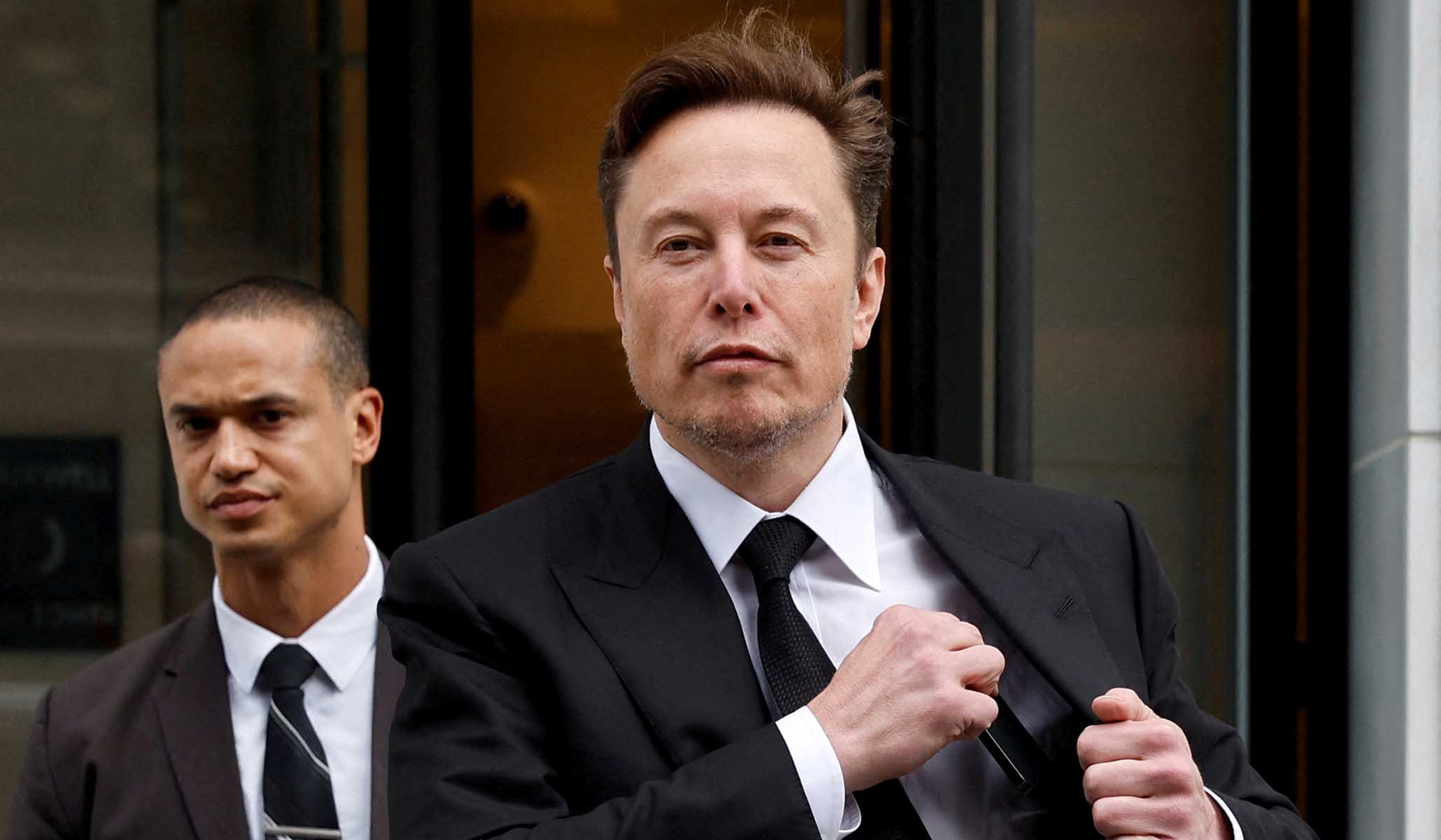
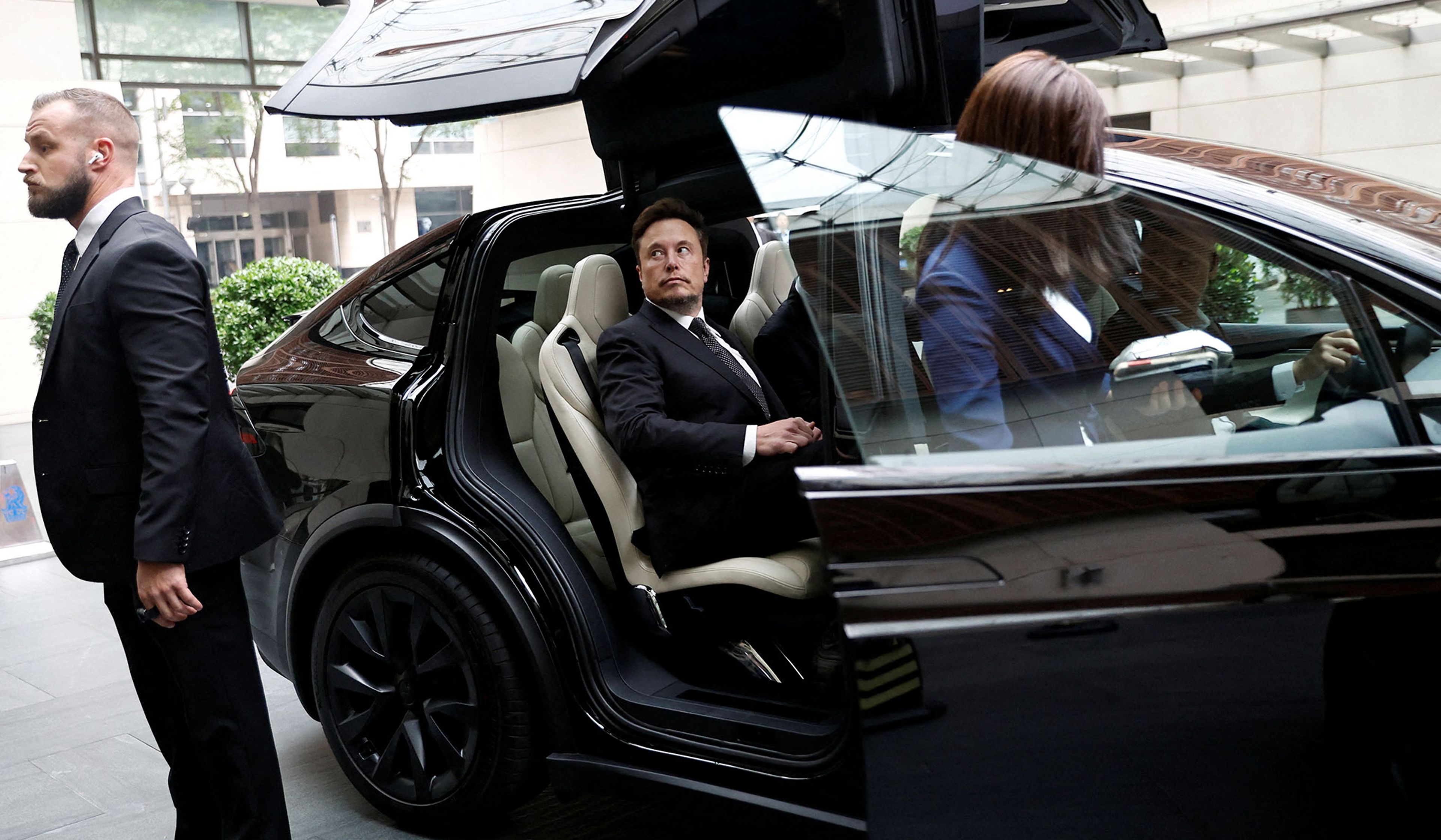
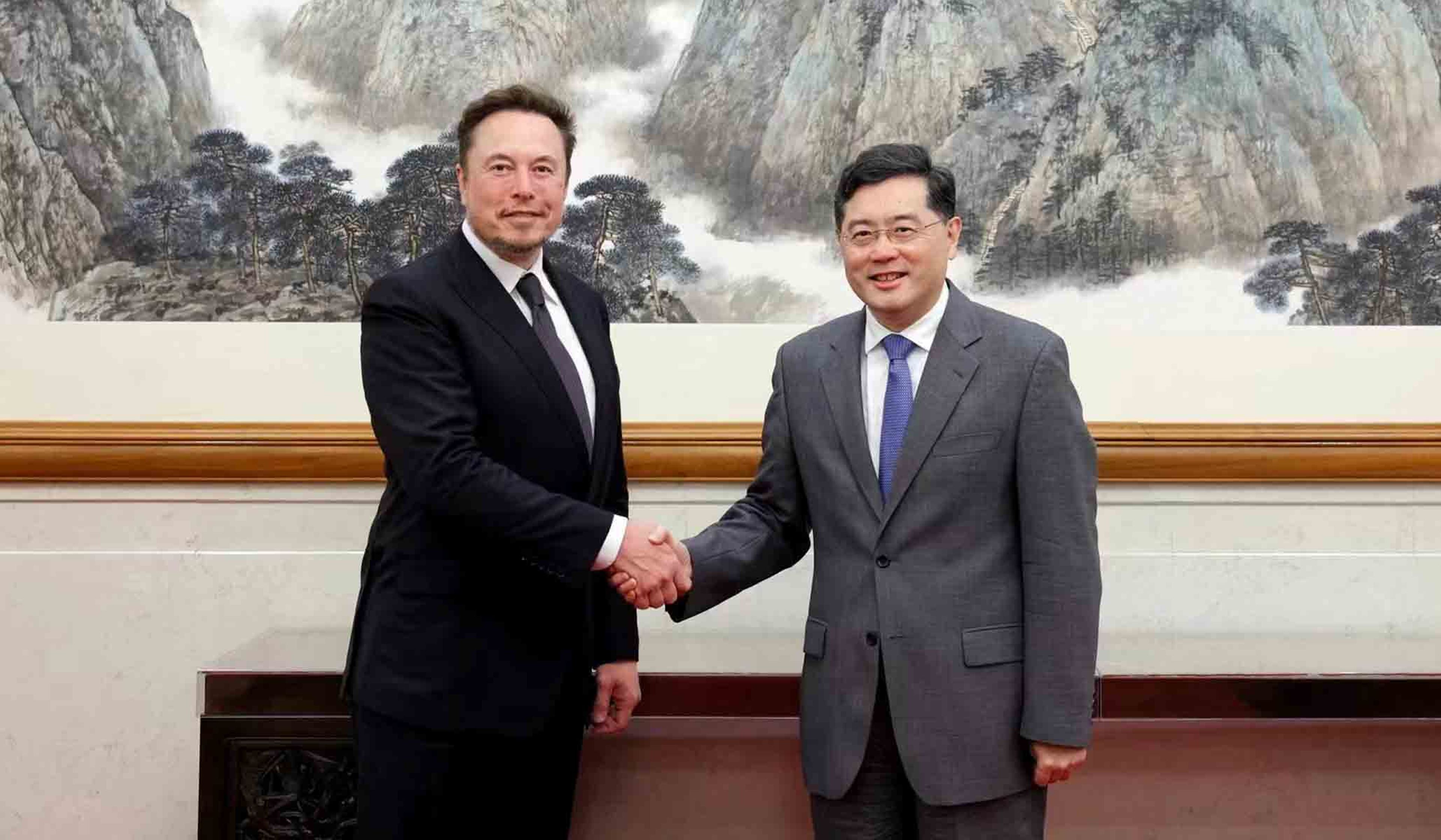

Tesla CEO Elon Musk and his security detail depart the company’s local office in Washington, D.C., January 27, 2023.
Jonathan Ernst / Reuters









Comments